




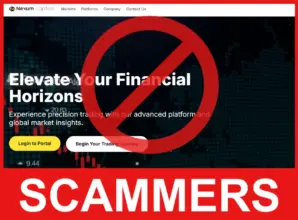
Over the past few years, online trading has attracted millions of people looking for additional income or financial independence. Unfortunately, alongside legitimate brokers, the internet has become flooded with platforms that exist solely to exploit inexperienced investors. One of the names that has increasingly appeared in complaints and warning discussions is Seikum. At first glance, Seikum presents itself as a modern and ambitious brokerage company. The website uses professional design elements, confident language, and attractive promises of stable profits. For someone without deep experience in financial markets, everything looks convincing. However, once we move past the surface and begin examining how this broker actually operates, a very different picture emerges. This article was prepared to give readers a clear and honest overview of Seikum’s activities, explain why so many investors consider it dangerous, and show what steps can be taken if money has already been lost. The specialists at DNB Forex Review regularly work with victims of such brokers, and the information below reflects patterns they see every day.

Information About the Fraudulent Broker
Seikum claims to be an international broker providing access to popular financial markets such as forex, cryptocurrencies, indices, and stocks. According to its promotional materials, the platform allegedly offers advanced trading tools, professional analytics, and personal account managers who help clients grow their capital. However, when reviewing the broker’s content carefully, several red flags appear almost immediately. The descriptions of services remain very general and lack technical detail. There is little explanation of how trades are executed, where liquidity comes from, or which trading technology is actually used. These are basic things any legitimate broker normally explains openly. Another concern is the language used throughout the platform. The broker focuses heavily on emotional triggers: fast profits, financial freedom, and exclusive opportunities. Risk warnings are either hidden or written in a vague manner. There is no clear explanation that trading can lead to losses, which is a legal requirement in many jurisdictions. Many users report that after registration they receive frequent phone calls or messages from so-called “analysts.” These individuals push clients to deposit larger amounts, often claiming that a special market opportunity is about to close. This aggressive behavior does not align with professional brokerage standards and instead resembles sales pressure tactics.
Verification of Company Data
One of the most important steps when choosing a broker is verifying company data. This includes legal registration, licensing, and regulatory oversight. In the case of Seikum, this is where transparency nearly disappears. The broker does not provide clear, verifiable information about its legal entity. Company names, registration numbers, and physical office addresses are either missing or impossible to confirm. In some cases, the information provided appears inconsistent, which raises further suspicion. There is also no reliable proof that Seikum holds a valid license from a recognized financial regulator. Licensed brokers are required to follow strict rules designed to protect clients, including fund segregation and reporting obligations. Seikum does not offer evidence that it follows any of these standards. Additionally, the platform avoids disclosing who actually owns or manages the company. Legitimate financial firms are usually proud of their management teams and corporate history. In contrast, anonymity is often a sign that a broker does not want to be held accountable. For investors, this lack of transparency creates a serious risk. Without legal registration or regulatory supervision, clients have no protection if something goes wrong. And based on user complaints, something often does.
Exposing the Broker as a Fraudster
When evaluating whether a broker is acting fraudulently, it is important to look at behavior patterns rather than just marketing claims. Seikum demonstrates several classic signs associated with investment scams. First, there are repeated reports of withdrawal problems. Many clients say that once they request to withdraw funds, the broker suddenly introduces new requirements. These may include unexpected fees, additional verification payments, or minimum trading volumes that were never mentioned before. Second, communication often changes once money is deposited. At the beginning, support agents are responsive and friendly. After clients attempt to withdraw funds or question suspicious activity, responses become slow or stop completely. Third, account balances shown on the platform are likely simulated. Victims frequently report seeing profits grow rapidly on screen, only to discover that these numbers have no real connection to actual market activity. The moment a withdrawal is requested, those profits effectively disappear behind excuses. These behaviors strongly suggest that Seikum operates not as a real broker, but as a controlled system designed to keep deposits inside and prevent withdrawals.
Fraud Broker’s Deception Scheme
Understanding how the Seikum scheme works can help investors avoid similar traps in the future. The process usually follows a predictable pattern. It begins with advertising or direct contact. Potential clients are attracted through online promotions or unsolicited messages. The message is always optimistic and reassuring. Next comes registration and the first deposit. The initial amount is often small to lower psychological resistance. Shortly after, an account manager contacts the client and begins building trust. Then comes escalation. The client is shown impressive “results” and encouraged to deposit more money to increase profits. Pressure tactics are commonly used, including claims that this is a limited opportunity. Finally, the exit phase begins. When the client wants to withdraw funds, obstacles appear. Fees, taxes, commissions, or verification payments are demanded. If the client refuses, communication may stop entirely. At this stage, the victim realizes that the money is likely gone.
How to Get Money Back from a Scam Broker
Losing money to a fraudulent broker can feel overwhelming, but it is important to understand that recovery is sometimes possible. The key factor is acting quickly and seeking professional assistance. DNB Forex Review specializes in helping victims of dishonest brokers. Their experts begin by analyzing each case individually, reviewing payment methods, communication history, and account activity. They help clients collect evidence, including transaction records and correspondence. This information is critical for initiating disputes with banks or payment providers. In some cases, chargeback procedures can be used to reverse transactions. DNB Forex Review also assists in filing complaints with relevant financial authorities and advising clients on legal options. While no recovery can be guaranteed, professional involvement significantly increases the chances of success. Most importantly, working with specialists helps victims avoid secondary scams that often target people who have already lost money.
Negative Reviews About the Broker
A large number of complaints about Seikum follow the same storyline. People describe being convinced to invest, seeing rapid account growth, and then being blocked from accessing their funds. Some users report emotional pressure and manipulation, including guilt-based tactics and false claims about legal consequences if they stop trading. Others mention sudden account closures without explanation. There are also reports of fake positive reviews used to balance out criticism. These reviews often lack detail and sound generic, which further undermines their credibility. When real user experiences are compared, a consistent pattern of deception becomes impossible to ignore.

Why Platforms Like Seikum Continue to Appear
Many investors ask a reasonable question after discovering a scam: if platforms like Seikum are so dangerous and complaints about them exist, why do they continue to appear again and again? The answer is not simple, but it reveals how modern financial fraud has adapted to the digital world. The first and most important reason is low entry barriers. Creating a professional-looking broker website today is cheap and fast. Ready-made trading interfaces, design templates, and fake dashboards can be purchased or rented. From the outside, everything looks like a real financial company, even though behind the scenes there is no trading at all. This allows scammers to launch a new “broker” in a matter of weeks. The second factor is jurisdictional chaos. Online brokers often claim to operate internationally, but in reality, they may not be legally registered anywhere meaningful. Fraudsters deliberately choose offshore zones, fake addresses, or vague corporate structures that make legal responsibility difficult to establish. When problems arise, victims do not know which country’s laws apply or where to file a complaint. This confusion works in favor of scammers. Another key reason is psychology. Platforms like Seikum are designed not for experienced traders, but for people who are new to investing or going through financial stress. The messaging focuses on hope, urgency, and fear of missing out. When a person believes they have finally found a way to improve their financial situation, critical thinking often weakens. Scammers exploit this emotional vulnerability with precision. Social proof also plays a powerful role. Fake reviews, staged success stories, and invented testimonials create the illusion that “many people are already earning.” Humans naturally trust the choices of others, especially when they appear confident and successful. Even cautious individuals may lower their guard when they believe a platform is popular and widely used. Another reason these platforms survive is underreporting. Many victims feel shame or guilt after losing money. They may blame themselves and avoid telling family members, banks, or authorities. As a result, the true scale of damage remains hidden. Fraudsters rely on this silence. Every unreported case allows the scheme to continue a little longer. There is also the problem of slow enforcement. Even when complaints are filed, investigations take time. Fraudulent brokers often shut down and reappear under a new name before any action is taken. The same people, the same scripts, and sometimes even the same website design are reused. Only the brand changes. Payment systems add another layer of complexity. Many scam brokers use intermediaries, cryptocurrency transfers, or poorly regulated payment providers. This makes tracking funds difficult and creates obstacles for chargebacks. Victims often discover too late that their money has already passed through multiple accounts. Finally, there is a growing market for secondary scams. After platforms like Seikum collapse, new “recovery services” may appear, promising to get lost money back for a fee. These services often target the same victims again. This creates a cycle where people who have already suffered once are exploited repeatedly. All of this explains why fraudulent brokers continue to exist despite warnings and reviews. The system is designed to move faster than regulation and to prey on human emotions rather than technical knowledge. Understanding these mechanisms is not just informative — it is protective. When investors recognize how and why such platforms operate, they become far harder to deceive. Education, transparency, and early professional support remain the most effective tools against financial fraud.
Conclusion
Seikum displays nearly every warning sign associated with fraudulent online brokers: lack of transparency, unverified licensing, withdrawal barriers, and numerous victim complaints. For anyone considering investing through this platform, the risks clearly outweigh any potential benefits. For those who have already lost money, the most important step is not to panic, but to act. Contacting experienced specialists such as DNB Forex Review can make a real difference. Their knowledge, tools, and experience provide victims with a structured path forward instead of leaving them alone with the problem. Financial scams thrive on silence and confusion. The sooner you seek help, the stronger your position becomes.






I had trouble withdrawing money from Seikum and decided to look for assistance. This situation has been very stressful, and I want to know if there is a realistic way to recover funds from companies that do not return customer payments.
Leave your contact details, and we will get in touch with you for a free consultation.
I believe I was misled by Seikum and now I am trying to recover my money. I have kept all the payment details and messages. Can someone explain what information is needed to start a fund recovery case?
Our specialists will contact you after you submit a request on the website.