




Imagine coming across a professional-looking website promising fast profits, large returns, and state-of-the-art trading tools, all suggesting that financial freedom is just a click away. This scenario is common for people exploring online trading, particularly in forex and cryptocurrency markets. Unfortunately, many of these platforms are not what they claim to be, and Degen Tradex, operating through degentradex.com, has recently become a concerning example of this trend. Many investors find themselves drawn in by slick marketing and the promise of easy money. Some have deposited their savings, only to find withdrawals blocked and customer support unresponsive. Others notice red flags but are unsure what they mean. This review explains why Degen Tradex is widely considered a fraudulent broker, how its deceptive scheme works, and how victims can take action to recover lost funds with the assistance of professionals specializing in broker recovery.
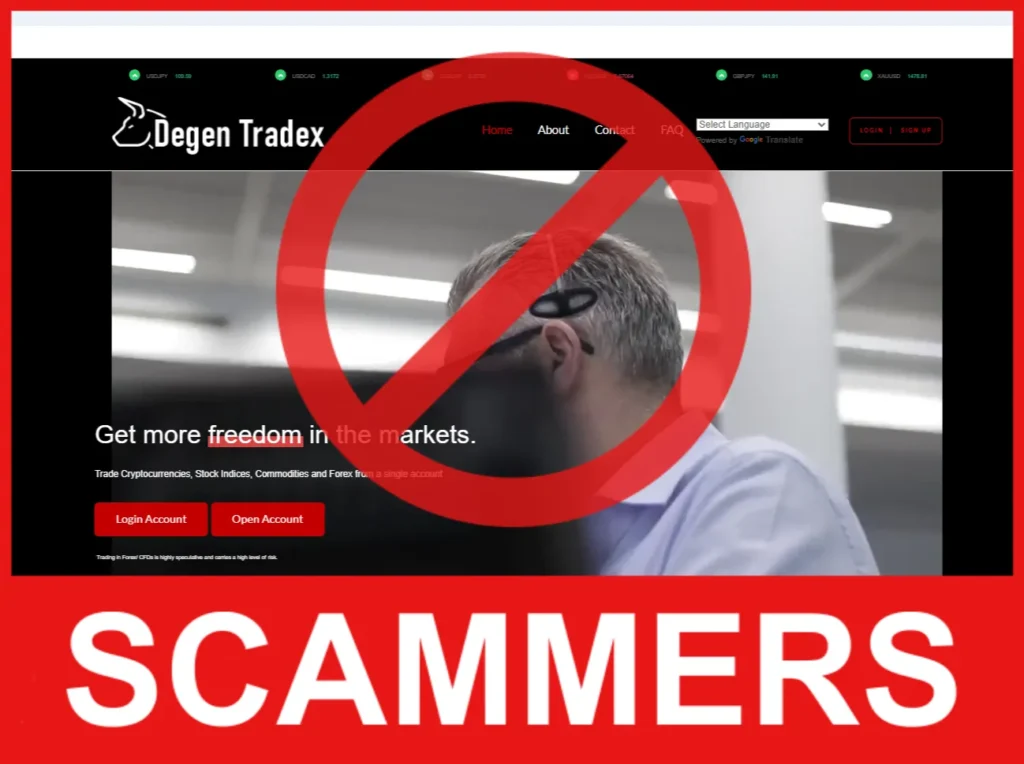
Information About the Fraudulent Broker
At first glance, Degen Tradex presents itself as a modern online broker offering trading services in forex, cryptocurrency, and other financial markets. The website claims to provide advanced trading platforms, personalized tools, and a global presence. It is designed to impress, particularly investors who are new to online trading. However, a closer look reveals a troubling picture. Degen Tradex lacks authorization from any recognized financial regulator. This means it is not legally allowed to provide investment services, leaving investors unprotected. Despite claims of global regulation, there is no verifiable evidence to support these statements. The platform also relies heavily on marketing tactics common to fraudulent brokers. These include promises of extraordinary profits with little or no risk, testimonials that appear scripted or exaggerated, and highly polished user interfaces that give the impression of legitimacy. Their FAQ section attempts to downplay regulatory concerns by suggesting that regulation is not required for their services, which should be a warning sign for anyone familiar with financial markets. In short, Degen Tradex may look professional, but its operational structure is designed primarily to collect deposits from investors rather than to provide legitimate trading services.
Verification of Company Data
One of the first steps to assessing a broker is verifying its registration and regulatory compliance. For Degen Tradex, this verification fails to produce reassuring results. The company provides a business address, contact details, and claims of global regulatory compliance. However, these claims are unverified. There is no license from recognized authorities such as the Financial Conduct Authority, the U.S. Securities and Exchange Commission, or the Cyprus Securities and Exchange Commission. The address provided may correspond to a virtual office or an unrelated business, a common tactic used by unregulated brokers. Legitimate brokers provide transparent documentation of their regulatory status, including license numbers and official certificates. Degen Tradex provides none of this. Investors who deposit funds with unregulated brokers are exposed to significant risk, as there is no financial oversight or recourse if funds are misappropriated. These findings highlight a critical red flag: the absence of verified regulatory information indicates that the broker is operating without legal protection for clients.
Exposing the Broker as a Fraudster
Why is Degen Tradex considered fraudulent? Several warning signs are apparent. Lack of Regulation: The broker is not licensed by any reputable authority, meaning there is no legal oversight or accountability. Unrealistic Promises: Claims of guaranteed high returns are misleading. Even experienced traders cannot promise profits, and such guarantees are typical of scam operations. Opaque Operations: Contact information may not be verifiable, and claims about partnerships or technology are difficult or impossible to confirm. Blocked Withdrawals: Many victims report difficulty withdrawing funds after depositing, often being asked for additional fees or facing arbitrary limits. Negative Listings: Independent reviews and reports consistently categorize Degen Tradex as unregulated and operating with scam-like characteristics. Taken together, these factors clearly indicate that Degen Tradex operates primarily to mislead and extract funds from clients rather than to provide legitimate financial services.
Fraud Broker’s Deception Scheme
Understanding the operational scheme of Degen Tradex explains why so many investors fall victim. Targeted Marketing: Prospective clients are approached through online ads or social media, often promising fast profits or exclusive tools. Scammers exploit emotional triggers like urgency or fear of missing out. Convincing Website: The platform may feature charts, dashboards, and account balances that appear legitimate, but these are often fabricated. No real trading may be taking place. Initial Small Withdrawals: Early small withdrawals build trust, encouraging investors to deposit larger sums. Withdrawal Barriers: After larger deposits, withdrawals are delayed or blocked. Victims are told they must pay fees or taxes to release funds. Disappearance: Ultimately, the broker may go offline, customer support becomes unreachable, and the money is lost. This structured approach is intentional, designed to extract as much money as possible while creating an illusion of legitimacy.
How to Get Money Back from a Scam Broker
If you have invested with Degen Tradex, there are steps to recover your funds. Cease Communication: Stop responding to any requests from the broker to avoid further manipulation. Document Everything: Keep records of all communications, transactions, and screenshots of the platform. Engage Recovery Specialists: Professionals such as DNB Forex Review can assist in tracing payments, contacting banks, and drafting legal demands to recover funds. Their experience significantly increases the chances of successful recovery. Report to Authorities: Even if the broker is unregulated, reporting to financial watchdogs or law enforcement helps document the case. Pursue Chargebacks or Legal Action: Payments via credit or debit cards may be eligible for chargebacks. Cryptocurrency payments are more challenging but can be addressed through specialized legal channels. Prompt action is crucial, as delays reduce the likelihood of recovering funds.
Negative Reviews About the Broker
Victims of Degen Tradex consistently report. Inability to withdraw funds despite repeated attempts. Requests for additional fees or payments before releasing funds. Poor or nonexistent customer support. Emotional stress and financial loss. These reviews are not isolated complaints. They reflect a consistent pattern of deception and financial abuse. Some victims note that professional recovery services were able to recover partial funds, highlighting the importance of expert assistance.

Hidden Tactics – How Fraudsters Stay Invisible
One of the reasons brokers like Degen Tradex can operate for months, or even years, without immediate consequences is their ability to remain virtually invisible to regulators and potential victims until it’s too late. These fraudsters are not just careless; they carefully design their operations to avoid detection, exploiting gaps in regulations and relying on human psychology to keep their schemes alive. Understanding these hidden tactics is crucial, both to recognize fraud early and to avoid falling victim again. Fraudulent brokers often go to great lengths to mimic legitimate financial institutions. Their websites are polished, featuring complex dashboards, charts, and account statistics that appear real. They may even claim partnerships with well-known trading platforms or financial institutions, sometimes displaying fake logos or fabricated endorsements to create a sense of trust. Investors unfamiliar with the industry may take these claims at face value, assuming that such professional presentation equates to reliability. The reality is that appearance can be entirely manufactured; the charts and data may be purely cosmetic, with no real trading happening behind the scenes. Many scam brokers register their domains anonymously, using services that hide the true owner’s identity. They may also create temporary websites or frequently change domain names, which makes it difficult for regulators and investigators to trace them. This constant mobility allows scammers to disappear and reappear under slightly altered names, targeting new victims while avoiding legal action. In some cases, a broker may shut down its site entirely after a wave of complaints, only to relaunch later with minor changes, giving it a veneer of legitimacy for unsuspecting investors. Fraud brokers also rely heavily on fake testimonials and positive reviews. On their sites or across forums, you may find glowing reports of satisfied clients claiming to have made substantial profits. These reviews are often fabricated, sometimes generated by bots or written by individuals compensated to write convincing stories. By presenting a seemingly thriving client base, scammers exploit a psychological phenomenon called social proof—investors are more likely to trust a broker if others appear to have succeeded with it. Many victims do not realize that these “success stories” are entirely fictional until they try to withdraw funds. Another tactic involves the manipulation of payment systems. Scammers often ask for deposits through methods that are difficult to reverse, such as cryptocurrency transfers, wire transfers, or non-refundable online payment services. Some may even use intermediary companies to further obscure the trail of funds, making recovery far more complicated without professional help. By controlling the flow of money and keeping it untraceable, fraudsters maintain operational invisibility while extracting as much as possible from victims. Perhaps the most insidious tactic is psychological manipulation. Scammers are skilled at creating urgency, fear of missing out, and overconfidence. Investors are often encouraged to deposit quickly or “unlock” opportunities that supposedly expire within hours. They may also receive personal attention from a “dedicated account manager,” who builds trust while subtly pushing for larger investments. Once the funds are in the system, this same tactic is used to delay withdrawals, ask for additional fees, or invent regulatory obstacles—all designed to maintain control over the victim’s money while appearing legitimate.
Conclusion
The story of Degen Tradex is, unfortunately, far from unique. Every day, new investors encounter brokers that look polished, professional, and trustworthy at first glance. Websites like Degen Tradex are carefully designed to appear legitimate—they use slick interfaces, charts that look like real trading data, and language that inspires confidence. But behind this carefully constructed façade lies a harsh reality: unregulated, fraudulent brokers exist solely to mislead investors and extract money. Once funds are deposited, withdrawals are delayed or blocked, support becomes unreachable, and the investor is left with little recourse. Recognizing this reality is the first and most important step toward protecting yourself. Taking action is crucial. Simply acknowledging that you have been misled is not enough—inaction can allow the fraudsters to continue operating and taking advantage of other unsuspecting individuals. The longer you wait, the more difficult it can become to trace funds or recover losses, especially if the broker has moved funds through multiple accounts or jurisdictions. This is why immediate and strategic action is essential. Professional recovery specialists, like those at DNB Forex Review, have experience in dealing with the exact tactics used by fraudulent brokers. They know how to trace payments, communicate with banks and financial institutions, and apply the proper legal pressure to improve the chances of recovering funds. Attempting this process alone, without expertise, often results in frustration and little to no recovery. Equally important is the documentation of your interactions with the broker. Keeping detailed records of emails, messages, transaction confirmations, and screenshots of the trading platform can make a significant difference. These documents provide evidence that is essential when specialists begin the recovery process or when authorities investigate. They also help to counter the false narratives scammers may attempt to create, such as claiming you agreed to certain conditions that were never disclosed. Every piece of evidence increases your leverage and strengthens your case. Reporting the fraud is another step that should not be overlooked. Even if the broker operates in a jurisdiction that does not regulate financial services or has no physical presence, filing a report with your local financial authority, consumer protection agency, or cybercrime unit is essential. This helps build a record of the fraudulent activity, potentially contributing to investigations that can stop the broker from targeting more people. Additionally, reporting ensures that other potential victims are warned, reducing the impact of the scam on the wider public. Recovering funds from unregulated brokers is challenging, but not impossible. Professional teams combine financial expertise, investigative skills, and legal knowledge to pursue avenues for recovery, including chargebacks, legal claims, and coordination with intermediaries who may have handled payments. In some cases, victims are able to recover a significant portion, if not all, of their investments. Waiting, ignoring the situation, or attempting recovery without guidance usually results in permanent loss, emphasizing the urgency of taking action. Finally, the experience of dealing with a fraudulent broker highlights the importance of education and vigilance in all future investments. Understanding the warning signs of scams—such as unrealistic promises of profits, lack of regulatory oversight, opaque company data, and difficulty with withdrawals—can prevent repeat incidents. Learning from experience, combined with professional support, empowers investors to protect themselves and make informed decisions in the future. In conclusion, falling victim to a broker like Degen Tradex can be devastating, but it does not have to be permanent. The key lies in prompt, decisive action: stopping communication with the scam, documenting evidence, engaging recovery specialists, and reporting the fraud to authorities. Each step you take increases the likelihood of reclaiming your funds and preventing further losses. Specialists such as DNB Forex Review provide the knowledge, resources, and strategic guidance necessary to navigate this complex situation. Acting quickly, staying informed, and seeking professional assistance are not just recommended—they are essential for anyone who wants to take back control of their finances and protect themselves against fraudulent brokers in the future.






I lost money with Degen Tradex and want to share my experience with others. The platform looked reliable at the beginning, but problems started when I requested a withdrawal. I could not get my funds back and now I am searching for help. I found information about recovery services and hope my case can be reviewed. If anyone else was affected by this broker, please share your experience.
We will review the information provided and contact you to discuss potential next steps.