




The online trading industry continues to attract thousands of new investors every year. Forex, CFDs, cryptocurrencies — all of these markets promise opportunity. But alongside legitimate brokers, there are platforms created with one goal: to extract money from unsuspecting clients. Luminex FX presents itself as a professional brokerage company offering access to global financial markets. At first glance, the website looks polished and convincing. It speaks about financial freedom, advanced tools, and personal account managers ready to help clients succeed. However, when you move beyond the marketing language and examine the facts, serious concerns begin to surface. This review was prepared for DNB Forex Review to shed light on the risks associated with Luminex FX, to analyze the warning signs, and to explain how victims can pursue the recovery of their funds.
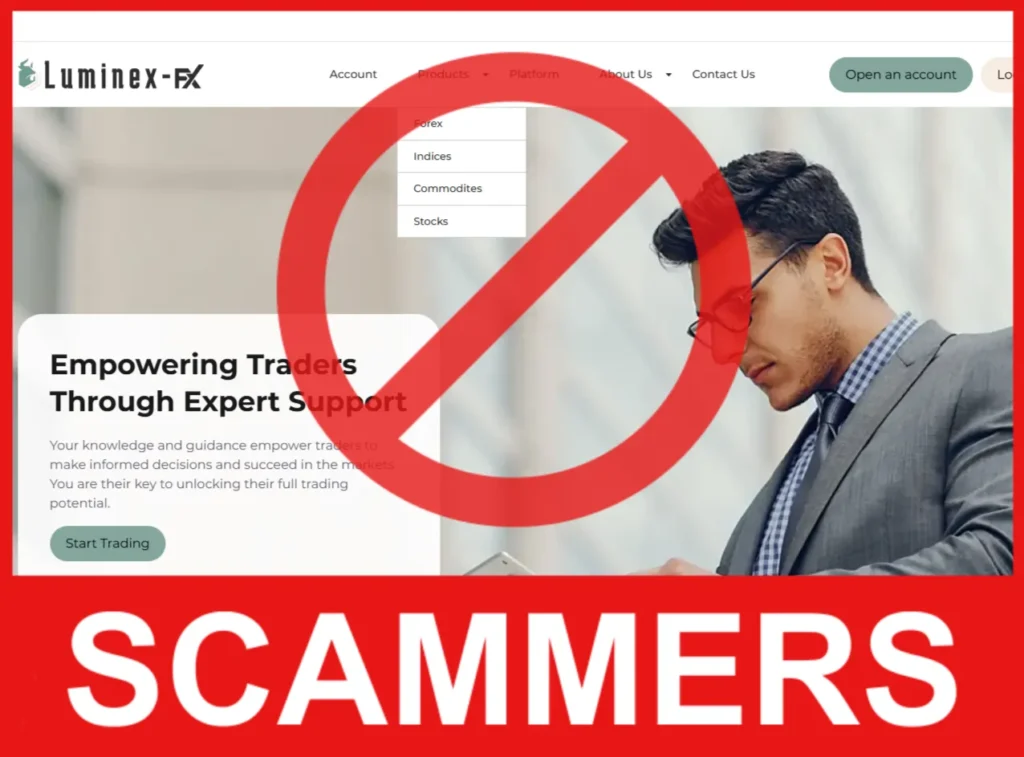
Information About the Fraudulent Broker
Luminex FX positions itself as an international trading platform offering Forex and CFD trading services. The website promotes competitive spreads, modern trading infrastructure, and allegedly experienced financial experts who guide clients through the process. The structure of the website follows a familiar pattern used by many questionable brokers. It emphasizes fast registration, easy deposits, and “high-profit opportunities.” There are different account types, often structured in a way that encourages larger deposits in exchange for better trading conditions or additional services. However, several important details are either missing or vague. There is limited transparency about the actual legal entity behind the platform. The company background appears generic and lacks verifiable corporate history. Information about executives, founders, or management is absent. Regulatory information is either unclear or not verifiable through official financial authorities. A legitimate brokerage company typically provides detailed information about its registration, regulation, and operational history. In the case of Luminex FX, the available data does not provide the level of transparency one would expect from a trustworthy financial institution. Another red flag is the way the platform focuses heavily on deposits. The emphasis appears to be more on convincing clients to fund their accounts quickly rather than on educating them about the risks of trading. Responsible brokers clearly disclose risk warnings and do not present trading as a guaranteed path to profit.
Verification of Company Data
When assessing any broker, verification is the most critical step. A legitimate broker must be licensed by a recognized financial regulator such as the Financial Conduct Authority (FCA), the Australian Securities and Investments Commission (ASIC), the Cyprus Securities and Exchange Commission (CySEC), or similar authorities depending on jurisdiction. In the case of Luminex FX, publicly verifiable regulatory credentials are either absent or cannot be confirmed in official regulatory databases. This is a major concern. Operating without proper regulation means. There is no external oversight. Client funds are not protected by compensation schemes. There is no mandatory segregation of client funds. Dispute resolution mechanisms are limited or non-existent. Additionally, domain registration data suggests that the website is relatively new. Fraudulent brokers often operate under short-lived domains. Once complaints accumulate and their reputation deteriorates, they shut down and reappear under a different name. Another issue is the lack of detailed corporate identification. Legitimate companies clearly display their legal name, registration number, and physical office address that can be independently verified. In many scam cases, the provided addresses turn out to be virtual offices or unrelated locations. Without solid proof of licensing and regulation, investors are effectively sending money to an unknown entity with no legal accountability.
Exposing the Broker as a Fraudster
Several patterns associated with Luminex FX are consistent with common broker scam models. First, there are aggressive marketing tactics. Victims often report being contacted by phone after registering online. Account managers use persuasive language, presenting trading as a low-risk opportunity with high returns. Second, there is the illusion of profitability. After making an initial deposit, clients may see their account balance grow quickly. This growth often appears unrealistically consistent. The purpose is psychological: to build trust and encourage larger deposits. Third, problems begin when clients attempt to withdraw funds. This is the turning point in many cases. Reported issues typically include. Withdrawal delays without explanation. Requests for additional documents beyond standard verification. Unexpected “taxes” or “processing fees.” Demands for further deposits before withdrawal approval. Legitimate brokers process withdrawals according to clear, published policies. They do not invent new fees after a withdrawal request is made. When a platform consistently blocks or complicates withdrawals, it is a strong indicator of fraudulent intent.
Fraud Broker’s Deception Scheme
Understanding the mechanics of the scheme helps investors recognize manipulation early. The broker uses online ads, social media promotions, or cold calls to attract clients. The message usually focuses on financial independence and quick profits. Clients are encouraged to start with a modest amount. The barrier to entry is intentionally low to reduce hesitation. A representative contacts the client and offers “personal guidance.” This person builds rapport and gradually encourages larger investments. The trading platform shows steady gains. Whether these trades are real is often questionable. The displayed profits serve to build confidence. The client is persuaded to deposit larger sums to “maximize returns.” When the client requests a withdrawal, obstacles appear. Additional fees, identity verification demands, or technical excuses are introduced. Eventually, communication stops, or the website becomes inaccessible. This structured approach is not accidental. It is designed to exploit trust, greed, and hope.
How to Get Money Back from a Scam Broker
If you have lost money through Luminex FX, it is important to act quickly. DNB Forex Review specializes in assisting victims of fraudulent brokers. Their approach typically includes. Experts evaluate your situation, including payment method, communication history, and transaction details. All relevant documentation is gathered: bank statements, screenshots, email correspondence, and account records. If payment was made via credit or debit card, a chargeback request may be initiated through your bank. This process disputes the transaction on the basis of fraud. Bank and Payment System Complaints. Formal complaints may be submitted to financial institutions involved in processing the payments. Legal and Regulatory Escalation. Where appropriate, additional steps may include legal notices or regulatory reports. The key factor in successful recovery efforts is timing. The sooner action is taken, the higher the chances of freezing or reversing transactions.
Negative Reviews About the Broker
Independent review platforms contain numerous complaints about experiences consistent with the pattern described above. Common themes in negative feedback include. Inability to withdraw funds. Account managers who become unreachable. Sudden account closures. Pressure to deposit more money to “unlock” withdrawals. Emotional manipulation by company representatives. Victims often describe feeling misled. Many say that everything appeared legitimate until they tried to retrieve their funds. The emotional toll is significant — financial loss combined with stress, embarrassment, and frustration. When multiple unrelated individuals report similar experiences, the pattern becomes difficult to ignore.

How to Protect Yourself from Similar Broker Scams
Beyond this specific case, investors should apply strict due diligence before depositing funds with any broker. Verify licenses directly through official regulatory websites. Avoid brokers that promise guaranteed returns. Be cautious of unsolicited investment calls. Never pay additional “release fees” for withdrawals. Research independent reviews and complaint history. Fraudulent brokers rely on urgency and emotion. Taking time to verify facts can prevent significant losses.
Conclusion
After carefully examining the available information, the overall picture surrounding Luminex FX raises serious and unavoidable concerns. The combination of limited transparency, unverifiable regulatory claims, withdrawal-related complaints, and behavioral patterns consistent with known broker scams creates a risk profile that no cautious investor should ignore. First and foremost, the absence of clearly verifiable regulation is not a minor detail — it is fundamental. Regulation is the backbone of trust in the financial industry. A licensed broker operates under strict supervision, must comply with capital requirements, keeps client funds segregated, and is accountable to a recognized authority. Without that oversight, clients are effectively transferring money to a private, unmonitored entity. If something goes wrong, there is no safety net. Second, transparency is noticeably lacking. A legitimate financial company is proud of its credentials. It clearly states its legal entity name, registration number, office location, and licensing authority. It allows clients to independently verify this information. When such clarity is missing or difficult to confirm, it is not an administrative oversight — it is a warning sign. Third, the reported withdrawal difficulties cannot be dismissed as isolated incidents. In the brokerage industry, the true test of legitimacy is not how easily you can deposit funds — it is how smoothly you can withdraw them. Consistent reports of delays, additional fees, and sudden communication breakdowns suggest systemic issues rather than simple misunderstandings. It is also important to address the psychological tactics often associated with questionable brokers. Many victims describe persuasive account managers who build trust over time. They create the impression of partnership, expertise, and shared financial goals. The platform may display impressive profits early on, reinforcing confidence. But when the client attempts to secure those profits by withdrawing funds, the tone changes. This pattern is not accidental; it is part of a structured approach designed to prolong deposits and delay exits. Another factor to consider is operational longevity. Scam-oriented platforms often operate for limited periods under one brand name before closing and re-emerging under a new identity. A relatively new website with limited corporate history increases uncertainty. Investors are left without a track record to evaluate, without audited financial statements, and without long-term reputation indicators. From a risk management perspective, even a single major red flag should be enough to trigger caution. In this case, there are multiple overlapping concerns. Lack of confirmed regulatory supervision. Limited corporate transparency. Withdrawal complaints. Aggressive sales tactics. Short operational history. When these factors appear together, the responsible conclusion is not optimism — it is caution. For anyone who has not yet deposited funds, the safest decision is to pause. Conduct independent verification. Check official regulatory registers. Speak directly with licensed financial institutions. There are many regulated brokers in the market that operate transparently and are accountable to recognized authorities. There is no reason to accept uncertainty when safer alternatives exist. For those who have already invested and are experiencing difficulties, the situation requires immediate action. Delays can reduce the likelihood of successful recovery. Financial disputes are often time-sensitive, especially when card payments or electronic transfers are involved. Seeking professional guidance from specialists experienced in broker fraud cases can significantly improve the chances of recovering funds. It is also essential to remove any sense of personal blame. Broker scams are designed to appear legitimate. They use professional websites, confident representatives, and convincing dashboards. Many intelligent and financially literate individuals have fallen victim to similar schemes. The issue is not a lack of intelligence — it is calculated manipulation. In conclusion, the evidence suggests that engaging with Luminex FX carries substantial risk. Until verifiable regulation, transparent corporate identity, and a clean withdrawal track record are clearly demonstrated, extreme caution is not just advisable — it is necessary. Financial markets reward informed decisions, not rushed ones. When doubts accumulate and transparency is missing, the safest strategy is to step back, reassess, and protect your capital.






I had problems with Luminex FX withdrawals. I am looking for information about recovering my lost funds and getting professional help.
Our team is ready to help you regain control of the situation. Submit a request today.