




Every year thousands of people lose money to fake brokers who promise easy profits and financial freedom. One of the newest names in this growing list of scam platforms is Raliplen. To most untrained eyes, it looks like a legitimate online trading service. It has a modern website, a list of tradable assets, and bold claims about returns. But this is where the illusion ends. Raliplen is not a trustworthy broker, and behind the glossy design lies a dangerous trap that has already cost many people their hard‑earned savings. This article is a complete and detailed review of Raliplen from the perspective of a financial review and recovery center that helps victims of fraud. It is based on all available public information about the broker’s operations, customer experiences, and scam signals. Our goal is to expose how Raliplen operates, why it should not be trusted, how it entraps investors, what victims have reported, and what options exist for those who have already been harmed. If you are reading this before investing with Raliplen, this review will give you a clear picture of the risks involved. If you have already lost money, this article explains what has happened and how professional recovery assistance can help you pursue your funds.
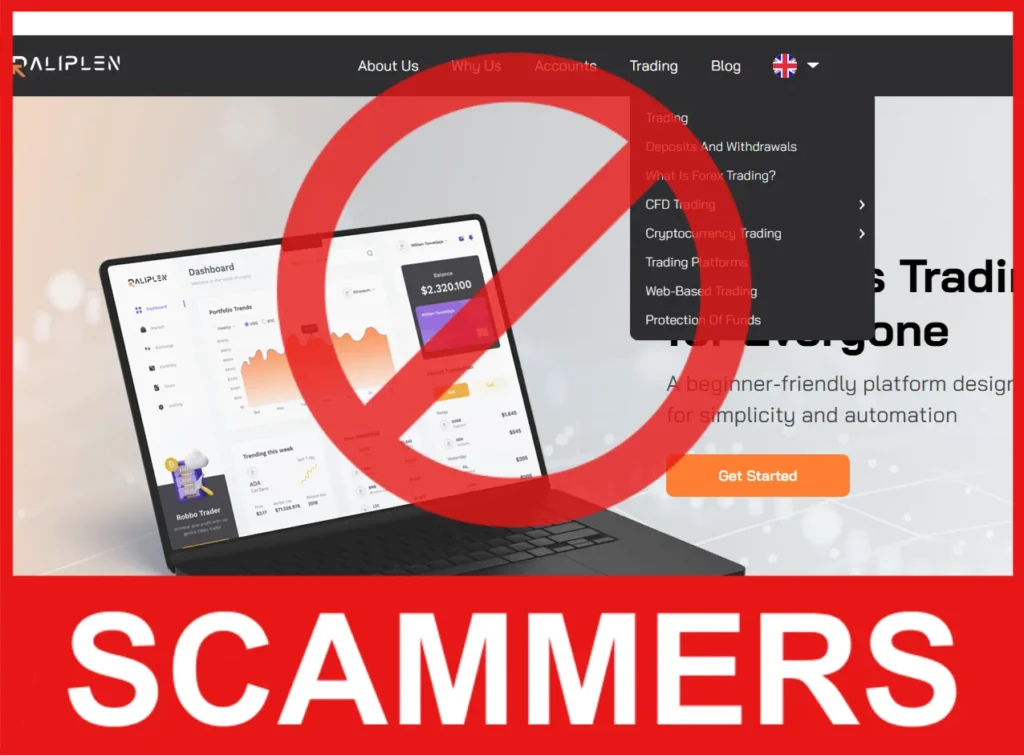
Information About the Fraudulent Broker
Raliplen presents itself as an online trading broker where users can trade forex, cryptocurrencies, indices, and other financial instruments. The website is styled in a way that looks professional at first glance. There are claims of advanced trading tools, personal account managers, and fast execution. The narrative is familiar because it mirrors how many legitimate brokers market their services. However, when you examine the real substance beneath the surface, very little trustworthy information is available. There are no transparent records of company registration, no verifiable history, and no evidence of legitimate operations stretching back in time. The site itself was created recently, and its footprint on the internet is almost entirely driven by its own promotional content rather than independent coverage or financial press. This means that the broker exists primarily as a digital presence with no solid backing or reputation outside of its own claims. Actual user feedback paints a far darker picture than the promotional language chosen by the broker itself. Former clients report that their interactions with the platform became problematic early on. Initially, they were encouraged to fund accounts and were even shown impressive paper profits in their dashboards. But those profits did not reflect real trading outcomes, and when users tried to withdraw money, the experience changed dramatically. Instead of smooth access to their funds, they encountered resistance, excuses, and in many cases, outright refusal.
Verification of Company Data
One of the most fundamental checks anyone should perform before investing with an online broker is verifying the company’s registration and regulatory status. Legitimate brokers are typically regulated by financial authorities that require disclosures, compliance with financial laws, and transparency in corporate information. This provides at least a baseline of protection for clients, such as segregated client accounts, audited financials, and dispute resolution pathways. In the case of Raliplen, there is no credible evidence of regulation by any recognized financial authority. The broker does not provide verifiable registration numbers, audited financial reports, or traceable headquarters information. The office address listed on the website, if any, cannot be confirmed through official business registries. There is no mention of oversight by major regulators such as the Financial Conduct Authority in the United Kingdom, the Australian Securities and Investments Commission, the Cyprus Securities and Exchange Commission, or equivalent institutions in other jurisdictions. Because of this lack of verifiable data, Raliplen cannot demonstrate that it adheres to financial standards designed to protect investors. Instead, the available information points to an unregulated operation that functions outside the boundaries of established financial supervision. Independent website analysis tools that measure trustworthiness based on domain age, ownership transparency, and reputation indicators give Raliplen a low trust score. This is not a definitive proof of fraud on its own, but it is a strong warning sign when combined with the absence of licensing data and the presence of numerous complaints from dissatisfied users. Without proper regulation, clients do not have access to mechanisms such as investor compensation schemes, regulatory arbitration, or financial oversight that would normally be expected in the event of disputes or insolvency. This makes the company inherently risky, far beyond the usual risks of trading markets.
Exposing the Broker as a Fraudster
When we talk about a broker being a fraudster, we are not making a casual accusation. We are identifying patterns of behavior that match what financial investigators and consumer protection agencies around the world classify as fraudulent conduct. In the case of Raliplen, these patterns appear clearly when we examine how the broker interacts with clients in real scenarios. First, there is the issue of fabricated profitability. Many victims report that their trading accounts show large sums of profit within the platform’s interface. These profits look real on the screen and give users hope that their deposits are growing. However, when those same users attempt to withdraw their profits, they are told that the profits are not eligible for withdrawal until certain conditions are met. Those conditions are often vague, unreasonable, or impossible. This kind of manipulation of account balances is a psychological tactic. It is designed to convince users that they have succeeded and to entice them to invest even more in pursuit of bigger gains. Psychologically, people find it harder to walk away from money that appears to belong to them, even if it is not real. Fraudulent brokers exploit this human tendency. Second, the pressure from the so‑called account managers is excessive and unwelcome. Instead of answering genuine questions or providing transparent guidance, these representatives use aggressive language and high‑pressure sales techniques to push clients toward additional investment. They often act in a way that is inconsistent with legitimate financial advising, where clients are encouraged to understand risks and make informed decisions. With Raliplen, the goal of the account manager is not to educate but to extract more funds. Third, there is the issue of arbitrary account restrictions. When users attempt to withdraw their own money, the platform often imposes sudden requirements such as identity verifications that are never explained clearly, additional fees that were never disclosed upfront, or supposed regulatory conditions that cannot be independently verified. In some cases, accounts are simply frozen without explanation. Collectively, these behaviors are not consistent with ethical or lawful broker practices. They show a pattern of deception, manipulation, and exploitation of investor trust. Reflecting on this behavior, it becomes clear that Raliplen is not operating with the intention of providing legitimate trading opportunities. Instead, it uses the pretense of trading to lure funds from individuals and then places obstacles in the way of accessing those funds.
Fraud Broker’s Deception Scheme
Fraudulent brokers often use a common scheme that has worked for decades, long before the internet made it easier. The basics of that scheme are simple: attract victims with attractive promises, get them to deposit money, create the illusion of profit, and then prevent withdrawal. Raliplen follows this scheme closely, with a modern twist for the online age. The first part of the deception is marketing. Potential victims see ads that promise high returns on investments, low entry requirements, and fast access to financial markets. The tone is inviting and reassuring, suggesting that even those without much experience can make money. These advertisements are designed to lower skepticism and to capture the interest of people who are looking for financial opportunities. Once a potential victim signs up, the second stage begins. This involves direct communication from an assigned account manager or broker representative. These individuals appear knowledgeable and friendly. They reach out via phone calls, messages, or emails, and they build a rapport with the client. This part of the scheme is psychological: create trust, provide reassurance, and position themselves as partners in the victim’s financial success. After trust has been established, the scam enters its most dangerous phase: encouraging deposits. Victims are persuaded to make an initial deposit and then, because the platform shows apparent profits shortly afterward, are encouraged to make additional deposits. The presence of phantom profits creates a sense of urgency and optimism. But these profits are not real. They are numbers on a screen designed to get clients emotionally invested. When the victim eventually requests a withdrawal, the illusion collapses. Suddenly, the broker introduces obstacles that were never disclosed at the time of deposit. These include demands for large “verification” fees, assertions that regulatory requirements must be met first, or complicated and shifting conditions that are nearly impossible to satisfy. At this point, the broker’s primary goal is not to facilitate a withdrawal but to generate more fees or to keep the money within the system. For those who persist in trying to reclaim their funds, the process becomes frustrating and costly. Many victims report months of back‑and‑forth communication that leads nowhere. The final stage of the deception scheme is silence or disappearance. Some fraudulent brokers eventually shut down their websites or migrate to new domains once they have extracted as much money as possible from their captive victims. This leaves victims without a way to communicate or to access any form of support.
How to Get Money Back from a Scam Broker
If you have already invested funds with Raliplen and are struggling to withdraw money or have been blocked from accessing your account, it is understandable to feel frustrated and powerless. But it is important to know that there are structured ways to pursue recovery, especially with professional support. The first step in any recovery process is documentation. Gather all records of your interactions with the broker, including emails, messages, transaction receipts, screenshots of account balances, and any correspondence with account managers. These documents form the foundation of your case. Even if the broker’s communication is evasive or incomplete, the records you have serve as evidence. Once you have documentation, the next step is to seek professional review. Firms that specialize in broker fraud recovery have experience in analyzing these cases, understanding the legal implications, and determining the best approach. They can help you understand where jurisdictional issues may arise and what legal avenues might be available based on the nature of your deposits and the location of the financial institutions involved. Professionals can also help initiate processes such as chargeback requests through your bank or credit card provider if the deposits were made through those methods. Chargebacks are not guaranteed, but they are often successful if there is evidence that the company misrepresented its services or engaged in fraudulent activity. In cases where cryptocurrency was used, recovery is more complex but not impossible. Recovery specialists know how to trace blockchain transactions and to work with forensic analysts to establish where funds were moved after leaving your wallet. If the funds are traced to identifiable exchanges or wallets, it may be possible to pursue action there. In many situations, having a structured legal approach makes a significant difference. Self‑representation or informal attempts to negotiate with the broker rarely succeed because fraudulent brokers have little incentive to cooperate. Professional recovery teams, however, can communicate in ways that make it clear legal measures are being considered, which often motivates intermediaries or payment processors to act. It is important to be cautious about any service that promises guaranteed refunds without risk. There are too many scam recovery companies that exploit victims a second time. Reputable recovery professionals are transparent about the chances of success, the processes involved, and the costs. They focus on realistic outcomes and build plans that align with your specific situation. The key takeaway is that you are not alone. Many victims have successfully recovered funds with expert help, and you can too. The sooner you begin the recovery process, the more options you have available.
Negative Reviews About the Broker
One of the strongest pieces of evidence pointing to Raliplen’s fraudulent nature comes from the experiences shared by people who were directly affected. Across multiple independent review platforms, almost all reviews of Raliplen are negative, and the themes are consistent. Many reviewers describe how they initially believed the broker’s promises, deposited funds, and then saw their account balances increase on the platform interface. At first, this felt encouraging, and some even shared screenshots of supposed profits. But when they tried to withdraw their money, the situation changed dramatically. Requests for withdrawal were met with new conditions that were never disclosed earlier. Reviewers speak of demands for extra fees, unexpected verification requirements that go nowhere, and long delays with no clear explanation. Another common complaint is about the behavior of account managers. Instead of providing support, these representatives repeatedly pressured clients to add more funds. Some reviewers reported receiving multiple calls and messages every day, urging them to deposit more money before they could access their supposed profits. This aggressive sales behavior led some people to lose far more than they originally intended. Many reviews also mention the frustration of trying to contact customer support. After being ghosted by their account manager or being told repeatedly that withdrawals were being processed, users eventually received no responses at all. Some victims tried to escalate complaints within the platform, only to be ignored or given conflicting information. Emotionally, the reviews are filled with regret, anger, and feelings of betrayal. People talk about losing savings meant for important life goals like education, home purchases, or retirement. The harm goes beyond financial loss; it affects people’s wellbeing, confidence, and trust in online financial services. One of the rare recurring notes in these negative reviews is praise for professional recovery assistance. Victims who sought help from experienced recovery specialists often report that they were able to reclaim at least part of their deposits. This reinforces the idea that the problem is not a simple customer service issue but a deep, systemic fraud that requires expert intervention to address.

Additional insights not covered elsewhere
When examining the nature of online broker fraud, it is important to understand that Raliplen is not an isolated phenomenon. It is part of a broader pattern of scam entities that exploit the lack of strict regulation in certain parts of the online financial space. Over the years, many individuals looking to grow their savings or start investing have been targeted by similar operations under different names. These operations often share the same tactics: attractive marketing, opaque company information, aggressive sales agents, and withdrawal blocks. Because of this pattern, regulatory agencies and consumer protection groups have repeatedly warned investors to conduct deep due diligence before engaging with any trading platform that is not transparently regulated by a known authority. Legitimate brokers welcome scrutiny. They provide clear licensing information, verifiable contact details, and audited financials. They do not pressure clients into additional deposits or block access to funds without transparent contractual reasons. Fraudulent brokers, on the other hand, rely on momentum. They count on the fact that many people only realize something is wrong when it is already too late. They also know that most victims will not pursue legal action because of the complexity of international financial law, the lack of local regulatory coverage, and the emotional toll of the experience. This is why specialized review and recovery services are crucial. They not only help individuals pursue refunds but also educate the public about scam tactics and provide resources to reduce future harm. The more information that circulates about operations like Raliplen, the harder it becomes for similar fraudsters to recruit new victims. Another insight is that friends and family often act as early warning systems. In many cases, those targeted by fake brokers have someone in their life who is skeptical. When this caution is voiced early, it can prevent damage. The problem is that many victims feel confident in their ability to evaluate financial services, and that confidence is precisely what fraudulent brokers exploit. They use industry jargon, professional‑looking interfaces, and selective transparency to create the illusion of legitimacy, preying on the natural optimism and desire for financial betterment. Understanding this psychological aspect is important. It reminds us that investing always carries risk, and the first rule of any financial decision should be: verify before trusting.
Conclusion
After thoroughly reviewing Raliplen’s operations, the experiences of victims, and the overall lack of transparency, it becomes unmistakably clear that this broker is a fraudulent entity. The combination of unverified claims, fabricated account profits, aggressive pressure to deposit more money, sudden withdrawal obstacles, and an absence of regulatory oversight is not a coincidence. These are hallmarks of a deliberate scheme to extract funds from unsuspecting investors. Unlike legitimate brokers, Raliplen does not operate with transparency or accountability. Every positive claim on their website—about market access, trading tools, and profitability—is undermined by the systematic difficulties clients face when they attempt to access their funds. The consequences for victims are severe. Many have lost not only the money they invested but also emotional stability and confidence in online financial services. Savings earmarked for education, housing, or retirement have been wiped out, often leaving people in a vulnerable financial position. The damage is not limited to the immediate financial loss; it also affects decision-making and trust. After experiencing such scams, many victims hesitate to engage with even legitimate investment opportunities, which can have long-term effects on financial growth and security. From a practical perspective, the risk of engaging with an unregulated broker like Raliplen cannot be overstated. Without proper licensing, there is no guarantee of fund protection, no access to dispute resolution mechanisms, and no recourse in the event of fraud. This means that the money you deposit is effectively at the mercy of the broker, with little to no legal protection. The platform’s behavior—manipulating balances, blocking withdrawals, inventing fees—serves to trap funds and maximize losses, which is consistent with professional-grade fraudulent schemes observed worldwide.








Raliplen caused me financial problems after I realized that I could not get my funds back. I am currently searching for a solution and want to learn more about money recovery options. I have saved my transaction records and communication history. If there are people who went through the same situation, please share your experience because it may help others understand what to do.
Contact us by submitting a request, and we will provide the necessary support.
I found this page while searching for information about Raliplen. Unfortunately, I also had issues with this company and lost money. I want to know whether there are legal ways to request a refund or recover funds from this type of scam. I am interested in hearing from other victims and learning what information is needed to review a case.
Leave your contact details, and we will get in touch with you for a free consultation.