




Online trading has opened the door to global markets for millions of people. With a few clicks, anyone can invest in currencies, cryptocurrencies, commodities, or stocks. Unfortunately, this accessibility has also created fertile ground for fraud. Behind polished websites and persuasive sales pitches, some so-called brokers operate with one simple goal: to separate investors from their money. Wattumtrade is one of those platforms that raises serious concerns. On the surface, it presents itself as a modern trading company offering attractive returns and professional support. However, when we look closer, the picture changes dramatically. Regulatory warnings, missing company information, suspicious practices, and complaints from affected users all point in the same direction. This article takes a detailed look at Wattumtrade: who they claim to be, what can actually be verified, how their scheme works, what victims report, and most importantly, how people who have suffered losses can pursue recovery with the assistance of professionals such as DNB Forex Review. The goal is not to create panic, but to provide clarity. The more informed investors are, the harder it becomes for fraudulent brokers to succeed.
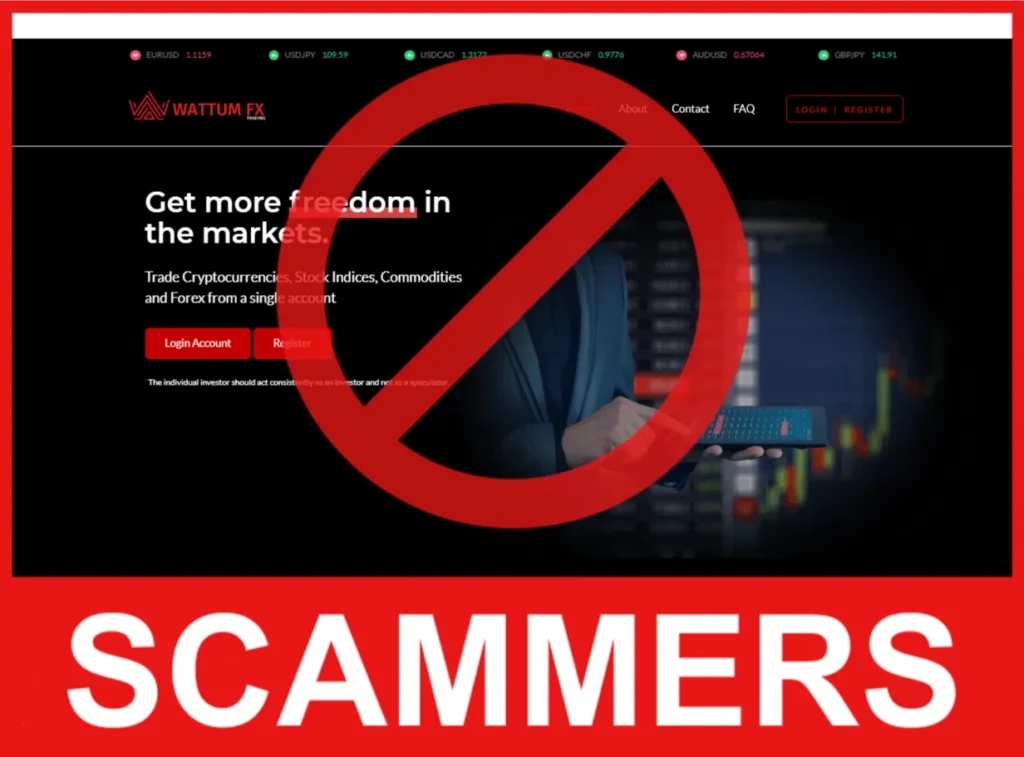
Information About the Fraudulent Broker
Wattumtrade positions itself as an international trading platform offering access to forex and digital asset markets. The website design appears professional at first glance. There are references to advanced trading tools, experienced analysts, secure transactions, and strong profitability. Promises of stable income and financial growth are placed front and center. However, once you move beyond the marketing language, concrete details are surprisingly thin. Legitimate brokers usually provide clear information about their regulatory status, company registration number, physical office location, leadership team, and risk disclosures. With Wattumtrade, this transparency is either missing or difficult to verify. The platform emphasizes profitability but provides little explanation about actual trading conditions. There is no detailed breakdown of spreads, commissions, liquidity providers, or execution policies. Instead, the focus remains on earnings potential and account upgrades. This imbalance is important. Real brokers talk openly about risk. Fraudulent platforms talk almost exclusively about profit. Another common characteristic is the aggressive tone used to encourage deposits. Investors are often presented with limited-time opportunities or special bonuses that supposedly increase returns. These tactics are designed to create urgency. When emotion overrides caution, critical thinking fades. That is exactly what fraudulent brokers rely on. In addition, there is no verifiable track record of the company’s history. Reliable brokers typically have years of operational data, public documentation, and visible presence in industry directories. With Wattumtrade, the digital footprint appears shallow. This lack of history is not proof on its own, but in combination with other warning signs, it becomes significant.
Verification of Company Data
One of the most effective ways to assess a broker is to verify its regulatory status. Financial regulators exist to protect investors and maintain fair market practices. A properly licensed broker must comply with strict rules regarding client fund segregation, reporting standards, and dispute resolution. In the case of Wattumtrade, there is no evidence of valid authorization from any major financial authority. Even more concerning, the respected Financial Conduct Authority in the United Kingdom has issued a public warning regarding this entity. When a regulator of this caliber flags a company, it means the firm is either operating without permission or falsely claiming legitimacy. Regulatory warnings are not issued lightly. They follow internal checks confirming that a company is providing financial services without proper authorization. For investors, this has serious implications. If a broker is unregulated, there is no official compensation scheme, no supervisory oversight, and often no clear legal jurisdiction for resolving disputes. Beyond licensing, corporate registration details are also unclear. Transparent companies provide registration numbers that can be cross-checked with official government databases. In the case of Wattumtrade, attempts to verify such information do not produce solid confirmation of a functioning, accountable entity. Another important aspect is the absence of identifiable executives. Legitimate financial firms usually disclose their management team, directors, and compliance officers. Investors can research these individuals and assess their professional backgrounds. When leadership remains anonymous, accountability disappears. If something goes wrong, there is no identifiable person to hold responsible. All these elements together form a pattern. A broker that lacks regulation, verifiable corporate records, and transparent leadership should be approached with extreme caution.
Exposing the Broker as a Fraudster
Fraudulent brokers often follow a recognizable pattern. While details may differ, the underlying structure remains similar. Wattumtrade displays several characteristics that align with known investment scam models. First, there is the issue of unrealistic expectations. Consistent, high returns with minimal risk are repeatedly implied. In legitimate trading, profits are never guaranteed. Markets fluctuate. Even experienced traders experience losses. Any platform that downplays risk while highlighting stable gains is creating a distorted picture. Second, withdrawal difficulties are a common complaint in cases involving similar platforms. Victims frequently report that while deposits are processed instantly, withdrawal requests become complicated. Additional charges, unexpected verification requirements, or unexplained delays suddenly appear. This tactic is designed to extract more money while postponing the inevitable refusal. Third, communication methods often shift once significant funds are deposited. At the beginning, representatives are attentive and persuasive. After larger amounts are invested, responses slow down or become generic. In more severe cases, communication stops altogether. Fourth, bonus structures may be used to restrict withdrawals. Clients are told that they must meet certain trading volume requirements before accessing their own funds. These terms are often buried in fine print or introduced after deposits have been made. These behaviors are not minor customer service issues. They are structural red flags associated with fraudulent operations.
Fraud Broker’s Deception Scheme
The operational pattern of suspicious brokers usually unfolds gradually. It begins with attraction. Advertising campaigns, social media promotions, or direct outreach introduce the platform as a profitable opportunity. The tone is friendly and supportive. Next comes the first deposit. The minimum entry amount is often relatively modest, lowering psychological barriers. After this initial step, the client may see simulated profits reflected in their account dashboard. These numbers are designed to build trust and excitement. Encouraged by apparent success, investors are persuaded to deposit larger sums. Account managers may suggest upgrading to a premium tier for better returns. At this stage, emotional investment becomes strong. The client begins to imagine financial independence. The turning point arrives when a withdrawal is requested. Suddenly, complications arise. Taxes, service charges, liquidity fees, or compliance payments are demanded. Each payment is presented as the final requirement before funds are released. In reality, the goal is to extract as much as possible before the client stops cooperating. Eventually, communication may cease or the website may become inaccessible. By the time victims realize what has happened, the operators have often moved on to a new domain under a different name.
How to Get Money Back from a Scam Broker
If you have lost money to Wattumtrade, it is important to act quickly and gather all evidence, including transaction records, messages, and account details. Working with a professional recovery service like DNB Forex Review can make a real difference. They can trace where your funds went, communicate with banks or payment providers, and guide you through the legal and procedural steps needed to recover your money. The sooner you take action and involve experienced specialists, the higher your chances of successfully getting your funds back.
Negative Reviews About the Broker
Although some fraudulent platforms attempt to suppress criticism, patterns of dissatisfaction inevitably emerge. In cases connected to brokers like Wattumtrade, victims commonly describe similar experiences. Many report that initial interactions were smooth and professional. Representatives appeared knowledgeable and supportive. However, once larger sums were involved, the tone changed. Withdrawal requests were delayed repeatedly. New conditions were introduced without prior disclosure. Some individuals describe being pressured to deposit additional funds under the pretext of unlocking profits. Others recount that after refusing to pay extra fees, their accounts were frozen. Attempts to contact support were met with silence or automated responses. There are also reports of personal data being misused or shared, leading to additional unsolicited investment offers from other questionable entities. This pattern suggests the possibility of networks of interconnected operations. While each individual story differs in detail, the emotional outcome is often the same: confusion, frustration, and financial loss. These accounts reinforce the importance of verifying a broker thoroughly before transferring funds.

Beyond the Case – Psychological Manipulation in Investment Scams
One aspect that deserves special attention is the psychological strategy behind such schemes. Fraudulent brokers do not rely solely on technical deception. They exploit human emotions. Greed, hope, urgency, and fear are powerful motivators. By presenting time-sensitive opportunities, scammers create pressure. By showing early profits, they generate trust. By suggesting exclusivity, they appeal to ego. By threatening account suspension, they induce fear. Understanding these mechanisms is crucial. When investors recognize that manipulation is part of the design, they are less likely to fall into similar traps in the future. Financial literacy is not only about numbers and charts. It is also about emotional awareness. Education and open discussion reduce stigma. Victims often hesitate to speak out due to embarrassment. In reality, fraud is engineered to deceive intelligent and cautious people. Silence only benefits the perpetrators.
Conclusion
When you step back and look at the full picture, the situation becomes clear. Wattumtrade demonstrates multiple warning signs associated with fraudulent broker activity: lack of verified regulation, official warnings from financial authorities, unclear corporate identity, unrealistic profit promises, and patterns of withdrawal obstruction. Each of these factors on its own would already justify caution. Together, they form a highly concerning pattern. But here is the most important part: discovering that you were misled is not the end of the story. For many victims, the hardest moment is not the financial loss itself — it is the realization that they trusted the wrong company. There is frustration, anger, and often embarrassment. People ask themselves how they did not see the red flags earlier. This emotional burden can paralyze action. And that is exactly what fraudulent brokers rely on. They expect victims to give up, stay silent, and move on. Professional assistance changes that dynamic completely. When specialists step in, the situation becomes structured instead of chaotic. Instead of scattered emails and unanswered support tickets, there is a clear plan. Instead of emotional reactions, there is strategic analysis. Organizations such as DNB Forex Review work specifically with cases involving broker misconduct and online investment fraud. Their experience allows them to recognize patterns immediately and determine the most effective course of action. One of the most valuable aspects of professional involvement is transaction analysis. Many victims believe that once funds are sent — especially in cryptocurrency — they are gone forever. In reality, financial movements leave digital footprints. Blockchain transfers can be traced. Bank transactions can be reviewed. Payment intermediaries can be identified. While recovery is never automatic, understanding the route of the funds is the foundation of any serious attempt to reclaim them. Another critical factor is communication with financial institutions. Banks, payment processors, and exchanges respond very differently when contacted by an experienced recovery team rather than an individual client. Properly prepared documentation, structured claims, and knowledge of compliance procedures significantly increase the chances of escalation and review. Timing also matters. The earlier professionals intervene, the stronger the position. Legal positioning is equally important. Cross-border fraud cases often involve multiple jurisdictions. An individual investor may not know where to file complaints or which authorities have relevance. Professionals understand how to navigate regulatory bodies, financial oversight institutions, and law enforcement channels. They know how to present evidence in a way that aligns with formal requirements. There is also a psychological advantage. Victims who work with specialists regain a sense of control. Instead of feeling powerless against anonymous operators, they become active participants in a recovery strategy. This shift in mindset is powerful. It transforms the situation from helplessness into action. It is equally important to understand what professional assistance is not. It is not magic, and it does not guarantee instant refunds. Ethical recovery specialists provide realistic assessments, not false promises. They evaluate each case individually and explain possible outcomes transparently. That honesty is a major difference between legitimate recovery firms and secondary scams that target victims again. Unfortunately, secondary fraud is common. After losing money to one broker, victims may be contacted by other entities claiming they can recover funds instantly for an upfront fee. This is why choosing a reputable firm with a clear track record matters. Due diligence should apply not only to brokers, but also to recovery services. Time is a decisive factor. Financial trails grow colder as months pass. Websites disappear. Domains change. Contact details become invalid. Acting quickly improves the likelihood of tracing funds and initiating formal procedures. Delays benefit the perpetrators. Beyond financial recovery, professional action serves a broader purpose. Each documented case contributes to a larger body of evidence against fraudulent networks. Complaints, regulatory reports, and coordinated action make it harder for such operators to continue under new names. Speaking up protects not only the individual victim but also future potential investors. The central message is this: being scammed does not define you. Fraud schemes are engineered to manipulate trust, urgency, and hope. Intelligent and cautious people fall victim every day. What matters most is what happens next.






I had problems withdrawing my funds from Wattumtrade. At first everything looked normal, but later I noticed many issues with communication. I am looking for advice on how to report this case and what steps can help with recovering the lost money.
Our specialists will help assess the situation and propose possible solutions. Submit a request.