




Online trading and investing attract people around the world with the promise of financial growth. When markets are volatile and technology allows anyone to open an account in minutes, many see an opportunity to improve their financial situation. Unfortunately, this environment also enables deceptive actors to appear legitimate and mislead traders and investors. One such operation is Exchange Capital Trade, a broker‑brand offering supposed access to currency markets and other trading products. From its marketing and website presentation, Exchange Capital Trade resembles a professional brokerage. It uses familiar financial language and emphasizes gains and access to global markets. However, closer inspection reveals serious concerns about both the legitimacy of the company and the safety of funds entrusted to it. In recent months, financial authorities have publicly identified this broker as potentially harmful, calling into question its claims and prompting warnings for individuals to steer clear. This review explores what Exchange Capital Trade represents, what is known about its regulatory status, the red flags that suggest it may be a scam, typical ways such operations deceive traders, reports from individuals affected by similar brokers, and how people can try to recover funds with professional help. The goal is to offer readers clear insight into this broker and the broader risks of unregulated trading platforms.
Information About the Fraudulent Broker
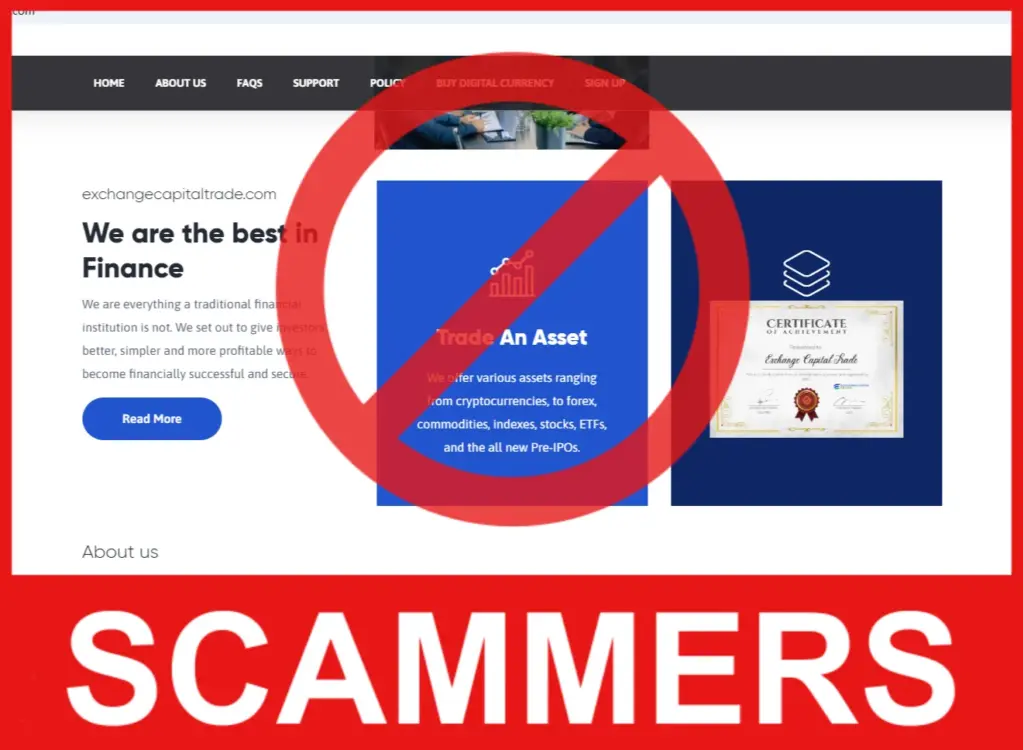
Exchange Capital Trade presents itself as a provider of online brokerage services, offering trading in foreign exchange and potentially other financial instruments. The broker operates through a website that appears professionally designed, with claims about trading technology, account types, and investment opportunities. This presentation aims to build trust and attract clients looking for active trading or passive investment returns. Despite this appearance, there are significant issues when it comes to factual background and transparency. One of the most important pieces of information about Exchange Capital Trade is that a major regulatory authority in the United Kingdom has issued an official warning about this company. The UK authority stated clearly that Exchange Capital Trade is not authorised to provide financial services in its jurisdiction. This means the broker does not have the legal permission to offer investment or trading services to individuals in that market, and regulatory protections that normally apply to clients of authorised firms do not exist for this service. As a result, people using the platform would not have access to formal dispute resolution or compensation schemes if problems arise. Beyond regulation, investigative tools that assess website safety have identified significant risk indicators for exchangecapitaltrade.com. The domain was registered recently, indicating a very short track record. Websites established by legitimate global brokers typically have years of operational history. The analysis also finds that the domain has been associated with other suspicious sites hosted on the same server and that the registration details are hidden. This lack of transparency is a known tactic used by fraudulent operators to make it difficult to trace ownership and accountability. Taken together, the available evidence suggests that Exchange Capital Trade is not what it claims to be. Although it may appear like a standard brokerage on the surface, the absence of regulatory clearance, the short domain age, and risky indicators raise strong doubts about the authenticity and safety of the service.
Verification of Company Data
Verifying a broker’s credentials should always be the first step for anyone considering an investment. Legitimate financial firms are registered with reputable regulators, publish clear documentation about their registration and legal status, and disclose the people and entities behind the service. In the case of Exchange Capital Trade, this kind of verification raises immediate concerns. The UK financial regulator has confirmed that Exchange Capital Trade is not an authorised firm. In practical terms, this means that the company has not passed the rigorous review process that regulated brokers must complete. Regulatory permission involves checks on capital adequacy, security of client funds, internal controls, and ongoing compliance with financial laws. Without this authorisation, there is no official oversight of the broker’s activities, no reporting to regulators, and no standard of conduct that must be followed. In addition to the lack of authorization, basic corporate information about the company is elusive. There is no clear evidence of legal registration in any well‑known financial jurisdiction. The website does not provide verifiable office addresses, registration numbers, or disclosures about its owners or management team. This absence of corporate transparency is a significant red flag. Legitimate financial service providers generally go to lengths to reassure clients by publishing audited financials, regulatory identifiers, and contact information with verifiable addresses. The technical profile of the website also undermines credibility. The domain was registered only recently, it uses a registrar with a known high proportion of suspicious sites, and there are indications that the same server hosts other risky websites. These factors do not prove fraud on their own, but they align with many documented cases where fraudulent brokers set up new domains, used shared hosting to reduce costs, and obscured ownership to avoid accountability. Without verifiable data confirming that Exchange Capital Trade is licensed, regulated, and transparent, it is not reasonable to consider this broker safe or trustworthy. Instead, the available information points strongly toward an unregulated and high‑risk service that should be treated with caution.
Exposing the Broker as a Fraudster
There are common patterns that distinguish legitimate brokers from fraudulent operators, and Exchange Capital Trade exhibits several of these warning signs. First and foremost, there is the issue of regulation. A genuine broker will be licensed by at least one reputable financial regulator and will make that licensing information easy to verify. In contrast, Exchange Capital Trade has no known licenses and has been publicly named by a major regulator as an unauthorised firm. Without regulation, clients have no legal recourse if funds are mishandled, and the broker is not accountable to any legal or financial oversight body. Another key indicator of fraud is the lack of transparency about the company itself. Exchange Capital Trade does not reveal its ownership, leadership, or registration history. This means investors cannot confirm who is behind the platform or whether the people managing it have any legitimate financial expertise. A lack of corporate identity is deliberate; fraudulent operators hide behind anonymity to avoid being traced when problems occur. Fraudulent brokers also tend to use overly attractive claims to lure clients. While specifics about promises made by Exchange Capital Trade may vary, most scam brokers advertise high returns, sophisticated trading tools, or exclusive opportunities without providing balanced information about risk. Real trading always carries risk, and legitimate brokers are required to present risk disclosures clearly. Further, the use of high‑risk indicators found in independent website risk evaluations suggests that Exchange Capital Trade fits the behavior of high‑yield investment programs that are often associated with fraud. Such sites are frequently hosted alongside other questionable services and lack the infrastructure expected of a professional financial institution. New traders might be impressed by the design or marketing language, but the underlying structure and history reveal a lack of real financial credibility. Taken together, these elements reveal a pattern that is consistent with fraudulent broker operations. This is not a case of a poorly performing broker; it is a business model that appears designed to attract funds and operate without the obligations and protections that legitimate financial firms must observe.
The Fraud Broker’s Deception Scheme
Scam brokers typically operate in a way that initially appears normal or even attractive to prospective clients. They create a professional‑looking website with familiar financial terms and trading interfaces that mimic legitimate broker platforms. They may offer tools, account tiers, and promotional materials that are designed to convince visitors that they are dealing with a credible financial service. After initial contact, such brokers often reach out to potential clients directly, using persuasive communication to encourage opening an account and making the first deposit. This outreach can include emails, messages, or calls that seem friendly and informed. Once a client makes an initial deposit, the platform may display an account balance that grows, giving the illusion of profitable trading. This is a psychological tactic that aims to build trust and persuade clients to invest more money. The turning point comes when the client tries to withdraw funds. At this stage, fraudulent brokers introduce obstacles. Requests for withdrawal may be deflected with excuses about verification, fees, taxes, or minimum balance requirements. Clients often find that their support contacts disappear, or suddenly become unresponsive. These tactics are designed to trap funds within the broker’s control and delay or prevent withdrawal. Over time, clients may find that they have lost access to their accounts entirely. Compounding the deception is the fact that the broker has no obligation to hold client funds in segregated accounts or to protect them in case of financial distress. In regulated environments, client funds are kept separate and safeguarded, but unregulated brokers have no such requirements. This means clients’ money can be mingled with other operational funds or simply used without oversight. While detailed customer complaints about Exchange Capital Trade specifically are limited in searchable records, the patterns observed in other unregulated broker scams strongly suggest that the same deceptive methods could be employed here. Unregulated brokers tend to operate in a similar fashion across brands: they look legitimate at first, encourage deposits, then make it extremely difficult or impossible to recover funds once invested.
How to Get Money Back from a Scam Broker
If someone has realised that they have deposited funds into a fraudulent broker such as Exchange Capital Trade, the recovery process can be challenging, but it is not necessarily hopeless. The first priority is to document all interactions, deposits, communications, and account information. These records form the basis for any attempt to recover funds and are essential for banks, payment processors, legal teams, or authorities reviewing the case. One of the most effective tools available to individuals in this situation is participation in a chargeback or reversal request with the bank or card issuer used to make the deposit. Financial institutions can sometimes reverse transactions if it can be demonstrated that the transfer was made under false pretences or was part of a scam. However, navigating this process alone can be intimidating and complex. Banks require precise documentation and may have strict deadlines for submitting claims. This is where experienced legal and recovery specialists can be crucial. Professionals who focus on recovering funds from fraudulent brokers understand the nuances of financial disputes and chargeback claims. They know how to present evidence to banks, how to argue for reversal of unauthorised or deceptive transactions, and how to coordinate with regulatory bodies when possible. They assist in organising documentation, following local financial laws, and advocating on behalf of clients. It is also important to report the scam to relevant financial regulators and consumer protection agencies. While these organisations cannot directly return funds, their records help build a broader understanding of the fraudulent activity and can influence regulatory actions. Reporting can also help prevent others from falling victim to the same scheme. The road to recovery may vary depending on how the funds were transferred, the jurisdictions involved, and the responsiveness of financial institutions. However, individuals who engage experienced professionals early in the process generally have a stronger chance of recovering at least a portion of their lost funds than those who attempt the process alone.
Negative Reviews About the Broker
Specific, searchable complaints about Exchange Capital Trade itself may not yet be widespread on independent review platforms, but the analysis of this broker’s presence already raises serious concerns. The lack of trust in the domain and the warning from a financial regulator serve as indirect negative feedback. When regulators explicitly warn that a firm is not authorised to provide financial services, this alone is a major negative indicator that clients should not trust the company. In the broader world of unregulated or fraudulent brokers, negative reviews often share common themes. Traders report problems withdrawing funds, unresponsive or deceptive customer service, and unexpected charges or fees that are only disclosed after funds are transferred. In some complaints about similar broker scams, individuals describe having made deposits, seeing simulated profits in their accounts, and later being unable to withdraw any of the money. In the worst cases, contact with the broker ceases completely after the account is funded. These kinds of reviews underscore a consistent pattern of behaviour among fraudulent brokers. Clients may initially feel encouraged by responsive communication, only to be met with silence or obstruction when it comes time to access their money. Unfortunately, many victims decide not to share their experiences publicly, either out of embarrassment or a belief that nothing can be done. This means that the lack of visible negative reviews does not necessarily imply that the broker is legitimate, especially when there are other strong warnings from regulators and independent evaluators. Taken together, the absence of positive independent reviews and the presence of authoritative warnings and risk signals form a negative reputation that potential traders should take seriously.

The Importance of Checking Every Broker Before Investing
Before trusting any online broker, especially one that offers access to complex financial markets, it is essential to conduct rigorous due diligence. This means more than just reading the marketing material on the company’s own website. Instead, potential investors should verify licensing information with official financial regulators, check the age of the domain and company history, and search for independent reviews or complaints from other users. A common mistake people make is assuming that a professional‑looking website or persuasive sales language equates to legitimacy. Many fraudulent brokers invest significant resources into creating polished websites, promotional videos, and marketing campaigns to build trust quickly. They may even mimic the branding of legitimate financial institutions to create a sense of familiarity. Without verification through independent sources, trusting this appearance can lead to financial loss. Checking with regulators is an especially important step. Reputable authorities provide searchable lists of authorised firms, and any legitimate broker should be found in at least one of these lists. If a company is not present, or if the regulator issues a warning, this is a strong sign that the broker should be avoided. Another useful practice is looking into the experiences of others. Independent trading forums, complaint boards, and general finance community discussions often reveal issues that do not appear on the broker’s own site. People who have attempted to withdraw funds, contact support, or verify documentation may share useful warnings that help others identify risks early. Finally, individuals should be cautious of brokers that offer unrealistic promises of guaranteed profits, minimal risk, or unusually high returns. Legitimate financial markets are inherently uncertain, and credible brokers acknowledge the possibility of losses as well as gains. By being thorough in these checks, traders protect not only their funds but also their confidence and peace of mind. Taking time to research before investing can save significant hardship later.
Conclusion
The evidence available about Exchange Capital Trade points strongly toward an unregulated, high‑risk online broker that should not be trusted with client funds. It lacks official licensing, is publicly flagged by a major regulator as unauthorised, has a very short operational history, and exhibits technical and transparency issues that are consistent with fraudulent operation patterns. For anyone considering investing or trading through this broker, these are serious concerns that outweigh any superficial appearance of legitimacy. Unregulated brokers present a real danger because they operate without oversight, transparency, or accountability. When individuals deposit money through such platforms, they lack the legal protections and dispute mechanisms that come with regulated financial services. This makes it far more difficult to recover funds in the event of loss or deception. If you have already transferred funds to Exchange Capital Trade and suspect that you have been misled or defrauded, it is important to take action. Gathering documentation of your deposits and communications is the first step. Seeking assistance from specialists who understand how to navigate recovery procedures — including bank chargebacks and coordination with financial institutions — is crucial for improving your chances of getting money back. These professionals have experience compiling evidence, filing claims, and advocating for clients in ways that are difficult for individuals to manage alone. Reporting the situation to financial authorities and consumer protection bodies adds another layer of response, helping to ensure that regulators are aware of the problem and can take any appropriate action. Even if immediate recovery is not guaranteed, contributing to the public record of complaints helps protect others. In summary, the available information paints a clear picture: Exchange Capital Trade is not a safe or trustworthy broker, and those who have been affected should seriously consider engaging expert recovery services to pursue the return of their funds. Understanding the risks and acting early are essential steps in responding to online broker fraud.






I lost money because of Exchange Capital Trade and it was a very stressful situation. I asked for a withdrawal several times but never received my funds. I found specialists who helped me understand my options and explained how the recovery process works. I hope my case can be solved and other victims can also find a way to get their money back.
Our specialists will contact you after you submit a request on the website.