




In the world of online trading, it is easy for someone seeking to grow their savings to feel confusion and uncertainty. When a website appears professional and invites you to trade currencies, commodities, cryptocurrencies, or stock contracts, it may feel like an opportunity. Unfortunately, not all brokers are what they seem. The online entity presenting itself as Core Mart is one such example. Although its website appears polished and inviting, deeper investigation reveals red flags and warnings that ordinary investors should not ignore. Scammers often craft convincing facades to attract unsuspecting traders, and Core Mart fits this pattern. What appears at first to be a legitimate financial service provider may actually be an unauthorized operation with no real oversight, no verified licensing, and no protection for client funds. This review will help you understand who Core Mart claims to be, what evidence exists about its operations, how fraud schemes like this typically work, and why it matters to anyone who has lost money or is considering investing. It is important to speak clearly about this subject so that individuals do not fall victim to another scam story. Many people think that they are savvy or that they will avoid mistakes, yet fraudsters are experienced in psychological tactics and online persuasion. Feelings of trust can be manipulated easily when a website looks appealing and when someone promises fast results. When you combine those factors with a lack of regulation and a history of complaints about similar brokers, the reality becomes clear. The goal of this article is not only to describe Core Mart but also to arm you with knowledge, show you the truth behind the rhetoric, and help you understand the steps to take if you have already lost money. The next sections explore all of these aspects in detail.
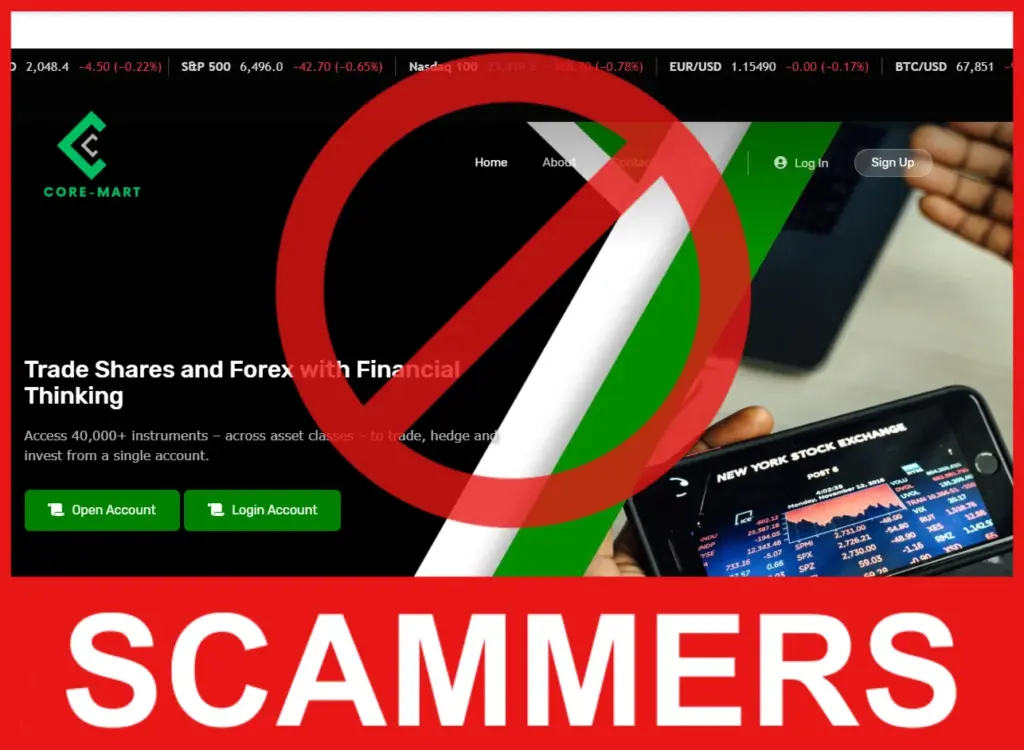
Information About the Fraudulent Broker
When you first land on the Core Mart website, you may see polished graphics, interactive account dashboards, and language that sounds professional. This is exactly how many fake brokers start. They make their site look sleek, modern, and trustworthy in order to attract deposits from visitors. What this website does not show, however, are the crucial details that legitimate brokers always make public: verifiable regulatory approvals, independent audit reports, and transparent corporate histories. Official warnings from financial regulators reveal that Core Mart is not authorized to provide financial or investment services. In the United Kingdom, the regulator that oversees financial firms has flagged the domain used by Core Mart as an unauthorized entity. This means that the company is operating without permission and without oversight. Authorized brokers are subject to strict capital requirements, must protect client funds in segregated accounts, and must comply with reporting and transparency standards. An unauthorized firm has none of these obligations. When a regulator issues a warning against a firm, it does not do so lightly. Such warnings are the result of evaluation and, in many cases, reports of irregular activity affecting real investors. Behind the scenes, numerous brokers with similar names have used fake or misleading claims about licensing in order to lull potential clients into a false sense of security. They might claim to be based in financial hubs like London or claim a physical address where there is no real operational office. They might show contact details that route back to overseas call centers. Without a verified license or a presence in recognized regulator databases, there is no guarantee that Core Mart has any legal basis for trading activities. From a consumer perspective, this is extremely risky because there is no official body supervising its behavior. This is precisely why regulators list Core Mart among entities to avoid.
Verification of Company Data
One of the first steps a potential investor should take before trusting a broker is to verify whether it is officially licensed by recognized financial regulators. Reputable financial firms are required to hold licenses from authorities that enforce rules designed to protect clients. These authorities typically include the Financial Conduct Authority in the United Kingdom, the Australian Securities and Investments Commission in Australia, the Cyprus Securities and Exchange Commission in Europe, or similar bodies in other jurisdictions. Core Mart, however, fails this basic test. The regulator in the United Kingdom has explicitly stated that this firm is not authorized to provide financial services. This means there is no legal standing for it to solicit investments, accept client money, or manage trading accounts. When a company appears on an unauthorized list, it often signals that the regulator has either investigated or has sufficient reason to warn the public that the firm’s claims about licensing and permissions cannot be verified. In practical terms, without a verified license, there is no guarantee that client funds are safeguarded. Investors with legitimate brokers can rely on protections including compensation schemes, dispute resolution services, and accountability mechanisms. Core Mart offers none of these. Another common scam tactic is to use a corporate name or address that looks plausible on the surface but cannot be verified through official records. Many fraudulent brokers use post office box addresses or the names of third parties to create the impression of legitimacy. When investigators check company registers in jurisdictions like the United Kingdom, they find no corresponding records showing a licensed financial operation. This is an important distinction: being incorporated as a business entity in a country does not automatically grant the right to offer investment services. Brokers must secure explicit licenses to handle client funds and provide trading services. There is no evidence that Core Mart has ever done so.
Exposing the Broker as a Fraudster
To understand how Core Mart operates as a fraudulent broker, it helps to unpack the typical behaviors and tactics used by such scam operations. Fraudulent brokers are not accidental operators; they are typically designed to exploit human psychology and trust. They rely on shiny websites and persuasive language to create an appearance of professionalism. Behind the scenes, they use tactics that steer clients toward outcomes where the broker benefits and the investor suffers. One of the clearest signs of fraud in this case is the absence of any legitimate regulatory oversight. Legitimate brokers are transparent about where they are licensed, what regulatory body governs them, and how client funds are protected. In contrast, Core Mart does not present verifiable information of this type. Instead, the broker’s claims about its credentials cannot be confirmed independently, which is a hallmark of scam operations. Fraudsters often invent or exaggerate regulatory claims to lull victims into comfort, hoping they will not dig deeper. Another sign of unfair practice is how these brokers typically handle client onboarding and deposits. Fraudulent brokers often use high‑pressure tactics, offering bonuses or guaranteed returns that seem too good to be true. They may reach out through social media, emails, or online ads to invite individuals into their platform, promising easy profits or special account privileges. Once a client makes an initial deposit, they are frequently encouraged to increase that deposit under various pretexts, such as unlocking higher tier accounts or accessing exclusive services. This pattern of coaxing larger deposits is common in scams and is designed to escalate the amount of money that can be misappropriated. Once money is deposited, fraudsters often display fake account balances to create the illusion that investments are performing well. This false sense of progress is intended to build trust and delay any suspicion. Clients might see growing numbers on their screens and assume everything is legitimate. The reality is that these numbers often have no connection to real market activity. They are simply presented to keep clients engaged and waiting to withdraw larger amounts. Perhaps the most obvious sign of fraud appears when a client requests a withdrawal. At this stage, scam brokers regularly impose unreasonable delays, unexpected fees, or requirements that were never disclosed at the time of deposit. They may claim that additional documentation is required, that technical issues are preventing the transfer, or that new taxes must be paid before funds can be released. This is an intentional tactic to frustrate the client and extract more money. In many cases, communication becomes intermittent or ceases entirely. At this point, it becomes clear that the broker’s primary interest was not facilitating genuine trading, but collecting deposits.
Fraud Broker’s Deception Scheme
Fraudulent brokers use well‑established schemes to deceive clients, and understanding these schemes is critical to identifying and avoiding them. The deception usually begins with attraction. Brokers like Core Mart invest in outward appearances — professional websites, glowing testimonials, and promises of success. They often target individuals through social media advertisements, sponsored content, or unsolicited messages. Their marketing language is designed to sound like legitimate financial opportunity, often downplaying risk and emphasizing gains. After initial contact, prospective clients are carefully guided through account setup. This process typically includes incentives such as welcome bonuses or promises of high percentage returns. These techniques work by appealing to basic human desires for financial improvement and quick growth. As soon as a client makes an initial deposit, the broker achieves its primary objective: obtaining control of investor funds. Once funds are in the system, the illusion of a functioning trading platform is maintained. The broker’s proprietary platform or a white‑label trading interface may display balances and profits that look real. This is deliberate. Clients are less likely to question the operation if they see positive results. Many will assume that the broker is performing well with their money. Some may even feel encouraged to invest larger amounts. The point at which the deception becomes clear usually comes at the time of withdrawal. This is where fraudulent brokers switch from friendly account managers to evasive operators. When a client requests a withdrawal, the broker will begin imposing a series of obstacles. They might demand additional verification, unexpected fees, or documentation that was never mentioned at the time of deposit. Each delay is a tactic to frustrate and confuse the client. Often these requirements are impossible or never result in funds being released. The objective is to buy time and extract additional deposits by convincing the client that staying invested longer will eventually pay off. Another common part of the deception scheme is misused account managers and retention agents. In many scams, once the client is emotionally invested and has deposited funds, they are placed in contact with a more persuasive agent. This person insists that additional deposits are necessary to unlock profits or maintain account status. They employ psychological pressure to keep clients contributing more funds. Every extra deposit increases the scammer’s financial gain and reduces the likelihood that the client will recover their money. Ultimately, if the client persists in trying to withdraw funds, communication may stop altogether. The website may become unreachable, emails unanswered, and phone numbers disconnected. At that stage, the broker has achieved the desired outcome from the perspective of the fraud operation: collection of as much client money as possible, and disappearance before accountability.
How to Get Money Back from a Scam Broker
Falling victim to a fraudulent broker like Core Mart can be devastating. Many people who trusted the platform may have experienced delays, withdrawal denials, or even complete loss of access to their funds. If you find yourself in this situation, it is crucial to know that losing money does not mean the end of the story. There are steps you can take and professionals who specialize in helping victims recover their funds. Specialist services that focus on fund recovery begin by carefully reviewing your case. They gather all available documentation, including emails, transaction records, chat logs, screenshots of account activity, and any correspondence with the broker. This evidence becomes the basis for constructing a clear narrative showing that you were misled by a fraudulent operation. It also helps establish proof of loss and identify the mechanisms through which your funds were taken. Once the case is documented, recovery experts often pursue channels such as bank chargebacks. If your payment to the broker was made by credit card or bank transfer, it may be possible to dispute the transaction with your financial institution. Chargebacks can force card issuers or payment processors to reverse fraudulent transactions, returning funds to your account. Timing is critical, as there are deadlines for filing disputes. Recovery specialists know how to work within those timelines and present strong cases to banks that might otherwise dismiss chargeback attempts. In addition to chargebacks, recovery professionals may assist with formal complaints to regulators and enforcement authorities. Even though Core Mart is not licensed, regulators often collect reports of unregulated activity and can issue warnings, freeze assets, or take action that supports recovery efforts. Specialists can help you navigate these processes, which are often unfamiliar and intimidating for the average investor. Legal action is another avenue. In some jurisdictions, financial fraud is a punishable offense, and lawyers with experience in this field can file civil or criminal complaints on your behalf. These actions put pressure on fraud operators and may lead to settlements or legal judgements that contribute to recovery. Crucially, specialists in fund recovery understand the psychological impact of scams and provide support beyond technical processes. Many victims feel shame, confusion, or fear after losing money, and a professional team can offer guidance without judgement. Their knowledge of scam behavior, financial systems, and legal frameworks increases the likelihood that you will recover at least part of your lost funds.
Negative Reviews About the Broker
Because Core Mart is relatively new to public scrutiny, there are not yet extensive collections of reviews from victims on major platforms. However, the absence of positive reviews and the presence of warnings and complaints in regulatory channels and independent scam lists itself reflects a negative reputation. Where unregulated brokers exist, review ecosystems almost always show consistent themes: people complaining about blocked withdrawals, lack of support response, unexpected fees, and losses that never get reversed. Independent online review portals analyze broker websites and assign trust scores based on domain age, history, visitor traffic, and linkages with known unsafe sites. These tools often flag brokers like Core Mart as low trust or likely unsafe due to the combination of hidden ownership details, recent domain registration, and connections to other questionable sites. A low trust score is not definitive proof of fraud, but it is a strong indicator when accompanied by other red flags. In markets with greater exposure to fraudulent brokers, users often share stories on community sites describing how their first small withdrawals succeeded, giving them confidence, only for withdrawal requests on larger amounts to be refused indefinitely. This is not unique to Core Mart but is consistent with the experience of victims of similar scam brokers. People report having to provide unreasonable documentation to get their own money back, only to be told that various “fees” or “taxes” are required first. This sequence of events is typical in many victims’ accounts and underscores how scam brokers extract as much money as possible before cutting off access.

Additional Important Consideration: Broader Scam Context
One aspect that is often overlooked in discussions about fraudulent brokers is the wider ecosystem that enables and promotes them. Fraudulent brokers typically do not operate in isolation. They are part of a network of marketing affiliates, third‑party promoters, and advertising channels that push their services to a broad audience without adequate vetting. These affiliates may appear as trading signal groups, financial “experts” on social media, or influencers who promote trading opportunities without checking whether the broker they advocate is licensed or trustworthy. This marketing channel amplifies the reach of fraudulent brokers and often introduces them to potential victims who might not have encountered the broker directly. Poorly regulated advertising spaces allow these promotions to run unchecked, giving scammers the illusion of legitimacy. Many investors assume that because a broker’s service was promoted on a well‑known social platform or by someone they follow, it must be safe. This assumption can be dangerous when dealing with unregulated entities. Another element of the broader scam environment is the occurrence of “recovery scams.” These are entities that appear after the fact, contacting victims of one scam and offering to help recover losses for a fee. These recovery schemes often take additional funds from people who are already vulnerable. Distinguishing between legitimate recovery assistance and another scam requires experience, legal knowledge, and careful analysis, which is another reason why professional help matters.
Conclusion
After reviewing all available information, one thing becomes clear: Core Mart is not a legitimate, trustworthy broker. It lacks verifiable regulation, it appears on unauthorized lists maintained by financial authorities, and it displays all of the classic patterns associated with fraudulent online trading operations. This is not a situation where an investor is dealing with a misunderstood broker or a company that made mistakes. The absence of oversight means that clients have no recourse and no protections. If something goes wrong, there is no financial ombudsman, no compensation scheme, and no regulatory body with authority to step in. For anyone who has been affected by this broker’s conduct, or who suspects that their funds are at risk, it is important to recognize that inaction only benefits the fraudster. Brokers like Core Mart are designed to collect deposits and make it as difficult as possible for clients to withdraw their own money. Support lines go silent, withdrawal requests are delayed indefinitely, and excuses multiply when clients press for accountability. These techniques are intentional and part of a wider scam blueprint that predatory brokers have used for years.








I lost a large amount of money with Core Mart and I am searching for assistance. The company convinced me to invest more, but later I found out that withdrawing funds was very difficult. I believe this was a fraudulent scheme. I would like to receive information about possible ways to recover my investment.
Our team will help you recover stolen funds; please submit a request.