




Investing online has never been more popular. People from all walks of life see financial markets as a way to grow savings, save for retirement, or pursue financial independence. The promise of earning money from forex, stocks, cryptocurrencies, or other assets is very real when working with legitimate, regulated firms. But at the same time, this popularity has created fertile ground for fraudsters who pose as investment brokers to steal money from unsuspecting individuals. One of these operations is known as Global Share Investment. At first glance, it looks like a professional trading platform offering access to global markets with modern tools and support. But when you dig deeper, the reality is different. This article explores what we know about Global Share Investment, how it operates, why it is considered a scam, and what victims can do to get their money back through specialized recovery services like those offered by DNB Forex Review. The purpose of this review is not to simply say that something might be risky. It is to lay out clear evidence and patterns that show this broker lacks legitimacy, targets investors deceptively, and uses well‑worn fraud tactics that lead to financial loss and emotional distress for the people who trusted them.
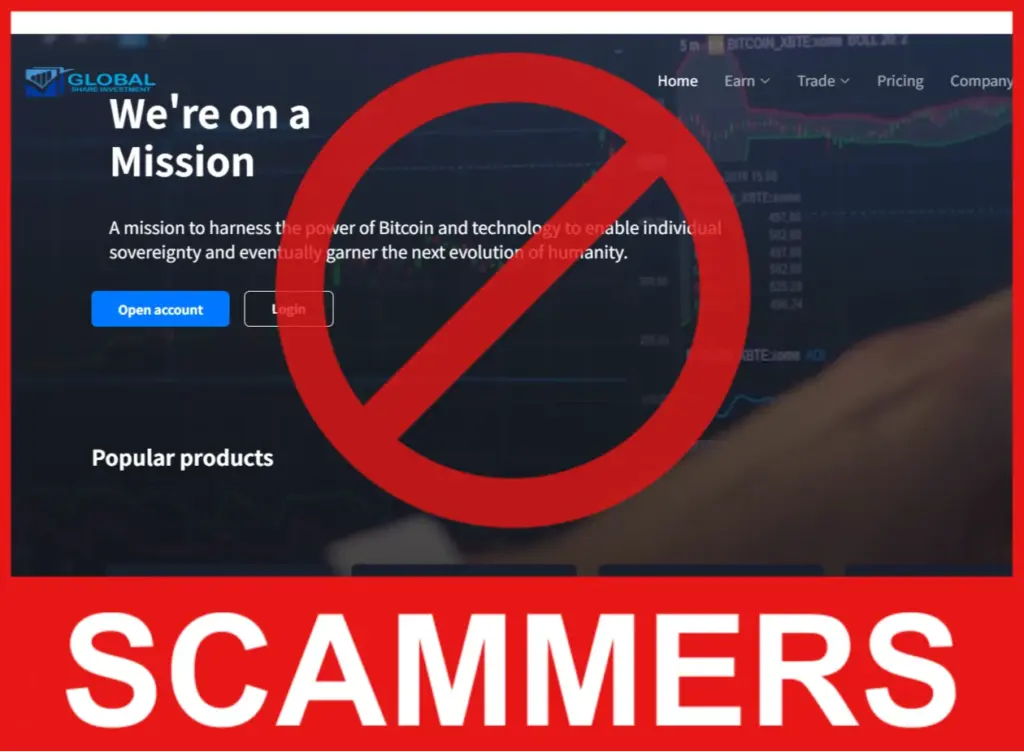
Information About the Fraudulent Broker
Global Share Investment presents itself online as a broker that allows individuals to trade various financial instruments and grow their wealth. The marketing language used on its platforms is designed to build confidence. It talks about access to global financial markets, advanced trading tools, and dedicated account managers who guide users toward success. There might be screenshots of impressive returns, glowing testimonials, and promises of fast profits. But the surface impressions are just that: impressions. Behind them sits a company with no meaningful credentials. The UK financial regulator, the Financial Conduct Authority (FCA), has explicitly warned that Global Share Investment (sometimes operating under the name Global‑shareinvestment Trading Limited) is not authorised to provide financial services or investment products in the UK. This warning means the firm is not legally allowed to solicit clients, hold client funds, or offer regulated investment services under UK law. If you see contact information, addresses, or phone numbers on the broker’s website, be aware that these may be false, changing regularly, or copied from real companies to make the operation appear legitimate. These are classic tactics used by scammers who want to avoid detection while convincing victims that they are dealing with a genuine business. Despite claiming to be a broker or investment firm, there is no public evidence that Global Share Investment is listed with reputable financial authorities anywhere in the world. Legitimate brokers will proudly display licences from regulatory bodies such as the FCA in the UK, CySEC in Cyprus, ASIC in Australia, or similar agencies. Absence of such information is not an oversight; it is a sign that they do not meet the legal and financial standards required to operate a regulated investment business. Scam brokers often fabricate official‑sounding names, use professional website templates, and employ persuasive sales agents to create the illusion of a real brokerage. But careful analysis of public warning lists and financial regulator statements reveals that this firm has no verifiable regulatory status, no transparent ownership, and no accountability mechanisms. This is not a legitimate broker; it is a facade designed to attract money from unsuspecting investors.
Verification of Company Data
In the case of Global Share Investment, the most important step for any investor should have been to verify the company’s legitimacy before sending any funds. Unfortunately, many victims do not conduct this verification, or they assume that because a website looks professional, it must be safe. However, the facts show otherwise. According to public regulatory information, Global Share Investment appears on an official warning list issued by the UK Financial Conduct Authority. The FCA states that this firm may be providing or promoting financial services or products without permission, and that individuals should avoid dealing with it. The warning also explains that contact details such as address and telephone numbers provided by such firms may be false or may belong to unrelated businesses. Being on a regulator’s warning list is one of the clearest red flags — it means that a government body responsible for protecting investors has assessed the firm and determined that it is not authorised. This absence of authorisation carries serious consequences. Clients will not have access to formal complaint mechanisms like the Financial Ombudsman Service, and they are not protected by schemes that compensate investors if a broker fails. In plain language, that means if the broker disappears with your money, there is no safety net or regulatory recourse to get it back. Another part of verification is checking regulatory databases. Anyone can (and should) use publicly available tools like regulator firm checkers to confirm whether a broker holds a licence. For Global Share Investment, such checks reveal no legitimate registration. This is not a matter of missing paperwork; it is evidence that the broker is operating outside legal frameworks. It is also common for such entities to claim to be based in well‑known financial centres to boost credibility. But being able to list a London address or UK phone number does not equate to being regulated in the UK. Scammers often borrow or fake addresses and may change them frequently to avoid being tracked. These details alone should not be considered proof of legitimacy. Given the lack of regulatory compliance, the company’s structure and background cannot be verified independently. There is no transparent record showing who owns it, where it is legally registered, or what financial safeguards are in place for client funds. Legitimate brokers must publish this information and be subject to ongoing regulatory oversight. Global Share Investment does not meet this fundamental requirement.
Exposing the Broker as a Fraudster
There are several unmistakable signals that Global Share Investment is not a trustworthy broker but rather a fraudulent operation. First and foremost is the absence of proper licensing. If a broker is truly offering investment services, especially across borders, it should be authorised by recognised financial regulators. In the case of Global Share Investment, the FCA has warned that it is not authorised, meaning it has no legal basis to operate as a financial service provider in one of the world’s most strictly regulated markets. Another sign is the use of misleading contact information. Scammers often provide telephone numbers and addresses that either don’t exist, belong to unrelated parties, or are virtual office locations designed to mislead. These details give a superficial veneer of credibility, but once investigated, they fall apart as proof of legitimacy. Fraudulent brokers typically engage in aggressive marketing and pressure sales tactics. They may reach out unsolicited through phone calls, emails, or social media messages, inviting individuals to join exclusive investment opportunities. Often these initial contacts are friendly and seem helpful, but they are designed to build trust quickly and push potential victims toward making a deposit before they have time to properly evaluate the risks. Another common telltale sign is the promise of guaranteed returns or exceptional profits with little or no risk. Real markets are volatile, and no broker with integrity would promise high returns while downplaying risk. Scammers rely on these unrealistic promises to lure victims. Perhaps the most revealing sign is what happens when a client attempts to withdraw funds. Many victims of fraudulent brokers report that withdrawing even small amounts becomes difficult or impossible after a certain point. The brokers may blame technical issues, regulatory processes, tax obligations, or verification requirements. In some cases they demand additional fees before allowing a withdrawal — fees that are never justified and only serve to extract more money from the victim. In well‑documented fraud schemes, victims are sometimes able to make small initial withdrawals, creating the illusion that the platform is legitimate. Once the investor deposits larger sums, however, they encounter endless obstacles. Payment requests for verification, taxes, fees, or compliance checks are used as excuses to delay or block withdrawals indefinitely. These tactics are not random; they are engineered to maximize the amount of money the fraudster can extract before the victim realizes that their funds are gone. These patterns match the experiences reported in countless investment fraud cases, where the “broker” disappears with the funds or refuses to return them under various pretexts. The lack of transparent records, unclear company data, absence of regulatory oversight, and typical scam tactics all point to Global Share Investment being a fraudulent operator.
Fraud Broker’s Deception Scheme
The deception scheme used by fraudulent brokers such as Global Share Investment follows a recognizable pattern. At the outset, the scam begins with professional‑looking promotional material designed to attract attention. This might include a website with sleek graphics, claims of advanced trading tools, and promises of high returns. Sales agents approach potential victims via phone calls, emails, or social media, often appearing helpful and knowledgeable. The initial contact serves an important purpose: to build trust. The scammer may spend significant time building rapport, answering questions, and presenting fake success stories or screenshots showing profits. This early phase is critical because it lowers the victim’s guard and makes them believe they are engaging with an expert or legitimate company. Once trust is established, the pressure to deposit funds begins. Victims are encouraged to make a small initial deposit to start trading. At this point, the scam often appears to work: the victim’s balance may show profits, and some small withdrawals may even be processed. This reinforces the victim’s belief in the legitimacy of the platform. However, as the investment amount increases, the scammer’s real strategy unfolds. They start introducing obstacles when the victim tries to withdraw larger sums. They might claim that there are compliance checks, tax requirements, or additional fees that must be paid first. These demands can be disguised as “standard procedures” or “security verifications,” but in reality they are tactics to drain more money from the victim. In many cases, the scammer uses psychological manipulation. They might stress urgency, telling the victim that delays could result in missed profit opportunities. They create fear of loss if action is not taken quickly. These emotional levers are powerful and keep victims investing more money even when red flags appear. As the situation worsens, communication from the scammer becomes evasive. Emails go unanswered, phone calls cease, and accounts become inaccessible. The victim eventually realizes they have little chance of recovering their investment directly from the broker. This pattern is common in investment scams because it exploits both financial naivety and emotional vulnerabilities. Victims are not just losing money; they are losing trust and confidence in their ability to make sound financial decisions. The fraudster’s goal is to extract as much money as possible before the victim recognizes the deception.
How to Get Money Back from a Scam Broker
Losing money to a scam broker like Global Share Investment can be devastating, but there are steps victims can take to try to recover their funds. One of the most effective approaches is to work with specialists who understand the complexities of broker fraud, regulatory systems, and financial dispute resolution. A firm like DNB Forex Review offers services to help victims of unscrupulous brokers pursue recovery. The first step typically involves documenting all communications and financial transactions related to the scam. This includes emails, chat logs, bank transfer records, screenshots of account balances, and any contact information for brokers or sales agents. Detailed records strengthen the case and provide evidence to support claims. Next, specialists will analyze the case to identify legal grounds and potential recovery methods. One common route is to work with banks or payment providers to initiate chargebacks. A chargeback is a reversal of a transaction initiated by the cardholder’s bank. If the victim can show that the transaction was unauthorized or fraudulent, the bank may reverse the payment and return funds. Chargebacks are time‑sensitive, so acting quickly increases the chances of success. Legal professionals can also report the scam to financial regulators and law enforcement agencies. In some jurisdictions, regulators can take action against fraudulent brokers, freeze accounts, or issue public warnings that add weight to recovery efforts. Reporting to law enforcement opens the possibility of criminal investigation, which can lead to asset freezes or prosecutions in some cases. Another avenue is to engage in negotiation or settlement with intermediary payment processors or crypto exchanges if the funds were sent through those channels. Experienced recovery teams understand how to trace funds even when cryptocurrency or alternative payment methods were used. Importantly, recovery specialists provide guidance that helps victims avoid further scams. After experiencing a loss, some individuals are targeted by fake “recovery agents” who claim they can get money back for an upfront fee. Genuine recovery services will never demand large upfront payments with no guarantee of results. A reputable firm will explain realistic chances, possible costs, and step‑by‑step strategies in clear language.
Negative Reviews About the Broker
Because Global Share Investment lacks regulation and transparency, there is no central review platform where unhappy clients can leave feedback. However, similar fraudulent brokers typically generate a consistent pattern of negative reviews that reveal how victims were treated. In cases of investment fraud with unauthorized brokers, common complaints include: Difficulty or refusal to process withdrawals after initial deposits. Demands for additional fees, verification payments, or taxes before funds can be released. Sudden disappearance of account access once larger sums are deposited. Evasive or unresponsive customer support when investors ask for help. Aggressive pressure from sales agents to increase investment amounts. False promises of guaranteed returns that never materialize. For example, victims of other fake investment platforms described being contacted by persuasive agents who seemed friendly and professional at first. These agents used convincing arguments and even shared fake profit screenshots to build confidence. When victims tried to withdraw more money or requested proof of regulatory status, the communication changed drastically — becoming slow, dismissive, or non‑existent. Some reports from online discussions about similar scams make it clear that once the fraudster feels the victim is beginning to doubt the legitimacy, they stop responding altogether.

Understanding Regulatory Red Flags
One area not covered fully above is the broader landscape of regulatory red flags and how investors can use them to identify potential scams. Scammers have become increasingly sophisticated, using professional websites, offshore addresses, and cloned regulatory information to appear legitimate. This makes it harder for lay investors to know who they are really dealing with. But common signals can help you spot fraud early: Unauthorized status: If a broker claims to be authorised but cannot be found in official regulator databases, it is almost certainly fraudulent. Regulators like the FCA strictly control who can offer financial services in their jurisdictions. A legitimate broker will be easy to verify through these databases. No compensation protection: Legitimate regulated firms are typically members of investor protection schemes. If a broker cannot show membership in such programs, your funds are not protected. Inconsistent corporate information: Fraud brokers often provide inconsistent details about ownership, jurisdictions, or registration numbers. If you cannot confirm this information independently, treat it as a red flag. Pressure tactics: Legitimate financial advisors and brokers will never force you to make quick decisions or push you toward larger investments. They will give you time to consider risks and consult third parties. Requests for unusual fees: If a broker keeps asking for payment of “taxes”, “processing fees”, or “verification costs” before releasing funds, this is a classic scam technique.
Conclusion
In summary, Global Share Investment represents a serious investment scam. It is not regulated by any reputable financial authority, despite claims to the contrary. Official regulators have explicitly warned against dealing with this entity, indicating that it may be promoting financial services without permission. The lack of transparency, absence of verifiable credentials, misleading contact information, and typical fraud tactics are all signs that this is not a legitimate trading platform but a scheme designed to extract money from unsuspecting victims. For anyone who has already invested with this broker and lost funds, the situation is distressing but not hopeless. Working with recovery specialists such as those at DNB Forex Review provides a structured path to pursue compensation. Documenting all evidence, acting quickly to initiate chargebacks or disputes, reporting to regulators and law enforcement, and engaging legal expertise all increase the chances of recovering lost money. Far too many investors fall victim to similar scams each year, losing significant amounts and feeling powerless to get their money back. But by understanding how these scams operate, recognizing red flags early, and seeking professional help, victims can fight back. You are not alone, and you do not have to accept loss as the final outcome. Professional recovery services know the common tactics fraud brokers use, how to navigate complex financial systems, and how to advocate on behalf of victims to retrieve funds. The importance of acting quickly and partnering with experienced specialists cannot be overstated. Scammers often disappear, change identities, or transfer funds through complex channels that become harder to trace over time. The sooner you act, the higher the likelihood that your money can be recovered and justice can be pursued. In a world where financial fraud is unfortunately common, education, vigilance, and informed action are your best defenses. If you have been affected by Global Share Investment, reach out to professionals who understand the legal and financial landscape — you deserve a chance to get your money back.






I was contacted by Global Share Investment and thought it was a real investment company. Unfortunately, after sending my money, I faced problems when trying to take it back. They kept delaying my withdrawal and asking for additional fees. Now I know that many people have had similar experiences. I am searching for a way to recover my lost money and understand what can be done in cases like this.
Leave your contact details, and we will get in touch with you for a free consultation.