




The online trading industry is growing extremely fast, and every day new platforms appear claiming to offer easy access to financial markets. Some of them are fully regulated and operate under strict financial supervision, while others are built with a completely different purpose — attracting deposits and making withdrawals nearly impossible. Based on available information and user feedback, QuantumTradesNet falls into the second category. At first glance, the website tries to look like a professional investment service. It promotes high returns, advanced trading tools, and “expert assistance” for traders of all levels. However, once you look beyond the marketing language, the situation looks very different. This review explains how the platform operates, what users are reporting, and why it shows multiple warning signs typical of fraudulent brokers. It also highlights how schemes like this work in general and why professional assistance, such as services provided by DNB Forex Review, can be important for victims trying to recover lost funds. The main danger of such platforms lies in their combination of attractive advertising and strong psychological pressure. They often target beginners or people looking for additional income, which makes them more likely to trust promises of quick profits. In most cases, once money is deposited, users realize they are not dealing with a real trading environment but with a system designed mainly to collect further deposits while blocking withdrawals.
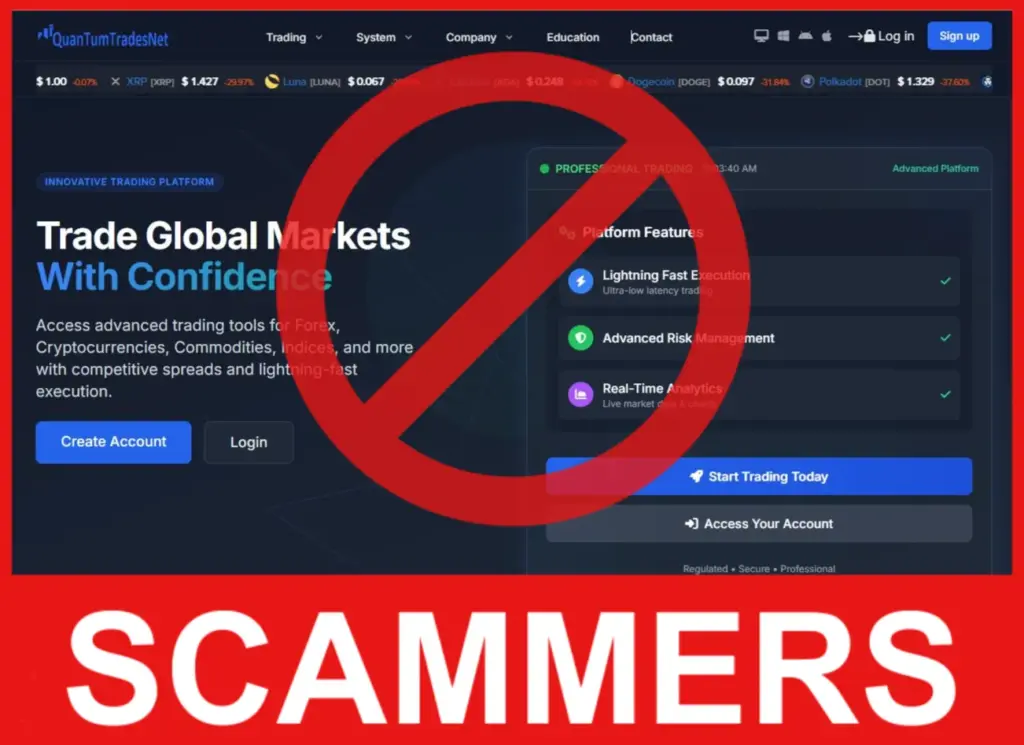
Information About the Fraudulent Broker
On its website, QuantumTradesNet presents itself as a global brokerage offering access to forex, cryptocurrencies, commodities, and indices. It uses attractive phrases such as “AI-driven trading,” “guaranteed returns,” and “personal financial advisors.” However, when these claims are examined more closely, several issues become clear. First, there is almost no transparent company information. Reliable brokers always provide verifiable details such as registration numbers, licensing bodies, and physical office addresses. In this case, such information is either missing or impossible to confirm. Second, the platform strongly encourages fast registration and immediate deposits. Users often report being contacted by so-called “account managers” who push them to invest more after showing artificially positive results in their dashboards. Third, the trading system itself raises concerns. Many users suspect that the platform does not connect to real markets at all. Instead, it appears to simulate trading activity, showing fake profits to build trust and encourage further investment. A common pattern emerges in user reports: everything seems normal at first, but once withdrawal is requested, delays begin, unexpected fees appear, or accounts become restricted without explanation.
Verification of Company Data
One of the most important steps when evaluating any broker is checking its legal status. Legitimate companies are regulated by financial authorities such as the FCA in the UK, CySEC in Cyprus, or ASIC in Australia. In the case of QuantumTradesNet, no reliable regulatory license can be confirmed. Searches in official databases either return no results or show unrelated or invalid information. Another concern is the structure behind the website. Fraudulent platforms often operate through offshore registrations or shell companies, making it extremely difficult to identify who actually runs the business. Contact details also raise suspicion. Although the website provides support emails and chat options, users report that communication is short-lived and usually stops completely when withdrawal requests are made. In some cases, the platform even displays fake certificates or claims partnerships with well-known financial institutions, but none of these claims can be independently verified. This lack of transparency is not a minor issue — it is one of the strongest indicators that the platform is not operating as a legitimate financial service provider.
Exposing the Broker as a Fraudster
Looking at user experiences and common scam patterns, several serious red flags become obvious. One of the most frequent complaints involves withdrawal problems. Small withdrawals may sometimes be processed to build trust, but larger ones are consistently blocked. Users are often told they must pay “taxes,” “verification fees,” or “unlocking charges.” Another issue is manipulated account performance. Many users report seeing steady profits that do not reflect real market behavior, suggesting that the results are artificially generated. There is also strong pressure from so-called advisors. They often encourage users to invest more, sometimes even suggesting loans or additional funding to increase profits. Psychological manipulation is another key tactic. Users are told they are “close to financial freedom” or warned that they will “miss a unique opportunity” if they stop investing. Once a user refuses further deposits or requests a withdrawal, communication often becomes slow or stops entirely, and accounts may suddenly become restricted. All of these signs strongly suggest that QuantumTradesNet operates not as a real broker, but as a structured system designed to extract as much money as possible from users.
Fraud Broker’s Deception Scheme
The operation follows a fairly predictable structure used by many fraudulent platforms. It starts with aggressive marketing through social media, ads, or direct contact. The message is always the same: easy money, low risk, and fast profits. After that comes the initial deposit stage. Users are encouraged to invest a small amount, typically between $250 and $500. Shortly after, the system may display fake profits to build confidence. Next comes the pressure phase. Account managers push users to increase their deposits, claiming that larger investments lead to higher returns or better trading conditions. When users attempt to withdraw funds, they enter the so-called “restriction phase.” Suddenly, additional payments are required — taxes, fees, or verification costs. These demands are not legitimate and serve only to extract more money. Finally, communication stops or the platform disappears completely. In some cases, the same operators relaunch the scheme under a different name and repeat the process. This model is not unique to QuantumTradesNet but is widely used across unregulated trading scams.
How to Get Money Back from a Scam Broker
For victims of such schemes, the situation can feel overwhelming, but there are still possible recovery options. The first and most important step is to stop sending any additional money. Scammers often continue requesting “final payments,” but these are always part of the fraud. Next, it is crucial to collect all available evidence, including payment receipts, email correspondence, chat messages, and screenshots of the trading account. Specialists such as DNB Forex Review focus on assisting victims of financial fraud. Their work involves analyzing payment flows, identifying possible recovery routes, and initiating chargeback or dispute procedures when possible. Depending on how the money was sent — credit card, bank transfer, or cryptocurrency — different recovery strategies may be applied. In some cases, banks can reverse transactions if fraud is properly documented and reported in time. Legal experts may also assist in filing complaints with regulators or payment providers. While recovery is never guaranteed, professional assistance significantly increases the chances of success and helps prevent further losses.
Negative Reviews About the Broker
Across various forums and complaint platforms, feedback about QuantumTradesNet is overwhelmingly negative. Users often describe a similar experience: initial friendliness, smooth account activity, and visible profits in the dashboard. However, problems begin when they attempt to withdraw money. Common complaints include blocked accounts, unexplained delays, and repeated requests for additional payments. Some users report losing significant amounts after being pressured to increase investments multiple times. Others mention emotional pressure from account managers who refuse to process withdrawals. There are also reports that accounts become inactive once users stop depositing money. Although individual stories vary, the overall picture is consistent — users are unable to access their funds and feel misled by the platform.

Hidden risks and additional dangers users should be aware of
Beyond the obvious issues, there are deeper risks connected to platforms like QuantumTradesNet. One major concern is data security. Users often submit sensitive documents such as passports, bank details, and personal information. In unregulated environments, there is no guarantee this data is protected. Another issue is the lack of independent auditing. Legitimate brokers are regularly audited to ensure client funds are handled correctly. Fraudulent platforms bypass or fake this process entirely. There is also the risk of rebranded scams. Even if QuantumTradesNet disappears, the same operators may return under a new name using the same tactics. Additionally, victims may be targeted by secondary scammers offering “guaranteed recovery services” in exchange for upfront fees.
Conclusion
When dealing with platforms like QuantumTradesNet, the most dangerous part of the situation is often not the initial investment, but what happens after it. Many people don’t immediately realize they are facing a scam because everything is designed to look professional at the beginning. The website works, the “trading dashboard” updates, and even small withdrawals might sometimes go through. That creates a false sense of safety. But once the pattern shifts, things usually move quickly in the wrong direction. Withdrawal requests suddenly trigger delays. Support becomes less responsive. New conditions appear that were never mentioned before. It can feel confusing, but in reality, this is often the point where the system switches from “building trust” to “extracting as much money as possible before the user stops.” The key problem is that time works in favor of the fraud operators, not the victim. Every extra day gives scammers more opportunities to apply pressure, request additional payments, or simply disappear with the funds. In many cases, victims who react immediately after the first withdrawal issue have a much better chance of limiting losses compared to those who wait and hope the situation resolves itself. Another important factor is psychological resistance. People often hesitate to act because they are unsure, embarrassed, or still believe the platform might eventually pay out. Fraud systems rely heavily on this hesitation. The longer a person stays emotionally attached to the idea of “getting the money back from the platform itself,” the harder it becomes to take effective recovery steps. What many victims don’t realize is that waiting too long can also make technical recovery more complicated. Payment traces can become harder to follow, transaction disputes may have strict time limits, and some banks or payment providers only accept complaints within a certain window. Once that window closes, options become more limited. There is also the issue of evidence preservation. In the early stages, users still have access to full chat histories, account dashboards, transaction receipts, and emails. Over time, access can be restricted or data may disappear entirely. That is why collecting documentation immediately is not just helpful — it is critical for any recovery attempt. At the same time, victims should be aware that scammers often continue the manipulation even after trust is broken. It is very common for users to receive messages like “pay this fee to unlock your withdrawal” or “make one final deposit to release your funds.” These messages are not random — they are part of a structured pressure tactic designed to extend the scam cycle. This is exactly where professional assistance becomes important. Recovery specialists, such as DNB Forex Review, work with cases where timing and structure matter. They understand how these fraud systems operate, how payments move through different channels, and what steps can still be taken depending on how quickly the case is reported. In many situations, people are surprised to learn that banks, card providers, and payment systems may still be able to intervene — but only if the request is made quickly and correctly. That is why expert guidance at an early stage can significantly improve the chances of success. It is also important to understand that emotional decision-making can slow down recovery. Victims sometimes try to “solve it alone,” hoping to avoid involving third parties. Unfortunately, this usually leads to delays and missed opportunities. In fraud cases, hesitation is often more damaging than the initial mistake itself. Another risk is secondary fraud. Once scammers identify a victim as someone who has already lost money, that person may be targeted again by fake recovery agents or “legal consultants” promising guaranteed refunds for upfront fees. These are often extensions of the same criminal ecosystem, not independent services. Acting quickly with verified professionals reduces the chance of falling into this second trap. Ultimately, the QuantumTradesNet situation reflects a broader reality in online trading fraud: these schemes are not chaotic or random. They are structured, repetitive, and designed to maximize financial extraction before disappearing or rebranding. Understanding this structure is what allows victims to respond effectively. The most important takeaway is simple but crucial: hesitation costs money. The moment something feels wrong — whether it’s blocked withdrawals, unexpected fees, or disappearing support — it should be treated as a serious signal, not a temporary issue. Quick action does not guarantee recovery, but it significantly improves the chances. Collecting evidence early, stopping further payments immediately, and contacting professionals like DNB Forex Review can make the difference between partial recovery and total loss. In the end, the key lesson is not just about one platform. It is about recognizing how modern online investment scams operate and responding before the situation escalates. The faster action is taken, the more options remain open — and in financial fraud cases, options are everything.






I invested with QuantumTradesNet because I thought I was using a professional investment platform. Unfortunately, after some time I noticed problems with my account. The company showed profits but did not allow me to withdraw my own money. They gave different reasons every time I asked about the payment. I believe many other people may have faced the same problem. I am looking for assistance in recovering my funds and understanding what legal options are available for victims of this type of fraud.
We would be happy to help you; please submit a request on the website.
I believe QuantumTradesNet was not a legitimate trading service because my experience had many warning signs. I was contacted by their representatives who promised support and good returns, but later they stopped helping when I requested a withdrawal. Losing money this way has been very difficult. I would like to know if there are people who successfully recovered funds from this broker and what information is needed to start a recovery request. Any advice from other victims would be helpful.
Submit a request, and we will help you.