




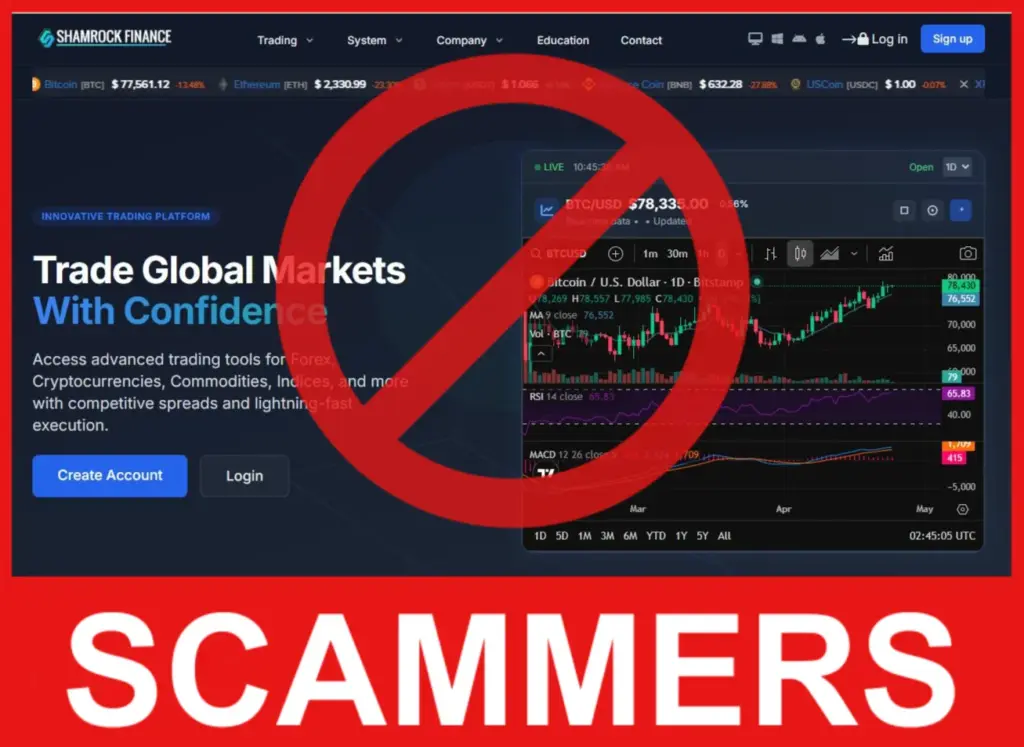
Online trading has become an easy entry point for many people looking to grow their savings, but it has also opened the door for a growing number of fraudulent brokers. Shamrock Finance, operating through the website shfonline.com, is one of the platforms that has recently raised serious concerns among traders and analysts. At first sight, it presents itself as a modern and professional brokerage service, offering access to forex, cryptocurrencies and other financial markets. However, behind this polished image there are repeated complaints, unclear company information, and patterns of behavior that are often associated with financial scams. This review is prepared in a clear and practical way to help readers understand how such schemes usually work and why so many users report negative experiences. It is also meant to support the work of DNB Forex Review, a legal service that assists victims in attempting to recover funds from dishonest brokers. The situation around Shamrock Finance is not unique, but it is a strong example of why careful evaluation is necessary before trusting any online trading platform.
Information About the Fraudulent Broker
Shamrock Finance tries to position itself as a global trading solution for both beginners and experienced investors. The website design and communication style suggest a professional financial environment, with promises of easy access to trading tools, personal account managers and high profit potential. The platform encourages users to deposit funds quickly and start trading immediately, often emphasizing simplicity and speed as key advantages. However, when looking deeper into user experiences and available information, a very different picture begins to appear. Many individuals describe a similar pattern of interaction. At the beginning, communication feels supportive and friendly, and small investments are often followed by visible “profits” displayed inside the trading dashboard. These results are presented in a way that builds trust and encourages further deposits. The situation usually changes once clients try to withdraw their money. At that point, communication becomes less responsive, and new conditions or explanations appear that were never mentioned before. Some users report being told that they must pay additional fees or meet extra requirements before withdrawals can be processed. Others say that their accounts became suddenly restricted without clear explanation. These experiences are frequently associated with unregulated brokerage schemes that rely on trust-building at the start and obstruction later.
Verification of Company Data
One of the most important steps in evaluating any financial company is checking its legal status and regulatory background. In the case of Shamrock Finance, this verification process raises serious concerns. There is no clear evidence that the platform is authorized by any well-known financial regulator. Legitimate brokers usually display their licensing information openly and allow clients to verify it through official databases. Here, such transparency is missing or extremely difficult to confirm. Another issue is the lack of verifiable corporate identity. Reliable brokers normally provide detailed company registration data, including physical office locations and responsible legal entities. With Shamrock Finance, this information appears vague or incomplete. Users searching for official company records often find inconsistent or unclear details, which makes it difficult to determine who is actually operating the platform. Communication channels also contribute to uncertainty. Reports suggest that contact with support representatives is inconsistent, especially after deposits are made. While initial responses may be quick and persuasive, later attempts to reach the company often result in delays or silence. This pattern is a serious warning sign because legitimate financial institutions maintain stable communication regardless of client activity. Overall, the lack of verifiable licensing, unclear ownership structure, and unreliable communication form a strong indication that the platform operates outside proper regulatory control.
Exposing the Broker as a Fraudster
When analyzing Shamrock Finance, several behavioral patterns stand out and are commonly associated with fraudulent broker operations. One of the most noticeable is the promise of unusually high returns with minimal risk. In real financial markets, such guarantees simply do not exist, and any platform suggesting otherwise should be approached with caution. Another concerning element is the psychological pressure placed on clients. Many users describe being contacted frequently by so-called account managers who encourage them to invest more money. These conversations often include urgency tactics, such as limited-time opportunities or warnings that missing a deposit could mean losing potential profit. This type of pressure is designed to push clients into emotional decisions rather than rational financial planning. A particularly troubling pattern is the difficulty or complete inability to withdraw funds. While depositing money is usually simple and fast, withdrawal requests often trigger unexpected obstacles. These can include sudden verification demands, claims of unpaid taxes or fees, or indefinite account reviews. In many cases, communication gradually stops altogether, leaving clients without access to their funds. There are also reports suggesting that trading results displayed on the platform may not reflect real market activity. Instead, they appear to be internally generated figures meant to create the illusion of profit. This encourages users to invest more, believing they are already making gains.
Fraud Broker’s Deception Scheme
The operation model behind Shamrock Finance follows a structure that is unfortunately common among fraudulent investment platforms. It begins with aggressive online advertising or unsolicited contact through social media or messaging platforms. The goal is to attract individuals who may not have extensive experience in trading. Once a potential client registers, they are quickly introduced to a personal account manager. This person plays a key psychological role, building trust and presenting the platform as a reliable opportunity. Early interactions are usually positive, and small deposits are encouraged as a safe starting point.= After the initial deposit, users may see apparent growth in their account balance. This stage is crucial because it creates confidence and encourages larger investments. Clients are often told that increasing their deposit will unlock better trading opportunities or higher profits. The situation changes dramatically when clients attempt to withdraw money. At this point, new barriers appear, and communication becomes inconsistent. Some are told that additional payments are required before funds can be released, while others experience complete account restrictions. Eventually, many users lose access entirely, realizing that the displayed profits were never truly accessible.
How to Get Money Back from a Scam Broker
For individuals affected by situations involving brokers like Shamrock Finance, recovery is often challenging but not impossible. This is where specialized legal and financial assistance becomes important. DNB Forex Review focuses on helping victims analyze their case and identify possible recovery routes. The process usually starts with gathering all available documentation, including payment confirmations, transaction records, communication history and screenshots from the trading platform. These details help specialists understand how the funds were transferred and where they may have gone. Depending on the payment method used, different recovery strategies may be applied. In cases involving bank cards, chargeback procedures may be possible if initiated quickly. For bank transfers or cryptocurrency payments, tracing the flow of funds and identifying intermediary services can sometimes provide opportunities for action. In more complex cases, legal complaints and cooperation with financial institutions may be necessary. The important factor is timing. The sooner action is taken, the higher the chance of interrupting the flow of funds and increasing recovery possibilities. Many victims delay action, which unfortunately reduces the effectiveness of potential solutions.
Negative Reviews About the Broker
Across various independent discussions and complaint reports, Shamrock Finance is frequently mentioned in a negative context. Users often describe similar experiences, which typically begin with smooth onboarding and end with financial losses or blocked withdrawals. One of the most common complaints is the inability to retrieve deposited funds. Many users report that everything seems normal until they request a withdrawal, after which communication slows down or stops completely. Others mention being asked to pay unexpected fees that were never disclosed at the beginning. Another recurring theme is emotional manipulation. Clients often describe feeling pressured, rushed or misled by representatives who initially appeared supportive. This shift in behavior creates confusion and frustration, especially for those who trusted the platform with significant savings. While there may be some positive comments online, they often lack detailed personal experience and tend to be generic in nature. This contrast between detailed negative reports and vague positive statements raises further doubts about their authenticity.

Additional risks and overlooked consequences
Beyond financial loss, involvement with unregulated brokers like Shamrock Finance can carry additional risks that are not always immediately visible. One of these is data security. When users provide personal identification details, banking information and contact data, they rely on the platform to handle this information responsibly. Without regulatory oversight, there is no guarantee of proper data protection. Another often overlooked consequence is psychological stress. Victims frequently experience anxiety, regret and long-term financial pressure, especially when significant savings or borrowed money are involved. The emotional impact can be as damaging as the financial loss itself. There is also the risk of repeated targeting. Once a person has been identified as a potential investor, their contact details may be shared or reused by other similar schemes, leading to further fraudulent attempts in the future.
Conclusion
The situation surrounding Shamrock Finance clearly shows how carefully designed online trading scams can appear legitimate at first glance. The platform presents itself as a modern brokerage service, but the deeper you look into its behavior, the more inconsistencies and warning signs emerge. What starts as a simple investment opportunity often turns into a frustrating experience where users lose control over their own money and struggle to get clear answers from the company. One of the most important takeaways from this case is the imbalance between deposit and withdrawal processes. Scam-oriented brokers typically make depositing funds extremely easy, while withdrawing them becomes complicated or practically impossible. Shamrock Finance follows this same pattern. Users describe smooth onboarding, helpful communication at the beginning, and even early “profits” shown on their accounts. But once real money withdrawal is requested, the situation changes completely. Suddenly, new conditions appear, support becomes less responsive, and clients are left waiting without clear explanations. Another key issue is the lack of transparency. In legitimate financial services, company details, regulatory licenses, and legal responsibilities are clearly displayed and easy to verify. In this case, that transparency is missing or highly questionable. This creates an environment where clients have no real protection and no clear authority to turn to when problems arise. It also makes dispute resolution extremely difficult without professional assistance. The psychological strategy used in such schemes should not be underestimated either. Many victims report that communication with so-called account managers feels very personal and supportive in the beginning. This is intentional. Building trust is part of the strategy. Once confidence is established, clients are encouraged to invest more, often under time pressure or emotional persuasion. This manipulation can lead even cautious individuals to make decisions they later regret. It is also important to understand that cases like Shamrock Finance are not isolated incidents. They are part of a wider ecosystem of unregulated or semi-anonymous online brokers that frequently appear, operate for a period of time, and then either rebrand or disappear. The structure is often the same: attractive promises, unclear legal background, and withdrawal problems once funds are deposited. This repeating pattern is one of the strongest indicators that investors are dealing with a high-risk or fraudulent operation. For people who have already suffered financial losses, the situation can feel overwhelming. Many victims initially believe that nothing can be done and that their money is permanently gone. However, this is not always the case. Financial recovery options may still exist depending on the payment method and timing of the transaction. This is where specialized assistance becomes important. Organizations like DNB Forex Review focus on analyzing each case individually, identifying possible transaction paths, and exploring legal or banking procedures that may help recover funds. What matters most in such situations is speed and organization. The sooner a victim reacts, the higher the chances of tracing the money flow and initiating recovery steps. Keeping all communication records, transaction details, and account screenshots can make a significant difference in building a strong case. In the end, Shamrock Finance serves as a strong reminder of how important it is to approach online investments with caution. Any platform that guarantees profits, avoids clear regulation, or creates barriers during withdrawal should immediately raise concern. Trust in financial services must always be based on transparency, verified licensing, and consistent behavior—not on promises or temporary success inside a trading dashboard. The overall lesson is simple but critical: in online trading, if something feels overly easy or unusually profitable at the start, it is worth questioning what comes next. And in many cases like this, what comes next is exactly where the real risk begins.






Has anyone managed to get their money back from Shamrock Finance? I lost my investment and I am searching for a reliable way to handle this situation.
If this company has defrauded you, submit a request, and one of our specialists will contact you for a free consultation!
I lost money with Shamrock Finance and I am trying to find a way to recover it. They promised good results but later I had problems with communication and withdrawals. I would like to know if anyone has successfully recovered funds from this company.
Submit a request, and we will contact you.