




Online trading platforms have become extremely popular in recent years, especially among people looking for quick access to financial markets and additional income opportunities. Along with legitimate brokers, however, the internet has also seen the rise of questionable investment websites that raise concerns due to lack of transparency, unclear regulation, and aggressive marketing tactics. One of the platforms that has recently attracted attention is Prime Lattice Investment operating through the domain primelatticeinvestment.pro. This article takes a careful and balanced look at the platform from an investigative perspective. It focuses on publicly observable patterns, typical complaints associated with similar websites, and general risk signals that users should be aware of. The purpose is to help readers better understand how such systems usually operate and why many affected individuals later seek assistance from companies like DNB Forex Review, which specializes in fund recovery cases involving disputed brokers and financial platforms.
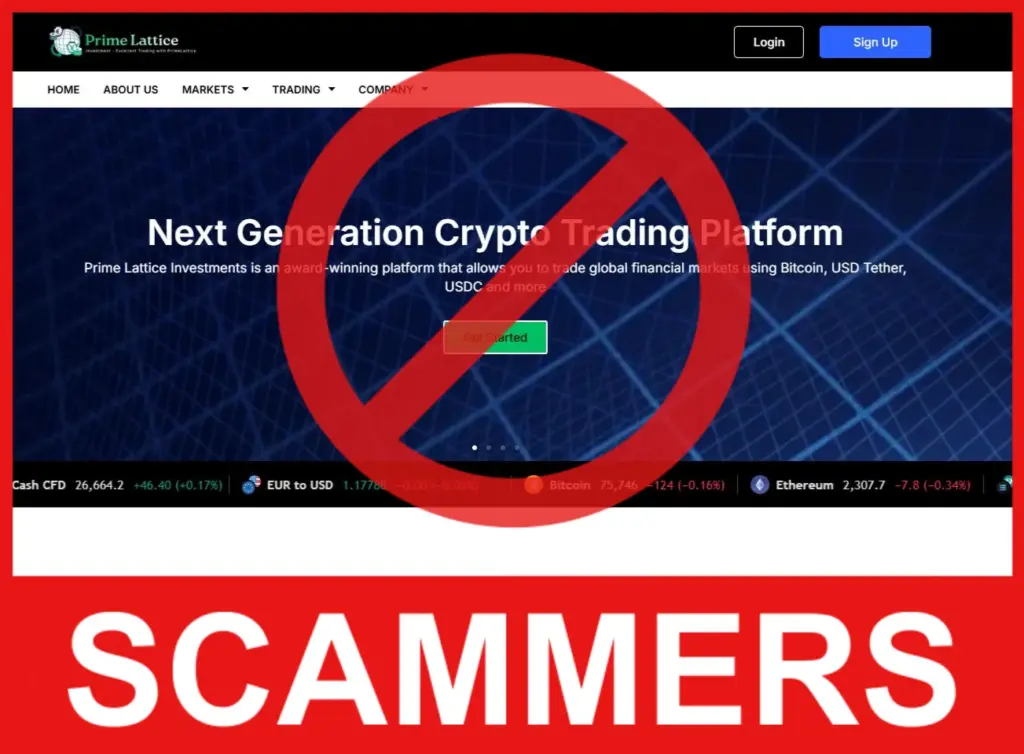
Information About the Fraudulent Broker
Prime Lattice Investment presents itself as an online investment service offering access to trading opportunities in forex, digital assets, and other financial instruments. The website structure typically reflects what many users would expect from a modern brokerage service. It often includes claims of advanced trading systems, professional analysts, and high return potential. At first glance, the presentation may appear convincing to individuals who are not deeply familiar with financial markets. In many similar cases across the online trading industry, platforms with this type of presentation tend to focus heavily on attracting beginners. The messaging is usually simple and emotionally appealing, suggesting that investing is easy, fast, and highly profitable. This approach is often combined with direct communication methods such as personal account managers or consultation calls. Reports from users of similar services frequently describe a pattern where early interactions feel highly professional. Representatives are often attentive, guiding users through account creation and encouraging initial deposits. In some cases, users report seeing quick account growth inside their dashboards, which creates a sense of trust. However, in many disputed cases, these results are not connected to real market activity but are instead part of simulated environments designed to encourage further deposits. Another important aspect is the lack of detailed public background about the company structure. Many users find it difficult to identify who exactly operates the platform, where it is registered, and under which jurisdiction it functions. This lack of clarity is one of the key factors that often raises concerns in the online investment sector.
Verification of Company Data
When evaluating any brokerage or investment platform, one of the most important steps is verifying its legal status and regulatory oversight. Legitimate financial companies are usually registered with recognized regulatory authorities and must comply with strict financial standards, including transparency of operations, client fund protection, and reporting requirements. In the case of Prime Lattice Investment, publicly available information appears limited. Users attempting to verify the company often encounter difficulties in finding clear registration details or confirmed regulatory licenses. In the financial industry, this lack of transparency is considered a serious warning sign, especially when combined with promises of high returns or guaranteed profits. Regulated brokers are typically listed in official databases maintained by financial authorities such as the Financial Conduct Authority in the United Kingdom, the Cyprus Securities and Exchange Commission, or similar institutions in other jurisdictions. These records are publicly accessible and allow clients to confirm whether a company is legally authorized to offer investment services. When a platform does not clearly appear in such registries, it does not automatically prove wrongdoing, but it significantly increases risk. In many previously investigated cases involving similar websites, the absence of verifiable company information was later associated with withdrawal problems and disputes over client funds. Another common issue in such environments is the use of vague or incomplete corporate identities. Some websites may provide company names without supporting documentation or may operate under domains that change over time. This makes long-term verification more difficult for users and regulators.
Exposing the Broker as a Fraudster
Platforms that later become subject to complaints often show certain behavioral patterns that experienced investors recognize as warning signs. One of the most frequently reported issues is the promise of unusually high returns with minimal or no risk. In real financial markets, consistent high returns without risk are not realistically achievable. Another concern is the presence of strong pressure tactics. Users sometimes report being encouraged to deposit more funds shortly after registration. Communication may emphasize urgency, suggesting that opportunities are limited or time sensitive. This psychological pressure is often used to accelerate decision making without proper research. Additional concerns arise when users attempt to withdraw funds. In many similar cases, withdrawal requests are delayed or rejected under various explanations. Some users report being asked to pay additional fees before accessing their own funds, such as taxes, verification charges, or processing costs. These requests are not standard practice in regulated financial environments. There are also reports in similar cases where account balances appear to grow rapidly, but these balances cannot be withdrawn or verified externally. This creates a false sense of profitability and encourages further deposits.
Fraud Broker’s Deception Scheme
Although each platform may operate differently, many questionable investment services follow a familiar structure. The process often begins with aggressive marketing campaigns designed to attract new users. Once contact is established, representatives encourage initial deposits, often starting with relatively small amounts. Early interactions are usually positive, and users may be shown apparent profits within their accounts. After trust is established, users are encouraged to increase their investment. At this stage, communication becomes more focused on scaling profits and taking advantage of supposed market opportunities. The situation changes when users attempt to withdraw funds. This is where many complaints begin. Delays, technical issues, and additional requirements are introduced. In some cases, users are told that verification is incomplete or that taxes must be paid before withdrawal can proceed. Eventually, communication may become limited or completely stop, leaving users unable to access their funds. This pattern has been reported across many disputed trading platforms and is a key indicator of potential financial misconduct.
How to Get Money Back from a Scam Broker
For individuals who believe they have encountered problems with an online investment platform, it is important to act quickly and methodically. Financial recovery cases often depend on how fast action is taken and how well the situation is documented. Specialized recovery services such as DNB Forex Review assist clients in handling disputes involving brokers and investment platforms. Their work typically involves analyzing transactions, identifying payment routes, and communicating with financial institutions to initiate dispute procedures. One of the most important steps is collecting all available evidence. This includes transaction records, communication logs, account screenshots, and any documents related to deposits and withdrawal requests. The more complete the documentation, the stronger the potential case. Depending on the payment method used, different recovery options may be available. Card payments may allow chargeback procedures, while bank transfers may require formal dispute claims. Cryptocurrency transactions are generally more complex but may still be investigated through tracing methods. Professional assistance is often important because financial institutions require structured and detailed submissions. Without proper documentation and understanding of the process, recovery attempts may be delayed or rejected.
Negative Reviews About the Broker
In cases involving platforms with similar characteristics, users often report a combination of positive early experiences followed by negative outcomes later in the process. Initial communication is usually described as professional and responsive, which helps build trust. Over time, however, users frequently report difficulties when attempting to withdraw funds. Common complaints include delayed responses, unexpected fees, and unclear explanations regarding account status. Some users also mention feeling pressured to reinvest profits rather than withdraw them. Emotional stress is another common theme in such situations. Many individuals do not immediately recognize the risk and only realize the situation after encountering repeated obstacles during withdrawal attempts. By that point, resolving the issue becomes more complicated.

Additional Observations and Industry Context
The online trading industry has grown rapidly, and with it, the number of unregulated or poorly regulated platforms has increased. Many of these platforms rely on modern website design and persuasive marketing rather than transparent financial operations. A key issue is that users often confuse professional appearance with legitimacy. A well-designed website does not guarantee regulatory approval or financial safety. In reality, regulatory compliance is the most important factor when evaluating any investment service. Another important observation is the global nature of such platforms. Many operate across borders, making enforcement and oversight more challenging. This is why regulatory verification and independent research are essential before investing. Education plays a crucial role in preventing financial losses. Understanding basic principles of trading, risk management, and regulatory requirements can significantly reduce exposure to potentially unsafe platforms.
Conclusion
When looking at Prime Lattice Investment and similar online trading platforms, the most important thing to understand is that the real risk is not always obvious at the beginning. Everything may look smooth and professional at first. The website may appear well designed, communication may feel supportive, and even early account activity can create the impression that trading is successful. This is exactly what makes these situations complicated for many users, because nothing immediately feels wrong. However, when patterns repeat across many similar platforms, a clearer picture starts to form. The most consistent issue reported in cases like this is the difficulty or complete inability to withdraw funds once deposits increase. That moment is usually where trust breaks down. What seemed like a profitable investment account suddenly becomes a system of delays, additional requirements, and unclear explanations. For many users, this is the point where concern turns into frustration and uncertainty. Another important point is transparency. In legitimate financial services, transparency is not optional. Users should always be able to clearly identify who operates the company, where it is registered, and under which financial authority it is supervised. When this information is missing, vague, or difficult to confirm, it creates a serious imbalance between the platform and the client. The user is expected to trust the system with money, while the system does not provide full accountability in return. It is also worth understanding the psychological side of these experiences. Many people do not invest large amounts immediately. Instead, they start small, see positive results on their screen, and gradually build confidence. This gradual trust-building process is often what leads to larger deposits. When problems appear later, users are often surprised because nothing seemed suspicious in the beginning. This emotional aspect is one of the main reasons why similar platforms are effective in attracting and retaining clients before issues arise. At the same time, it is important not to ignore the responsibility of users to verify financial services before committing funds. The online investment space is full of both legitimate brokers and high-risk platforms, and the difference between them is not always visible at first glance. This is why independent research, regulatory checks, and cautious decision-making are essential steps before investing. When financial losses occur, many people feel confused about what to do next. In such situations, structured recovery assistance becomes important. Firms like DNB Forex Review focus specifically on helping individuals who face disputes with brokers or investment platforms. Their role is to analyze transactions, identify possible recovery channels, and assist with communication processes that are often difficult for individuals to handle alone. It is important to understand that recovery is not guaranteed, and every case is different. The success of any recovery effort depends on several factors, including payment method, timing, documentation quality, and the structure of the transaction flow. However, taking action quickly significantly improves the chances of a positive outcome. Delays often make the process more complicated, especially when funds move through multiple channels or jurisdictions. Another key lesson from situations like this is the importance of documentation. Many users underestimate how valuable screenshots, emails, chat records, and transaction confirmations can be later. These details often become the foundation of any investigation or dispute process. Without them, it becomes much harder to prove what happened or track where the money went. Ultimately, the most important takeaway is awareness. The online trading world offers real opportunities, but it also contains platforms that operate with unclear intentions or insufficient regulation. The difference between a safe experience and a problematic one often comes down to preparation and caution before investing, rather than reaction after problems occur. Prime Lattice Investment, like many similar cases, serves as a reminder that appearance alone is not enough to determine legitimacy. Real financial trust is built on regulation, transparency, and accountability, not promises or presentation. Anyone considering online investment should take time to verify these elements carefully and avoid decisions driven by urgency or pressure. For those who have already encountered difficulties, the situation is not necessarily the end of the road. Options may still exist, and professional support can provide a structured path forward. What matters most is not ignoring the problem and taking informed steps as early as possible. In the end, the safest approach in online investing is simple. Be skeptical of promises that sound too good, verify everything independently, and prioritize security over speed. This mindset does not eliminate risk completely, but it significantly reduces the chance of falling into situations that lead to financial loss and stress.






Prime Lattice initially presented itself as a structured investment platform, but over time it became clear that something was not right. My account showed increasing returns, but no actual withdrawals were processed. When I requested access to my funds, I was told there were regulatory fees required. After questioning this, support responses became slow and vague. I am now trying to determine whether financial institutions can intervene and whether there is any realistic chance of recovering part of the transferred funds.
Submit a request, and we’ll help you.