




In today’s online trading world, investors are constantly exposed to platforms that look professional on the surface but raise serious concerns once examined more closely. One of these platforms is HRS Investing operating through the website hrsinvesting.co. At first glance it presents itself as a modern brokerage offering access to forex cryptocurrency and CFD trading with promises of simple profits and professional support. However many users who interact with such platforms later report a very different experience marked by financial losses blocked withdrawals and lack of transparency. This review is prepared in the style of an investigative analysis for DNB Forex Review which specializes in helping victims of questionable brokers recover lost funds. The goal is to present a clear picture of how such platforms typically operate what risks are involved and why traders should be extremely careful before investing.
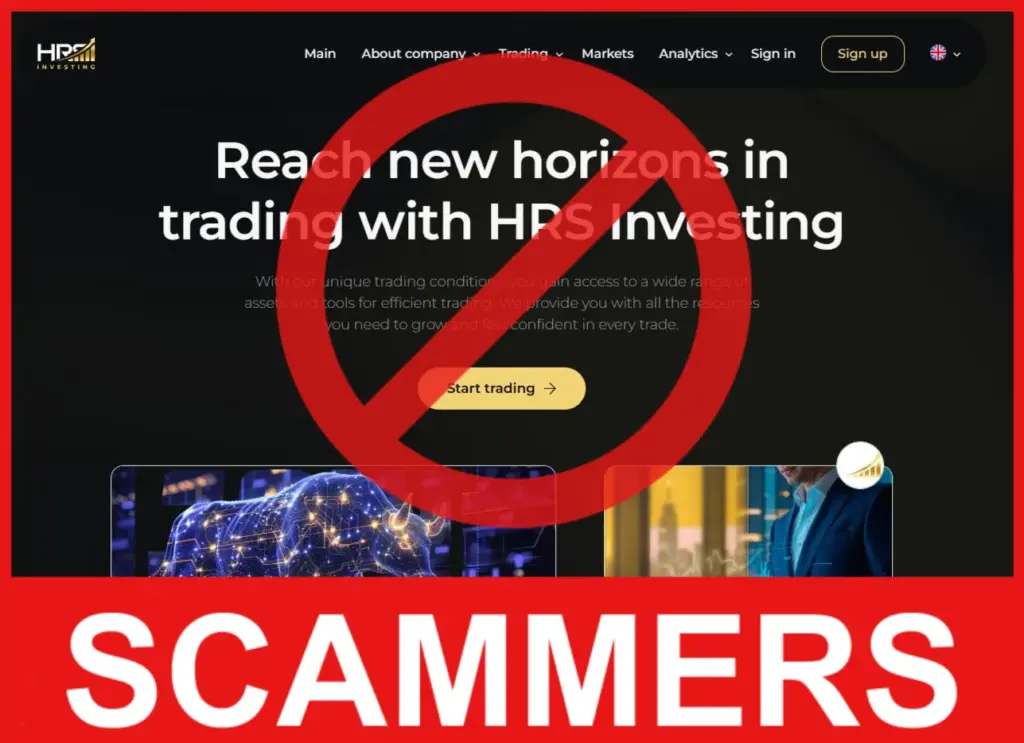
Information About the Fraudulent Broker
HRS Investing promotes itself as a trading service that provides access to global financial markets. The website typically highlights features such as advanced trading tools personal account managers and fast profit opportunities. These claims are designed to attract inexperienced traders who are looking for quick returns. However real user experiences described in online discussions about similar brokers often show a different reality. After registration individuals are usually contacted by representatives who present themselves as financial advisors. These representatives encourage clients to make an initial deposit and often push them to invest larger amounts over time. Many users report that the trading environment appears artificial. Price movements can feel inconsistent and profits shown on the platform may not reflect real market conditions. This creates a false impression of success which encourages further deposits. Another common issue is communication. At the beginning support is active and responsive but as soon as users attempt to withdraw funds communication often becomes slow or completely stops. In many cases clients are told to wait or are given unclear explanations about delays.
Verification of Company Data
One of the most important aspects when evaluating any broker is transparency regarding its legal status. In the case of HRS Investing there is often little verifiable information available. Legitimate financial companies usually provide clear details such as registration numbers licensing authorities and physical office addresses that can be independently confirmed. With platforms like HRS Investing users often struggle to find reliable regulatory information. Claims of licensing are either missing unclear or cannot be verified in official financial regulator databases. This is a major warning sign because regulated brokers must always be registered with recognized authorities. Another concern is the lack of consistent company identity. Some users report that company names or operational details change over time or differ across documents. This makes it difficult to determine who is actually operating the platform and where it is legally based. Domain information in similar cases also shows short operational history which suggests that the website may be part of a short term operation rather than a stable financial institution. The absence of verified regulation means users have no external protection. If problems occur there is no governing authority that can enforce rules or guarantee fair treatment.
Exposing the Broker as a Fraudster
Several patterns commonly associated with suspicious brokers can be observed in reports connected to platforms like HRS Investing. One of the most frequent issues is aggressive marketing. Potential clients are often contacted unexpectedly and persuaded to invest quickly. The communication usually focuses on emotional pressure and promises of financial success. Another warning sign is the deposit behavior structure. Users are encouraged to start with small amounts which builds trust. After seeing initial activity on their account they are persuaded to invest larger sums under the impression that higher investment leads to higher returns. Withdrawal problems are among the most serious complaints. When users try to access their money they are often met with excuses such as verification delays technical issues or requests for additional payments. In some cases accounts become restricted or completely inaccessible. There are also reports of manipulated trading results where profits appear on the screen but cannot be realized in actual withdrawals. This creates a false sense of success and keeps users engaged longer. Emotional manipulation is another key factor. Clients sometimes report being encouraged to take loans or reinvest profits under pressure from so called account managers who present themselves as trusted advisors.
Fraud Broker’s Deception Scheme
The operational model behind platforms like HRS Investing often follows a structured pattern designed to maximize deposits while minimizing withdrawals. The process usually begins with online advertising or direct contact. Users are attracted by promises of financial independence and easy trading success. Once interest is shown they are guided through registration and encouraged to make a first deposit. After the deposit an account manager becomes active. This person builds trust by providing guidance and showing supposed trading opportunities. Early results may appear positive which encourages the user to invest more. As investment increases the platform begins to show higher profits on the account dashboard. These profits are often not real but are used to create psychological motivation for further deposits. When a user decides to withdraw funds the situation changes. New conditions appear including hidden fees additional verification steps or requests for taxes or commissions. These requirements are designed to delay or prevent withdrawal. In many cases communication eventually stops completely leaving the user without access to funds or support. This cycle is typical in unregulated brokerage schemes where the main goal is continuous deposit collection.
How to Get Money Back from a Scam Broker
Getting money back from a scam broker is difficult but not always impossible. The most important thing is to act quickly once you realize something is wrong. Start by collecting all evidence, including payment receipts, screenshots of your account, chat messages with the broker, and any emails or instructions you received. This information is crucial because it helps prove what happened and shows the flow of your funds. If you paid by bank card or bank transfer, you can contact your bank and request a chargeback or transaction dispute. In many cases banks have procedures for investigating suspicious transactions, especially if they were made recently. If cryptocurrency was used, recovery is more complicated, but transaction tracing can sometimes help identify where the funds were sent. It is also important not to communicate further with the scam broker, especially if they try to demand extra payments for “taxes” or “unlocking withdrawals,” since this is usually another manipulation attempt. Instead, focus on formal dispute channels and professional assistance. Specialized recovery services and legal teams like DNB Forex Review can analyze your case, identify payment routes, and help prepare claims against intermediaries involved in the transaction. While no service can guarantee success, taking professional steps significantly improves the chances compared to acting alone.
Negative Reviews About the Broker
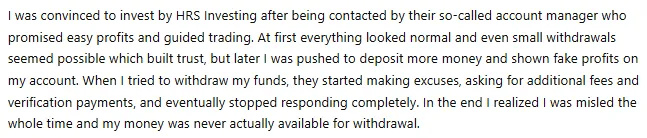
Across various online discussions users describing their experience with brokers similar to HRS Investing often highlight the same problems. Many individuals say they were initially impressed by the professionalism of the platform and the responsiveness of support. However this perception changes once money is deposited. A frequent complaint is that withdrawals are either extremely delayed or completely blocked. Users report being told that their account is under review or that additional payments are required before funds can be released. Some users mention feeling pressured into depositing more money even after expressing doubts. In certain cases individuals say they were contacted repeatedly and encouraged to invest larger sums under the promise of recovering previous losses. Another common theme is the emotional impact. Victims often describe stress frustration and financial pressure especially when savings or borrowed money were involved. Although not every review can be independently verified the consistency of these complaints across different sources is significant and reflects a pattern seen in many unregulated trading platforms.
Additional important observations for traders
One important issue often overlooked is how convincing these platforms can appear at first. Modern websites use professional design fake testimonials and simulated trading dashboards to build trust. Many traders are unaware that online trading environments can be fully simulated without real market connection. This means that displayed profits may not reflect actual financial activity. Another key point is the importance of independent verification. Relying only on information provided by the broker itself is risky. External checks and regulatory confirmation are essential before making any investment decision. It is also important to understand that legitimate brokers do not pressure clients into depositing funds quickly or discourage withdrawals. Any behavior involving urgency pressure or emotional manipulation should be treated as a serious warning sign.
Conclusion
After reviewing all available information about HRS Investing and comparing it with well-known patterns of questionable brokerage behavior, the overall picture remains deeply concerning. The platform presents itself as a modern and reliable trading service, but the structure described by users and the typical warning signs surrounding it suggest a very different reality. What stands out first is the lack of transparent and verifiable company data. In legitimate financial services, regulatory status is always clear and easy to confirm. Here, however, users repeatedly struggle to find proof of licensing or credible oversight. When a broker operates without visible regulation, it essentially means there is no external authority protecting clients or supervising how their funds are handled. Another critical issue is the behavior described by users once they start interacting with the platform. The early stage is usually smooth, with friendly communication and promises of guidance. This is often followed by increased pressure to invest more money, with constant reassurance that larger deposits will lead to better returns. While this may feel encouraging at first, it is a well-known psychological tactic used to build trust and gradually increase financial exposure. The most alarming point comes when users attempt to withdraw their funds. At that stage, many reports describe delays, unexpected requirements, or complete loss of communication. Requests for additional payments, such as fees or verification costs, are also frequently mentioned in similar cases. These tactics create a situation where the user is trapped in a cycle of waiting and paying, without ever successfully recovering their own money. It is also important to highlight the emotional impact on victims. Many people enter such platforms with hope and trust, often investing savings or even borrowed funds. When problems begin, the experience can quickly turn into stress, confusion, and financial pressure. This emotional burden is often underestimated, but it is one of the most damaging consequences of interacting with unregulated brokers. Another key observation is the consistency of complaints. Even though individual stories may vary, the same core issues appear repeatedly across different sources. These include withdrawal restrictions, pressure to deposit more funds, unclear company identity, and lack of support once problems arise. When similar patterns are seen across many users, it becomes difficult to dismiss them as isolated incidents. In the broader context of online trading, platforms like HRS Investing serve as a reminder of how important proper verification and caution are before investing money. The appearance of professionalism is no longer enough to judge legitimacy. Modern fraudulent schemes can replicate almost every visual aspect of a real brokerage service, making it extremely difficult for inexperienced users to identify risks early. For anyone who has already interacted with such a platform and is facing financial loss, the situation can feel overwhelming. However, it is important to understand that action is still possible. Recovery is not guaranteed, but ignoring the problem almost always reduces any chance of success. Financial transactions leave traces, and with proper analysis, some of those paths can sometimes be followed. This is where specialized assistance becomes important. Legal and financial recovery teams like DNB Forex Review focus on investigating transaction flows, identifying payment channels, and working with banks or intermediaries to challenge suspicious transfers. They also help structure complaints and gather evidence, which is often essential when dealing with unregulated entities that try to avoid accountability. The key message in conclusion is simple. Platforms that lack transparency, pressure users to invest quickly, and create barriers to withdrawals should never be treated as safe investment environments. No matter how convincing the presentation may appear, the absence of regulation and consistent user complaints is always a serious warning. HRS Investing, based on the available information and typical behavioral patterns observed, fits into a high-risk category where financial losses are a realistic outcome for many users. Caution, verification, and independent research are essential before engaging with any similar platform. For those already affected, seeking professional guidance quickly can make a meaningful difference. The earlier action is taken, the better the chances of identifying possible recovery routes and limiting further damage.






My case with HRS Investing started with a relatively small investment, but the representatives encouraged me to increase my deposits after showing what appeared to be successful trades. Unfortunately, none of the displayed profits mattered when I decided to withdraw. Communication became difficult, support responses were inconsistent, and additional charges were introduced without clear justification. After seeking professional guidance, I managed to recover a portion of my funds. The process was neither quick nor simple, but it was far more productive than continuing to negotiate directly with the company. I hope others affected by HRS Investing can find useful information and support here.
Submit a request, and we’ll help you.