When people first discover an online broker like Fast Mega Trade, it often seems like an exciting opportunity to enter financial markets and grow wealth. A slick website, promises of easy access to forex and other assets, and the sense that anyone can profit can be very tempting. Many people invest significant savings hoping to achieve financial goals faster, especially when global economic uncertainty makes traditional investments feel slow or unproductive. Unfortunately, not all brokers are created equal, and some are positioned to take advantage of people’s trust, experience level, and desire for financial security. Fast Mega Trade is one such broker that has raised serious concerns among financial regulators and independent watchdogs. From its early online presence it has portrayed itself as a legitimate platform for trading, but underneath the polished exterior there are numerous signs that it may not be what it claims to be. This is not just about unhappy customers or a poorly designed trading platform. There is growing evidence that Fast Mega Trade operates without appropriate licensing, targets individuals through persuasive marketing, and uses misleading practices to extract funds, making it a potential fraud. For people considering investments or trying to understand what has happened to their money, it is essential to look beyond the surface and understand the full picture.
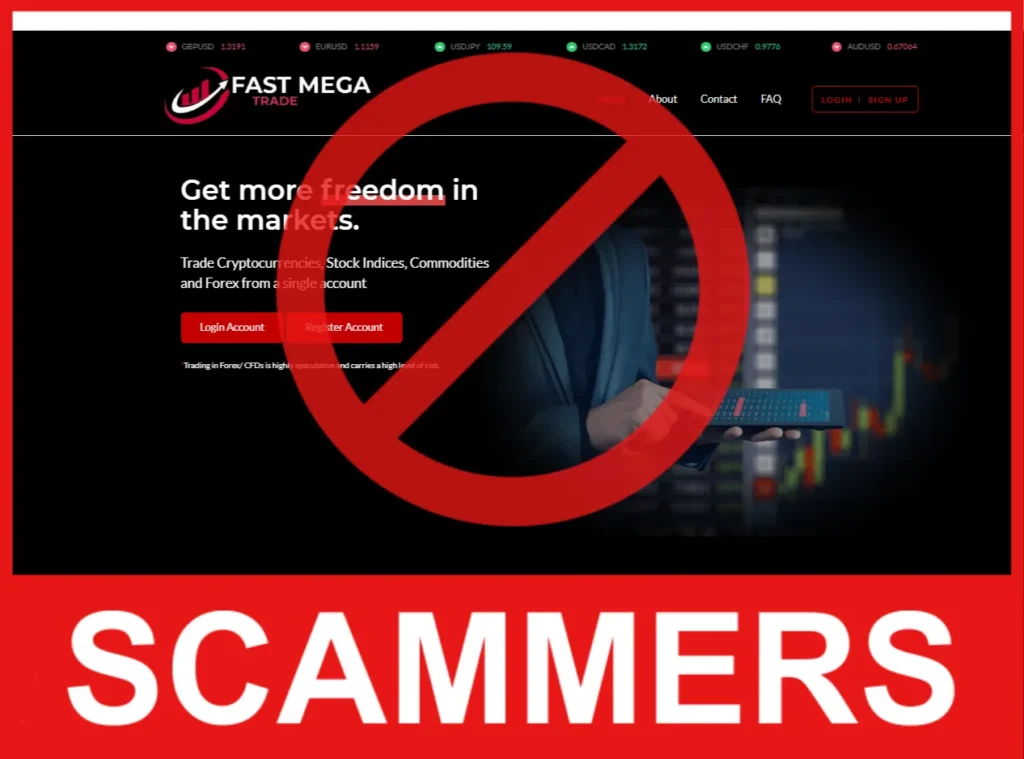
Information About the Fraudulent Broker
Fast Mega Trade presents itself online as a brokerage platform that allows clients to trade a range of financial instruments including currencies, indices, and other market assets. Its website uses design elements similar to many legitimate trading platforms: charts, account options, and language suggesting quick access to global markets. At first glance, this could give an impression of legitimacy, especially to people who are new to trading or unfamiliar with how regulated brokers operate. However, a deeper look at the available information reveals a stark mismatch between appearance and reality. Independent analysis from broker watchdog sources has categorized Fast Mega Trade as a scam operation. These assessments are based on evidence that the entity offers trading services without any verifiable financial license from reputable authorities. In other words, the broker claims to operate in the financial markets but does so without the necessary legal authorizations that protect clients and ensure transparency. Regulatory warnings from financial authorities highlight that Fast Mega Trade may be providing or promoting financial services without permission. This is a very serious issue because regulated brokers must meet strict requirements in terms of financial reserves, operational transparency, client fund protection, and the ability to settle disputes. Unregulated brokers, by contrast, do not follow these rules, and clients who deposit money have virtually no legal protections. In its promotional materials, Fast Mega Trade often speaks in general terms about opportunity, growth, and user experience, but it fails to provide concrete documentation of the company’s legal standing. It may list an address in a well‑known city, giving a sense of trustworthiness, but independent verification shows that this kind of information can easily be fabricated or borrowed from legitimate businesses. The absence of verifiable licensing documents, audited financial reports, or recognized industry credentials is not a minor oversight. It is a fundamental red flag that undermines any claims the broker makes about being a trustworthy partner for investment and trading.
Verification of Company Data
One of the most important steps in assessing the legitimacy of any online broker is checking official company registration and licensing information. Legitimate brokers must be registered with financial regulators in the jurisdictions where they operate, and these regulators maintain public databases that investors can search to confirm a firm’s status. Examples of respected regulators include bodies in major financial centers that require strict reporting, capital requirements, client protection standards, and regular audits. When it comes to Fast Mega Trade, thorough checks reveal that it does not hold valid licenses from any well‑recognized regulatory authority. Official warning lists from financial regulators clearly state that the firm is not authorized to provide financial services in some key markets. Authorities emphasize that if a company is not on the list of registered entities, it is not legally permitted to solicit funds, offer trading services, or operate as a financial intermediary. This means that any money a client deposits is not protected by consumer compensation schemes or oversight mechanisms designed to ensure that trading practices are fair and transparent. The broker’s advertised contact information, such as an address in a major international city and an email contact, appears on its website, but these details are unverified and may not correspond to any actual licensed financial institution. It is common in scam operations for perpetrators to use generic addresses or false contact information to create an aura of legitimacy. In some cases, the address might belong to an unrelated building or business, or it may have been copied from another source entirely. Independent review platforms that monitor the trustworthiness of financial websites also assign low risk scores to online brokers similar to Fast Mega Trade when they lack verified registration. These risk scores typically take into account factors such as domain age, ownership information, technical setup, and the presence or absence of regulatory documentation. In the case of Fast Mega Trade, the absence of a verifiable regulatory footprint and the presence of technical and structural indicators associated with high‑risk or untrustworthy sites result in a low confidence rating.
Exposing the Broker as a Fraudster
There are several distinctive signals that suggest Fast Mega Trade operates in a manner consistent with fraudulent brokers rather than legitimate financial service providers. The first and most obvious sign is the absence of a valid regulatory license. Licensed brokers are required to clearly display regulatory certificates, license numbers, and associated legal information on their websites and in their documentation. These serve as proof that the broker is under the supervision of a recognized authority. The absence of such information is not a minor omission but a fundamental indication that the entity is operating outside legal and financial norms. Another key sign of fraud is the pattern of marketing and promotional language used. Scam brokers tend to promise unusually high returns with minimal risk, rely heavily on persuasive language designed to evoke fear of missing out, and target individuals with aggressive online ads, unsolicited messages, and direct outreach. This kind of messaging creates an environment in which people feel pressured to act quickly and invest without performing adequate due diligence. Legitimate brokers generally avoid guaranteeing returns or suggesting that trading is risk‑free, because responsible financial service providers must disclose the risks associated with market volatility and potential loss. In addition to the marketing approach, the structure of how clients are encouraged to deposit and manage their funds also reveals problematic practices. Reports from people who have interacted with similar unregulated brokers describe experiences where initial deposits are followed by repeated requests for additional funds. These additional payments are framed as necessary for unlocking certain features, accessing higher levels of service, covering minor fees, or optimizing trading performance. The cumulative effect is that clients can end up investing far more than they initially intended, often without seeing any meaningful returns. Perhaps the most alarming sign of fraudulent behavior is the issue of withdrawals. Many accounts linked to unregulated brokers become effectively inaccessible once a client attempts to withdraw funds. The platform may require increasingly obscure or undocumented conditions to be met before authorizing a withdrawal, or may simply stop responding altogether. When an investor cannot easily withdraw money, especially their own initial deposit, it is a clear indication that the broker does not operate with the interests of its clients in mind.
Fraud Broker’s Deception Scheme
The way fraudulent brokers like Fast Mega Trade attract, engage, and then trap their victims follows a well‑known pattern that repeats across many scam operations. Understanding this pattern can help people see how easily intelligent and well‑intentioned individuals can be misled when they are not aware of the underlying deception. At the beginning, potential victims are often reached through online advertisements, unsolicited emails, social media outreach, or referrals from other individuals. The initial pitch is usually compelling: promises of accessible trading accounts, high returns, easy interfaces, and the opportunity to participate in financial markets with minimal barriers. Because financial markets can be intimidating and complex for newcomers, brokers that promise simplicity and profit seem attractive. Fraud brokers exploit this desire by overselling accessibility and downplaying risk. When people create accounts and deposit initial funds, the platform often shows positive results or simulated profits. This gives the appearance that the investor is making money, which reinforces trust and prompts further deposits. At this stage, the platform’s interface may look professional and dynamic, creating the illusion of real trading activity. However, the profits displayed may be fabricated or manipulated by the broker’s internal systems. Once the user has funds in the account, and especially if they try to withdraw, problems start to emerge. The broker may introduce new barriers, such as requiring documentation that was not previously requested, charging unexpected fees, or demanding additional payments before processing withdrawals. Each of these demands is presented as a legitimate procedural step, even though in reality they serve only to extract more money from the victim. Victims might comply, hoping that the next step will finally release their funds, but the pattern continues with more conditions and delays. Over time, communication from the broker may become sparse, scripted, or evasive. Eventually, the victim finds themselves unable to withdraw anything, with little chance of effective recourse. This pattern is so common that financial authorities in multiple jurisdictions have warned the public about brokers that exhibit these exact behaviors. The true cost of this deception is that victims not only lose money, but also face emotional stress, periods of denial about what has happened, and confusion about how to address the situation. For many, the hardest part is recognizing that they were targeted by a structured scheme, rather than simply having a bad experience with a legitimate broker. Awareness of the deception scheme helps people avoid similar traps in the future and informs them how to identify warning signs early.
How to Get Money Back from a Scam Broker
Falling victim to a fraudulent broker can feel devastating, as if there are no options left. But it is important to know that being scammed does not mean giving up. There are professional legal and recovery specialists whose entire job is to help people reclaim funds that were taken through fraudulent trading platforms. The process is not simple, and it cannot be done by repeatedly contacting the scam broker asking for refunds. Instead, it involves targeted actions that take into account financial laws, banking systems, and consumer protection mechanisms. Professional recovery specialists begin by documenting the client’s entire interaction with the broker. This includes deposits, account communications, trading records, and any correspondence. This data is crucial in establishing the timeline and nature of the financial relationship. Next, experts analyze the payment routes through banks, credit card processors, or digital currency channels to trace where the money went. In many cases, fraudulent brokers funnel deposits through intermediary accounts or third‑party payment processors, and only a detailed trace can uncover these connections. Legal recovery services also assess whether the broker’s activities violate specific financial laws or regulations in the jurisdictions involved. This step is vital for building official complaints, which can be filed with financial regulators, consumer protection agencies, and sometimes even law enforcement. Filing a complaint with the appropriate regulator not only helps the individual case but also contributes to broader warnings and actions against the fraudulent entity. In situations where a chargeback or bank claim is possible, specialists can work with clients to submit disputes through their financial institution. This process may involve presenting evidence that the transaction was fraudulent, that the services were misrepresented, or that the broker was not authorized to perform financial services. While chargeback windows are limited and require timely action, doing this with experienced assistance increases the chance of success. It is also possible to pursue civil litigation in cases where the broker’s identity and jurisdiction can be established. This involves hiring lawyers with expertise in financial fraud and cross‑border litigation. These professionals can pursue legal remedies on behalf of the investor, including asset seizure, injunctions, and judgments that may ultimately be enforceable in other jurisdictions.
Negative Reviews About the Broker
Because Fast Mega Trade is relatively new and operated without visibility like regulated brokers, there are not extensive review archives on mainstream platforms. However, the reviews and warnings that do exist consistently paint a concerning picture. Independent broker risk assessment sites have categorized the broker as unregulated and potentially fraudulent. These platforms highlight that the company fails to provide valid licensing, uses generic contact information, and has a very short track record with no verifiable operational history. Such risk assessments are based on criteria that include the absence of trustworthy documentation and low confidence scores in online trust evaluations. In addition to official risk evaluations, anecdotal reports from victims of similar unregulated brokers reveal a recurring theme. People often describe an initial sense of confidence as they see their accounts growing or receive persuasive communication from “account managers.” Then, once they attempt to withdraw funds, they encounter a series of obstacles: demands for additional fees, requests for unclear documentation, or outright refusal to process withdrawals. Some victims report being told that they need to pay a tax, insurance, verification fee, or other charges before their funds can be released. These fees were never disclosed clearly at the time of deposit and often represent a tactic to extract more money under false pretenses. Other common complaints include sudden loss of contact with support, changing requirements that keep growing, and abrupt suspension of accounts when clients start asking for refunds. Many people also describe a pattern where the broker continues to ask for additional funds by implying that larger deposits will lead to better returns, while disregarding previous investments. These experiences are similar to patterns seen in other known broker scams, in which emotional pressure and misinformation are used to prolong the scam and make victims believe that cooperation will eventually yield results.

Additional Perspective: The Broader Risk of Scam Brokers Online
Fast Mega Trade is not an isolated case; it belongs to a large category of online brokers that operate without appropriate oversight or transparency. In the age of digital marketing, it has become extremely easy for fraudsters to create professional‑looking platforms, buy advertising space, and attract victims through social networks, online ads, or unsolicited messages. These operations are often structured to mimic legitimate financial services, which makes them harder to detect for people who are not experts in financial regulation. Across the industry, scam brokers use similar tactics: they set up appealing websites, promise high returns with little risk, showcase fabricated success stories, and build trust through aggressive follow‑up communication. They exploit basic psychological triggers such as fear of missing out, excitement at potential profits, and trust in professional presentations. What makes these schemes particularly dangerous is that they often target newcomers to trading or people seeking alternative investment opportunities during challenging economic times. Another concerning practice is the use of cloned identities or misleading branding that resembles legitimate brokers. Fraudsters may copy elements of trusted broker platforms, adopt names that sound familiar, or even advertise fake partnerships with well‑known firms. Once victims are onboarded, they face the same cycle of manipulated account balances, blocked withdrawals, and repeated requests for more money. This broader environment means that individual victims are not alone. There is a widespread network of fraudulent entities operating under different names, constantly creating new websites and platforms when old ones are shut down or blacklisted by regulators. Financial authorities in multiple jurisdictions regularly issue warning lists to alert the public, but enforcement is often slow or impossible because these brokers may be based offshore or hide their true identities.
Conclusion
In conclusion, the evidence surrounding Fast Mega Trade strongly suggests that it is not a legitimate regulated broker, but rather a high‑risk unregulated entity that exhibits patterns consistent with fraudulent behavior. The absence of verifiable licensing, the presence of regulatory warnings, the lack of transparent company data, and reports of problematic withdrawal practices all point to a situation in which investors have little to no protection and substantial risk of financial loss. If you have been affected by such a broker, it is crucial to recognize that asking the broker directly for your funds is unlikely to succeed on its own. Scammers are adept at avoiding accountability, blocking contact, and creating new platforms once complaints surface. Instead, victims need targeted action that involves documentation, transaction tracing, formal complaints, chargeback claims, and where possible, legal proceedings. Professional recovery and legal specialists like those at DNB Forex Review have the expertise, tools, and experience to navigate the complexities of financial fraud cases. They understand how to work with financial institutions, regulators, and legal systems to pursue restitution. More importantly, they can guide victims away from common traps and help preserve evidence in ways that enhance the likelihood of success.