In the world of online trading and investment, not all that glitters is gold. Each year thousands of ordinary people are lured into dubious investment platforms with promises of quick gains, expert trading strategies, and effortless profits. Among the names that have recently raised serious concerns among financial experts and regulators is Welthex Property, presented online as a broker or investment service. At first glance the platform looks like just another trading opportunity, but beneath the polished layout and promotional language lies a series of red flags that cannot be ignored. This article is not just another review. It is a critical examination of Welthex Property based on regulatory alerts, industry reporting, and known patterns of fraud. If you or someone you know has interacted with this platform, the insights that follow are written in straightforward language and intended to help you understand what may be happening behind the scenes. The story of Welthex Property is a story of risk, lack of oversight, and potential financial loss, and awareness is the first step in protecting yourself and others.
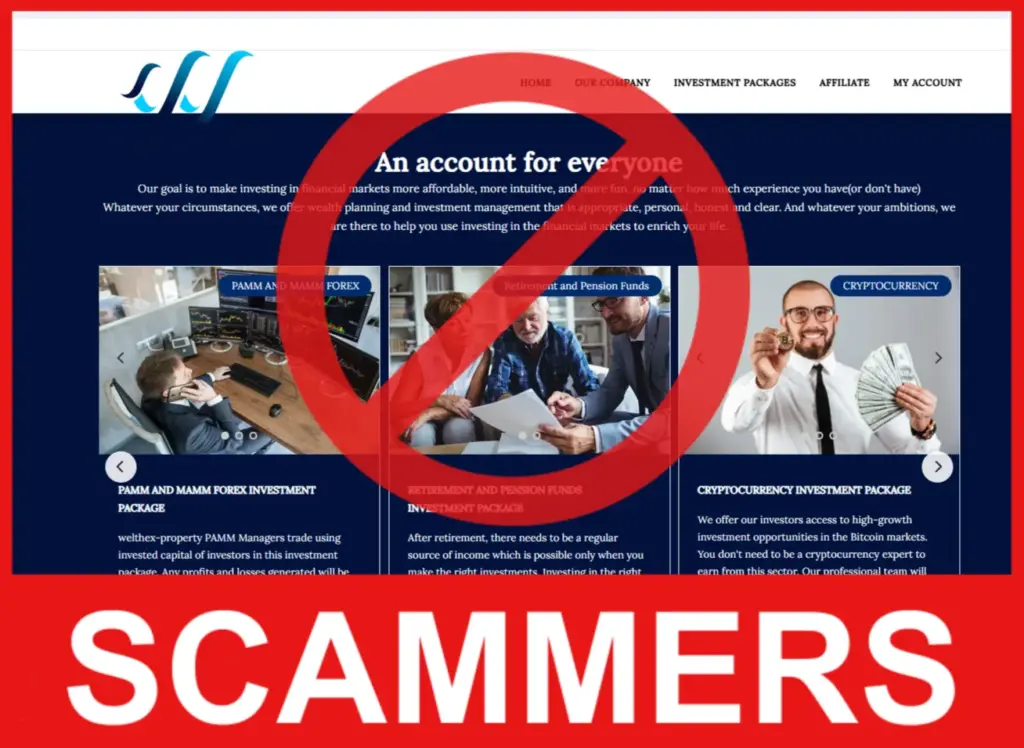
Information About the Fraudulent Broker
When encountering a financial broker online, the first things most people look for are signs of legitimacy: regulated status, transparent company information, clear terms of service, and verifiable credentials. These basic elements are missing in the case of Welthex Property. Welthex Property presents itself as an online broker or investment platform. It operates under a domain name that appears professional at a quick glance, and it uses design elements typical for financial service marketing. However, official information shows that the entity behind this name is not registered or licensed to offer financial services in the United Kingdom or other major jurisdictions. In regulatory warnings issued recently, authorities designated Welthex Property as an unauthorised firm, meaning it is not permitted to provide investment services or promote such services to the public. This alone should set off alarm bells for anyone considering investing their money. A legitimate financial services provider must be licensed by a recognised regulator; without this, there is no legal accountability or protection for investors. Further scrutiny reveals that the contact information promoted by the broker is vague and unverifiable. The address listed in regulatory warnings is a general country location rather than a verifiable business address, and the only contact method provided is an email address. There is no information about company owners, directors, or where their business is legally registered in a meaningful corporate registry. This lack of transparency is typical of unregulated brokers designed to conceal their true origins and avoid scrutiny. In practice, such platforms may offer a user interface for trading or account management, but this interface often does not interact with real financial markets. Instead, it may simply display simulated account balances or trades, giving users the illusion of profits or active trading. All of this contributes to a scenario where users are basically dealing with an anonymous entity that has no accountability, oversight, or regulatory obligation to protect their capital. The absence of regulatory status, the obscured corporate information, and the generic contact details all contribute to a picture that should cause serious concern for anyone contemplating financial interaction with Welthex Property.
Verification of Company Data
When a broker is legitimate, it is possible for anyone to verify key information about the company. Regulators publish lists of authorised firms, include licence numbers, and often offer tools to validate whether a broker is permitted to operate. In the case of Welthex Property, every one of these verification checks comes up empty. Regulators in major markets have issued explicit warnings about this broker as an unauthorised firm. When an organisation appears on an official warning list, it means that authorities have determined that the entity is not registered or licensed to provide the financial services it claims to offer. In the United Kingdom for example, such warnings are only issued after careful review and in response to activity that may pose risk to investors. Because Welthex Property appears on such a list, it has been flagged as an entity that may be targeting investors despite having no permission to do so. The consequences of dealing with an unregulated broker are severe. Without proper regulatory oversight, the broker is not required to follow basic standards of transparency, capital protection, or dispute resolution. When things go wrong, investors cannot turn to regulatory bodies to intervene, and they are excluded from compensation schemes that protect client funds in the event of bankruptcy or misconduct. Even more, if a broker claims an address or contact information but fails to provide verifiable records in official business registries, this means that investors cannot easily track who is really operating the service or where they might pursue legal action. In some instances, platforms advertise a physical address or phone number, but deeper investigation shows these details to be incomplete or unrelated to any credible business. Because of this, it is nearly impossible to verify the true nature of the organisation. In the world of regulated finance, brokers are required to disclose their registration numbers, provide audited financial reports, and submit to regular compliance checks. None of these requirements apply to Welthex Property, which places it outside the boundaries of regulated financial activity. This complete lack of verifiable, reliable company data is one of the most fundamental reasons why investors should treat Welthex Property with extreme caution.
Exposing the Broker as a Fraudster
Understanding that a broker is unregulated is only the first step. The deeper question is how this situation affects real people. There are common patterns seen in trading platforms that operate outside regulatory frameworks, and Welthex Property displays several of them. First, unregulated brokers often use well‑designed websites and professional marketing to create a false sense of trust. They may list asset classes, simulated trading tools, and account tiers in a way that mimics legitimate services. But this visual polish does not reflect actual financial infrastructure. Without regulation, these sites can control every aspect of the trading experience, including prices, execution results, and account balances. Essentially, they could be creating an internal simulation rather than providing access to real markets. Second, the absence of real oversight means that users often encounter significant obstacles when they attempt to withdraw funds. This is one of the most common complaints in broker scams: initial deposits may go through without issue, but when investors try to access their capital or profits, they are met with excuses, additional verification demands, or sudden restrictions. Because the broker has no obligation to honour withdrawals and no regulatory body to enforce compliance, these delays or refusals are effectively intentional. Third, in many documented cases involving similar unregulated brokers, there are reports of aggressive sales tactics used to encourage larger deposits. Traders might receive frequent calls or urgent messages pushing them to increase their investment or to pay additional fees for “account upgrades” or “priority access.” These techniques are designed not to improve trading outcomes, but to extract as much money from victims as possible. Fourth, the lack of objective customer support and transparent communication is another hallmark. In legitimate firms, customer service is accessible, documented, and subject to oversight. In unregulated environments, once an investor’s money is in the system, the same support channels that once encouraged investing can become slow, unresponsive, or disappear entirely when problems arise. Taken together, these characteristics paint a clear picture: when a broker operates without regulatory accountability and hides basic corporate information, it is not just risky, it is likely engaging in behaviour that harms investors. The risk is not theoretical; it is a documented pattern seen again and again in other unregulated broker scams.
Fraud Broker’s Deception Scheme
It is common in the industry for unregulated brokers to use a certain deceptive structure. Although each case has unique elements, the overall pattern is familiar and has caused significant financial loss to many unsuspecting individuals. The first lure is almost always promise. Platforms like Welthex Property use language that emphasizes quick returns, access to profitable markets, and the sense that anyone can start earning with minimal effort. These messages often appear alongside persuasive statistics or testimonials that seem compelling at first glance. Once someone is convinced to register, they provide personal information and are typically prompted to fund their account. Methods for funding might include bank transfers, digital currency payments, or other means that are difficult to trace or reverse once submitted. At this stage, new investors may see account dashboards showing profits or positive trading results, but these numbers are often fabricated and adjustable by the broker’s internal system. When the investor wants to access their money — whether the initial deposit or supposed profits — the difficulties begin. The platform may claim that additional verification is required, or that fees must be paid before withdrawal can proceed. They might suggest that the account holder must upgrade or agree to new terms. Because there is no real legal obligation to release funds and no oversight that enforces such obligations, these demands often continue until the investor stops trying or the broker disappears entirely. This scheme is not unique to Welthex Property, but the patterns are consistent with numerous unregulated broker scams reported by industry watchdogs. The combination of enticing marketing, opaque operations, blocked withdrawals, and a lack of accountability creates a system where the broker benefits at the direct expense of the investor.
How to Get Money Back from a Scam Broker
If you have lost money to a broker like Welthex Property, the situation may feel overwhelming. You might be asking yourself how it happened and whether there is any realistic way to reverse the damage. The good news is that there are avenues for action, and engaging professionals who understand these scams can make a difference. One of the first steps in recovery is gathering all relevant documentation: account statements, copies of communications, proofs of payment, and screenshots of your account activity. This information forms the basis for any formal claim or legal process. Even if the broker operates offshore or without a public corporate presence, these materials are essential for tracing what happened and building a case. Experienced specialists who work in financial fraud recovery understand how to navigate the complexities of unregulated broker scams. They know how to approach banks or payment processors to explore whether chargebacks or reversals are possible. While these options are not guaranteed, especially depending on the payment method used, banks and card issuers often have protocols for dealing with unauthorised transactions or services that were never actually provided. Legal experts also know how to work with consumer protection agencies and financial regulators to document evidence of fraud and pursue action against offenders. In some cases, even when a broker has no clear legal identity or is located in a difficult jurisdiction, public pressure and coordinated legal strategies can yield results, including partial recovery of funds. It is also important to be wary of additional scams that target victims by promising guaranteed recovery for fees. Genuine recovery specialists base their service on transparent agreements and typically do not demand large upfront payments before any results are achieved. In short, while recovering money after a scam is challenging, it is far from hopeless. With the right support and strategic action, victims can significantly improve their chances of regaining lost funds.
Negative Reviews About the Broker
Because Welthex Property is unregulated and relatively obscure compared to larger broker scams, there are currently fewer public testimonials or widely shared complaints specifically naming this platform. However, what does exist broadly confirms the same pattern of negative experience seen with unregulated brokers: People report difficulties withdrawing funds, even when account balances appear to show profits. Customer support becomes slow, evasive, or unresponsive when investors raise concerns. Investors are pressured to deposit more money or pay unexplained fees in order to access funds. These descriptions are not isolated to this one broker; they are exactly what countless victims of similar scams report over and over. When traders share their experiences on forums, social media, or review sites, the recurring theme is frustration with blocked withdrawals, lack of communication, and the sudden disappearance of support once money has been deposited. The lack of a regulatory safety net means these grievances cannot be resolved through normal complaint procedures, which leaves victims feeling stranded and violated. Although we cannot list specific client testimonies for this platform due to limited public reporting at this time, the consistency of the negative feedback associated with unregulated brokers — including those flagged by authorities — strongly suggests that anyone dealing with Welthex Property is at high risk of similar outcomes. This pattern underscores the importance of avoiding such brokers in the first place and acting quickly if you have already been involved.

Recognising the Broader Pattern of Broker Scams
It can be tempting to think that scams like these are rare or unlikely to affect someone who believes they are careful. In reality, fraudulent brokers operate using psychological tactics designed to lower skepticism and build trust through familiar visuals, friendly outreach, and promises of benefits that sound just plausible enough to be true. Many victims describe their first contact as professional and convincing, which makes the eventual loss feel like a personal betrayal. One of the key lessons from the broader landscape of broker scams is that the lack of regulatory status is usually the first and most telling sign of risk. Legitimate brokers spend considerable time and resources obtaining licences and complying with oversight rules because it protects both their business and their clients. Any entity that skips this process — or hides behind vague or offshore registration — has done so for a reason. Another pattern seen in these cases is the exploitation of emerging financial trends. Scammers latch onto topics like cryptocurrency, property investment, or exotic financial instruments because they capture attention and seem modern and profitable. They use the allure of new markets to distract from the fact that their operations are not grounded in real trading infrastructure or legal compliance. Finally, the sheer number of unregulated platforms in circulation means that consumers must be more vigilant than ever. Whether the broker uses a name like Welthex Property or something else, the same principles apply: regulation matters, transparency matters, and if either of those is missing, your money could be at risk.
Conclusion
The story of Welthex Property is not an isolated incident. It is part of a wider pattern in online financial services where unregulated brokers appear legitimate at first glance but lack the oversight and accountability that protect everyday investors. This absence of regulation is not a minor issue — it is the foundation that determines whether your money is safe or exposed to potential loss. If you have been impacted by this broker or others like it, ignoring the situation will not make it go away. Taking informed action with the help of professionals who specialise in dealing with financial fraud increases your chances of recovering at least part of what you lost. These specialists understand how to handle unregulated broker cases, work with financial institutions, and navigate legal avenues that ordinary individuals are not familiar with. Above all, it is important to share your experience, warn others, and demand transparency and accountability in the financial services you engage with. Scams like Welthex Property succeed only when victims are unaware of the warning signs or believe they are powerless to respond. By learning how these scams operate and by acting decisively when something feels wrong, you can protect your finances and help prevent others from falling into the same trap.