




When ordinary people think about stepping into financial markets, they often imagine the possibility of growth, stability, and a chance to build a secure financial future. Unfortunately, that hope can be exploited by individuals or groups who present themselves as brokers but are actually running scam operations. One of these questionable entities is known as 360Secured Digital Earning. While the name might sound professional and trustworthy, and the marketing language might appear polished and convincing, there are serious concerns that this operation is not what it claims to be. Many people around the world have been approached with promises of high returns, low risk, and easy access to trading through platforms like this one. It is important to understand that not all online brokers are regulated, safe, or honest. Scammers target people’s trust and financial goals by using persuasive language, attractive interfaces, and emotional pressure to make deposits. The aim of this article is not only to review and analyze what 360Secured Digital Earning claims to be but also to examine the available evidence about its legitimacy, explore signs of fraudulent behavior, outline how such fraud schemes generally operate, and explain the options available for victims who want their money back, particularly with the support of professionals such as the team at DNB Forex Review.
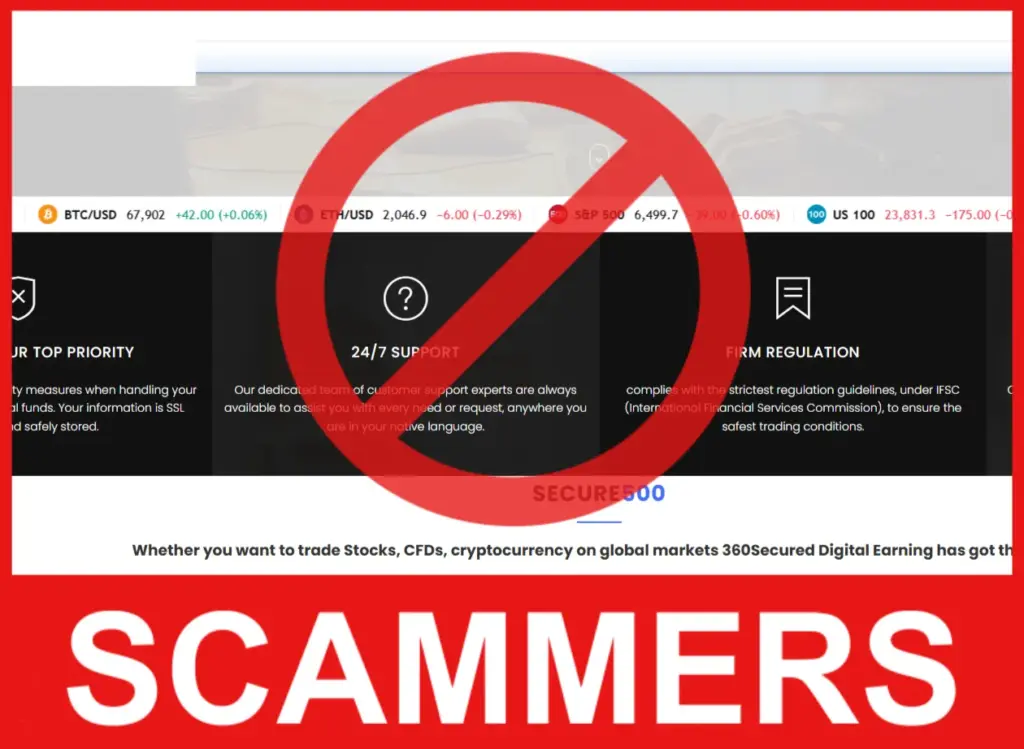
Information About the Fraudulent Broker
360Secured Digital Earning presents itself as an online trading broker that provides access to a range of financial markets, including currencies, cryptocurrencies, indices, and digital assets. On the surface, the website and promotional materials are designed to appear modern, professional, and technologically sophisticated. The company uses polished graphics, images of people celebrating success, and financial terms that lend an air of legitimacy. It markets account packages at different investment levels, promising enhanced returns and access to “professional” trading resources. On the website, visitors are told that they can use advanced trading tools, enjoy secure account access, and receive assistance from personal account managers who will help them navigate the markets. However, when you look closely at the way the information is presented, several inconsistencies and contradictions start to emerge. The promises of high returns with minimal risk are a classic tactic used to attract novice investors who may not have experience with financial markets. Real investment involves risk, and reputable brokers are careful not to overpromise. By contrast, 360Secured Digital Earning tends to use language that suggests extraordinary gains are easily achievable, which is rarely the case in genuine trading environments. Another point that deserves attention is the environment created by the company’s sales representatives. Many victims report that after initial contact, they are introduced to personal advisors who make clients feel supported and encouraged. These advisors frequently follow up through messaging apps or email with gentle insistence, trying to build a relationship. They share charts, provide reassurances, and create a narrative of steady profit. In some stories, people are shown screens where their account balance appears to grow, reinforcing the belief that trading is genuinely happening.
Verification of Company Data
When considering any broker, one of the most important things to verify is whether the company is licensed and regulated by a reputable financial authority. Regulation is not simply a bureaucratic formality; it provides legal oversight, consumer protection, and a framework within which brokers must operate in a transparent and accountable way. Genuine brokers publish their regulatory status clearly, including details such as registration numbers, the authority that oversees them, and links to verification records. Potential clients can independently confirm this information by checking public databases kept by financial regulators. In the case of 360Secured Digital Earning, there is a widespread absence of verifiable regulatory information. The broker’s promotional materials claim that they are regulated by a number of financial authorities, including well‑known international bodies. However, when these claims are tested against official regulatory registries, no corresponding entries are found. This means that the organization is not listed as authorized or licensed by the authorities it purports to be regulated by. Lack of such registrations is a serious concern. Financial regulators around the world maintain public lists of firms they license. These lists exist precisely so that investors can check whether a company operates with the required oversight. If a broker cannot be found in these lists, it is generally considered unregulated, and dealing with unregulated firms carries elevated risks. An absence of regulation means there is no formal mechanism to enforce transparency, hold the broker accountable for misconduct, or provide client protections such as compensation schemes in case of insolvency. Furthermore, there is often a lack of clear corporate identity for 360Secured Digital Earning. Genuine brokers typically disclose ownership details, including the parent company, directors, registered addresses, and business registration numbers. In contrast, this broker’s available documentation does not include verifiable corporate information. There are no reliable references to independent audits or financial statements that could offer insight into the company’s operations or financial health. Another concern is the use of regulatory logos and language without authorization. In many cases, fraudulent brokers will display the names of regulators as if they are endorsements, even when there is no relationship. This can mislead users who may not know how to verify these claims independently.
Exposing the Broker as a Fraudster
What does it mean to call a broker a fraudster? In financial markets, fraud takes many forms, but at the core it involves deception, intentional misrepresentation, and actions designed to mislead investors in order to profit unlawfully. When a broker engages in practices that are inconsistent with transparency, disregards regulatory standards, or imposes conditions that unfairly disadvantage clients, those are strong indicators of fraudulent behavior. With 360Secured Digital Earning, several warning signs point to the possibility that the operation is not simply poorly managed, but potentially designed to benefit from investor deposits rather than facilitate legitimate trading. One major concern is the way funds are handled — particularly the process that is triggered when investors request withdrawal of their money. In multiple reports about similar broker scams, investors are told that before a withdrawal can be processed, they must pay additional fees, submit extensive documentation, or satisfy conditions that were never disclosed at the time of deposit. These conditions often serve only to delay, complicate, or ultimately prevent withdrawal. Another fraudulent characteristic is the creation of a false sense of profitability. Fraudulent brokers often manipulate account dashboards to show rising balances, even if no real trading activity is occurring. This tactic plays on emotions, reinforcing the idea that gains are being made and prompting investors to deposit more funds to take advantage of perceived success. Once additional deposits are made, the illusion continues, but the real opportunity to withdraw existing money becomes increasingly difficult. The behavior of account managers associated with these types of brokers also raises red flags. Real brokers typically do not assign personalized managers who communicate through private messaging apps and encourage aggressive investing behavior. In contrast, fraudulent operations often set up these personal channels to create dependency, build trust, and maintain continuous engagement — all with the goal of keeping the investor’s attention and money within the system. A further sign of fraud is the use of high‑pressure tactics. Genuine financial institutions understand that investment decisions take consideration, and they do not pressure clients to make quick decisions, deposit larger sums urgently, or change investment plans under emotional appeals. When pressure is applied to act quickly to secure gains or avoid missing out, it is typically an attempt to bypass rational evaluation.
Fraud Broker’s Deception Scheme
To understand how fraud brokers operate, it is helpful to look at the overall structure of their deception and how each element works together. These schemes are not usually random; they are engineered to create a narrative that feels real, engaging, and convincing enough to lull the investor into making decisions they might not otherwise make. The first part of the deception typically begins with contact. Potential victims are approached through targeted advertising, social media outreach, unsolicited messages, or even search results that appear when someone is researching investment opportunities. The language is welcoming and evokes opportunity rather than risk. The key objective is to get contact information so a sales representative can reach out directly. Once initial contact is made, the victim is introduced to an “advisor” or a representative who frames the broker as a trusted partner. At this stage, the conversation focuses heavily on potential gains, favorable market trends, and the quality of the platform’s technology. Clients may be shown demo accounts or simulated charts that make it appear as though trades are happening and profits are being earned. The smoother and more optimistic this part of the interaction feels, the more likely a person is to relax their guard. The introduction of personal account managers is strategic, not accidental. By assigning a dedicated individual to communicate directly, the broker personalizes the relationship. This can create a psychological effect where the victim feels looked after and supported, even though the fundamental purpose may be to keep them invested and make them feel reliant on the advice being provided. As the investor begins to make deposits, they may see their account balance increase. These increases are often artificial. They are not real realized profits from genuine trading, but numbers that are designed to encourage further investment. Once the investor has put in a significant sum, the next stage of the deception begins: withdrawal resistance. At this point, the broker may introduce new conditions, technical requirements, or unexpected fees. They might cite regulatory compliance, account verification, or tax issues as reasons why funds cannot be released until additional steps are taken. This creates a landscape of confusion, delay, and frustration for the investor. Because these explanations are dressed in professional language, victims often believe they can resolve the issue and eventually receive their money — if they just comply. The problem is that these new requirements may never be sufficient to secure a withdrawal. In many cases, the conditions keep multiplying. Each new contact with the broker reveals another “mandatory step,” another fee, another document that must be submitted. Meanwhile, the account balance continues to be used as leverage to convince the investor that the money is still there and that they can retrieve it if they just follow instructions.
How to Get Money Back from a Scam Broker
Realizing that you have been misled or defrauded is painful, but it does not mean that you have no options. The journey toward recovering lost funds often begins with documentation, communication, and professional support. Many individuals who try to navigate this alone become overwhelmed by uncertainty, legal language, and complex financial processes. This is why specialized assistance is so important. Getting your money back from a scam broker is rarely straightforward, but it is possible with the right approach. The first step is to gather all records related to your engagement with the broker. This includes deposit confirmations, transaction records, email exchanges, chat messages with account managers, and screenshots of account balances or promises made by the broker. Even small details can be important in building a case. Once you have your documentation in order, it can be extremely beneficial to enlist the support of professionals who know how these cases work. A firm like DNB Forex Review specializes in navigating the recovery process for victims of fraudulent brokers. Their experience allows them to understand where to look, how to interpret financial records, and how to structure complaints so they carry weight with the relevant institutions. DNB Forex Review can help you prepare and submit claims to banks, payment processors, regulatory authorities, and dispute resolution services. Financial institutions often have internal investigation teams that will review evidence of unauthorized or suspicious transactions. A well‑prepared claim can lead to chargebacks or reversals of deposits if the bank determines that the funds were transferred under false pretenses. Furthermore, regulatory authorities can be notified to trigger inquiries into the broker’s conduct. While unregulated brokers are harder to pursue through these channels, coordinated complaints can still have an impact. In some cases, regulators share information that can support legal action or help prevent future victims from falling into the same trap. Legal representation may also be necessary in certain jurisdictions, especially if the scam involved large sums or cross‑border transactions. Lawyers experienced in financial fraud cases can draft legal notices, pursue court orders, and engage with foreign entities when needed.
Negative Reviews About the Broker
360Secured Digital Earning has very few verified reviews on mainstream platforms, but the absence of positive feedback and the presence of warnings in regulatory and scam forums point to a negative reputation. Common themes reported by users include blocked withdrawals, unresponsive support, unexpected fees, and losses that are never returned. Analysis of the broker’s website and online reputation also raises concerns. Hidden ownership details, a recently registered domain, and links to other suspicious sites suggest low trustworthiness. While these factors alone don’t prove fraud, combined with unverifiable regulatory claims, they strongly indicate risk. Victims describe a familiar pattern: small deposits may appear profitable at first, encouraging further investment, but when attempting larger withdrawals, accounts are blocked and additional fees or documentation are demanded. This sequence is typical of scam brokers aiming to maximize deposits while preventing fund recovery. Even without extensive individual reports, the overall picture is clear: 360Secured Digital Earning consistently generates complaints rather than verified positive experiences, reflecting a reputation built on exploitation rather than legitimate trading.

Psychological Impact on Victims
One part of financial fraud that is often overlooked is the psychological toll it takes on victims. Losing money is bad enough, but the emotional effects can be long‑lasting and deeply challenging. People who have been deceived by fraudulent brokers often report feelings that range from embarrassment and shame to anxiety, anger, and deep distrust of financial systems. When someone invests funds with the expectation of growth and security, they are not just handing over money. They are handing over hope, trust, and a vision for their future. When that trust is betrayed, it can feel like a personal violation. Many victims describe a sense of cognitive dissonance — knowing on some level that something felt off, but still believing that the broker was legitimate because of the convincing presentation and persuasive communication. This psychological impact can extend into other areas of life. Victims may become hesitant to engage with genuine financial opportunities in the future. They may second‑guess their decisions, withdraw from planning for their financial goals, or experience stress that affects their relationships and daily functioning. The emotional burden can sometimes be heavier than the financial loss itself. Psychological effects also influence how victims react to withdrawal difficulties. Instead of cutting losses early, some people remain engaged because they cannot emotionally accept that they have been deceived. The illusion of regaining funds may become more attractive than confronting the reality of loss. Fraudulent brokers exploit this vulnerability by continually dangling the possibility of recovery, making it harder for victims to walk away. Another emotional challenge is the fear of judgment. Many victims are reluctant to share their experiences because they feel embarrassed or believe they should have seen the danger earlier. This stigma can delay reporting and prolong the impact of the fraud. A supportive environment where victims can speak openly and receive empathy rather than criticism is crucial to the healing process.
Conclusion
In summary, 360Secured Digital Earning displays many characteristics that are typical of fraudulent broker schemes. Despite polished marketing and promises of lucrative returns, there is a lack of verified regulatory status, opaque company information, high‑pressure engagement strategies, and obstacles placed in front of withdrawals. These are not isolated incidents or minor mistakes — they form a pattern of behavior that suggests the broker’s priorities lie with extracting deposits rather than facilitating legitimate trading. Any time a financial service provider cannot demonstrate transparent regulation or refuses to provide standard investor protections, potential clients should treat it with extreme caution. The absence of credible oversight means that if something goes wrong, there is no safety net, no official support for victims, and no guarantee that funds will ever be returned. For individuals who have already invested and are struggling to access their money, there is a path forward. Documenting all interactions, collecting proof of deposits and communications, and seeking professional assistance are essential first steps. A firm like DNB Forex Review specializes in helping people navigate this process with experience and expertise. Their team can help draft compelling claims to financial institutions, work with dispute resolution processes, and advise on legal strategies. This kind of expert support increases the likelihood of recovering lost funds compared to attempting the process without guidance. The emotional impact of being deceived by a scam broker can be profound, but it should not prevent victims from seeking restitution. Understanding that fraudsters use psychological tactics to build trust and maintain engagement helps victims see that their reactions were not unreasonable. Taking action to recover money, sharing experiences to warn others, and working with professionals to navigate the aftermath are all steps that reinforce resilience.






My experience with 360Secured Digital Earning was a warning that online investment opportunities should always be carefully checked. I was convinced to invest after receiving professional-looking information and promises of good returns. When I wanted to withdraw my money, the process became complicated and eventually stopped completely. I believe I was affected by a scam and would like to receive guidance on possible recovery actions and what documents are necessary to support my claim.
Our specialists will help assess the situation and propose possible solutions. Submit a request.