Over the last ten years the online trading industry has expanded dramatically. Today thousands of platforms offer access to global financial markets and promise traders convenient tools, professional support and high potential returns. For many beginners the opportunity to earn money through forex, cryptocurrencies or other assets seems appealing, especially when brokers advertise trading as something simple and accessible even without previous experience. Unfortunately, the rapid growth of the industry has also attracted dishonest companies. Alongside legitimate brokers there are many platforms created mainly to collect deposits from inexperienced investors. At first glance such projects can appear convincing. They usually have modern websites, professional design and persuasive promotional materials. Visitors are often greeted by so-called financial specialists who promise assistance and profitable trading strategies. However, the reality behind these attractive presentations may be very different. Some of these platforms operate in ways that resemble classic online investment scams. One of the projects that has recently drawn attention from market observers and investors is Chiyoda-Trust. The platform introduces itself as a brokerage company that supposedly provides access to international financial markets. On the surface the offer looks familiar: various trading instruments, support from account managers and promises of advanced trading technology. Yet when the platform is examined more carefully, several concerns start to appear. Some clients mention problems when trying to withdraw funds, while information about the company itself remains unclear. In addition, certain aspects of the project resemble patterns often associated with questionable brokerage operations. In this review we will examine the Chiyoda-Trust platform in detail, look at the available information about the company, highlight potential warning signs and explain why investors should carefully evaluate this broker before trusting it with their money.
Information About the Fraudulent Broker
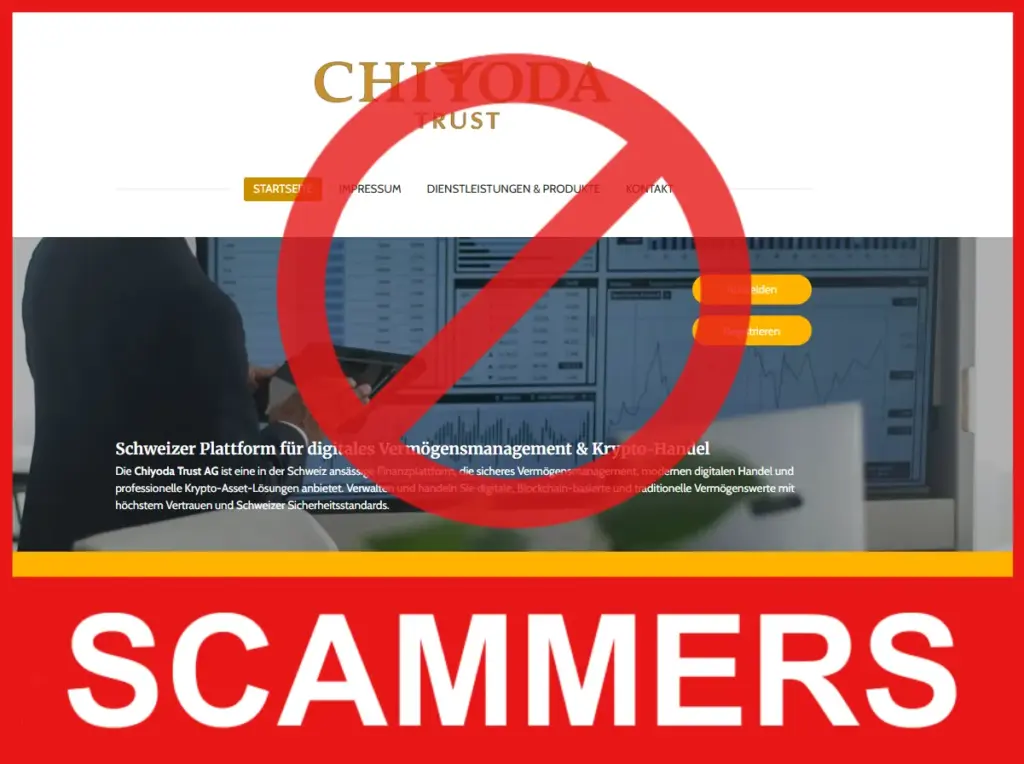
Based on the information presented on its website, Chiyoda-Trust describes itself as an international brokerage service that provides traders with access to different financial markets. According to the platform, users can trade a variety of assets including currency pairs, cryptocurrencies, stocks and commodities. The company also claims that its clients receive professional guidance and access to modern trading technology. The website itself is designed in a way that creates the impression of a legitimate financial company. It includes common elements that can be found on many brokerage platforms, such as charts, descriptions of trading opportunities and statements about experience in the financial sector. Potential clients are told that the platform offers convenient conditions and modern technological solutions. Despite this professional appearance, the information provided often remains quite general. Instead of clear explanations about how the trading environment actually works, the site focuses mostly on promotional statements about efficiency and profitability. Details that are usually important for traders — such as precise trading conditions, spreads, commissions or information about liquidity providers — are not always explained in a transparent manner. Another detail worth noting is the name used by the broker. The term “Chiyoda” is widely known because it belongs to a large Japanese engineering corporation. However, there is no clear public evidence confirming that the trading platform has any connection to that organization. In the online investment world, scammers sometimes use names similar to well-known companies in order to create a sense of credibility. The platform also promotes the idea that almost anyone can start trading and generating income quickly. Visitors are encouraged to register, deposit funds and rely on personal advisors who supposedly help manage the trading process. For people who are new to financial markets this offer may sound appealing. Nevertheless, experienced traders understand that financial markets always involve risk and that consistent profits cannot be guaranteed. When a broker focuses primarily on the promise of easy earnings while providing limited verifiable information about its operations, it naturally raises concerns among professionals. Because of this, the initial impression created by the Chiyoda-Trust website should not be accepted without further verification. A deeper analysis is necessary to determine whether the platform operates as a genuine broker or whether it displays characteristics of a questionable investment project.
Verification of Company Data
Checking a broker’s official data is one of the most important steps before investing. Legitimate financial companies are required to operate under strict regulations. They usually obtain licenses from recognized financial authorities and openly disclose their registration details, legal status and management information. When analyzing Chiyoda-Trust, this verification becomes more complicated. The platform suggests that it provides services to traders from different countries, but finding reliable confirmation of regulatory supervision is difficult. Reputable brokers typically publish detailed legal information on their websites. This usually includes the name of the legal entity behind the platform, the company registration number and the regulatory authority responsible for overseeing its activities. With this information investors can independently verify the broker in official databases. In the case of Chiyoda-Trust, such transparency appears limited. The available data about the company may be incomplete or vague, making it difficult for potential clients to understand who exactly operates the platform and under which jurisdiction. Another important element when evaluating a broker is the openness of its corporate structure. Reliable financial companies generally disclose their headquarters location, contact details and sometimes even information about key members of the management team. These details allow clients to confirm that the company exists as a legitimate business entity. Platforms with questionable reputations often avoid sharing such information. Instead, they provide only minimal contact details such as a basic email address or a simple form for communication. Without clear information about the company’s physical location or legal registration, investors cannot be certain who is actually responsible for the platform. Experts also analyze the history of the website domain. Many fraudulent projects operate for a relatively short period of time before disappearing and reappearing under a different name. Anonymous domain registration and hidden ownership information can therefore raise additional questions. Taken together, these factors make it difficult to fully confirm the legitimacy of the Chiyoda-Trust platform. When important company details cannot be independently verified, investors should approach such projects with caution.
Exposing the Broker as a Fraudster
Financial experts evaluate brokerage platforms using several criteria. When multiple warning signs appear at the same time, the likelihood that a broker may be unreliable becomes much higher. In the case of Chiyoda-Trust, several aspects have attracted attention. One of the key concerns is the lack of clearly verifiable regulatory information. Licensed brokers normally emphasize their regulatory status because it demonstrates compliance with financial laws. When a platform does not clearly provide such confirmation, it naturally raises questions. Another factor involves marketing practices. Many questionable platforms rely heavily on promotional campaigns that highlight the possibility of fast profits. Instead of educating clients about the risks involved in trading, these brokers often focus almost entirely on potential earnings. There are also reports suggesting that representatives of similar platforms actively contact potential investors through phone calls or online messages. During these conversations clients may be encouraged to deposit money quickly so they do not miss a supposedly profitable opportunity. This approach is unusual for reputable financial companies. Professional brokers typically provide information and allow clients to make investment decisions independently without strong pressure. The trading environment itself may also raise doubts. Some suspicious platforms use simplified web-based trading interfaces that simulate market activity rather than providing access to real financial exchanges. Although the interface displays charts and account balances, the data may not represent actual trading operations. Another warning sign appears when clients try to withdraw their funds. Complaints about delays, additional fees or unexpected conditions are frequently reported by victims of fraudulent brokers. Even after paying extra charges, investors sometimes find that the withdrawal is still not processed. When these elements are analyzed together, they form a pattern that resembles many previously identified online trading scams.
Fraud Broker’s Deception Scheme
Many fraudulent brokerage schemes operate using a similar strategy. Understanding this process helps explain why so many people become victims. The first stage usually involves online advertising. Potential investors encounter promotional content suggesting that trading is a simple way to generate income. These advertisements often target individuals who are looking for additional financial opportunities but may not have extensive experience with financial markets. After a person registers on the website, a representative of the platform may contact them. This individual typically presents themselves as a professional account manager who will guide the client through the trading process. The initial deposit requested is usually modest. By asking for a relatively small amount, the broker lowers the psychological barrier for new clients. Once the deposit is made, the trading account may show apparent profits. Seeing positive results often motivates investors to deposit more money. Account managers may encourage larger investments by explaining that higher capital leads to greater potential returns. Sometimes a small withdrawal may even be allowed in order to strengthen the client’s trust. However, once the deposited amount becomes significant, problems begin to appear. Withdrawal requests may be delayed or blocked entirely. Clients might be told that they must first pay additional charges such as taxes, verification costs or processing fees. Each payment often leads to new conditions or new explanations. Eventually communication with the broker becomes less frequent or stops completely. At this stage many investors realize that the platform was never intended to operate as a legitimate trading service.
How to Get Money Back from a Scam Broker
For people who have lost money to fraudulent brokers, the situation can be extremely stressful. Many victims initially believe that their funds are permanently lost. Nevertheless, in some cases financial recovery may still be possible. The first and most important step is to stop sending any additional money to the platform. Fraudulent brokers often attempt to convince victims to make further payments by claiming that these payments are necessary for releasing the funds. Another essential step is collecting evidence. This includes payment confirmations, screenshots of the trading account, email correspondence and records of communication with company representatives. Professionals who specialize in financial disputes can analyze this material and determine possible recovery strategies. Often the investigation focuses on the payment methods that were used for the deposits. DNB Forex Review assists individuals who have encountered fraudulent brokerage platforms. Their specialists analyze financial transactions and prepare documentation that may help initiate recovery procedures through banks or payment systems. Because financial disputes often involve specific procedures and time limits, professional assistance can significantly improve the chances of a successful outcome. While no recovery process can guarantee a full return of funds, many victims manage to recover part of their money when they seek expert help without delay.
Negative Reviews About the Broker
User reviews often reveal how a brokerage platform actually operates. When many investors report similar issues, these experiences should not be ignored. Discussions about suspicious brokers frequently follow a similar pattern. At the beginning clients describe positive interactions with account managers and apparent profits displayed on their trading accounts. Difficulties usually begin when investors attempt to withdraw their funds. Some users report that their withdrawal requests remain pending for long periods of time. Others mention being asked to pay additional fees before the process can continue. Another common complaint involves communication problems. While representatives of the broker may actively contact clients during the deposit stage, they often become difficult to reach once withdrawal issues arise. Some investors also describe pressure from account managers encouraging them to increase their investments. These conversations may include promises of special strategies or exclusive opportunities available only to clients who deposit larger amounts. When these kinds of complaints appear repeatedly, they serve as an important warning for potential investors to carefully evaluate the platform before committing any funds.

Warning Signs That Investors Often Miss
Many people who fall victim to questionable brokers later admit that there were warning signs from the very beginning, but at the time those signals did not seem serious. Fraudulent platforms often rely on this exact situation. They create an environment that feels professional and trustworthy so that small doubts are easily ignored. One of the most common warning signs is overly persistent communication. After a person registers on the website, representatives of the platform may start calling frequently and encouraging them to make a deposit as soon as possible. The conversation is usually friendly and confident, but the goal is to push the potential client into making a quick decision. Legitimate financial companies rarely pressure people in this way. Another signal that investors often overlook is the promise of unusually stable profits. Financial markets are unpredictable, and no real broker can guarantee that a client will earn money consistently. When a company talks mostly about profits and rarely mentions risks, this should immediately raise questions. It is also important to pay attention to how the company reacts when a client asks detailed questions. Professional brokers are normally open about their trading conditions, regulation and company structure. If the answers remain vague or representatives try to change the subject, it may indicate that the platform is hiding important information. Many scam projects also create a sense of urgency. Clients may be told that a special investment opportunity is available only for a limited time or that they must deposit more money quickly in order to secure higher returns. This psychological pressure is designed to prevent investors from taking time to research the platform properly. Recognizing these warning signs early can save investors from serious financial losses. Careful research and a healthy level of skepticism are essential when dealing with any online broker, especially when the platform is relatively unknown or provides limited verifiable information about its operations.
Conclusion
The analysis of the Chiyoda-Trust platform reveals several elements that require careful consideration. Although the company presents itself as a broker offering access to global markets, the available information about its regulatory status and corporate background remains unclear. At the same time, the platform displays characteristics often associated with questionable online brokers. Limited transparency, strong marketing promises and reports of withdrawal difficulties all contribute to the concerns expressed by investors and analysts. For anyone considering online trading, verifying the credibility of a broker is essential. Careful research, independent reviews and confirmation of regulatory licenses can help prevent serious financial losses. Individuals who have already experienced problems with suspicious brokers may still have options for addressing the situation. Specialists from DNB Forex Review assist victims of fraudulent investment schemes by analyzing their cases and exploring possible recovery solutions. Acting quickly, gathering evidence and seeking professional assistance can significantly improve the chances of resolving financial disputes. In the world of online investments, caution and thorough verification remain the most reliable tools for protecting both capital and financial security.