




The Forex market continues to attract people who are hoping to earn money online, often with the idea of achieving financial independence or creating an additional income stream. Unfortunately, this same environment has also become a comfortable space for fraudulent platforms that disguise themselves as legitimate brokers. One of the websites that has raised concerns is margin-forex.com, which presents itself as a trading service provider offering access to global financial markets. At first sight, the platform tries to create an impression of professionalism. It speaks about trading opportunities, advanced tools, and easy access to financial instruments. However, when you look more closely at how it actually operates, several worrying signals begin to appear. These signals are typical for high risk or potentially fraudulent brokerage schemes that target inexperienced traders. This review, prepared for DNB Forex Review, takes a closer look at the platform, its structure, possible risks, and typical complaints associated with similar brokers. The goal is to explain everything in a simple and understandable way so that readers can recognize danger early and avoid financial losses.
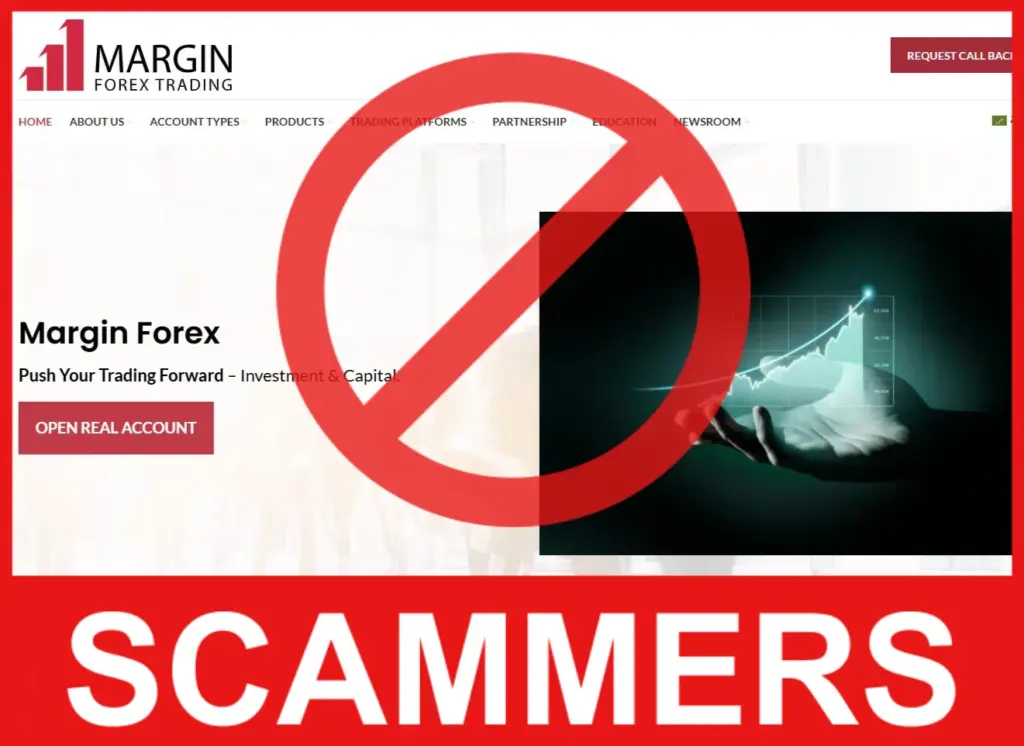
Information About the Fraudulent Broker
Margin Forex presents itself as a modern online broker that allows trading in Forex pairs, cryptocurrencies, indices, and commodities. The website claims to provide fast execution, user friendly access, and attractive trading conditions designed for both beginners and experienced traders. However, the overall presentation of the platform is extremely generic. Many sections of the website rely on broad marketing phrases instead of real technical or financial details. There is very little concrete information about how trades are executed, where liquidity comes from, or how client funds are protected. This lack of transparency is often a warning sign in the Forex industry. Another concerning aspect is the strong focus on deposits. In many similar cases across the market, platforms that are not truly regulated tend to prioritize encouraging users to fund their accounts as quickly as possible. The communication often becomes centered around increasing deposits rather than explaining real trading risks or strategies. There is also a noticeable absence of meaningful company background. Legitimate brokers usually provide detailed information about their leadership, history, and operational structure. In contrast, Margin Forex appears to offer very limited verifiable information about who actually runs the platform. In addition, the trading environment shown to users may not reflect real market conditions. Many victims of similar platforms report that prices, balances, and profits displayed inside the account can appear artificially generated, which creates a false sense of success and encourages further deposits.
Verification of Company Data
When trying to verify the legal status of Margin Forex, serious issues become apparent. One of the main problems is the lack of confirmed licensing from any well known financial regulatory authority. Licensed brokers are normally supervised by organizations such as the Financial Conduct Authority in the United Kingdom, CySEC in Cyprus, ASIC in Australia, or similar institutions in other regions. These regulators maintain public databases where licensed companies can be easily checked. In the case of Margin Forex, there is no clear evidence of such registration. The website does not provide verifiable license numbers or references that can be independently confirmed. This absence of regulatory oversight means that clients do not have the usual protection mechanisms that exist in the financial industry. Another issue is the lack of transparent corporate identity. Reliable financial companies always disclose their legal entity name, registered address, and compliance documentation. In contrast, questionable platforms often hide or generalize this information, making it difficult to determine where the company is actually based or which laws apply to it. Domain information is also often a concern in such cases. Many unregulated brokers use recently registered websites and rely on privacy protection services to hide ownership details. This makes it almost impossible for clients or authorities to identify the real operators behind the platform. Without verified regulatory status or clear company data, users are essentially dealing with an entity that operates outside standard financial control systems, which significantly increases the risk of financial loss.
Exposing the Broker as a Fraudster
Several behavioral patterns associated with Margin Forex closely resemble those seen in known fraudulent brokerage operations. One of the most common issues reported in similar cases is difficulty withdrawing funds. While depositing money is usually simple and fast, withdrawal requests often face delays, unexplained rejections, or complete silence from support teams. Another concerning pattern is aggressive communication from so called account managers. These individuals often contact clients directly and encourage them to increase their investments. They may use emotional pressure, promises of higher profits, or warnings about missed opportunities. This type of behavior is frequently observed in scam operations designed to extract as much money as possible from clients. There is also the issue of unrealistic expectations being created. Clients may be shown constant growth in their trading account, even when no real market activity supports such results. This can mislead users into believing that they are successfully trading, when in reality the numbers may be manipulated internally. Another red flag is the sudden change in communication behavior once clients request withdrawals. At first, support teams may be responsive and friendly, but later they may become unresponsive or start introducing new conditions that prevent payouts. This shift in behavior is often a key indicator of fraudulent intent.
Fraud Broker’s Deception Scheme
Fraudulent Forex platforms often follow a structured method of operation, and Margin Forex appears to fit this general pattern. The process usually begins with online advertising or direct marketing messages that promise easy income, fast results, and simple trading conditions. After a user registers, they are typically guided through a smooth onboarding process that creates a sense of trust. Small initial deposits may even show positive trading results, which encourages confidence in the system. Once trust is established, clients are usually contacted by representatives who encourage them to invest larger amounts. These conversations are often persuasive and may include pressure tactics or emotional manipulation designed to increase deposits. As investment amounts grow, the platform may continue to show apparent profits to keep the client engaged. However, when the client attempts to withdraw money, the situation changes. Suddenly, new requirements appear, such as additional fees, verification delays, or technical problems that prevent transactions from being completed. In many cases, communication eventually stops altogether, leaving the client without access to funds and without support from the platform.
How to Get Money Back from a Scam Broker
Recovering funds from an unregulated Forex broker can be challenging, but it is not always impossible. The first step is to collect all possible documentation related to the case. This includes payment confirmations, bank statements, email correspondence, chat histories, and screenshots of the trading account. Once all evidence is gathered, the next step is to contact the bank or payment provider as quickly as possible. In some situations, especially when payments were made by card, chargeback procedures may be available. These procedures allow clients to dispute transactions and potentially recover their funds. In more complex cases, professional assistance becomes very important. DNB Forex Review specialists focus specifically on helping victims of financial fraud. They analyze each case individually, identify possible recovery routes, and guide clients through the process of disputing transactions or initiating financial investigations. Because fraudulent brokers often use complicated structures to hide funds, experience and knowledge of financial recovery procedures can make a significant difference in the outcome.
Negative Reviews About the Broker
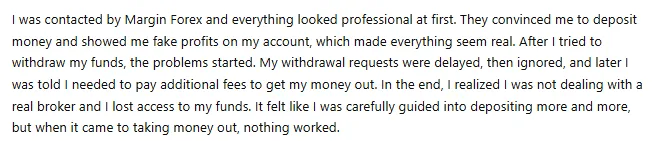
Feedback patterns associated with platforms like Margin Forex often follow a similar structure. Many users report that everything seems normal at the beginning, especially during the deposit phase. However, problems usually start when withdrawal is requested. Common complaints include blocked accounts without explanation, sudden requests for additional payments before withdrawal approval, and complete loss of communication with support teams. Some users also describe being encouraged to invest more money under the promise of unlocking profits or receiving bonuses. Another frequently mentioned issue is psychological pressure. Clients often report feeling pushed into making quick decisions without enough time to evaluate risks properly. This is a typical strategy used in fraudulent environments to reduce rational thinking and increase emotional decision making. Over time, these experiences create a clear pattern that suggests systematic issues rather than isolated incidents.
Additional warning signs investors should know
When it comes to platforms like Margin Forex, the danger is not always obvious at first glance. Scam brokers rarely present themselves as scams. Instead, they carefully build an image of a legitimate financial service. That is why it is important to understand the smaller, less obvious warning signs that often appear before the main problems start. One of the most overlooked signals is the way the platform communicates before any deposit is made. In many fraudulent schemes, the communication feels extremely smooth and friendly at the beginning. Representatives are very responsive, patient, and willing to explain everything in simple terms. However, this is often part of a scripted approach designed to lower suspicion. Once money is deposited, the tone of communication frequently changes. The same “supportive” managers may become much more aggressive, pushing clients to invest more or warning them about missed opportunities. Another subtle warning sign is the lack of real financial education or risk explanation. Legitimate brokers usually spend time explaining how volatile markets are, how leverage works, and what risks traders should expect. Fraudulent platforms often avoid deep explanations because their goal is not to educate but to attract deposits. Instead of realistic risk discussions, users are presented with simplified messages like “start earning today” or “unlock financial freedom”. A very common red flag is the artificial feeling of trading success. Some users notice that their accounts show consistent profits even when they have little or no trading experience. In real financial markets, such steady growth is extremely rare, especially for beginners. When profits appear too smooth or too predictable, it can indicate that the trading environment is simulated or manipulated internally rather than connected to real market liquidity. Another important warning sign is pressure to use bonuses or promotional offers. Fraudulent brokers often advertise deposit bonuses, “insurance funds”, or special trading conditions. At first, these offers seem attractive, but they usually come with hidden restrictions. For example, clients may not be allowed to withdraw funds until a certain trading volume is reached, or they may be forced to deposit additional money to activate bonus-related conditions. These structures are designed to trap funds inside the platform. A further indicator is the behavior of withdrawal systems. Even before serious problems occur, some users notice that withdrawal options are limited, unclear, or constantly changing. A legitimate broker always provides clear and stable withdrawal procedures. In contrast, suspicious platforms often introduce new steps, additional verification requirements, or unexpected delays that were not mentioned at the beginning. There is also the issue of inconsistent information across the website. Scam platforms often copy text sections from other websites or use generic templates that contain contradictions. For example, trading conditions might differ between pages, or legal disclaimers may not match the actual services offered. These inconsistencies are usually a sign that the platform was not built with transparency in mind. Another red flag is the absence of independent presence in the financial industry. Real brokers are usually discussed on reputable financial forums, reviewed by analysts, and listed in regulatory databases. Scam brokers, on the other hand, often exist in isolation. Their online presence is usually limited to their own website and paid promotional content, without genuine independent verification. It is also important to pay attention to how strongly the platform focuses on emotional decision making. Fraudulent brokers often avoid technical discussions and instead use emotional language. They talk about changing your life, escaping financial struggle, or achieving quick success. This emotional framing is intentional, as it reduces rational thinking and encourages impulsive deposits. Another subtle but important sign is the constant urgency in communication. Messages like “limited opportunity”, “last chance to invest”, or “market conditions changing rapidly” are often used to push clients into quick decisions. Real financial markets do not require such artificial urgency, and professional brokers do not pressure clients to act immediately. Some users also report that once they question the platform too deeply, responses become vague or evasive. Instead of clear answers, support representatives may redirect the conversation or provide incomplete information. This avoidance behavior is often a sign that the platform cannot support its claims with real evidence. Finally, one of the strongest hidden warning signs is the emotional dependency created by account managers. Over time, some clients start relying heavily on these managers for every decision. This dependency is intentional in many fraudulent systems, as it reduces independent thinking and makes it easier to control the client’s actions. All these signs may seem small individually, but together they form a clear pattern. When multiple warning signals appear at the same time, the risk of dealing with a fraudulent broker increases significantly.
Conclusion
The overall analysis of Margin Forex shows multiple warning signs that are commonly associated with unregulated and potentially fraudulent brokerage operations. These include lack of verified licensing, unclear company structure, withdrawal difficulties, and patterns of aggressive client persuasion. While the platform presents itself as a professional trading service, the absence of transparency and regulatory oversight creates significant risk for users. In such conditions, the safety of invested funds cannot be guaranteed. For individuals who have already experienced financial losses or difficulties with withdrawals, it is important to act quickly and avoid further communication that could lead to additional losses. Professional assistance can significantly improve the chances of recovery. DNB Forex Review specialists provide support in such cases by analyzing transactions, identifying recovery options, and guiding victims through the process of attempting to return lost funds. In situations involving questionable Forex platforms, early action and informed decisions are often the only way to minimize damage and improve the possibility of financial recovery.






My experience with Margin Forex was disappointing. I trusted the platform and invested my savings, but later I found out that getting money back was almost impossible. They asked for additional payments and created more delays. I am searching for professional help to understand whether my funds can be recovered.
Our team is ready to help you regain control of the situation. Submit a request today.