




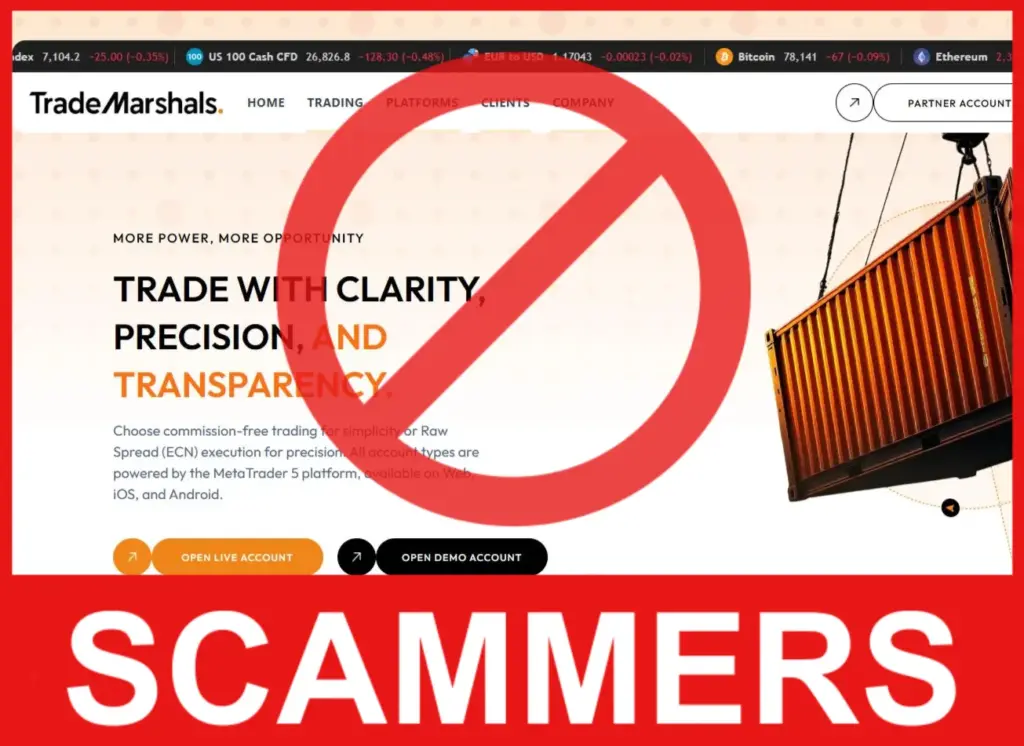
At first glance, Trade Marshals presents itself as a modern trading platform that gives access to forex, cryptocurrencies, indices, and commodities. The website looks polished, the messaging is confident, and everything is written in a way that makes trading seem simple and profitable even for beginners. It is exactly the kind of presentation that can easily build trust in a short time. However, once you start looking beyond the surface, the situation becomes less reassuring. Across different forums, review sites, and complaint threads, there are repeated stories from users who say their experience with the platform was far from what was promised. Instead of smooth trading and withdrawals, they describe pressure, confusion, and eventually financial losses. This review was created for DNB Forex Review, a service that works with victims of questionable brokers and helps them attempt to recover lost funds. The goal here is to present a clear picture of how Trade Marshals is described by users and why so many concerns have been raised around it.
Information About the Fraudulent Broker
Trade Marshals positions itself as a global brokerage service offering trading opportunities across multiple financial markets. The website promotes ideas of advanced tools, professional guidance, and fast profits. It also presents the idea that users can rely on personal account managers who will help them make better trading decisions. On the surface, this sounds like a typical online broker. But user feedback paints a very different picture of what happens after registration. Many people report that communication starts off very actively. Representatives contact clients frequently, often guiding them through the first deposit and encouraging them to begin trading quickly. Some users mention that early results on their trading dashboards appear positive, which builds confidence and encourages further investment. As time goes on, however, the tone reportedly changes. Users describe increasing pressure to deposit more money, sometimes under the promise of better opportunities or higher returns. Once larger sums are invested, several clients say they start experiencing serious difficulties when trying to withdraw funds or even get clear answers from support. What stands out in these reports is the pattern. The broker appears highly engaged when money is being deposited, but much less responsive when users attempt to take it out. This imbalance is one of the main reasons people begin to question the platform’s intentions.
Verification of Company Data
A key part of evaluating any financial service is understanding who regulates it and how it is legally structured. In the case of Trade Marshals, this information is not clearly presented. There is no strong, verifiable indication that the company is regulated by a major financial authority. Details about licensing are either missing or too vague to confirm independently. The ownership structure is also not clearly disclosed, which makes it difficult to determine who is actually behind the platform. In legitimate brokerage operations, regulatory oversight is central. It ensures that client funds are protected and that there are mechanisms for resolving disputes. When this oversight is missing or unclear, clients are left with very limited protection if something goes wrong. Another concern raised by users is the difficulty in verifying the company’s physical presence. In many cases, offshore registration is used in the online trading industry, and while this is not automatically fraudulent, it often reduces accountability and makes legal recovery more complicated. When combined with repeated complaints about withdrawals and communication issues, the lack of transparent company data becomes a serious warning sign.
Exposing the Broker as a Fraudster
When reviewing user experiences together, certain patterns appear repeatedly. One of the most common is aggressive client engagement at the beginning. Many users say they were contacted directly or encouraged to invest quickly, sometimes with strong emotional persuasion. Another pattern involves the way deposits are handled. Users describe situations where small initial investments seem to perform well on the platform, creating the impression that trading is successful. This early sense of progress often leads to larger deposits. After that point, many reports begin to shift. Clients say that trading conditions change, support becomes less responsive, and withdrawal requests start to face delays or unexplained rejections. In some cases, users mention being asked for additional payments before their funds can be released, which creates further frustration and confusion. There are also descriptions of trading behavior that users find suspicious, including unexpected losses or execution issues that are difficult to explain under normal market conditions. While such claims are difficult to independently verify, the frequency of similar complaints adds to the overall concern. What emerges from these accounts is a system where engagement is strong during deposits but weak during withdrawals, which is one of the most commonly reported warning signs in questionable brokerage operations.
Fraud Broker’s Deception Scheme
Based on collected experiences, the process often begins with attraction through advertising or direct contact. The platform presents itself as an opportunity for financial growth, often emphasizing simplicity and potential profit. After initial contact, users typically go through a stage where they are guided closely by a representative. This creates trust and reduces hesitation about making a deposit. In some cases, small early profits appear on the account interface, reinforcing confidence. Once trust is established, clients are encouraged to increase their investment. This stage is often accompanied by promises of better trading conditions or higher returns. Some users also mention receiving bonuses or special offers that encourage additional deposits. As trading activity increases, clients may be pushed into more frequent or higher-risk trades. At this point, some users begin to notice inconsistencies or unexpected results in their accounts. The final stage is where most complaints converge. When users attempt to withdraw their money, they encounter delays, additional requirements, or complete silence from support. Communication that was once active becomes minimal or disappears entirely. In many cases, the funds remain inaccessible. This progression, while not unique to one platform, is frequently associated with high-risk or unregulated brokerage operations.
How to Get Money Back from a Scam Broker
When people realize they may have been misled by a broker, the situation often feels overwhelming. However, there are still steps that can be taken to try to recover lost money. DNB Forex Review works with clients who have transferred funds to questionable or unregulated platforms. The recovery process depends on how the money was sent and what documentation is available. In many cases, banks or payment providers can initiate dispute procedures if fraud is suspected. This is often referred to as a chargeback process when card payments are involved. In other situations, transactions can be analyzed to trace where the funds were sent and whether financial intermediaries can assist in recovery. Legal routes may also be possible depending on the jurisdiction and payment method used. The key factor is acting quickly, as delays often reduce the chances of successful recovery. Clients are usually advised to preserve all communication with the broker, including emails, chat messages, and payment confirmations, as this information can be essential during investigations.
Negative Reviews About the Broker
Across various platforms, Trade Marshals is associated with a growing number of negative user experiences. While individual situations differ, the general themes are quite consistent. Many users mention difficulties withdrawing funds, even after completing what they believed were all necessary steps. Others describe sudden changes in account status or unexpected requirements that appear only when they try to access their money. There are also reports of strong pressure to invest more, sometimes accompanied by promises that additional deposits will unlock higher profits or faster withdrawals. When these expectations are not met, users often report feeling misled or ignored. Some individuals describe losing relatively small amounts at first, only to increase their investment later based on perceived success. Others report more significant losses after extended interaction with account managers. A recurring emotional pattern can also be seen in these reviews. Initial optimism tends to shift into confusion, followed by frustration and eventually distrust when communication breaks down.

How Clients Are Attracted and Managed
One of the most telling aspects of platforms like Trade Marshals is not just what they claim to offer, but how they actually behave when it comes to attracting and handling clients. When you put together user reports, complaint patterns, and typical industry practices used by questionable brokers, a clearer picture starts to emerge. The first stage is almost always client acquisition, and it tends to feel more aggressive than what people expect from a normal financial company. Many users describe being contacted out of the blue, either through phone calls, messaging apps, or follow-up emails after leaving their details on some financial or investment-related form online. The conversation usually doesn’t feel like a casual introduction. Instead, it is structured to push interest quickly, often focusing on potential profit rather than explaining risks. A common detail mentioned by users is the sense of urgency created during these first interactions. Representatives often emphasize that opportunities are “time-sensitive” or that market conditions are “perfect right now” to start investing. This psychological pressure is subtle, but effective, especially for people who are new to trading and may not fully understand how markets actually work. Once contact is established, the next stage is relationship building, which is where many clients report a noticeable shift in communication style. At this point, users are often assigned a personal “account manager” or “financial advisor.” This person becomes the main point of contact and is usually very active, responsive, and encouraging. They help with registration, guide the first deposit, and often walk the client through what looks like simple trading steps. This is where trust is built. Clients frequently describe feeling supported and even educated during this phase. The platform appears user-friendly, and the account dashboard may show positive early results. Even small gains are enough to reinforce confidence, especially for people who are not experienced traders. But what stands out in many reports is that this support is not consistent over time. As soon as the client becomes more financially involved, the tone of communication often shifts. Instead of focusing on education or strategy, the conversation starts to center around increasing deposits, upgrading account types, or taking advantage of “exclusive opportunities.” These offers are usually framed as limited or special, which adds pressure to act quickly. Another important observation is how dependency is gradually built. Clients begin to rely heavily on their assigned manager for decisions. This creates a situation where people trust recommendations without fully questioning them. In some cases, users report being guided into trades they did not fully understand, or being encouraged to increase exposure beyond their comfort level. As deposits grow, communication often becomes more transactional. The enthusiasm that was present at the beginning starts to fade, replaced by a stronger focus on financial input from the client. According to many complaints, this is the point where the relationship begins to feel one-sided. There is also a recurring theme of controlled optimism. Even when clients express hesitation or concern, they are often reassured that losses are temporary or that a “recovery strategy” is in place. This helps maintain engagement and discourages withdrawal requests. The emotional aspect of this interaction should not be underestimated, because it plays a key role in keeping users invested both financially and psychologically. Eventually, many users report reaching a point where they try to withdraw their funds. This is where the communication pattern changes most dramatically. The previously active and responsive support becomes slow, inconsistent, or completely unresponsive. In some cases, new conditions suddenly appear, such as additional verification steps, fees, or account restrictions that were not clearly explained earlier. Another detail that appears in multiple reports is the introduction of delays framed as technical or administrative issues. Users are told to wait for processing, compliance checks, or system updates. While delays are normal in financial services, the issue here is repetition and lack of transparency, which leads many clients to lose confidence. There are also mentions of escalating requests. Some users say they were asked to deposit additional funds before withdrawals could be approved. This creates a confusing situation where access to one’s own money becomes conditional on further investment. Naturally, this raises serious concerns for clients who were expecting standard withdrawal procedures. Over time, communication may stop altogether. This final stage is often described as sudden silence, where emails go unanswered and account managers disappear. At this point, users are left with limited options and often begin searching for external help. What makes this entire structure particularly concerning is the consistency of these reports across different users and time periods. While experiences may vary in detail, the overall pattern remains similar: strong engagement at the beginning, increasing financial pressure in the middle, and withdrawal difficulties at the end. From a broader perspective, this kind of client management strategy is often associated with high-risk or unregulated brokerage environments. It relies heavily on trust-building and emotional engagement rather than transparent financial operations. And once that trust is established, it becomes much harder for clients to step back or question what is happening. For anyone encountering similar behavior, the key warning sign is imbalance. If communication is intense when money is being deposited but becomes difficult when money is being withdrawn, that is usually a signal that something is not functioning in a standard, transparent way. In cases like these, independent review and external assistance become important. This is where services like DNB Forex Review can help clients step outside the emotional cycle and evaluate their situation from a more objective and structured perspective.
Conclusion
After reviewing the available information, user experiences, and common patterns associated with Trade Marshals, there are several concerns that cannot be ignored. The lack of clear regulation, repeated complaints about withdrawals, and inconsistent communication all contribute to a high level of uncertainty around the platform. While every trading platform carries risk, the combination of aggressive marketing, unclear legal structure, and negative user reports suggests that caution is necessary. For those who have already invested and are facing difficulties, it is important not to delay action. Financial recovery is often time-sensitive, and early steps can significantly affect the outcome. DNB Forex Review provides assistance to individuals in exactly these situations, helping them understand their options and work toward recovering funds through available financial and legal channels.







My case with Trade Marshals has been stressful because I cannot access the money I deposited. I tried contacting their support team several times, but I did not receive a proper solution regarding my withdrawal request. After researching online, I found information about possible recovery procedures and decided to seek professional assistance. I hope that by sharing my experience, other people who faced similar issues will know they are not the only ones looking for answers.
Our team will help you recover stolen funds; please submit a request.
My experience with Trade Marshals was a difficult lesson. I believed I was using a legitimate trading platform, but after depositing money I started facing constant issues with withdrawals. The company asked for additional actions before releasing my funds, but the explanations were unclear. I contacted a recovery specialist who reviewed my case and helped me prepare the necessary documents. The process is still ongoing, but I finally have a better understanding of how to proceed with my claim.
If this company has defrauded you, submit a request, and one of our specialists will contact you for a free consultation!