




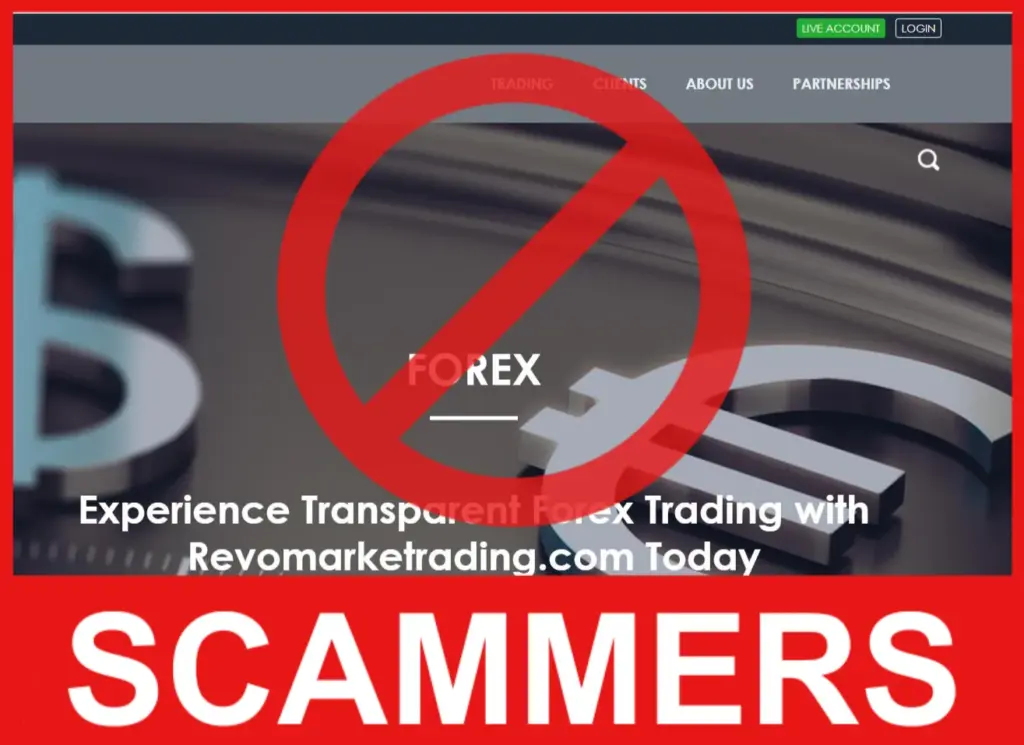
At first sight, Revomarketrading and its website revomarketrading.com try to present themselves as a modern gateway into financial trading. The language is polished, the visuals look professional, and the promises are attractive enough to make inexperienced investors curious. It is a familiar picture in the online trading world: fast profits, simple trading conditions, and personal assistance that supposedly helps clients grow their capital. However, what often matters more than appearance is what happens after a person actually deposits money. In many user reports and online discussions, a very different picture begins to emerge once funds are transferred. Instead of smooth trading and withdrawals, clients describe pressure, delays, and confusion that gradually replace the initial confidence. This article takes a closer look at how Revomarketrading is described by users, what concerns have been raised online, and why services such as DNB Forex Review are often contacted by people who believe they have been misled. The goal here is not to jump to conclusions, but to examine the patterns that appear repeatedly in similar cases across the online trading industry.
Information About the Fraudulent Broker
Revomarketrading positions itself as a global brokerage platform offering access to forex markets, cryptocurrencies, indices, and commodities. The website claims to provide fast execution, advanced trading tools, and conditions that are supposedly suitable for both beginners and experienced traders. At the beginning of communication, many users report a smooth onboarding experience. Representatives or so-called account managers often contact potential clients quickly, explaining how easy it is to start trading and how profitable the opportunities can be. The tone is usually friendly and encouraging, designed to build trust and reduce hesitation. As interaction continues, the focus tends to shift toward increasing deposits. Clients are frequently encouraged to upgrade their accounts or invest more in order to unlock better trading conditions or higher returns. Some users describe being shown dashboards where their balance appears to grow rapidly, creating a strong emotional incentive to reinvest. What stands out in many discussions is the lack of clarity about how trades are actually executed. Real brokerage companies typically provide transparent access to liquidity providers, trade confirmations, and regulatory documentation. In the case of Revomarketrading, users often say that such transparency is missing or insufficient, which raises questions about whether real market trading is taking place at all.
Verification of Company Data
One of the most important steps in evaluating any online broker is checking its regulatory status and company identity. In the case of Revomarketrading, this is where concerns begin to surface. Public information available online does not clearly confirm that the company is licensed by any major financial regulator such as the Financial Conduct Authority in the United Kingdom, the Cyprus Securities and Exchange Commission, or the Australian Securities and Investments Commission. These are the types of authorities that impose strict rules on brokers to protect clients. In addition, the corporate details provided on websites like this are often limited or difficult to verify independently. Sometimes company addresses are vague, and in other cases registration numbers do not match official databases. This lack of transparency makes it difficult for clients to understand who is actually operating the platform and where they are legally based. Another concern often mentioned by reviewers is the absence of clear information about management or ownership. Legitimate financial companies usually disclose their leadership structure and legal entities in detail. When this information is missing or unclear, it becomes harder to hold anyone accountable in case of disputes. While none of these points alone proves fraudulent activity, together they form a pattern that is commonly associated with high-risk or unregulated trading environments.
Exposing the Broker as a Fraudster
Across various online forums and complaint platforms, users describing their experience with Revomarketrading often mention similar types of problems. One of the most frequently reported issues involves withdrawal delays or complete inability to access deposited funds. Many users say that withdrawing money becomes difficult once they attempt to take profits or even their initial deposit. Requests may be delayed for long periods or rejected due to unclear verification procedures. In some cases, additional payments are requested before withdrawals can allegedly be processed. Another recurring theme is the aggressive behavior of account managers. Instead of neutral financial guidance, some clients report constant pressure to invest more money. Communication may include urgency, emotional persuasion, or warnings that opportunities will be lost if immediate action is not taken. There are also descriptions of sudden changes in communication quality. While support is responsive at the beginning, it often becomes slow or completely unresponsive once clients start asking for withdrawals. This shift in behavior is one of the most common red flags reported in similar brokerage complaints.
Fraud Broker’s Deception Scheme
Although each case may differ, many users describe a pattern that resembles a structured process designed to extract deposits gradually. The experience often begins with targeted advertising or direct contact from representatives who promise easy profits and simple trading conditions. After the first deposit, clients are shown an interface that appears to reflect trading activity and small gains, which builds trust and encourages further investment. As confidence grows, clients are encouraged to deposit larger amounts. Account managers may present this as a necessary step to access better opportunities or avoid missing profitable trades. Emotional pressure plays a significant role during this stage. Once a substantial amount of money is deposited, problems typically begin to appear when withdrawals are requested. Users report delays, additional fees, or sudden account restrictions. In many cases, communication becomes inconsistent, and explanations remain vague or change over time. Eventually, some clients are left unable to recover their funds, which leads them to seek help from recovery specialists or legal support services.
How to Get Money Back from a Scam Broker
When individuals realize they may be dealing with a questionable broker, the next step is often trying to recover lost funds. This is where organizations like DNB Forex Review are commonly contacted. The recovery process usually begins with a detailed review of all transactions, including bank transfers, credit card payments, or cryptocurrency movements. Understanding where the money went is essential for determining possible recovery paths. In some cases, chargeback procedures may be available, especially when payments were made using credit or debit cards. Banks and payment providers can sometimes reverse transactions if fraud or misrepresentation is proven. Legal complaints can also be submitted to financial institutions or payment processors involved in handling the funds. Even when a broker is offshore or unregulated, money often passes through intermediaries that may be subject to regulation. Specialists in this field also help clients organize documentation, communication records, and evidence of misleading practices. While recovery is never guaranteed, professional assistance can significantly improve the chances of success compared to acting alone.
Negative Reviews About the Broker
Across different review platforms and discussion forums, users describing Revomarketrading often share similar frustrations. Many mention that the problems do not appear immediately, which initially creates a false sense of trust. Some clients report that small withdrawals are occasionally allowed at the beginning. This can give the impression that the system is functioning normally. However, when larger amounts are requested, complications begin to appear. There are also reports of unexpected fees or conditions being introduced at the withdrawal stage. Users describe being asked to pay additional amounts in order to “unlock” their funds, which often leads to further losses. Another common complaint involves emotional manipulation. Some users say they were encouraged not to withdraw funds and instead reinvest them, being told that profits would increase significantly if they remained active. Although not every experience is identical, the repetition of these patterns across multiple independent accounts is what raises concern among financial analysts and recovery specialists.

Why Unregulated Brokers Continue to Appear Online
One of the most frustrating questions for investors who have already dealt with suspicious platforms like Revomarketrading is simple: why do these brokers keep appearing again and again, even after so many warnings, complaints, and exposed schemes? The uncomfortable answer is that the online trading space is still relatively easy to enter, difficult to fully regulate across borders, and highly profitable for operators who do not follow the rules. This combination creates the perfect environment for unregulated or questionable brokers to continuously emerge under new names and new websites. To understand this better, it helps to look at how the system actually works behind the polished websites and professional-looking trading dashboards. The first reason is accessibility. Creating a trading website today does not require building a real brokerage infrastructure. A group of individuals can purchase a ready-made trading platform, rent server space, and launch a website that visually imitates a legitimate financial service. The interface can show charts, balances, and trading activity even when no real market execution is happening in the background. For a new investor, everything looks real enough to build trust. The second reason is jurisdictional flexibility. Many of these companies register in offshore locations where financial regulation is minimal or difficult to enforce. These jurisdictions may allow businesses to operate without strict oversight, and in some cases, company details can be hidden behind layers of intermediaries. This makes it extremely hard for victims or authorities in other countries to trace responsibility or take immediate legal action. Another important factor is the global nature of online advertising. Social media platforms, search engines, and messaging apps allow financial offers to reach millions of users across different countries within seconds. Even if one website gets flagged or taken down, another similar one can appear shortly after under a different name. This “rebranding cycle” is one of the most common survival strategies used by unregulated brokers. There is also a psychological element that plays a major role. Many of these platforms rely on human behavior rather than technical complexity. They understand that people are attracted to opportunities that promise fast financial improvement. By presenting success stories, simulated profits, and friendly account managers, they create an emotional environment where decisions are made quickly, often before proper verification takes place. Another key issue is the lack of immediate reporting awareness. Many victims do not realize they have been misled until withdrawal problems start appearing. By that time, the company may already have moved funds, changed payment processors, or even rebranded entirely. This delay gives operators enough time to continue attracting new clients while existing complaints are still forming. Payment systems also play a role in the persistence of these brokers. Even when platforms are unregulated, they often manage to use legitimate financial channels such as credit card processors, crypto exchanges, or third-party payment agents. This creates a complex chain of transactions that can be difficult to trace or reverse without specialized assistance. It also gives the appearance of legitimacy at the early stages of the relationship. Another reason is the imbalance between regulation and innovation. Financial regulators do try to identify and block fraudulent operations, but they are often working reactively rather than proactively. By the time a warning is issued or a website is blacklisted, the operators may already have moved on to a new domain or structure. Perhaps the most important factor is profitability. Even if only a small percentage of users fall into the trap, the financial gain from those cases can be significant. This creates a business model where repeated attempts are worthwhile, even if some versions of the scheme are exposed or shut down. Finally, there is the issue of public awareness. Many first-time investors are still unfamiliar with how regulated trading should look. They may not know how to verify licenses, check company registrations, or recognize warning signs early. This knowledge gap makes it easier for unregulated brokers to target inexperienced users. All of these factors combined explain why platforms like Revomarketrading are not isolated cases, but part of a broader and recurring problem in the online financial world. It is not just about one website or one company—it is about a system where low barriers to entry, global reach, and limited enforcement create ongoing opportunities for misleading operators. This is exactly why caution, verification, and independent research are so important before investing money online. Once funds are transferred, especially to unregulated entities, recovering them becomes significantly more difficult and often requires professional intervention.
Conclusion
Revomarketrading, based on user reports and available discussions, raises several concerns that are commonly associated with unregulated or potentially deceptive trading platforms. These include unclear company information, withdrawal difficulties, aggressive marketing behavior, and lack of transparency in trading operations. While each individual case may differ, the overall pattern described by users is consistent enough to warrant caution. Online trading can be legitimate, but only when proper regulation, transparency, and accountability are in place. For individuals who believe they have experienced financial losses connected to platforms like this, acting quickly is essential. Gathering evidence, documenting communication, and seeking professional assistance can make a significant difference in potential recovery efforts. Services such as DNB Forex Review are often contacted by victims who need structured help in navigating complex financial disputes. While outcomes vary, taking informed and timely action remains one of the most important steps in dealing with such situations.






I had a similar problem with Revomarketrading. They showed profits on my account, but I could not withdraw anything. After getting help, I learned how to prepare the documents needed for my case. The process takes time, but at least I know what steps to follow now.
Submit a request to receive professional assistance and a consultation.