




The modern online trading space is filled with platforms that claim to open the door to Forex, crypto, and global investment opportunities. FOREXstock, operating via forexstocke.cc, is one of those services that has recently attracted growing concern from traders and financial analysts. At first sight, it is presented as a polished and professional trading environment, designed to help users earn from financial markets with ease. The promises sound attractive, the interface looks convincing, and the marketing language is carefully crafted to build trust quickly. But when users start engaging with the platform, a very different picture begins to emerge, filled with uncertainty, complaints, and red flags that cannot be ignored.
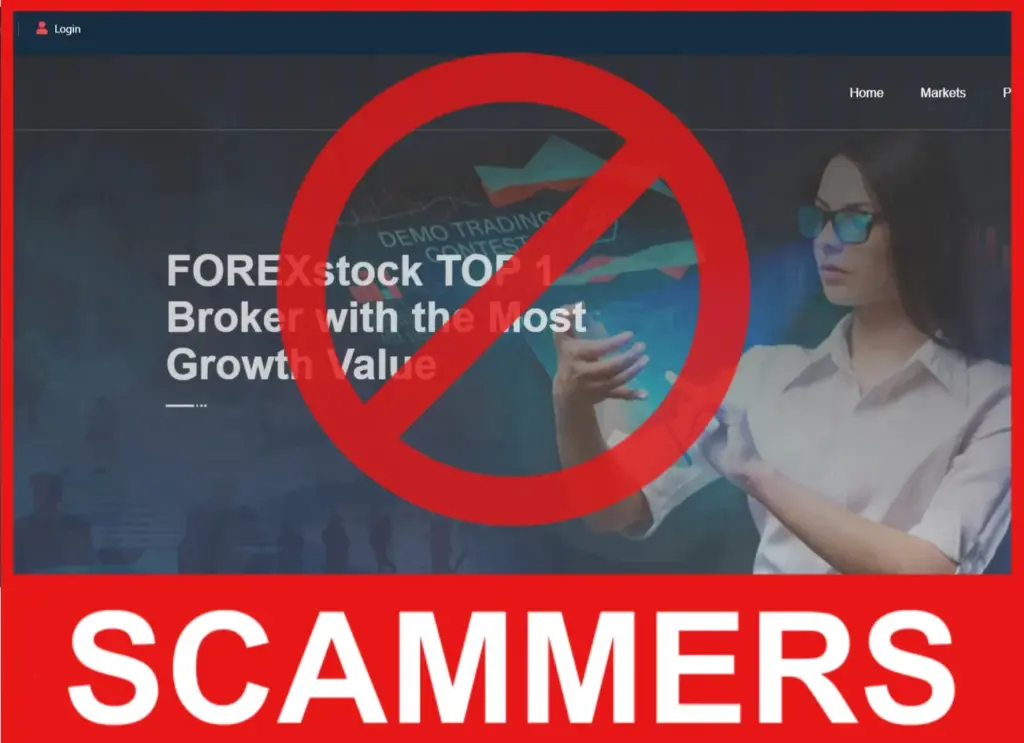
Information About the Fraudulent Broker
FOREXstock positions itself as a multi asset trading service offering access to Forex markets, cryptocurrencies, indices, and commodities. The platform is marketed as suitable for both beginners and experienced traders, emphasizing simplicity, fast results, and professional guidance. In practice, however, many users describe a completely different experience. After registering, they are quickly contacted by representatives who introduce themselves as personal financial assistants or account managers. Their communication is usually persistent and highly focused on encouraging deposits rather than explaining real market risks or trading strategies. A recurring pattern mentioned by users is that the platform seems more interested in how much money is deposited than in educating users or providing transparent trading conditions. Early interactions often feel smooth and supportive, but this changes once real money is involved. Some users report that initial account performance appears unusually positive, creating the impression of successful trading activity, even though no independent verification of real market execution exists. Communication behavior is another key point. Support representatives are responsive at first, but as soon as withdrawal requests appear, responsiveness tends to decrease significantly. This shift is one of the most frequently mentioned warning signs in similar cases across the online trading industry.
Verification of Company Data
A legitimate financial broker is expected to operate under strict regulatory oversight, providing clear licensing information, company registration data, and verifiable compliance with financial authorities. This transparency is essential for protecting clients and ensuring accountability. With FOREXstock, such transparency is not present in a verifiable form. There is no confirmed regulatory authorization from recognized financial regulators, and no clear evidence that the company operates under legitimate supervision. This alone places the platform in a high risk category from a regulatory perspective. The corporate identity of the platform is also unclear. There is no publicly verifiable headquarters, no detailed company background, and no transparent management structure. Users are left without information about who is actually running the platform or where it is legally based. Even domain ownership is concealed through privacy protection systems, making it difficult to trace operational responsibility. While privacy protection is not unusual in itself, combined with missing regulatory data and unclear company identity, it becomes another layer of concern. Legal documentation on the platform also raises issues. Terms and conditions often contain broad clauses that give the operator the right to restrict accounts, block withdrawals, or modify trading conditions without clear justification. In regulated environments, such clauses would typically not be acceptable, as they heavily favor the platform over the client.
Exposing the Broker as a Fraudster
Several behavioral patterns associated with FOREXstock strongly resemble those seen in fraudulent trading schemes. One of the most common issues is withdrawal obstruction. Users report that once they attempt to withdraw funds, unexpected problems appear. These include delays, repeated verification demands, or unexplained rejections. In some cases, access to accounts is restricted entirely after withdrawal attempts are made. Another consistent issue is deposit pressure. Account managers frequently encourage users to increase their investments, often suggesting that larger deposits will unlock better trading conditions or higher profits. This pressure can become persistent and emotionally driven, which is a known manipulation tactic in fraudulent environments. There are also concerns regarding trading transparency. Some users believe that the profits shown in their accounts are not linked to real market activity. Instead, they appear to be simulated or internally generated figures designed to encourage further deposits. Account restrictions and sudden communication breakdowns are also widely reported. In many cases, once users refuse additional deposits or request withdrawals, communication becomes limited or stops entirely, leaving them without support or access to funds.
Fraud Broker’s Deception Scheme
The structure used by platforms like FOREXstock typically follows a repeating pattern designed to maximize deposits while preventing withdrawals. It begins with advertising that highlights simple profits and easy entry into trading. Users are encouraged to register quickly and start with a small investment. Shortly after registration, a representative establishes contact and begins building trust through regular communication. Once trust is established, users are guided toward increasing their deposits. Early trading activity appears successful, reinforcing the idea that the platform is legitimate and profitable. This encourages users to invest larger amounts over time. Difficulties begin when users attempt to withdraw money. At this stage, the platform introduces new conditions such as unexpected fees, additional verification steps, or tax related requirements that were never previously mentioned. These obstacles delay or block access to funds. Eventually, communication may stop completely, and accounts can become inaccessible. At this point, users often realize that recovering their funds will be extremely difficult without external assistance.
How to Get Money Back from a Scam Broker
While situations involving platforms like FOREXstock can feel final, there are still potential recovery paths depending on how payments were made and how quickly action is taken. Professional recovery specialists work by analyzing transaction history, identifying payment channels, and determining whether funds can be disputed or reversed. This may involve coordination with banks, payment providers, or financial institutions depending on the method used for deposits. The process typically starts with gathering all available evidence, including payment receipts, messages, and account records. This documentation is essential for building a recovery case and identifying possible refund mechanisms. Timing is critical in these cases. The faster action is taken, the higher the chance of interrupting payment flows or initiating disputes before funds are fully moved beyond reach. It is also important to avoid making additional payments after problems begin. Fraudulent platforms often request extra fees under the promise of unlocking accounts or processing withdrawals, but these requests usually lead to further losses rather than resolution.
Negative Reviews About the Broker
Feedback from individuals who have interacted with FOREXstock is largely negative and follows a consistent pattern. Many users describe an initially smooth experience that later turns into frustration once financial withdrawals are involved. Common complaints include blocked withdrawals, sudden account issues, lack of support response, and unexpected demands for additional payments. Some users also report emotional pressure from account representatives encouraging continued investment even after concerns are raised. Another frequently mentioned issue is the display of unrealizable profits within accounts. Users see growing balances but are unable to access or withdraw those funds, creating confusion and disappointment. Overall, the user experience appears to follow a structured pattern of trust building followed by financial restriction.

Hidden Risks Beyond Financial Loss
The risks associated with platforms like FOREXstock go beyond immediate financial damage. One major concern is personal data exposure. Users are often required to submit sensitive identification documents during registration. In unregulated environments, there is no guarantee how this data is stored, secured, or whether it could be shared with third parties. Another hidden risk is repeated targeting. Once individuals interact with one questionable platform, their contact details may circulate within similar networks, leading to repeated exposure to similar schemes or recovery scams. Psychological pressure is also a significant factor. The gradual shift from friendly communication to persuasive financial pressure can affect decision making and create emotional stress. Many users report feeling trapped or confused when trying to resist further deposits. Technical manipulation may also occur in some cases, including delayed execution of trades or inconsistent pricing behavior, which can influence trading outcomes in ways that are not transparent to the user. Long term consequences are often underestimated. Beyond financial loss, users may experience loss of trust in online investing and increased vulnerability to future scams.
Conclusion
Looking at FOREXstock as a whole, the overall picture is not built on one single warning sign, but on a combination of repeated patterns that consistently appear across user reports, platform behavior, and structural analysis. When these elements are put together, they form a risk profile that cannot be ignored. The first and most important concern is the complete lack of verifiable regulatory grounding. In legitimate financial trading, regulation is not a decorative detail, it is the foundation of trust. It determines how client funds are handled, what rights users have, and what happens in case of disputes. With FOREXstock, this foundation is missing or at least not provably established. That immediately places users in a vulnerable position where there is no clear external authority overseeing operations or protecting client interests. Another key issue is the imbalance between promises and reality. The platform presents itself as a professional gateway to global markets, but the actual user experience described in complaints suggests something very different. Instead of transparent trading conditions and realistic risk explanations, users encounter strong marketing pressure, emotional persuasion, and a constant focus on increasing deposits. This imbalance is often one of the strongest indicators that a platform is not primarily designed for genuine market participation. Withdrawal behavior is perhaps the most critical element in the entire assessment. In any legitimate financial system, depositing and withdrawing funds should be equally straightforward, subject only to standard verification rules. However, in the case of FOREXstock, withdrawal processes appear to be the main point of conflict. The repeated emergence of delays, additional requirements, unexplained restrictions, or complete account blocks creates a structural pattern rather than isolated incidents. When withdrawal becomes difficult while depositing remains easy, it usually signals a system designed to control cash flow in one direction only. Equally concerning is the psychological structure of interaction. Many users describe a gradual shift in communication tone, starting from friendly assistance and evolving into pressure-based persuasion. This method is particularly effective because it builds trust before introducing financial pressure. Over time, users may begin to feel that increasing deposits is necessary to unlock progress or protect their account, even when no real justification is provided. This kind of emotional manipulation is subtle but highly effective, especially for inexperienced traders. The absence of transparency regarding company identity adds another layer of uncertainty. Without clear leadership, verified office locations, or publicly accountable management, users are left interacting with a system that has no visible responsibility structure. In practice, this means that when problems arise, there is no clearly identifiable entity to challenge or hold accountable in a meaningful way. There is also a broader systemic concern. Platforms that operate in this manner often do not function as traditional brokers at all, but rather as controlled environments where trading activity is simulated or heavily influenced internally. While this cannot always be proven directly from the outside, the consistency of user complaints about non-withdrawable profits and account manipulation strongly suggests that displayed trading results may not reflect real market execution. Another important factor is the escalation pattern. Many users do not experience problems immediately. Instead, the platform initially appears functional and even profitable. Issues only begin when larger amounts are deposited or when withdrawal is requested. This staged behavior is significant because it indicates design, not coincidence. It suggests that user trust is intentionally built before financial restrictions are introduced. Finally, the most important conclusion is not just about financial loss, but about control. In a legitimate trading environment, the user always retains control over their funds, decisions, and exit options. In the case of FOREXstock, multiple indicators suggest that this control becomes limited or fully removed once funds are deposited. That shift is what transforms a trading platform from a financial service into a high risk environment. Taken together, all these elements form a consistent and concerning picture. Even without relying on isolated claims or emotional opinions, the structural behavior alone raises serious doubts about the platform’s reliability and fairness. This is why such cases require careful attention, documentation of all interactions, and, when possible, early consultation with specialists experienced in financial dispute resolution. In situations like this, hesitation often works against the user. The longer funds remain inside such systems, the more difficult recovery tends to become. That is why awareness, documentation, and timely response are not just recommendations, but essential steps in protecting financial interests in a highly unregulated environment.






I never expected to find myself in this situation, but ForexStock turned out to be a costly lesson. Everything looked legitimate in the beginning, and the platform even showed steady gains on my account. The trouble started when I attempted to withdraw a portion of my balance. I was informed that additional compliance fees had to be paid before any funds could be released. After paying one fee, another requirement appeared. At that point, I became suspicious. I’m now trying to understand whether a recovery claim is possible and what evidence I should prioritize when preparing my case.
Specialists will contact you after you submit a request on our website.