




In recent years, online trading platforms have become a common tool for people looking to earn money from financial markets. Unfortunately, alongside legitimate companies, many fraudulent brokers also appear and disappear quickly, leaving traders with significant losses. One of the platforms that raises serious concerns is Open Gate Trading, operating through the website opengatetrading.com. At first sight, the platform presents itself as a professional brokerage service offering access to forex, crypto, and other financial instruments. The website is designed to look modern and convincing, with promises of high returns and simple trading conditions. However, deeper investigation and user feedback reveal a very different picture. Many traders report problems with withdrawals, sudden account restrictions, and pressure from representatives to deposit more funds. This review takes a closer look at Open Gate Trading, how it operates, what warning signs it shows, and why it is considered highly risky. It also explains how victims can potentially recover their funds with the help of DNB Forex Review specialists.
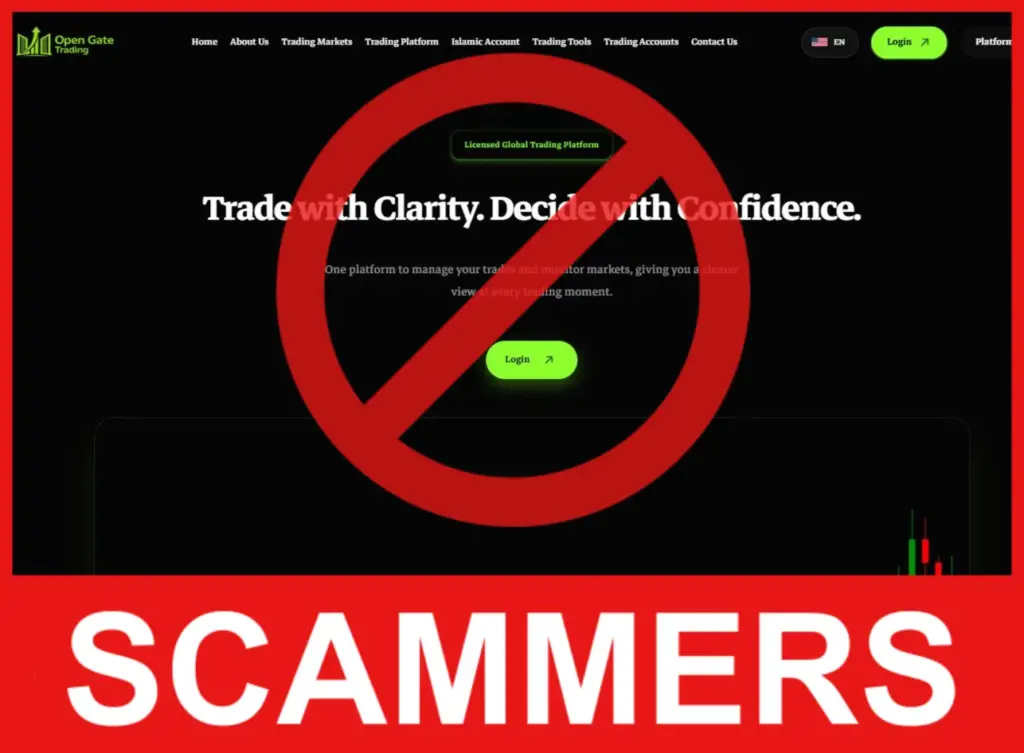
Information About the Fraudulent Broker
Open Gate Trading promotes itself as an international trading platform that provides access to financial markets and promises profitable trading opportunities. The website emphasizes fast profits, professional support, and easy access to trading instruments. These claims are typically used to attract inexperienced investors who are new to online trading. However, when examining the platform more closely, there is a noticeable lack of transparent information. There is no clear data about the company behind the platform, no verified management team, and no reliable explanation of its financial operations. This lack of transparency is one of the first warning signs. Users who have interacted with similar platforms report a very consistent pattern. After registration, individuals are contacted by so-called account managers who encourage them to make an initial deposit. At the beginning, the trading account may show small profits, which creates trust and motivates further investment. As time goes on, clients are often pushed to deposit larger amounts under the promise of higher returns. The communication becomes more aggressive, with constant suggestions that additional funds are needed to achieve financial success. In many cases, users are emotionally pressured into investing beyond their comfort level. The most serious problems begin when clients try to withdraw their money. Requests are delayed, ignored, or rejected for unclear reasons. Some users report being told that additional payments are required before withdrawals can be processed. In reality, these requests are often used to extract even more money from victims.
Verification of Company Data
One of the most important aspects of evaluating any broker is verifying its legal status and regulatory oversight. In the case of Open Gate Trading, this verification raises significant concerns. There is no confirmed evidence that the platform is regulated by any recognized financial authority. Legitimate brokers must be licensed and supervised by official regulators, but Open Gate Trading does not provide verifiable regulatory details. Another issue is the absence of corporate transparency. There is no publicly available information about the company’s founders, physical office location, or legal registration. In legitimate financial companies, such information is always clearly displayed and easy to verify. The domain history also suggests a relatively recent creation, which is common among questionable online brokers. These platforms often operate for a short time, collect funds from clients, and then disappear or rebrand under a new name. Additionally, there is no clear information about how client funds are stored or protected. Trusted brokers always separate client funds from company operating funds, but there is no indication that such protection exists here. The combination of missing regulatory status, unclear ownership, and lack of financial transparency creates a serious risk for anyone considering investing money through this platform.
Exposing the Broker as a Fraudster
Several patterns commonly associated with scam brokers can be observed in the case of Open Gate Trading. One of the most obvious issues is withdrawal obstruction. While depositing money is easy and fast, withdrawing funds becomes extremely difficult. Clients report that their requests are delayed indefinitely or rejected without proper explanation. Another warning sign is the behavior of account managers. Instead of offering neutral support, they actively encourage clients to invest more money. They often use persuasive language, suggesting that opportunities are limited or that missing additional investment could result in lost profits. There is also evidence of unrealistic trading results displayed on user accounts. In some cases, profits appear too quickly or consistently, which raises doubts about whether real market trading is actually taking place. Communication breakdown is another major concern. Once clients request withdrawals, support becomes less responsive or completely unresponsive. This sudden change in behavior is often a strong indicator of fraudulent activity. Finally, many users report being asked to pay additional fees before withdrawing their funds. These so-called taxes or verification payments are commonly used tactics in financial scams and rarely lead to actual payouts.
Fraud Broker’s Deception Scheme
The operation of Open Gate Trading appears to follow a structured pattern that is often seen in online investment fraud. It begins with attracting potential clients through online advertising, social media, or direct contact. The messages usually promise easy income, financial independence, or high returns with minimal risk. These promises are designed to appeal to inexperienced traders. Once a user registers, they are contacted by a representative who builds trust and guides them through the initial deposit process. This stage is designed to create a positive first impression. After the initial deposit, the trading dashboard may show early profits. This is an important psychological step because it encourages users to believe that the system is legitimate and profitable. Next comes the escalation phase, where clients are encouraged to invest larger sums. Account managers often insist that higher investments will unlock better opportunities or higher profits. Once significant amounts are deposited, the platform begins to restrict withdrawals. Clients are told they must complete additional steps, pay fees, or verify their identity further. These obstacles are not meant to resolve issues but to delay or prevent withdrawals entirely. Eventually, communication often stops completely, leaving the victim without access to their funds.
How to Get Money Back from a Scam Broker
Recovering money from unregulated brokers is challenging, but in many cases, action can still be taken. The most important step is to respond quickly and avoid further communication with the fraudulent platform.DNB Forex Review specialists work with victims of financial fraud and focus on analyzing payment transactions, identifying recovery options, and building legal strategies. Depending on the situation, they may assist with chargeback procedures, bank disputes, or legal claims against payment intermediaries. The recovery process often depends on how the deposit was made. Bank card payments, transfers, and cryptocurrency transactions all require different approaches. In many cases, financial institutions can be contacted to challenge unauthorized or misleading transactions. It is also important to gather all available evidence, including screenshots, transaction records, and communication history. This information helps specialists build a stronger case. While recovery is not guaranteed, professional assistance significantly increases the chances of success compared to acting alone. Many victims who delay action lose the opportunity to recover funds altogether.
Negative Reviews About the Broker
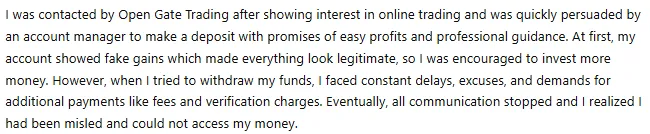
Online reports from individuals who interacted with Open Gate Trading describe a consistent set of problems. One of the most common complaints is the inability to withdraw funds after making deposits. Users often state that everything works smoothly at first, but issues begin once they try to access their money. Another frequent complaint is aggressive behavior from account representatives. Many users mention feeling pressured into depositing more money, even when they clearly expressed hesitation or refusal. Some traders report that their accounts showed sudden losses or became inaccessible without explanation. Others describe receiving constant requests for additional payments before withdrawals could be processed. There are also cases where communication stopped completely after users questioned the legitimacy of the platform. This sudden disappearance of support is often seen in fraudulent operations. Overall, the feedback pattern suggests that many users experienced financial losses and were unable to recover their funds through the platform itself.
Why scams like this continue to spread
The persistence of fraudulent trading platforms is linked to several important factors. Online trading is attractive because it offers the illusion of quick financial gain, which makes it easy for scammers to target inexperienced users. Another reason is the global nature of online platforms. Many of these companies operate across different jurisdictions, making it difficult for authorities to take direct action against them. Advertising also plays a major role. Fraudulent brokers often use targeted online ads to reach vulnerable individuals who are searching for investment opportunities. Finally, emotional manipulation is a key element. Victims are often convinced to trust the platform before realizing the risks, which makes it harder for them to disengage once problems appear.
Conclusion
After a full review of Open Gate Trading, the overall picture looks highly concerning. The platform presents itself as a professional brokerage service, but when you compare its promises with real user experiences and basic requirements for financial companies, a clear gap appears. On the surface, everything is designed to look convincing, modern website, trading dashboards, “personal managers,” and promises of stable income. But beneath this surface, there is very little that can confirm the company’s legitimacy. The most important issue is the absence of transparency. A real regulated broker always has a clear legal structure, licensing information, and verifiable oversight from financial authorities. In this case, such proof is missing or cannot be independently confirmed. This alone does not automatically prove fraud, but in the financial sector it is a serious warning sign that should never be ignored. Another major concern is the behavior reported by users. Many traders describe the same pattern: easy registration, fast deposits, early “profits” shown in the account, and then increasing pressure to invest more money. At first, everything seems smooth and even encouraging. But the situation changes dramatically once users try to withdraw their funds. Delays begin, excuses appear, and new conditions are introduced. This shift in behavior is one of the most typical indicators of problematic or fraudulent trading platforms. It is also important to highlight the psychological approach used by such platforms. Instead of simply offering trading services, they often rely on emotional influence. Clients are told that opportunities are limited, that they are “close to success,” or that they will miss profit if they do not act immediately. This type of communication is not standard in legitimate financial institutions, where decisions are left to the client without pressure. Here, however, pressure is a central tool. The issue of withdrawals is especially critical. In legitimate trading companies, withdrawing funds is a simple and transparent process, even if it takes some time due to banking procedures. In contrast, users of Open Gate Trading report repeated obstacles, unclear requirements, and requests for additional payments before funds can be released. These tactics are often used to extract more money from victims rather than process real withdrawals. Another worrying element is the disappearance of communication once problems arise. Many users mention that support is responsive only during the deposit phase. Once a client asks for their money back, communication becomes slow or completely stops. This pattern strongly suggests that client support is not designed to resolve issues, but rather to maintain the illusion of legitimacy until no more funds can be extracted. When we combine all these factors, lack of regulation, unclear company identity, withdrawal problems, aggressive sales tactics, and consistent negative user feedback, the risk level becomes extremely high. Even if some users may initially see small profits or positive experiences, the long-term pattern points toward serious financial danger. It is also important to understand that platforms like this often do not stay under one name for long. If negative attention increases, they may rebrand, change domain names, or present themselves as a completely new company. This makes it difficult for victims to track them or warn others in time. That is why early recognition of warning signs is essential. For anyone who has already invested money, the situation can feel stressful and confusing. Many victims initially believe that the problems are temporary or technical. Unfortunately, in cases like this, delays often become permanent obstacles. The longer funds remain in the system, the harder it becomes to recover them. This is why professional assistance is so important. DNB Forex Review specialists work with cases involving suspicious brokers and financial fraud. Their role is to analyze what happened, identify possible recovery routes, and support victims in taking action against payment providers or intermediaries. While no recovery process can guarantee full success, taking structured and informed steps significantly improves the chances compared to acting alone or waiting for the broker to respond. In situations like this, time is a critical factor. Financial scams often rely on victims hesitating or hoping the situation will resolve itself. In reality, quick response is often the difference between partial recovery and total loss. Gathering evidence, stopping further payments, and contacting professionals are key steps that should be taken as early as possible. To conclude, Open Gate Trading shows a combination of warning signs that align closely with known patterns of high-risk or potentially fraudulent brokerage operations. Lack of transparency, withdrawal difficulties, pressure tactics, and negative user experiences all contribute to a serious level of concern. Anyone interacting with such platforms should proceed with extreme caution and prioritize protecting their funds above any promised returns. The most important message is simple. In online trading, appearance can be misleading, and professional design does not guarantee safety. Careful verification and timely action are the only reliable ways to reduce financial risk.








I was unfortunately convinced to invest through what seemed like a professional trading setup. Open Gate Trading FX showed fake profits and even allowed small withdrawals initially, which built trust. Later, when I tried to withdraw a larger amount, I was asked to pay “taxes” and “fees,” which raised suspicion. I stopped all communication after that. I’m now looking into recovery options and would like to know if others experienced the same staged withdrawal blocking pattern.
Specialists will contact you after you submit a request on our website.