




Landmarkgroup, operating through the website landmarkgroup.io, presents itself as an online trading platform offering access to forex, crypto, and other financial instruments. At first glance, the project tries to look like a modern brokerage service with professional tools, trading dashboards, and promises of financial growth. However, when the platform is examined more closely, a different picture begins to appear, one that raises serious concerns for potential investors. Across the online trading space, there are many platforms that use similar presentation styles. They often rely on attractive marketing language, promises of fast profits, and personal support from so called financial experts. Landmarkgroup fits into this pattern. Reports from users and general risk indicators connected to such platforms suggest that the project should be approached with caution. This article is written to provide a detailed breakdown of how such a platform typically operates, what warning signs are associated with it, and why many affected individuals eventually seek help from organizations such as DNB Forex Review. The goal is to present the information in a clear and understandable way so that readers can better recognize potential risks before making financial decisions.
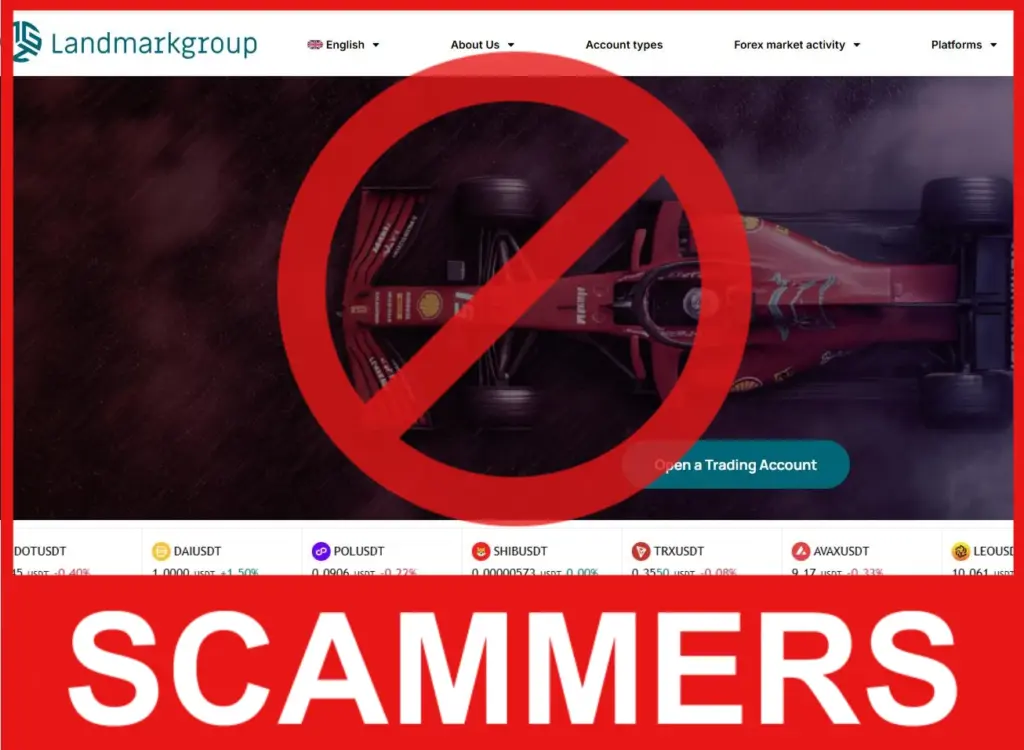
Information About the Fraudulent Broker
Landmarkgroup promotes itself as a gateway to global financial markets. The website structure and messaging focus heavily on trading opportunities, investment growth, and professional guidance. Visitors are encouraged to register quickly and begin investing, often with the promise that even beginners can achieve strong returns. Once a user enters the system, the experience typically becomes more personalized. Many similar platforms use so called account managers who contact new users almost immediately. These representatives often present themselves as experienced financial advisors. Their main role is to encourage deposits, sometimes starting with small amounts and gradually pushing for larger investments. In cases reported by users of similar offshore brokers, the early stage of interaction can appear positive. Clients may see profits displayed on their dashboard, and communication with support may feel responsive and encouraging. This stage is often designed to build trust and confidence. However, the situation usually changes when users attempt to withdraw their funds. Delays begin, additional requirements appear, and communication becomes less reliable. Some users describe being asked to pay unexpected charges before withdrawals can be processed. These patterns are not consistent with regulated brokerage standards and are often associated with high risk financial schemes.
Verification of Company Data
A key factor in evaluating any financial platform is the ability to verify its legal status. Legitimate brokers operate under strict regulatory frameworks and provide clear documentation regarding their licenses, registration numbers, and governing authorities. In the case of Landmarkgroup, there is a lack of clear and verifiable regulatory information. The platform does not convincingly demonstrate oversight from well known financial regulators. This creates uncertainty about whether the company is legally authorized to offer trading services. Another concern is the limited visibility of corporate identity. Reliable financial institutions usually provide transparent details about their headquarters, management team, and legal structure. In contrast, platforms with questionable practices often hide ownership information or register in offshore jurisdictions where regulation is weak. Communication channels also raise questions. Users frequently report that contact is limited mainly to email or chat systems, while direct phone communication is either unavailable or unhelpful. In legitimate financial companies, customer support and compliance departments are typically more structured and accountable. The lack of transparency does not automatically confirm wrongdoing, but it significantly increases risk. When combined with other warning signs, it creates a situation where investors cannot clearly verify who is managing their funds or how their money is being handled.
Exposing the Broker as a Fraudster
When examining user experiences and typical behavior associated with platforms like Landmarkgroup, several concerning patterns become visible. One of the most commonly reported issues is aggressive client communication. After registration, users are often contacted repeatedly and encouraged to invest more money. The communication style can feel persuasive and urgent, sometimes creating pressure to act quickly without proper evaluation. Another notable issue is the appearance of controlled trading results. Some users report seeing consistent profits early in their account activity. While this may seem encouraging, in unregulated environments such results can be artificially displayed to build confidence and encourage further deposits. Withdrawal problems represent one of the strongest warning signs. When clients request to withdraw funds, they often face unexpected obstacles. These may include repeated verification requests, unclear delays, or demands for additional payments. In legitimate financial systems, withdrawal processes are straightforward and not dependent on extra fees beyond standard banking charges. Another concern is the imbalance between deposit and withdrawal conditions. Depositing money is usually fast and simple, while retrieving it becomes complicated and slow. This asymmetry is often seen in fraudulent financial schemes designed to retain user funds.
Fraud Broker’s Deception Scheme
Platforms with suspicious characteristics often follow a structured approach designed to gradually increase user deposits while preventing withdrawals. The process usually begins with online advertising or direct outreach. Users are attracted by promises of financial independence, passive income, or expert trading strategies. Once registration is completed, a representative establishes contact and guides the user through the first deposit. At the beginning, everything may appear legitimate. The trading dashboard shows activity, and users may believe they are making real profits. This stage is essential for building trust and encouraging larger investments. As deposits increase, the behavior of the platform often shifts. Users may be encouraged to upgrade their account type or invest in special opportunities. These offers are usually framed as limited time or exclusive access deals. The final stage occurs when users attempt to withdraw money. This is where problems become visible. Requests are delayed or rejected, and new conditions are introduced. Some users are told to pay taxes or fees before funds can be released, even though such requirements are not standard practice in regulated trading environments. Eventually, communication may stop entirely. Accounts can be frozen, and access to the platform becomes limited or blocked. At this point, users are left without their funds and with little direct support from the company.
How to Get Money Back from a Scam Broker
For individuals who have lost money to platforms like Landmarkgroup, the situation can feel overwhelming. Many victims are unsure where to start or how to approach recovery. Because these platforms often operate across borders and use complex payment structures, direct resolution is usually difficult. This is where specialized recovery assistance becomes important. DNB Forex Review works with cases involving disputed financial transactions and unregulated brokers. The process typically begins with a full review of the situation, including payment records, communication history, and transaction details. Depending on the payment method used, different recovery strategies may be considered. These can include chargeback procedures for card payments or investigative tracing for electronic transfers. In some cases, legal steps may be taken against intermediaries involved in processing funds. Time is an important factor. The sooner action is taken, the higher the chances of identifying where the funds were sent and initiating recovery procedures. Victims are usually advised to collect all available documentation, including emails, receipts, and chat conversations. While no recovery process can guarantee success in every case, professional support significantly improves the chances of achieving a positive outcome compared to attempting recovery alone.
Negative Reviews About the Broker
Feedback associated with platforms like Landmarkgroup often follows a consistent pattern. Many users describe similar experiences, even if their individual circumstances differ. A frequent complaint involves difficulty withdrawing funds. Users report that the process becomes complicated once they request their money back. What initially appears to be a simple trading experience turns into a series of delays and conditions. Another common theme is emotional pressure. Some users mention feeling persuaded or even manipulated into depositing more money. Communication with account managers is often described as persistent and highly encouraging during the deposit phase, but significantly less responsive when withdrawal requests are made. Unexpected charges are another recurring issue. Users sometimes report being asked to pay additional amounts under various explanations. These requests often come without clear justification and are presented as necessary steps to access funds. There are also reports of accounts becoming inaccessible without warning. In such cases, users lose both control and visibility over their investments. Combined, these experiences create a strong pattern that aligns with known high risk financial schemes.

Hidden Operational Risks and How Scam Brokers Disappear or Rebrand
One important aspect that is often not discussed in detail when analyzing platforms like Landmarkgroup is what usually happens after complaints start to accumulate and the scheme becomes widely exposed. Fraudulent brokerage projects rarely stay in the same form for long. Instead, they tend to follow a cycle of rebranding, relocation, and technical restructuring designed to escape negative attention and continue operating under a new identity. A typical pattern begins when the platform starts receiving too many withdrawal requests or public complaints. At this stage, the operators often try to reduce visibility. Websites may suddenly become unstable, login access may be restricted, or customer support may stop responding consistently. This is usually not a technical accident but part of a controlled exit strategy. After that, many of these projects simply change their branding. The same group of operators may launch a new website under a different name, using a slightly modified design, new domain, and rewritten marketing materials. In reality, the structure behind the platform remains the same, but for new users it appears to be a completely fresh and legitimate company. Another important element is the use of offshore hosting and domain registration services. These allow operators to hide real ownership details and make legal tracking extremely difficult. When pressure increases from regulators or victims, the platform can be quickly moved to another server location or replaced entirely with a new domain. This flexibility is one of the main reasons such schemes are difficult to stop permanently. Payment processing is another hidden layer that most users do not see. Fraudulent brokers often do not handle funds directly. Instead, they use a network of third party payment agents, crypto wallets, or intermediary companies. This creates multiple layers between the victim and the final destination of the money. As a result, even when a user tries to trace funds, they often encounter fragmented transactions spread across different countries and financial systems. It is also common for these platforms to rotate their so called account managers. The person a client initially speaks with may disappear after a while, replaced by a new representative who claims to take over the account. This helps break continuity and makes it harder for victims to track responsibility or prove consistent communication patterns. Another overlooked risk is data retention and reuse. When users register and submit personal documents, including identification and proof of address, this information may be stored indefinitely or reused across related scam projects. In some cases, victims report being contacted again months later by different companies offering “recovery services” or “new investment opportunities,” which are often part of the same broader network of fraudulent operations. From a technical perspective, these platforms are often designed to be temporary. The trading interface does not need to connect to real financial markets. Instead, it can be fully simulated, meaning the operators have complete control over displayed profits, losses, and account balances. This allows them to maintain the illusion of trading activity without any real market exposure. What makes this model particularly dangerous is its adaptability. Even if one website is exposed and shut down, the same structure can reappear quickly under a different name, targeting new users who are unaware of previous complaints. This cycle repeats continuously, which is why awareness and early recognition of warning signs are critical. For users, understanding this hidden operational behavior is extremely important. It explains why recovery can be difficult, why communication suddenly stops, and why the same type of scam keeps reappearing under different brands. It also highlights the importance of acting quickly when problems first appear, because once a platform begins the shutdown or rebranding phase, chances of direct resolution decrease significantly. In the end, the most effective protection is awareness. Recognizing that many unregulated brokers are not long term financial institutions but temporary structures built for rapid profit extraction helps investors make safer decisions and avoid becoming part of the next cycle.
Conclusion
Landmarkgroup, based on available information and typical behavior patterns associated with similar platforms, presents multiple risk indicators that should not be ignored. The lack of transparent regulation, combined with withdrawal difficulties and aggressive investment tactics, creates an environment that is potentially unsafe for investors. While every user experience may differ, the overall structure resembles known cases of unregulated or deceptive brokerage operations. These platforms often rely on trust building at the beginning, followed by restricted access to funds once deposits increase. For anyone affected by such a situation, it is important to act quickly and seek professional help. Organizations like DNB Forex Review specialize in assisting victims of questionable brokers and can help evaluate possible recovery options based on individual circumstances. Ultimately, caution is essential in the online trading world. If a platform promises easy profits, applies pressure to invest quickly, or makes withdrawing funds unnecessarily complicated, these are strong signals that the risk level is high. Recognizing these signs early can prevent significant financial losses and protect investors from future harm.






Unfortunately, I also became a victim after being introduced to Landmark Group through social media ads and later direct messaging. The communication was very convincing, and I believed I was dealing with a legitimate financial service. After depositing a significant amount, I was locked out of my account. I am now collecting all transaction records and chat logs. Has anyone here worked with recovery specialists or legal teams that actually managed to trace and recover funds from similar schemes? I want to avoid wasting time on ineffective services, so any real experiences would be helpful.
Our team will help you recover your stolen money. Submit a request.