




Pipze is presented on the internet as a modern trading broker offering access to forex, indices, commodities, and CFDs with attractive conditions such as fast execution, flexible leverage, and multiple account types. At first glance, the platform appears structured and professional, with marketing materials designed to create trust and confidence among retail traders. However, when examining user experiences, independent broker evaluations, and complaint patterns, a much more controversial picture begins to emerge. Many traders report difficulties that typically do not align with the behavior of a fully regulated and transparent brokerage firm. These concerns include withdrawal delays, account restrictions, and lack of effective customer support. Because of this combination of aggressive promotion and repeated negative feedback, Pipze has become a subject of serious scrutiny among traders and analysts. The purpose of this review is to examine all available information, user experiences, and operational characteristics of the broker in order to understand whether it operates as a reliable financial intermediary or whether it shows patterns consistent with high-risk or potentially fraudulent activity. This analysis also aims to provide guidance for affected users, including how professional recovery assistance from DNB Forex Review can help in situations where funds become inaccessible.
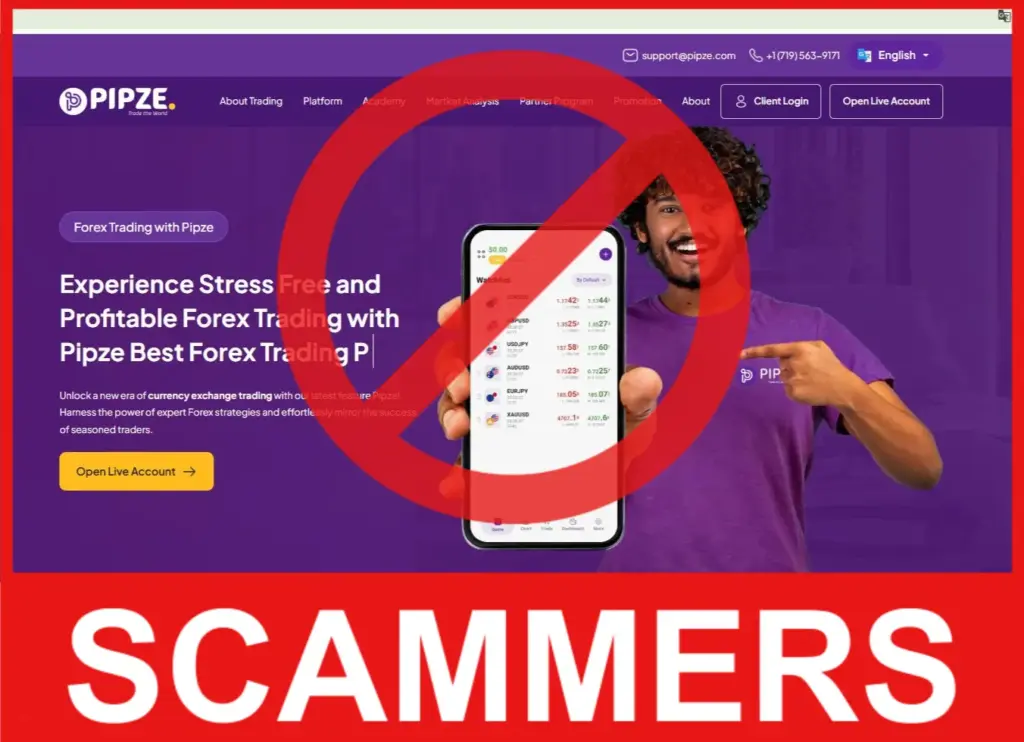
Information About the Fraudulent Broker
Pipze presents itself as a global trading platform offering access to a wide range of financial instruments, including forex currency pairs, metals, indices, shares, and CFDs. The broker claims to provide multiple account types such as Standard, Pro, ECN, Cent, and Swap-Free accounts. These options are typically designed to appeal to both beginners and experienced traders by offering flexibility in trading conditions and deposit requirements. The platform also promotes itself as technologically advanced, highlighting fast execution speeds, competitive spreads, and access to trading tools suitable for modern market participation. In addition, Pipze encourages users to start trading quickly with minimal onboarding friction, which is a common marketing approach used to attract inexperienced investors who may not yet fully understand the risks involved in leveraged trading. However, despite this polished presentation, independent feedback paints a more complicated picture. A number of traders report that while the platform appears functional during initial use, problems often arise once users attempt to withdraw funds or increase trading volume. Complaints include delayed withdrawals, unexplained account limitations, and lack of response from support channels. Some users also describe situations where accounts were suddenly restricted after profitable trading periods, which raises concerns about platform transparency and reliability. The overall impression created by combining marketing claims with user experiences is one of inconsistency. While Pipze promotes itself as a reliable and modern broker, the volume and nature of complaints suggest that traders should proceed with extreme caution when interacting with this platform.
Verification of Company Data
One of the most important aspects of evaluating any brokerage is verifying its legal status and regulatory oversight. In the case of Pipze, the company presents itself as an offshore-registered entity operating under a corporate structure that appears to be based in an international jurisdiction. However, there is no strong evidence that the broker is regulated by any major financial authority such as the Financial Conduct Authority in the United Kingdom, the Cyprus Securities and Exchange Commission, or the Australian Securities and Investments Commission. This lack of top-tier regulatory oversight is a significant concern because regulated brokers must comply with strict financial standards, including client fund protection, transparent reporting, and dispute resolution mechanisms. Without such regulation, clients have limited protection if something goes wrong. Another issue is the inconsistency of company information. While Pipze publishes corporate details, contact information, and legal disclaimers, independent reviewers have noted that these details are not always sufficient to confirm legitimacy. Offshore registration alone does not guarantee operational integrity, as many high-risk brokers use such jurisdictions to operate with minimal supervision. Furthermore, there is a noticeable gap between the company’s claimed experience and its visible digital footprint. The broker appears relatively new in terms of domain history and online presence, yet its marketing materials sometimes suggest a more established background. This mismatch between presentation and verifiable data raises additional questions about transparency. Overall, the verification process reveals a lack of strong regulatory confirmation, inconsistent corporate transparency, and limited accountability structures, all of which significantly increase the risk level for potential clients.
Exposing the Broker as a Fraudster
Several warning signs associated with Pipze resemble patterns commonly found in problematic or unregulated brokerage operations. One of the most frequently reported issues is withdrawal difficulty. Traders describe situations where withdrawal requests are delayed for long periods, rejected without clear explanation, or left unanswered altogether. In some cases, users claim that access to their accounts was restricted after they attempted to withdraw funds. Another significant concern is communication behavior. Many users report that customer support is responsive during the deposit phase but becomes significantly less responsive when financial issues arise. This shift in communication quality is often considered a red flag in the online trading industry. The platform’s marketing strategy also contributes to concerns. Pipze emphasizes fast profits, easy onboarding, and high leverage, which can create unrealistic expectations for inexperienced traders. In legitimate financial environments, risk disclosure is always a central focus, but in this case, promotional materials appear to emphasize opportunity more than risk. Additionally, referral and affiliate programs that reward user acquisition may encourage aggressive promotion without ensuring long-term client satisfaction. While such programs are not inherently fraudulent, when combined with withdrawal complaints and lack of regulation, they can form part of a concerning operational model. The combination of these factors suggests a pattern where user deposits are actively encouraged, while fund withdrawal processes appear less reliable or less transparent.
Fraud Broker’s Deception Scheme
Based on repeated complaint patterns and typical structures observed in similar cases, the operational model associated with Pipze may follow a recognizable sequence. The first stage involves aggressive marketing and user acquisition. The broker attracts clients through online advertising, promotional content, and affiliate networks. The messaging focuses on simplicity, profitability, and accessibility, encouraging users to open accounts quickly and make initial deposits. The second stage involves active trading engagement. Once users deposit funds, they are provided with access to a trading interface that appears functional and legitimate. Some users may experience initial positive trading outcomes, which builds trust and encourages additional deposits. This stage is critical because it reinforces confidence in the platform. The third stage begins when users attempt to withdraw funds. According to multiple complaints, this is where issues typically arise. Withdrawal requests may be delayed, subject to additional verification demands, or rejected without clear justification. Some users report that support teams stop responding or provide repetitive instructions without resolving the issue. The fourth stage involves account restrictions or communication breakdown. In more severe cases, users report being unable to access their accounts entirely. At this point, the user is effectively cut off from both funds and support channels. This sequence creates a situation where funds can be deposited easily but become difficult or impossible to retrieve, which is a major concern in the evaluation of any financial platform.
How to Get Money Back from a Scam Broker
If a trader has experienced issues with Pipze or a similar broker, it is important to act quickly and strategically. The first step is to gather all available documentation, including transaction records, emails, chat logs, account statements, and screenshots of trading activity and withdrawal requests. This evidence forms the foundation of any recovery attempt. The next step is to avoid making additional payments. In some cases, affected users are asked to pay extra fees, taxes, or verification charges before withdrawals are processed. These demands should be treated with caution, especially if they are not clearly documented or verified. Professional assistance from DNB Forex Review can play an important role in such situations. Specialists can analyze the payment method used, identify the financial pathways through which funds were transferred, and determine the most effective recovery strategy. This may involve communication with banks, payment providers, or other financial intermediaries involved in the transaction process. Each case is different, and success often depends on speed, documentation quality, and the type of payment used. The sooner a case is reviewed, the higher the chances of identifying a viable recovery route. DNB Forex Review focuses on building structured claims and guiding clients through the dispute process in a systematic and organized way.
Negative Reviews About the Broker
User feedback about Pipze contains both positive and negative comments, but negative reviews tend to focus on recurring issues. The most common complaint involves withdrawal problems. Users report delays, unanswered requests, and situations where funds remain locked in accounts without explanation. Another frequently mentioned issue is account restriction. Some traders claim that their accounts were limited or disabled after they attempted to withdraw profits. This creates a perception that the platform may behave differently when users are depositing funds compared to when they attempt to withdraw them. Support responsiveness is another area of concern. While communication may be smooth during onboarding and deposit stages, several users report difficulties reaching support once financial disputes begin. This inconsistency contributes to distrust among affected traders. Although there are also positive reviews describing smooth trading experiences, these are often outweighed in importance by withdrawal-related complaints. In financial services, the ability to withdraw funds reliably is a fundamental requirement, and repeated issues in this area significantly affect credibility.

Additional factors traders should understand before using Pipze
One important aspect that is often overlooked is the psychological structure of online trading platforms. Pipze, like many similar brokers, uses a combination of real-time trading interfaces, profit displays, and market data visualization to create a sense of legitimacy and control. While these systems may appear professional, they do not always guarantee transparency in execution or fund handling. Another factor is the role of leverage. High leverage allows traders to control larger positions with smaller deposits, but it also increases risk significantly. In unregulated environments, high leverage can contribute to rapid account losses or encourage overtrading, especially among inexperienced users. Bonus systems and promotional incentives also play a role. These offers may encourage larger deposits but can also come with hidden conditions that make withdrawals more complicated. Users should always carefully review terms before accepting such offers. Understanding these structural elements helps explain why some traders may experience difficulties even if the platform appears functional at first.
Conclusion
After a detailed analysis of Pipze, its public presentation, user feedback, and the overall structure of its operations, one conclusion becomes clear: this is a broker that raises far more questions than it answers. On the surface, everything is designed to look modern and trustworthy. The website is polished, the trading conditions sound attractive, and the platform promises fast access to global markets with flexible tools and high potential returns. For an inexperienced trader, this can easily create the impression of a reliable and profitable financial service. However, when we look deeper and compare marketing claims with real user experiences, the situation changes significantly. The most serious and repeated concern is not related to trading conditions or platform design, but to something much more important: the ability to withdraw money. Across different user reports, a consistent pattern appears where deposits are processed without difficulty, but withdrawals become delayed, restricted, or completely blocked. This is one of the strongest warning signals in the online trading industry, because a legitimate broker must always prioritize transparent and accessible fund withdrawal processes. Another important issue is the lack of strong regulatory protection. Pipze does not demonstrate clear supervision from top-tier financial regulators, which means clients do not have access to external dispute resolution bodies or guaranteed financial safeguards. In regulated environments, brokers must follow strict rules regarding client funds, reporting, and operational transparency. When such regulation is missing or unclear, the risk level for clients increases significantly, because all responsibility effectively shifts onto the trader. User complaints also contribute to the overall risk assessment. Many affected traders describe similar experiences: smooth onboarding, active trading at the beginning, and later sudden complications when attempting to withdraw funds. Some report account restrictions, others mention unresponsive support, and some say that communication stops entirely once financial issues arise. Even if not every user experiences these problems, the repetition of the same patterns across different cases is an important indicator that cannot be ignored. It is also important to understand the psychological structure of platforms like Pipze. Everything is designed to build trust quickly: simple registration, easy deposits, and an interface that looks professional and active. This creates a sense of control and opportunity. But in unregulated or weakly regulated environments, appearance does not guarantee safety. A platform can look fully functional while still operating without meaningful external oversight. For traders who have already deposited money and are facing difficulties, the situation can become stressful and confusing. Many people initially believe that delays are temporary or that verification issues will be resolved quickly. Unfortunately, in many similar cases across the industry, delays often become prolonged or turn into complete communication breakdowns. This is why early action is extremely important. The most important step for affected users is to stop further deposits immediately. Additional payments requested under the explanation of taxes, verification fees, unlocking charges, or insurance requirements should be treated with extreme caution. In many high-risk broker cases, these additional payment requests are not part of a legitimate financial process and may significantly increase losses. The next critical step is documentation. Every piece of evidence matters, including emails, chat messages, transaction receipts, account screenshots, and records of withdrawal requests. The stronger and more organized the documentation is, the higher the chances of building a successful recovery case. This is where professional assistance becomes important. DNB Forex Review specialists focus specifically on cases involving problematic brokers and failed withdrawals. Their role is not limited to general advice. They analyze how the funds were transferred, identify the financial institutions involved, and determine the most effective dispute strategy depending on whether the payment was made by bank card, bank transfer, or other methods. Each case is handled individually, because recovery strategies depend heavily on the payment route and timing. In many situations, quick action is essential. Financial transactions have time limits for disputes and chargebacks, and once these deadlines pass, recovery becomes significantly more difficult. That is why traders are encouraged to act as soon as they notice withdrawal issues rather than waiting for a broker to resolve the situation internally. Looking at the overall picture, Pipze demonstrates a combination of high marketing appeal and low transparency in critical areas such as regulation and fund accessibility. This imbalance is what creates the highest level of risk. A trading platform can only be considered reliable when it is not only easy to use but also fully transparent in how it handles client money. For readers who are evaluating whether to engage with this broker, the safest approach is caution. Attractive trading conditions and promotional promises should never outweigh the importance of verified regulation and proven withdrawal reliability. In financial trading, trust is not built on appearance, but on consistent, verifiable behavior over time. For those who have already been affected, the most important message is not to delay action. The sooner the situation is reviewed and properly documented, the higher the chance of identifying a potential recovery path. DNB Forex Review specialists can assist in organizing this process, communicating with financial institutions, and guiding clients through structured dispute procedures. In conclusion, Pipze represents a high-risk trading environment where reported withdrawal issues, weak regulatory transparency, and inconsistent user experiences create a serious warning profile. While the platform may appear professional on the surface, the underlying concerns are significant enough that traders should approach it with extreme caution and prioritize fund safety above all else.









I was contacted by people who convinced me to invest with Pipze. They were very friendly at first and promised good results, but everything changed when I asked to withdraw my money. I have been waiting for a solution for a long time without success. I would like to know if other people had the same problem and whether recovery specialists can help with cases like mine.
Submit a request, and our specialists will assist you.