




The online investment market has grown at an impressive pace over the last few years. More and more people are exploring ways to increase their income through Forex trading, cryptocurrencies, stocks, commodities, and other financial instruments. While this growing interest has created new opportunities for investors, it has also led to the appearance of companies whose credibility and business practices raise important questions. One broker that has recently attracted attention from traders and financial watchdogs is NoxWealth. NoxWealth promotes itself as a modern brokerage platform that provides clients with access to global financial markets. The company emphasizes investment opportunities, innovative trading tools, account security, and professional customer support. At first glance, the platform appears to offer everything a trader might expect from an online broker, which can make it seem like a trustworthy choice for those looking to invest. However, a closer examination reveals several issues that deserve careful attention. Concerns have been raised about the broker’s regulatory status, the availability of verifiable corporate information, and the overall level of transparency provided to potential clients. Various independent review platforms and industry observers have highlighted warning signs that investors should not overlook before committing their money. In this report prepared for DNB Forex Review, we take an in-depth look at NoxWealth, assess the information presented by the company, examine publicly available data, identify potential risks, explore common tactics associated with questionable brokerage operations, analyze user experiences, and explain what affected clients can do if they face difficulties recovering their funds.
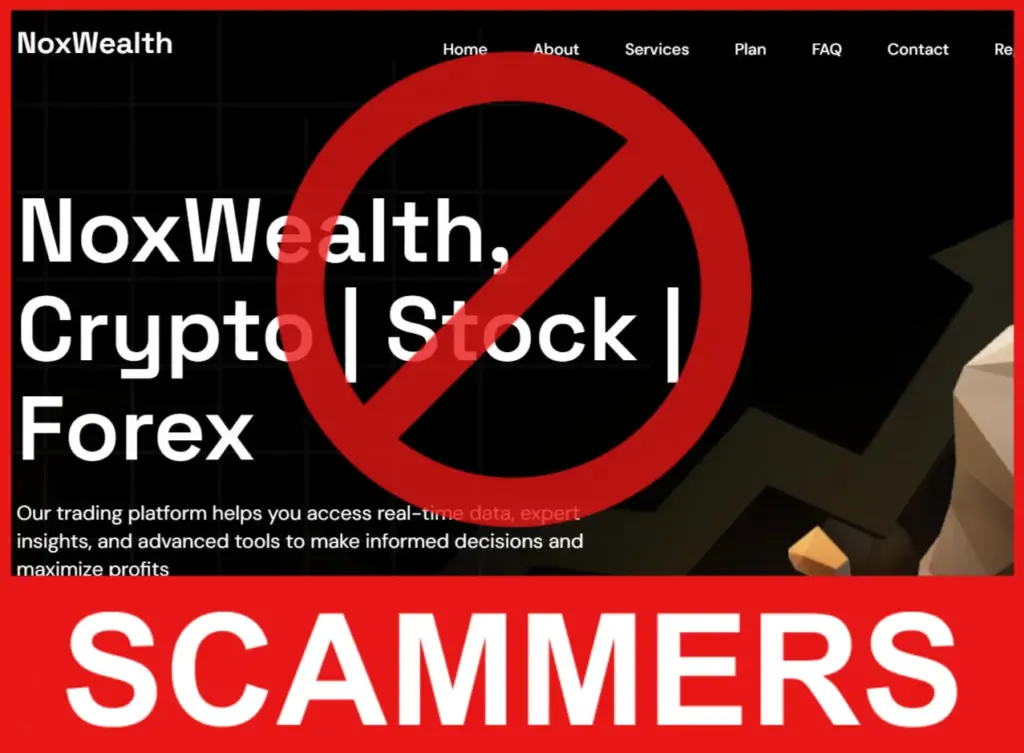
Information About the Fraudulent Broker
NoxWealth positions itself as an international investment company that provides access to financial markets and investment opportunities. The platform promotes various trading and investment services designed to attract both beginner and experienced traders. According to information available on its website, clients can allegedly benefit from advanced trading technologies, professional support, market expertise, and attractive investment conditions. The company places significant emphasis on financial growth and investment success. Visitors are encouraged to believe that they can achieve substantial returns through the broker’s services. Promotional materials often focus on the benefits of investing and the opportunities available through the platform. Like many online brokers, NoxWealth uses modern website design, persuasive marketing language, and promises of professional service. For inexperienced investors, these elements can create a sense of legitimacy and trustworthiness. However, attractive advertising should never replace proper due diligence. One of the most important aspects of evaluating any broker is understanding who operates the platform, where the company is registered, and which regulatory authority supervises its activities. In the case of NoxWealth, obtaining clear answers to these questions appears to be difficult. The available information raises concerns about transparency and accountability. Professional brokers usually provide detailed information about their legal entity, licensing status, management team, and regulatory obligations. Such information allows investors to verify the company’s legitimacy independently. When important details are missing or difficult to confirm, investors should approach the platform with caution. Another noteworthy issue is the strong focus on potential profits. Legitimate financial institutions generally provide balanced information that includes both opportunities and risks. Financial markets are inherently unpredictable, and no broker can guarantee consistent profits. When marketing materials focus primarily on rewards while minimizing discussions about risks, it may indicate that the company is more interested in attracting deposits than educating investors. The overall picture suggests that while NoxWealth attempts to present itself as a professional investment platform, significant questions remain unanswered regarding its operations and credibility.
Verification of Company Data
Verifying a broker’s background is one of the most important steps any investor can take before opening an account. Transparency is a fundamental characteristic of trustworthy financial institutions. Clients have the right to know who is handling their money and under what legal framework the company operates. When examining NoxWealth, several concerns emerge during the verification process. The broker presents itself as a legitimate business operating in the financial sector, yet publicly available information provides limited evidence that would allow investors to independently confirm many of its claims. One of the most significant concerns relates to regulation. Financial regulators exist to protect consumers and ensure that brokers follow strict rules regarding client funds, financial reporting, operational standards, and dispute resolution. A regulated broker is accountable to an independent authority. An unregulated broker operates with far fewer restrictions and oversight mechanisms. Research conducted by independent broker-review resources indicates that NoxWealth does not appear to possess a clearly verifiable financial license from a major regulatory authority. This absence of confirmed regulation immediately increases the level of risk associated with the company. Another issue involves the transparency of corporate information. Reliable brokers generally disclose detailed information about their legal structure, company registration numbers, physical office locations, executive management, and compliance departments. Investors should be able to verify this information through official databases and government records. In the case of NoxWealth, publicly available information appears limited. This lack of transparency makes it difficult for potential clients to determine exactly who operates the platform and where responsibility lies in the event of a dispute. Questions also arise regarding domain registration and ownership details. Hidden ownership information is not uncommon on the internet, but when combined with financial services and investment offerings, such anonymity becomes more concerning. Investors should always be cautious when dealing with companies whose operators are difficult to identify. The inability to independently verify important aspects of a broker’s business does not automatically prove fraudulent activity. However, it significantly increases uncertainty and risk. Responsible investors should view the absence of verifiable information as a serious warning sign rather than a minor inconvenience. Ultimately, trust in financial markets is built on transparency, accountability, and regulation. When these elements are missing or difficult to confirm, investors should carefully reconsider whether the potential risks outweigh any promised rewards.
Exposing the Broker as a Fraudster
The financial industry has witnessed countless cases where brokers initially appeared legitimate but later became the subject of complaints and investigations. While every situation is unique, many problematic brokers share similar characteristics. Several of these warning signs can be observed when analyzing NoxWealth. One of the most significant concerns is the apparent lack of verified regulatory oversight. Regulation serves as one of the strongest protections available to investors. Without it, clients may have limited options if disputes arise or funds become inaccessible. Another issue is the broker’s heavy reliance on promotional language. Statements emphasizing investment growth, success, and profitability can be appealing, particularly to inexperienced traders. However, financial markets involve substantial risk, and any company that focuses overwhelmingly on profits while providing limited discussion of risks deserves additional scrutiny. Transparency concerns also play a major role. Investors should never have to guess who is responsible for managing their funds. The inability to easily verify company ownership, management, and operational details creates uncertainty that would not typically be associated with established financial institutions. A further concern involves the discrepancy between marketing claims and independently verifiable facts. Many questionable brokers invest heavily in creating professional-looking websites while providing little evidence to support their promises. Appearance alone should never be considered proof of legitimacy. Another common red flag involves aggressive client acquisition strategies. Questionable brokers often prioritize attracting deposits rather than building long-term relationships with clients. In some cases, sales representatives may pressure investors to increase their deposits, promising greater returns or access to exclusive opportunities. The combination of these factors creates a risk profile that should concern any potential investor. While no single issue automatically proves wrongdoing, the accumulation of multiple warning signs significantly increases the possibility that clients could encounter problems in the future. Investors should remember that legitimate brokers earn trust through transparency, compliance, and consistent performance—not through marketing promises alone.
Fraud Broker’s Deception Scheme
Understanding how investment scams work can help investors recognize warning signs before significant losses occur. Although fraud schemes vary, many follow a remarkably similar pattern. The process often begins with advertising campaigns designed to attract potential investors. These advertisements may appear on social media platforms, websites, messaging applications, or search engines. They frequently promise financial freedom, passive income, or exceptional investment returns. After making initial contact, potential clients are encouraged to register and fund a trading account. The required deposit may seem relatively small, making the opportunity appear low-risk. Once funds are deposited, account managers often contact clients directly. These representatives may present themselves as experienced financial professionals who can help investors maximize profits. They may encourage larger deposits by claiming that higher account balances provide access to better opportunities. In many cases, investors see positive numbers displayed within their accounts. The apparent profits create confidence and motivate additional deposits. However, displayed profits are only meaningful if they can actually be withdrawn. Problems frequently begin when a client requests a withdrawal. Suddenly, various obstacles may appear. Investors may be informed that additional verification is required, taxes must be paid, special fees must be settled, or account upgrades are necessary before funds can be released. Some victims report being pressured to deposit even more money in order to unlock their existing balances. Others experience prolonged delays, unanswered communications, or complete account restrictions. The ultimate objective of many fraudulent operations is not successful investing but the continuous extraction of funds from victims. By the time investors realize something is wrong, recovering the money may become significantly more difficult. Recognizing these patterns can help traders identify potential dangers before substantial losses occur.
How to Get Money Back from a Scam Broker
Discovering that a broker may be unreliable is a stressful experience for any investor. However, taking immediate action can significantly improve the chances of a successful recovery process. The first step is gathering all available evidence. Every document, email, screenshot, transaction record, chat message, and account statement may become valuable during an investigation. The more documentation available, the stronger the potential case. DNB Forex Review specializes in assisting victims who have encountered problems with online brokers. The company’s specialists analyze individual situations, review available evidence, identify possible violations, and develop recovery strategies tailored to each case. Depending on the circumstances, several recovery options may be available. These may include payment disputes, chargeback procedures, financial investigations, legal actions, regulatory complaints, or cryptocurrency tracing efforts. Each case requires a professional assessment because the appropriate strategy depends on numerous factors, including payment methods, transaction history, jurisdiction, and the broker’s operational structure. One of the most important advantages of working with experienced specialists is the ability to avoid common mistakes. Many victims unknowingly damage their cases by delaying action, communicating incorrectly with the broker, or falling victim to secondary recovery scams. The sooner investors seek professional assistance, the greater the chances of preserving evidence and identifying available recovery options. Time is often a critical factor in financial disputes. For individuals who suspect they have become victims of a fraudulent broker, professional support can provide both practical guidance and a structured path toward potential fund recovery.
Negative Reviews About the Broker
One of the most valuable sources of information about any broker is the experience of its clients. While online reviews should always be approached critically, recurring complaints often reveal important patterns. Discussions surrounding NoxWealth frequently focus on concerns about transparency, regulatory status, and overall trustworthiness. Independent review platforms have published warnings and expressed skepticism regarding the broker’s operations. A recurring theme in many negative assessments is the lack of verifiable licensing information. Investors frequently view this issue as one of the most serious concerns because regulation serves as a fundamental layer of protection. Some reviewers also question the credibility of the company’s marketing claims. Promises of significant financial growth and investment success naturally attract attention, but experienced traders often regard such statements with caution. Another common concern involves uncertainty regarding the company’s ownership structure and operational background. Investors generally prefer brokers that provide extensive corporate information and clear accountability. In the broader financial industry, similar complaints often precede more serious allegations involving withdrawal difficulties, communication problems, or disputed transactions. For this reason, even early warning signs deserve careful attention. Potential clients should remember that a lack of widespread complaints does not necessarily indicate safety. Many fraudulent operations remain relatively unknown until significant numbers of victims begin sharing their experiences publicly. The safest approach is always to evaluate both positive and negative information while independently verifying all important claims.

The Hidden Cost of Trusting the Wrong Broker
Many investors focus primarily on the amount of money they may lose when dealing with a questionable broker. However, financial losses represent only part of the damage. Victims often experience significant emotional stress. Feelings of embarrassment, frustration, anger, and anxiety are common. Many individuals blame themselves for trusting the wrong company, even though sophisticated marketing techniques are specifically designed to create confidence. There are also practical consequences. Time spent communicating with the broker, gathering evidence, consulting specialists, and pursuing recovery efforts can be substantial. Some victims spend months attempting to resolve issues that could have been avoided through careful verification before investing. Questionable brokers may also expose clients to additional risks involving personal data. Identity documents, financial records, and sensitive information are frequently collected during account verification procedures. Investors should always consider how such information may be stored and used. The lessons learned from these situations highlight the importance of conducting thorough research before opening any investment account. Verifying licenses, checking regulatory databases, reviewing independent assessments, and understanding the company’s history can prevent significant problems in the future. Financial opportunities should never be pursued at the expense of basic security and transparency.
Conclusion
Our analysis of NoxWealth reveals numerous concerns that should not be ignored by potential investors. Questions regarding regulation, transparency, corporate information, and overall credibility create a risk profile that warrants extreme caution. While the company presents itself as a professional investment platform, independent evaluations and available information raise doubts that deserve serious consideration. The absence of clearly verifiable regulatory oversight, combined with transparency issues and other warning signs, makes it difficult to recommend the broker as a trustworthy option. Investors who have already deposited funds and are experiencing difficulties should act quickly. Preserving evidence, documenting all communications, and seeking professional assistance are essential steps. DNB Forex Review provides support to individuals who believe they have become victims of unreliable or potentially fraudulent brokers. Through professional analysis, evidence collection, and recovery assistance, the company’s specialists help clients explore available options for recovering lost funds. The most important lesson remains simple: never trust promises alone. Verify every claim, confirm every license, and research every broker before investing. A few hours of careful due diligence can prevent months of financial and emotional hardship.






My money is stuck with NoxWealth and I don’t know what to do next. They were very active when they wanted me to deposit more money, but after I asked for a withdrawal, the communication became poor. I hope to find some advice about recovering funds from this broker and avoiding further problems.
If you have fallen victim to an unscrupulous company, submit a request on our website.