




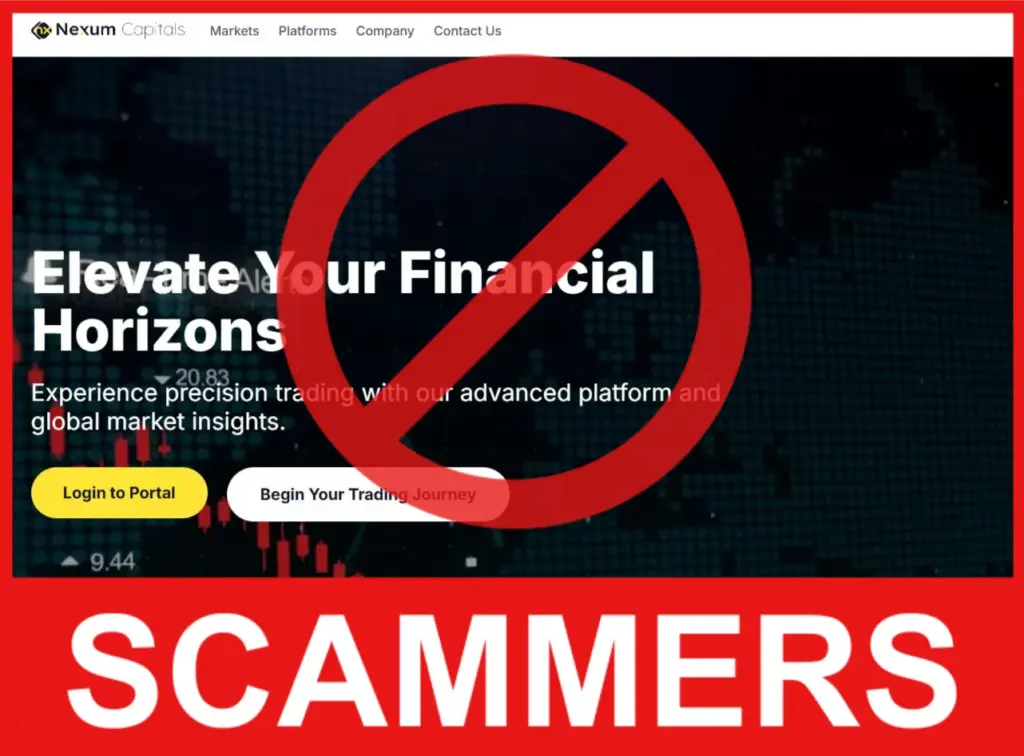
Nexum Capitals positions itself as a contemporary online trading platform that claims to provide access to a wide range of financial instruments, including forex, commodities, indices, equities, and cryptocurrencies. On the surface, the website gives a fairly polished impression: modern interface, confident wording, references to advanced trading solutions, and support for the widely recognized MetaTrader 5 terminal. Overall, it is clearly designed to look like a global brokerage service that can help clients increase their capital under professional trading conditions. However, once the promotional layer is set aside and the company background is examined more closely, a number of serious questions emerge. The broker refers to registration in Saint Lucia and relies on offshore corporate details as proof of legitimacy. At the same time, there is no solid evidence that it is supervised by any reputable financial regulator. This mismatch between aggressive marketing claims and the absence of verifiable oversight is a classic warning signal often seen in questionable online brokerage schemes. This analysis focuses on Nexum Capitals itself, its public presentation, transparency issues, and the typical risks associated with brokers operating in loosely regulated offshore environments. The purpose is to give readers a clearer understanding of how such platforms usually operate and why many clients later report difficulties when attempting to withdraw funds or confirm the safety of their accounts.
Information About the Fraudulent Broker
Nexum Capitals promotes itself as a multi-asset trading service suitable for both newcomers and more experienced traders. The platform advertises fast order execution, competitive spreads, favorable trading conditions, and access to global markets through CFD instruments. It also highlights convenience, claiming that users can trade via desktop applications, mobile devices, or web-based platforms without limitations. According to the information provided, the company is registered in Saint Lucia and presents an offshore registration number as evidence of its legal status. It also lists standard contact details such as an email address and international phone number, which are intended to create the impression of an established and organized financial entity. Trading is conducted through MetaTrader 5, a popular platform widely used in the industry, which can sometimes mislead inexperienced traders into assuming that the broker itself is trustworthy simply because the software is familiar. Despite this polished presentation, there is a noticeable lack of transparent and verifiable corporate information. There is no clear indication of physical office locations actively servicing clients, no publicly available details about executives or management, and no meaningful corporate history that would normally be expected from a properly regulated financial institution. Instead, the broker relies heavily on marketing language and promotional descriptions rather than independently verifiable business credentials. Another issue is the imbalance in the content presented on the website. A significant portion of the material is focused on encouraging deposits, account creation, and trading activity, while far less attention is given to explaining risk management, regulatory safeguards, or investor protection measures. This type of structure often suggests that the primary focus is on attracting client funds rather than providing a fully transparent and long-term regulated financial service.
Verification of Company Data
When examining the legitimacy of Nexum Capitals, the key issue is regulation. The broker claims to be incorporated in Saint Lucia, but incorporation alone does not mean it is authorized to provide forex or CFD trading services under strict financial oversight. In fact, Saint Lucia is known as a jurisdiction where company registration is relatively easy, but it does not function as a strong financial regulator for retail trading activities. This distinction is extremely important. A regulated broker must follow strict rules, including client fund segregation, audits, reporting requirements, and oversight from financial authorities. Nexum Capitals does not present evidence of meeting such standards. Public broker analysis platforms and review communities repeatedly highlight that there is no verifiable forex license connected to the company. The broker is generally classified as unregulated, which means it operates outside of recognized investor protection frameworks. In practical terms, this means clients do not have guaranteed protection if disputes arise. Another issue is the inconsistency of corporate transparency. While the broker provides a registration number and address, independent checks do not confirm strong supporting records that link the company to a well-established financial institution. There is also limited information about ownership, management, or compliance structure. Domain activity and online footprint also raise questions. The website appears relatively new, and there is very little long-term history of brand development. Legitimate brokers typically build a public track record over time, including partnerships, regulatory announcements, and industry presence. In this case, the broker appears to have emerged quickly with a strong marketing focus but weak institutional background.
Exposing the Broker as a Fraudster
Several red flags appear when analyzing Nexum Capitals from an investor protection perspective. The first and most obvious issue is the lack of regulation. Operating in financial markets without oversight creates a situation where the broker controls pricing, execution, and withdrawals without external supervision. Another warning sign is the structure of the website itself. It is heavily focused on promotional messaging and deposit incentives, while providing limited technical transparency about trading conditions. Important details such as spreads, commissions, execution model, and liquidity sources are either vague or not fully explained. There is also a noticeable imbalance between marketing claims and verifiable facts. The broker uses strong terms like “secure trading,” “professional environment,” and “trusted global service,” but does not support these statements with regulatory proof or independent financial audits. Another concerning pattern is the typical offshore structure. Offshore companies are not automatically fraudulent, but in the context of online trading scams, they are often used to reduce accountability and make legal recovery more difficult for clients. In addition, user feedback and independent assessments suggest issues with withdrawal processing and account handling. This is one of the most critical signs in the brokerage industry. When deposits are easy but withdrawals become slow, restricted, or conditional, it often indicates that the broker is not operating in a fully transparent financial environment.
Fraud Broker’s Deception Scheme
The operational model used by brokers like Nexum Capitals usually follows a recognizable pattern. It begins with aggressive marketing and smooth onboarding. Potential clients are often attracted through online ads, social media promotion, or direct outreach. The messaging focuses on fast profits, financial independence, and easy access to global markets. Once a client registers, they are encouraged to deposit a relatively small amount first. The trading platform may initially show positive results, which helps build trust. These early “profits” are often not real market outcomes but simulated account movements designed to encourage further investment. After the client gains confidence, account managers or support representatives may push for larger deposits. They often present opportunities such as “premium accounts,” “higher leverage,” or “exclusive trades.” This stage is designed to maximize client funding. Problems usually begin when the client attempts to withdraw money. At this point, various obstacles appear. The broker may request additional verification, claim tax obligations, introduce unexpected fees, or suggest that the account must be upgraded before withdrawals are allowed. In many cases, communication becomes slower or more restrictive. The goal of this structure is to keep the client depositing while delaying or preventing actual withdrawals. Over time, clients may realize that access to their funds is controlled entirely by the broker, not by transparent financial systems.
How to Get Money Back from a Scam Broker
When dealing with a suspicious broker, the most important factor is timing. If money has been deposited and withdrawal problems begin, immediate action is necessary. The first step is to gather all evidence, including transaction records, screenshots of account balances, email communication, and chat history with support representatives. Next, clients should contact their bank or payment provider. Depending on the payment method, it may be possible to initiate a chargeback, payment dispute, or transaction recall. Financial institutions sometimes have procedures for investigating unauthorized or misleading transactions, but these processes require quick reporting. If cryptocurrency was used, recovery becomes more complex, but reporting the transaction to relevant authorities is still important. Blockchain tracing and fraud reports can sometimes support investigations, although results vary. Specialized recovery services such as DNB Forex Review assist victims by organizing documentation, preparing formal complaints, and guiding clients through dispute procedures with banks and financial intermediaries. Their role is to structure the case in a way that increases the chances of financial recovery and avoids common mistakes that reduce success rates. It is also important to avoid third-party “recovery agents” who demand upfront fees without clear verification. Many of these are secondary scams targeting already affected victims.
Negative Reviews About the Broker
Public feedback about Nexum Capitals is limited but concerning. There are reports from users questioning withdrawal delays and account restrictions. Some individuals describe situations where trading appeared normal until they attempted to withdraw funds, after which communication became less responsive. Independent review platforms generally classify the broker as unregulated and high risk. Some assessments explicitly warn users to avoid depositing money due to lack of licensing and transparency. While the total number of reviews is not large, the consistency of negative indicators is important. A common theme in such cases is that users initially experience smooth onboarding and responsive support, but later face difficulties when requesting payouts. This pattern is frequently associated with brokers that prioritize deposits over long-term client service. The lack of a strong user community or verified long-term traders also adds to the concern. Established brokers usually have extensive online discussions, feedback histories, and public reputation records. In this case, the absence of such a footprint is itself a warning sign.

Additional risks and important observations
One of the most overlooked risks in cases like Nexum Capitals is psychological pressure. Many offshore brokers use structured communication strategies where account managers maintain close contact with clients. They often create a sense of urgency, suggesting limited-time opportunities or exclusive market conditions. This can lead clients to make emotional financial decisions. Another issue is the illusion of control. Trading dashboards may show profits and smooth performance, but without regulatory oversight, these figures cannot be independently verified. This creates a false sense of success while the actual withdrawal capability remains restricted. It is also important to understand that offshore brokers often operate across multiple domains or rebrand themselves if negative attention increases. This makes long-term tracking difficult and increases risk for new investors who may encounter the same operators under different names.
Conclusion
When all the pieces are put together, Nexum Capitals fits into a category of brokers that look professional on the surface but become very questionable once you start checking what actually stands behind the marketing. The company presents itself as an international trading platform, offers access to popular markets, and uses familiar tools like MetaTrader 5 to build trust quickly. It also relies on an offshore registration in Saint Lucia, which at first may sound legitimate to inexperienced traders. However, this is exactly where the main problem begins: incorporation in an offshore jurisdiction is not the same as being regulated by a financial authority that supervises forex and CFD activities. Without real regulation, there is no independent control over how client funds are handled, how trades are executed, or how withdrawals are processed. This means everything depends entirely on the internal policies of the broker itself. In practice, that creates a situation where the client is always in a weaker position, especially when disputes arise. Another important point is the lack of verifiable long-term reputation. Legitimate brokers usually build a visible history over time: regulatory updates, partnerships, public audits, industry presence, and consistent user discussions. In the case of Nexum Capitals, this kind of background is missing. Instead, the available information shows a relatively new and lightly documented operation that relies more on presentation than on proven track record. The behavioral pattern described by users and reviewers is also typical of high-risk offshore brokers. At the beginning, communication is smooth, registration is simple, and deposits are encouraged without friction. The trading environment may even appear stable and profitable. But the situation often changes when a client tries to withdraw funds. This is where delays, additional conditions, or sudden verification demands tend to appear. In many similar cases across the industry, this stage is where clients lose control over their own money. It is also important to understand the psychological side of such schemes. People are often encouraged to keep trading instead of withdrawing, based on the idea that profits can grow further. Some clients are told that they need to upgrade their account or meet certain requirements before they can access their balance. These tactics are not always obvious at first, because they are presented as “standard procedures,” but they effectively serve as barriers between the client and their funds. The biggest risk in situations like this is not just financial loss, but the difficulty of recovery. Offshore structures, lack of regulation, and weak transparency make it much harder to resolve disputes through normal financial channels. Once money is sent, the client often has limited leverage unless immediate action is taken. This is why early response is critical. If there are any signs of withdrawal problems, unexpected fees, or inconsistent communication, it should be treated as a serious warning. Delaying action usually reduces the chances of recovering funds, especially when payment systems or transaction windows become harder to trace over time. In cases like this, specialized assistance can play an important role. DNB Forex Review and similar recovery-oriented services focus on collecting evidence, structuring complaints, and guiding victims through the correct procedures with banks, payment providers, or relevant institutions. While no recovery process can guarantee success, having professional support significantly improves the chances of presenting a strong and properly documented case. Ultimately, Nexum Capitals should be approached with extreme caution. The combination of offshore registration, lack of clear regulatory oversight, limited transparency, and reported withdrawal issues creates a risk profile that is difficult to ignore. For traders, especially beginners, the most important lesson here is simple: a polished website and familiar trading tools do not automatically mean safety. In the financial markets, real protection comes from regulation, transparency, and accountability—not from marketing language. When those elements are missing, as in this case, the safest decision is usually to avoid engagement altogether and protect capital before problems arise rather than trying to solve them afterward.






My experience with Nexum Capitals shows how important it is to verify financial companies before sending money. I trusted the information provided by their agents and made an investment that I now consider a mistake. When I tried to withdraw my funds, I faced delays and unreasonable requests. I am currently searching for professional assistance and guidance on how to prepare a claim, collect evidence, and improve my chances of recovering the money I lost.
Submit a request, and we will contact you.