




Investing in online trading platforms can seem like an exciting way to grow savings or participate in global financial markets. Many people are drawn by promises of high returns, professional support, and easy access to forex and cryptocurrency markets. However, for some investors, these promises turn into a financial nightmare. One of the names that has recently attracted attention in this context is ACA Next. ACA Next presents itself as a broker offering cryptocurrency and forex trading services. At first glance, its website looks professional: charts, trading interfaces, account registration forms, and claims of market expertise. But closer inspection reveals numerous warning signs that suggest ACA Next is far from a trustworthy broker. In this review, we examine the company in detail, analyze its operations, and explore why anyone considering investing with this broker should be extremely cautious.
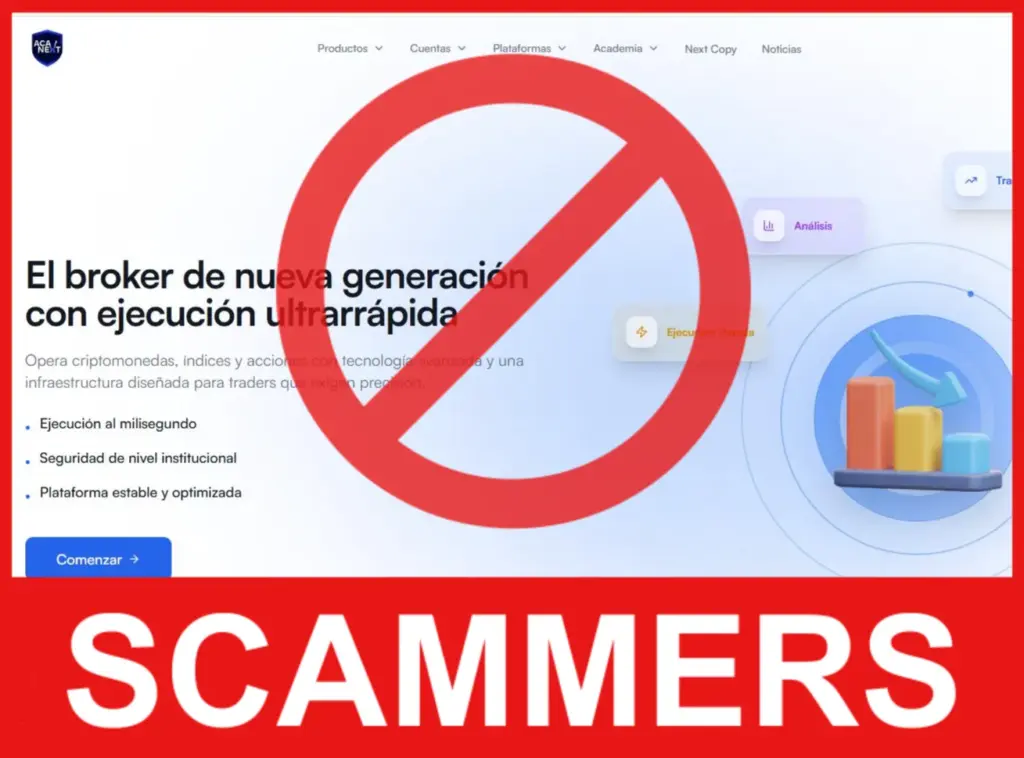
Information About the Fraudulent Broker
ACA Next claims to provide trading in major currency pairs and digital assets, with promises of user-friendly interfaces and high returns. Despite these marketing claims, research into the broker’s background reveals significant issues. The company provides very limited information about its ownership, leadership, or operational history. The website focuses almost exclusively on promotional content and does not provide verifiable evidence of legal registration or licensing in recognized financial jurisdictions. Several warning indicators are present. First, the company is relatively new, with a recently registered domain. Websites that appear suddenly and offer high-risk financial services are often used by fraudsters because it allows them to operate for a short time and disappear without accountability. Second, ACA Next does not provide any information about a legitimate regulatory license. Licensed brokers typically display their license number and the authority under which they operate, ensuring a measure of accountability and consumer protection. ACA Next offers no such information. Furthermore, the broker’s contact information is opaque. Instead of clearly verifiable phone numbers, email addresses, or office locations, the site provides generic contact forms and email addresses that cannot be independently confirmed. This lack of transparency makes it almost impossible for clients to hold the broker accountable if problems arise. Third-party broker reviews and community reports also suggest that ACA Next’s operations should be treated with extreme caution. Analysts consistently highlight its unregulated status and limited online presence as significant red flags.
Verification of Company Data
Verifying a broker’s credentials is one of the most critical steps for anyone considering trading. Legitimate brokers are registered with recognized financial authorities such as the FCA in the United Kingdom, ASIC in Australia, or CySEC in Europe. These licenses are crucial because they require brokers to comply with strict rules regarding client fund protection, transparency, and dispute resolution. ACA Next provides no verifiable license number or regulatory authority. While the website lists an address in Saint Lucia, this appears to be related to a corporate registration for business purposes rather than a license for financial operations. Saint Lucia allows companies to operate as international business entities, but this is not the same as being regulated by a financial authority. Operating without proper licensing means the company is not accountable to any government regulator, leaving investors exposed to potential loss with no formal recourse. Other independent checks also raise concerns. Analysts note that the broker’s domain is new, ownership details are hidden, and the website uses a standard marketing template without specific financial disclosures. All of these elements are consistent with the practices of untrustworthy brokers. The combination of an unregulated business structure, hidden ownership, and opaque communication methods makes it clear that ACA Next cannot be verified as a legitimate financial institution.
Exposing the Broker as a Fraudster
Several signs suggest that ACA Next operates as a fraudulent broker. First, its lack of licensing and oversight places it outside any regulatory protections. Without a regulator monitoring its activities, the broker can manipulate trading conditions, refuse withdrawals, and disappear with client funds. Second, the broker’s offerings are high-risk services such as forex and cryptocurrency trading. These products are inherently volatile, and without transparent terms, clients are vulnerable to sudden losses. Third, the broker’s website design and presentation appear professional, but the information is largely promotional. There is little explanation of risks, trading fees, or procedures for withdrawing funds. In legitimate brokers, risk disclosures and regulatory notices are prominent and detailed. ACA Next lacks these, signaling that its priority is marketing rather than protecting client interests. Another concerning element is the broker’s communication methods. The website provides generic email addresses rather than verifiable customer support channels, and no real office contact information is available. This approach makes it extremely difficult for clients to challenge the broker or seek assistance. Additionally, the domain’s new registration and limited online footprint indicate a short-term operation that could easily vanish once funds have been deposited. All these factors together suggest that ACA Next exhibits the hallmarks of a fraudulent broker. By combining high-risk trading products with minimal oversight and opacity, the broker places itself in the category of operations that are highly likely to harm investors.
Fraud Broker’s Deception Scheme
Although direct testimonials from ACA Next clients are scarce, the broker exhibits classic traits associated with fraudulent schemes. Scammers often employ polished websites to project legitimacy and lure clients into making initial deposits with promises of high returns. Once funds are deposited, clients face obstacles when attempting to withdraw money. These obstacles may include requests for additional documentation, unexpected fees, or delayed responses from “customer support.” The typical scam sequence often starts with emotional marketing. Traders are encouraged to invest quickly to avoid missing out on potential profits. Once a deposit is made, clients are either prevented from accessing funds or convinced to deposit even more money under the pretext of unlocking higher returns or bonuses. In many cases, the scammer disappears entirely, leaving victims with no recourse. ACA Next’s setup — including unverified ownership, lack of regulatory oversight, new domain, and opaque communication — fits this pattern. Even without multiple negative reviews, these structural characteristics suggest that the broker could employ a similar deceptive strategy to extract money from unsuspecting investors.
How to Get Money Back from a Scam Broker
Victims of fraudulent brokers like ACA Next can pursue recovery with professional assistance. Firms specializing in broker recovery work to reclaim funds by evaluating the investor’s interaction with the broker, gathering evidence such as transaction records and communication, and leveraging their experience with financial institutions. Specialist recovery teams can often negotiate directly with banks, payment processors, or legal channels to secure the return of deposited funds. Their knowledge of common fraud tactics, banking rules, and dispute mechanisms makes them much more effective than individuals trying to resolve the issue alone. Additionally, these specialists guide victims through the process, explaining legal rights and options, and helping to prevent further loss. Engaging a professional recovery service improves the likelihood of recovering funds and provides a structured approach to dealing with a situation that can be complex and emotionally stressful.
Negative Reviews About the Broker
Although ACA Next is relatively new, available reports indicate strong warnings from independent analysts. Safety and trust evaluations classify the broker as high risk due to its unregulated status, hidden ownership, and lack of transparency. Professionals warn that the absence of regulation alone is enough to consider the broker unsafe. In many cases, fraud brokers actively suppress negative reviews or disappear before complaints accumulate. The lack of widespread online testimonials does not indicate credibility. On the contrary, new or recently created brokers with minimal review history often represent a higher risk of fraud. Reports from financial communities emphasize that investors should avoid platforms that lack verification, regulatory oversight, and reliable client support.

Extra Insight — Why Transparency and Regulation Matter
When it comes to choosing a broker, transparency and regulation are not just technical details—they are the foundations of safety, trust, and accountability in the financial world. Investors often focus on potential profits, market opportunities, or slick interfaces, but the reality is that without transparency and proper oversight, even the most attractive offers can hide serious risks. Brokers like ACA Next exemplify why these elements are essential. Transparency begins with clear information about who is behind the company, how it operates, and under which regulatory framework it functions. Legitimate brokers provide detailed contact information, including verifiable office addresses, licensed phone numbers, and actual staff credentials. They also openly display licenses from recognized authorities such as the Financial Conduct Authority in the UK, ASIC in Australia, or CySEC in Europe. These licenses are not cosmetic—they are the guarantee that the broker is accountable to an external body that monitors its actions, enforces rules, and protects clients in cases of misconduct. Without this, clients are left with little recourse if something goes wrong. Regulation also ensures that client funds are handled responsibly. Licensed brokers are required to keep customer deposits separate from their own operational funds, often in secured accounts with reputable banks. This segregation prevents the broker from using client money for risky business ventures or to cover internal losses. In the case of unregulated brokers, including ACA Next, there is no such protection. All funds deposited can be treated as the broker’s private assets, making it easy for them to disappear or manipulate trading balances without consequence. Beyond fund safety, regulation enforces transparency in trading practices. Regulated brokers must provide accurate reports on trades, prices, spreads, and fees. They cannot manipulate software to artificially generate losses or gains in a client’s account. Unregulated brokers, however, have no obligation to maintain fair trading conditions. This creates the potential for hidden manipulations, where profits may be erased, losses exaggerated, or withdrawals blocked indefinitely under arbitrary pretexts. Transparency also plays a psychological role in investor confidence. Knowing that a broker is accountable to a recognized authority and operates in the open gives investors a sense of security. It allows them to make informed decisions based on verifiable information, rather than relying on promises of guaranteed profits or slick marketing materials. Fraudulent brokers exploit the absence of transparency by presenting a polished front while concealing critical details. ACA Next, for example, provides minimal corporate information, no verifiable license, and opaque contact methods, all of which are consistent with common scam tactics. Regulatory oversight also provides formal mechanisms for recourse. In cases of disputes, licensed brokers must participate in complaint handling and, in many jurisdictions, are subject to dispute resolution services. This means that if an investor cannot access funds or suspects misconduct, there is a structured legal pathway for addressing the problem. Without regulation, investors are often forced to rely on informal channels, such as contacting support emails that may never respond, or attempting to recover money through banks or legal services, which is more complex and uncertain. Finally, transparency and regulation matter because they help investors distinguish between short-term marketing hype and sustainable, professional trading operations. Fraudulent brokers often use new domains, aggressive marketing, and superficial features to lure clients quickly before disappearing. Regulators impose standards on operational history, corporate governance, and reporting, which naturally filters out such schemes. Observing whether a broker is regulated and transparent is often the most reliable indicator of legitimacy, more than any website design or claimed profitability. In essence, transparency and regulation are not merely optional—they are the core protective mechanisms in online trading. Investors who overlook these aspects often fall victim to brokers who operate without accountability, leaving their funds vulnerable. Understanding these principles is key to navigating the trading landscape safely. Brokers like ACA Next serve as a cautionary example: without verification and oversight, even seemingly professional platforms can quickly become instruments of financial loss. Protecting your investments requires vigilance, knowledge of regulatory standards, and a commitment to dealing only with brokers who operate openly and responsibly.
Conclusion
ACA Next demonstrates multiple red flags consistent with a fraudulent broker: no regulatory license, hidden ownership, high-risk services without transparency, and a lack of verifiable contact information. Investors who have already deposited funds should be cautious and seek professional assistance to recover their money. Understanding these warning signs can help investors avoid becoming victims in the first place. Engaging experienced recovery specialists significantly increases the likelihood of reclaiming lost funds and provides guidance through a challenging process. Protecting your money requires vigilance, awareness, and the support of professionals familiar with broker fraud schemes.







I lost money to ACA Next and now I am trying to deal with the situation calmly and carefully. The main issue was withdrawal — every time I tried to get my funds out, I was told to wait or send more information. It felt wrong from the start. I would appreciate any real guidance on how to proceed and what recovery options are available.
Our specialists will help assess the situation and propose possible solutions. Submit a request.