




The world of online trading and investment has exploded in the past decade. Social media and aggressive digital advertising have brought new financial products into millions of screens, promising easy passive income, automated profits, and life‑changing returns with hardly any effort. Among these offerings, “automated trading systems” have become a buzzword that attracts both experienced traders and total beginners alike. The idea is compelling: let software or an algorithm trade on your behalf, make smart decisions instantly, and generate profits on autopilot. Unfortunately, this landscape is also filled with unscrupulous actors using that promise as bait to lure people into handing over their savings. This article focuses on one such project, a website known as automated‑trading.top, which positions itself as a broker or automated trading platform. While the site may look polished at first glance, a closer examination reveals serious questions about its legitimacy and intentions. For anyone considering entrusting their money to a service like this, clear, honest information is essential. This article aims to break down what can be verified about this broker, explain why it raises red flags, outline common fraud schemes in this space, explore negative user experiences, and help you understand how to protect yourself and seek assistance if fraud has occurred. This is not technical marketing language or vague warnings. It is a grounded, critical assessment intended to help real people avoid real losses and seek recovery if they have already been harmed.
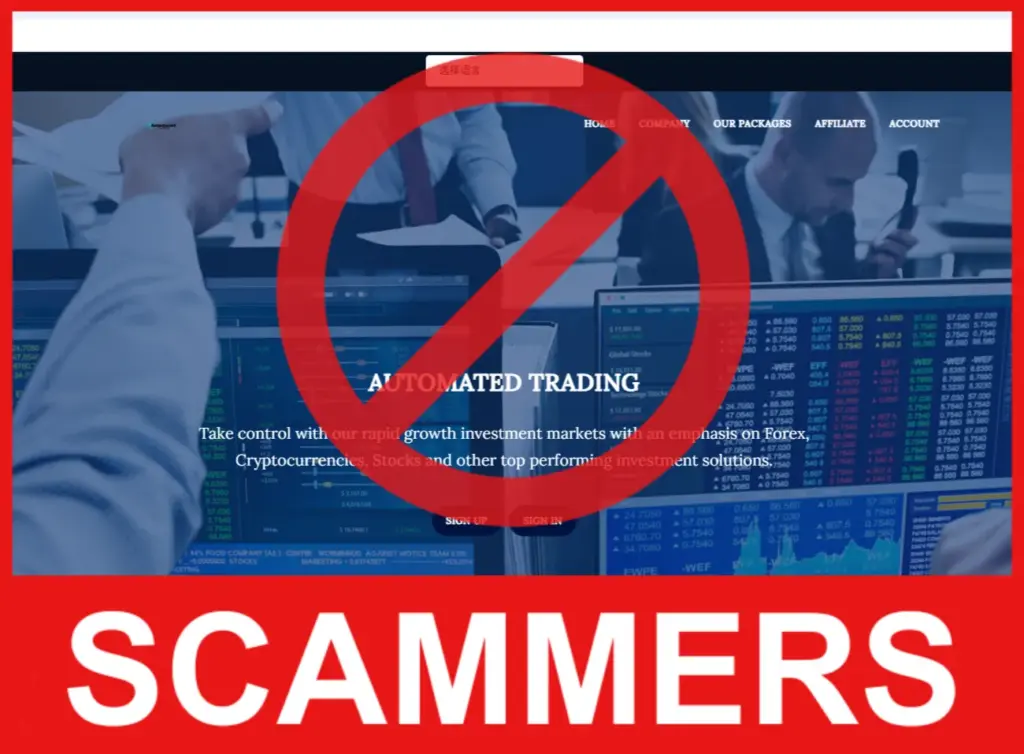
Information About the Fraudulent Broker
At face value, automated‑trading.top advertises itself as a platform for automated financial trading. It is positioned as a service that allows users to open trading accounts, deposit funds, and access automated algorithms or “bot” systems designed to trade on global markets. The appeal is clear: no need for deep market knowledge, no need to place trades manually, and potential profits high enough to lure people looking for alternative income sources. However, available evidence points to this site operating in a way that is typical of fraudulent brokers rather than legitimate ones. Independent risk analysis conducted by reputation monitoring services clearly flags automated‑trading.top as highly suspicious, with indicators that it might be a scam. Automated evaluations show that the domain was recently created, the identity of the site owner is hidden using privacy protection, and basic company information is redacted from public records. Legitimate brokers usually provide full contact information, transparent legal registration details, and verification of regulatory compliance; this site does none of that. The site’s trust score is extremely low in independent ratings, which means there is no meaningful evidence that the platform has an established track record, a transparent history, or a credible user base. The domain is young and ranked poorly for traffic, suggesting it has little genuine engagement and may exist solely to collect deposits. There is no traceable corporate ownership, and all attempts to analyze the content were inconclusive because the site actively blocks automated analyses. These features align not with reputable services but with typical patterns of fraudulent financial operations. Researchers and fraud analysis platforms often describe situations like this as “high‑risk financial service websites with low transparency.” That means even before you think about making an investment, the architecture of the project itself is a warning sign: a young domain, hidden owner identity, and no public corporate history all point to a project built to attract funds and avoid accountability. Even though the site uses basic security measures like SSL encryption (which simply protects data in transit and does not guarantee legitimacy), these are easily acquired for free by anyone, including scammers. The technical setup alone cannot be interpreted as a sign of reliability. In legitimate financial services, deeper verification such as regulatory statements, audited financials, and corporate contact details are required. The lack of these essentials is a strong indicator that this is not a transparent, responsible broker platform.
Verification of Company Data
When considering any online broker, the first questions should be: who runs this company, where are they legally incorporated, are they licensed by an actual regulator, and do they publish verifiable audited information? For automated‑trading.top, attempts to answer these questions yield alarming results. The WHOIS data for the domain shows that the identity of the owner is entirely hidden behind privacy protection services. In web domain registration, this is common for individuals or legitimate businesses that value privacy, but it is also a known tactic for fraudsters who want to avoid being traced or held accountable for financial misconduct. When combined with the very recent creation date of the domain and the lack of public corporate information, the result is a situation where nobody can reliably say who is behind this project. This alone should raise significant concerns. Regulatory information is another critical area. Legitimate brokers operating in financial markets are typically licensed and supervised by reputable authorities such as the Financial Conduct Authority (FCA) in the United Kingdom, the Cyprus Securities and Exchange Commission (CySEC), the Australian Securities and Investments Commission (ASIC), or similar bodies. These regulators require brokers to maintain minimum capital reserves, publish transparent financial reports, and adhere to strict compliance standards to protect investors. There is no evidence that automated‑trading.top holds any such license or even claims to. In fact, the absence of regulation is one of the key criteria used by fraud watchdogs to label a financial service as “high risk” or potentially fraudulent. Without a regulatory framework, investors have no legal protections, no compensation scheme, and no independent oversight that could intervene if something goes wrong. This situation leaves participants completely exposed. Moreover, the site’s public presentation lacks basic corporate disclosures: no verifiable address, no list of executives, no legal disclaimers that meet regulatory requirements, and no audited performance history. Many fraudulent brokers intentionally keep this information vague or absent because once they provide real, verifiable corporate data, they become accountable to laws and public scrutiny — which they often want to avoid.
Exposing the Broker as a Fraudster
There are several clear warning signs associated with automated‑trading.top and similar schemes that justify classifying this project as fraudulent. First, the marketing language used in these types of platforms typically leans heavily on promises that are too good to be true. Many fraudulent automated trading sites claim high returns with little risk, shielding complexity behind buzzwords like “algorithmic bot trading” or “AI‑driven strategies.” In real financial markets, consistent profits without risk simply don’t exist. Professional traders and regulated brokers alike emphasize transparency about risks. Any entity that glosses over downside and emphasizes easy gains should be treated with skepticism. Another critical red flag is the lack of transparency about how profits are generated. Legitimate algorithmic trading systems that are available to institutional clients still provide detailed explanations of their models, historical performance logs, and access to independent third‑party account verification. With automated‑trading.top, there are no independent verifiable results, no audit trail, and no way to confirm that the trading systems actually execute trades in real financial markets. This absence of proof suggests that the platform might simply be displaying fabricated profit figures to lure users. In fraudulent broker schemes, it is common for platforms to show superficially attractive dashboards with account balances that appear to grow, only to block withdrawal requests later. This tactic builds trust in the early stage, encouraging users to deposit more funds under the illusion of success. When users attempt to withdraw, unexpected conditions are introduced: supposed “verification fees,” tax requirements, or additional capital deposits. These delaying tactics often continue until the victim grows frustrated or the scammer disappears entirely. Another behavior seen in similar cases is the use of aggressive marketing, including cold emails, social media ads, and direct messaging that pressure individuals into making quick decisions. Legitimate brokers never resort to unsolicited contact promising automatic profits. Additionally, an unregulated broker has no obligations to segregate client funds, perform independent audits, or comply with anti‑money‑laundering and know‑your‑customer (KYC) requirements. This means that once money is deposited, it may be co‑mingled with other funds and not protected. There is no safeguard if the operator decides to misuse it. Finally, the very architecture of hiding the owner’s identity suggests avoidance of accountability. In regulated financial services, transparency is not optional — it is a requirement. When a broker purposefully obscures its operators, it raises questions about why there is no intent to comply with basic industry standards.
Fraud Broker’s Deception Scheme
Understanding how fraud brokers operate helps explain why people fall victim to these schemes and also how recovery strategies must be tailored. At the outset, most fraudulent automated trading schemes rely on psychological persuasion. They tap into a fundamental desire to grow wealth quickly and with minimal effort. Marketing rhetoric emphasizes automation, artificial intelligence, sophisticated bots, and algorithmic trading — all concepts that sound impressive to someone unfamiliar with financial markets. This narrative implies that profits can be generated passively, which makes the offer attractive. Once a potential customer lands on the site, the next step is to encourage registration. Most fraud platforms make this process frictionless. The user creates an account, often providing minimal verification details initially. Then they are prompted to deposit funds. This is where the real mechanism of the scam begins. Unlike regulated brokers that provide transparent trading accounts connected to real financial exchanges, fraudulent systems often simulate trading activity internally. The site may display fake profit graphs, inflated account balances, or dashboards that create the illusion of market engagement. These figures are not linked to real assets or live market liquidity. The goal is to build a false sense of confidence so the victim keeps their money with the platform and even deposits more. Another deception element often comes into play when the victim tries to withdraw funds. Instead of a straightforward process, fraudulent brokers introduce arbitrary conditions or fees. Common examples include “verification charges,” “taxes,” “anti‑money laundering fees,” or even demands for additional deposits to unlock the withdrawal feature. These requirements never correspond to any real legal or financial obligation but serve to extract even more money from the victim. In many cases, communications from the broker become increasingly evasive. Support accounts go silent, or the victim is transferred from one representative to another. Once the scam operator believes they have extracted as much money as possible, they may simply disappear — shutting down the website, abandoning contact emails, and vanishing without a trace. This model is closely aligned with what analysts have observed in broader forex and automated trading scams. Unregulated entities often prey on trust in unverified systems, use fabricated performance data, deny or delay withdrawals under various pretexts, and rely on anonymity to avoid accountability. Even when initial deposits appear safe or small withdrawals are processed to build trust, the ultimate goal is to extract as much capital as possible before the operation ceases.
How to Get Money Back from a Scam Broker
For anyone who has already invested in automated‑trading.top and is struggling to get their money back, the experience can feel overwhelming. But there are concrete steps and support options that can improve your chances of recovery. The first step in any recovery attempt is documentation. You should compile all records related to the investment: screenshots of your account dashboard, emails or messages from the broker, transaction records showing deposits, and any communication that took place. These records serve as evidence showing that funds were transferred to the fraudulent entity. Once you have collected this documentation, reaching out to your bank or payment provider is critical. Many financial institutions offer chargeback options for transactions made to fraudulent services. If you can show that you were misled or that the service was never legitimately provided, your bank may be able to reverse the transaction. Acting swiftly is important here, as there are often deadlines for initiating these claims. Working with legal specialists who understand financial fraud is another crucial strategy. A firm that focuses on forex and broker scams will know how to analyze the situation, identify the relevant laws breached by the fraudulent broker, and prepare legal complaints in appropriate jurisdictions. They can also assist in communicating with law enforcement agencies and financial regulators on your behalf. In addition, these specialists can help prepare formal reports to regulatory bodies even if the fraudulent broker is unregulated. Filing complaints with consumer protection agencies, financial watchdogs, and cybercrime units builds an official record of the fraud, which can support future legal action. It also contributes to broader industry efforts to identify and take action against fraudulent financial operations. Some victim support services offer direct negotiation with payment processors and intermediary financial institutions to recover lost funds. These professional pathways require experience, insight into fraud patterns, and often international legal coordination — expertise that individuals attempting recovery on their own typically lack.
Negative Reviews About the Broker
Direct reviews specifically for automated‑trading.top are scarce, likely because the project is very new and may not yet have drawn enough attention for widespread user feedback. However, when we look at patterns from similar automated trading platforms and unregulated brokers, a clear picture emerges of what unhappy users face. Users of scam or dubious automated trading services report a consistent set of complaints: they deposit funds expecting operational software and profit potential, they see fabricated account growth, and when they attempt to withdraw, the platform introduces sudden fees or impossible conditions. In many documented cases, users report receiving initial messages or advertisements that promise high returns with automated systems, only to find support becomes unresponsive later. These experiences are not unique. In discussions on independent forums, people recount how they were lured by the promise of automated profit‑making bots. At first, the platform would show promising results or even allow a small test withdrawal to build trust. But as soon as larger amounts were involved or official withdrawal requests were submitted, communication dried up, or new charges were demanded. These voices echo a familiar fraud pattern where trust is built and then exploited. For example, general sentiment around automated trading systems and bots on public discussion platforms reflects significant skepticism. Many contributors warn others that automated systems often fail to deliver what they promise, that they make unrealistic profit claims, and that once money is deposited, withdrawals become problematic. People speak of dashboards that show trades that never really executed, or profits that disappear when they attempt to cash out. In some cases, users explicitly label these platforms as scams based on personal experience.

Why Automated Trading is Misused by Scammers
Automated trading itself is a real concept used legitimately by institutional investors and hedge funds. Sophisticated systems based on proven models and rigorous risk management do exist, but they are typically transparent, well‑documented, audited, and regulated under strict financial oversight. They are not “black boxes” that promise guaranteed profits with no risk. Scammers exploit the popularity of the term “automated trading” precisely because it sounds technical and advanced, even to people without deep market knowledge. The idea that a software could be programmed to generate profits automatically resonates with people’s desire for simplicity and financial freedom. Scammers leverage this by packaging very basic or even fake tools under that enticing label. A responsible automated trading service, for instance, provides open performance records, verified by third parties, detailed explanations of algorithms, and clear disclosures about risks. They make no unrealistic promises because they know markets are complex and no outcome can be guaranteed. What fraudsters do is the opposite: they inflate expectations, hide risks, and hide their own identities. They rely on fancy buzzwords like “AI algorithm,” “machine learning bot,” “investment intelligence,” or “advanced signals” to distract from the fact that there is no verifiable system behind these claims. Combined with anonymous ownership and lack of accountability, this approach creates a perfect storm that can trap people who are not familiar with how real markets and regulated brokers operate.
Conclusion
In summary, automated‑trading.top exhibits multiple characteristics that align with fraudulent broker schemes rather than legitimate automated trading platforms. There is no verifiable information about the company behind it, the domain is very new and hides its registrant identity, and independent risk rating services label it as high risk. There is no evidence of regulatory licensing or transparent financial reporting. These alone are strong indicators of a project that should be approached with extreme caution. The pattern of deception is clear: enticing marketing language about automated profits, a lack of verifiable performance data, hidden ownership, and common tricks to delay or block withdrawals. These are the hallmarks of scams that have defrauded thousands of investors worldwide in recent years. If you have already invested and are facing difficulties withdrawing funds or suspect foul play, acting quickly is essential. Document all evidence, contact your financial institution about a possible reversal or chargeback, and seek the assistance of experienced professionals who can evaluate your case and guide you through legal and financial recovery processes. Attempting to navigate this alone can be overwhelming, especially when dealing with cross‑border scams and anonymous operators. Specialists in recovering funds from dishonest brokers understand the legal frameworks, the fraud mechanisms, and how to build a case that maximizes your chances of recovering losses.






Automated Trading looked like a normal investment service, but my experience showed the opposite. After I asked for a withdrawal, I faced delays and strange explanations. I lost money and now I want to find out if recovery is possible. I hope there are ways to investigate these cases and help people who were affected by this platform.
We will help you understand the situation and advise you on the next steps. Submit a request.
I had a bad experience with Automated Trading and I believe it is a fraudulent platform. I made a deposit after being promised good returns, but I never received my money back. I am currently searching for information about fund recovery and what steps victims should follow. Any advice from people who faced this situation would be helpful.
If you have fallen victim to an unscrupulous company, submit a request on our website.