




The world of online trading seems tempting — promises of easy earnings, fancy charts, success stories. But behind this facade, cynical scammers often hide, skillfully manipulating people’s trust. One such scam is Chainblocks (domain: chainbl0cks.net).
At first glance, the website looks quite legitimate: there’s supposed analytics, a user-friendly interface, even an imitation of an “investor platform.” But once you dig deeper, it becomes clear: this is not a broker, but a typical fraudulent project whose sole purpose is to extract as much money as possible from people and disappear.
In this review, we will break down how the Chainblocks scheme works, who is behind this “operation,” what victims’ reviews say, and most importantly — how you can recover lost funds with the help of DNB Forex Review, specialists who handle such cases.

- Chainblocks Broker Review — What Lies Behind the Facade
- Company Data Verification: Fake Licenses and False Addresses
- Exposure: How to Recognize Chainblocks’ Scam
- Scam Scheme: Step by Step, How They Steal Your Money
- How to Recover Money from Chainblocks with DNB Forex Review
- Victim Reviews: Real Stories of Deception
- Additional Topic: The Psychological Tricks Behind Chainblocks’ Scam
- Expanded Conclusion: Chainblocks — A Deeply Cynical Financial Scam
Chainblocks Broker Review — What Lies Behind the Facade
If you visit the Chainblocks website for the first time, you will likely be greeted with loud promises and “innovative investment solutions.” In reality, all of this is empty words.
The website claims that the company provides access to trading cryptocurrencies, stocks, indices, and even “technology funds.”
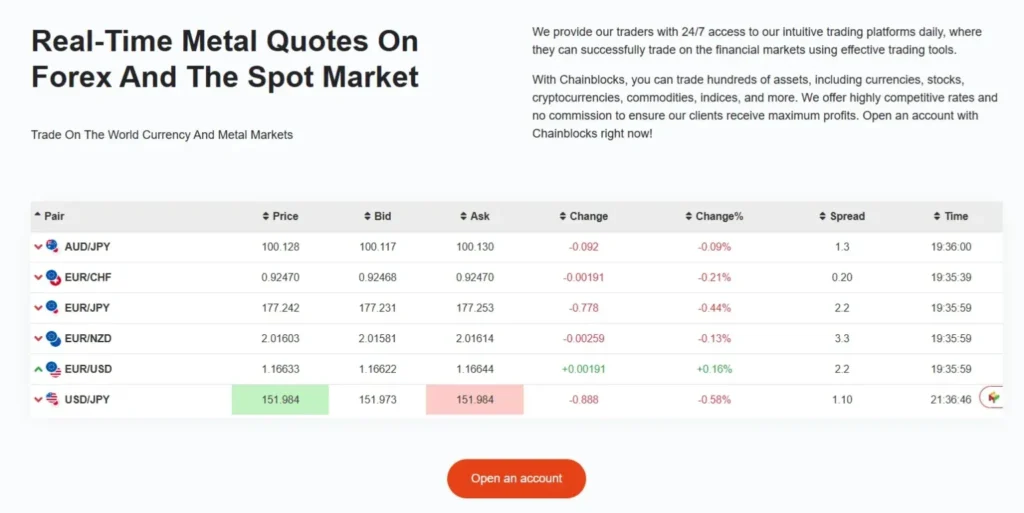
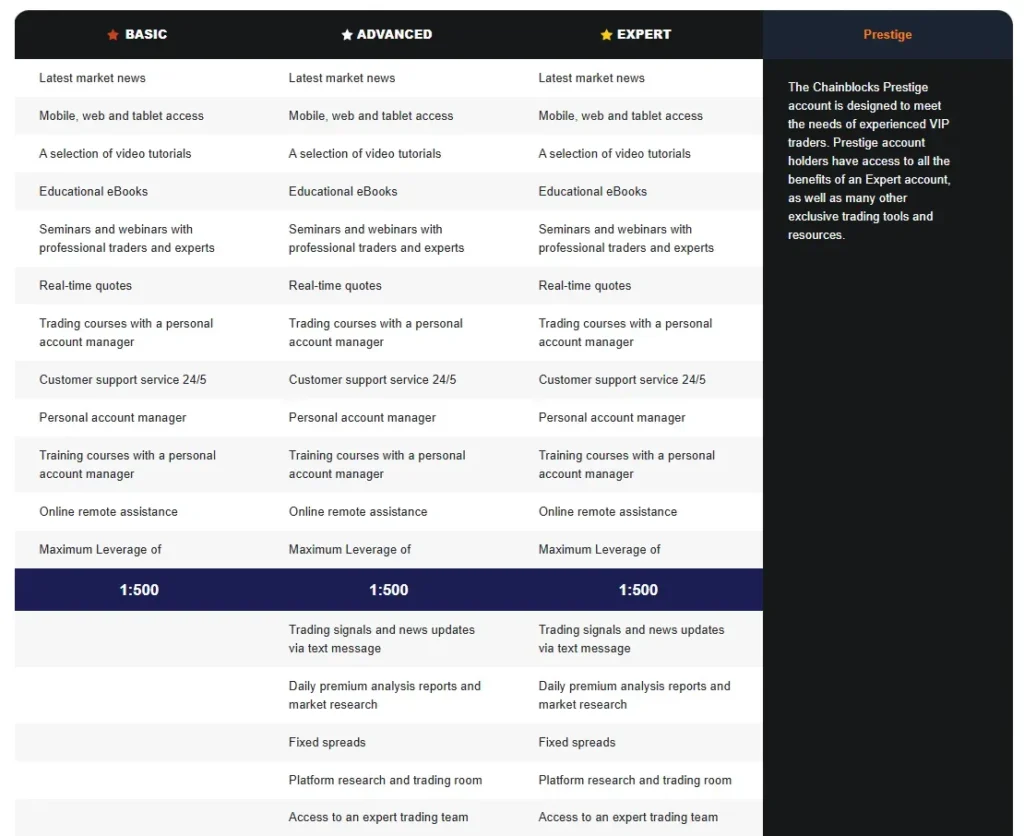
There is a section with pricing plans supposedly suitable for every investor level: from beginner to professional. But interestingly, there are no specific trading conditions. No spreads, no commissions, no information about liquidity providers.
In other words, a person has no idea what they are dealing with. Everything is designed to create the illusion of a real broker and convince the user to deposit funds.
Another warning sign — the absence of licensing information. The website does not even mention a registration number, legal address, or any official documentation. All that is listed is a non-existent company, supposedly registered in the UK or Seychelles.
Checking FCA, CySEC, FINRA, and other regulator databases shows that such a company simply does not exist. This indicates a typical offshore scheme masquerading as an investment broker.
Company Data Verification: Fake Licenses and False Addresses
On the Chainblocks site, you can find vague mentions of “regulation” and “compliance with international standards.” However, if you look at the facts, it turns out all of this is fabricated.
For example, the “About Us” page claims that Chainblocks operates under the supervision of a British regulator. But if you check the license number they provide (or don’t provide at all) in the official FCA registry, you will find nothing.
Moreover, the address listed on the website either does not exist on maps or belongs to a completely different organization. Some versions of the website show an address in Hong Kong, others in Cyprus. This is a classic masking scheme to confuse trails and complicate legal action.
Email and contact information is also fake. Emails either don’t get delivered or are answered by anonymous “managers” who are actually part of a group of psychological manipulators.
All signs point to Chainblocks being not a broker or investment company, but a fraudulent project operating through fake websites and fake contacts.
Exposure: How to Recognize Chainblocks’ Scam
Chainblocks’ main tactic is to play on trust. First, they find a potential victim through ads, social networks, or “analyst” calls.
The scenario is always the same:
They convince you that you can start with a small amount.
After an initial “profit,” the manager suggests increasing the deposit to “lock in success.”
When you try to withdraw even part of the funds — excuses appear: verification, taxes, fees, etc.
Then the broker stops responding, and the website may simply disappear.
Chainblocks actively uses psychological pressure: they constantly call, promise “guaranteed income,” praise the client for success. Some even create fake chats and show fake trading graphs.
It is especially dangerous that they operate through a chain of fake websites. When one domain is blocked, a new one opens — under a different name, but with the same schemes. Chainblocks has already appeared under similar names: Chainblock Trade, CBlocks Capital, etc.
Scam Scheme: Step by Step, How They Steal Your Money
To understand the scale of the fraud, here’s the full scheme:
Luring: You are found through Instagram, TikTok, Telegram ads, or “successful investor” stories.
Registration: On the Chainblocks site, you create a personal account and fund it — usually with a bank card or cryptocurrency.
Manipulation: After that, a “personal analyst” contacts you. They “help trade” but in reality, manage your account themselves.
Fake Profit: On the screen, you see your balance growing. In reality, these numbers have nothing to do with the real market — it’s just a fake interface.
Withdrawal Block: As soon as you want to withdraw money — “problems” appear: account freeze, tax, “suspicious activity.”
Complete Disappearance: When you stop investing — the broker stops responding. After a couple of weeks, the site stops working.
All deposited money ends up in anonymous crypto wallets or offshore accounts, and recovering it independently is almost impossible.
How to Recover Money from Chainblocks with DNB Forex Review
If you became a victim of Chainblocks — don’t give up. Money recovery is possible, especially if you act quickly and correctly.
The DNB Forex Review team has already helped many clients who encountered similar schemes. Their specialists know how the financial fraud industry works and use legal and technical tools to recover funds:
Initiate chargeback procedures via bank or payment system.
Track cryptocurrency transactions if the money was sent in digital assets.
File official requests to regulators, law enforcement, and financial institutions.
Help collect evidence: correspondence, payment receipts, screenshots, call recordings.
The key is not to waste time. The sooner you contact DNB Forex Review, the higher the chance of recovering money. Even if several months have passed, specialists can still help if you have proof of the transfers.
Victim Reviews: Real Stories of Deception
Looking at forums and review platforms like Trustpilot, Reddit, or Ru.Trade, you can find dozens of messages from people who suffered from Chainblocks.
Typical stories include:
Anna, 42: “Everything seemed fine at first — the analyst called every day, promised profits. When I tried to withdraw $300, they made me pay a ‘tax.’ After that — silence. Money gone.”
Dmitry, 33: “I was found through Instagram ads. I invested 500 euros. The balance grew until I tried to withdraw. Then the site just stopped opening.”
Igor, 51: “The manager convinced me to borrow money from the bank, promising it would all come back quickly. Now I’m in debt with nothing in my account.”
There are hundreds of such stories. People describe the same tactics: pressure, fake reports, fake consultants. This is clear proof that Chainblocks is not a broker but an organized financial scam.

Additional Topic: The Psychological Tricks Behind Chainblocks’ Scam
One of the most dangerous aspects of Chainblocks is not just the fake platform or the fraudulent financial promises — it’s the sophisticated psychological manipulation used to trap victims. Scammers understand human behavior and exploit it expertly:
Creating a Sense of Urgency: Victims are pressured to invest quickly, often with warnings that opportunities are limited or exclusive. This makes people act impulsively, bypassing rational decision-making.
False Authority and Credibility: Scammers present themselves as professional analysts, financial experts, or company representatives. They use fake certificates, testimonials, and logos of well-known institutions to appear trustworthy.
Reinforcing Trust Through Small Wins: Initially, the platform may show fake profits to convince users that the system works. This tactic encourages people to deposit more money, believing in their “success.”
Isolation from Reality: Victims are often encouraged to communicate only through the platform or private chat with the analyst, cutting them off from friends or family who might warn them.
Emotional Pressure: Constant praise, threats of missing opportunities, or claims of personal mentorship create emotional dependency, making victims less likely to question the scam.
Understanding these psychological tactics is crucial. Awareness is the first line of defense against scammers like Chainblocks, and it emphasizes why victims often fall for these schemes despite their initial skepticism.
Expanded Conclusion: Chainblocks — A Deeply Cynical Financial Scam
Chainblocks is not just a typical fraudulent website; it represents a well-orchestrated, highly manipulative financial scam. Unlike ordinary scams, which may rely on simple lies or one-time tricks, Chainblocks operates as a full-fledged operation designed to exploit both financial and psychological vulnerabilities.
The platform has no licenses, no real legal address, no transparent trading conditions, and no credible contacts. All promises of profits are entirely fabricated, and the seemingly professional interface is just a veneer to lure victims into depositing funds.
Victims often report the same sequence of events: initial small profits, increasing investment demands, fabricated obstacles to withdrawals, and complete disappearance of the platform and its operators. Stories like those of Anna, Dmitry, and Igor illustrate the devastating personal and financial consequences: loss of savings, accumulation of debt, and significant emotional stress.
Recovering funds independently is extremely difficult due to the offshore nature of the accounts, fake identities, and the use of cryptocurrency to obscure transactions. However, with the assistance of specialists from DNB Forex Review, victims have a real chance to reclaim their money. These professionals combine legal, financial, and technical strategies: chargebacks, cryptocurrency tracing, formal complaints to regulators, and evidence collection. Acting quickly significantly increases the chances of recovery.
Moreover, exposing scams like Chainblocks is not just about retrieving lost funds; it is about preventing future victims. Each review, report, and legal action contributes to raising awareness and dismantling the networks of these scammers.
Ultimately, Chainblocks exemplifies how sophisticated modern financial fraud has become. It is a stark reminder that online trading opportunities, especially those promising guaranteed profits, require thorough scrutiny. Protecting oneself requires vigilance, education, and, when necessary, professional assistance from trusted organizations like DNB Forex Review. Awareness, prompt action, and consultation with experts are the most reliable ways to avoid becoming another victim and to ensure scammers face consequences.








My question to the community: has anyone successfully recovered funds from Chainblocks via chargeback or crypto tracing? I wired money via Bitcoin and I’m told tracing is harder. It was about 5 k USD‑equivalent. The review page here gives hope, but I’d like to hear someone’s case where it worked. Also: what are realistic fees and timescales for these recovery services?
Specialists will contact you after you leave a request on the website.
I contacted Chainblocks via Instagram and within days I was pressured by a “manager” to increase my deposit once I saw some fake gains. When I asked to withdraw a modest amount, suddenly they claimed “verification issues” and “taxes”. After that, communication stopped and the platform vanished. I’m now looking into engaging a recovery service because I can’t trust the address or licence they claimed. If anyone else has done this please share your experience or referral.
Specialists will contact you after you leave a request on the website.