




When people first hear about a new online investment platform that promises easy profits and cutting‑edge financial technology, it is natural to be curious. The name Gorilla Chain and its website may give an impression of legitimacy and innovation in the world of cryptocurrencies and digital finance. However, underneath the marketing claims there are serious concerns and warnings from financial authorities and independent analysts. For anyone considering investing, and for those who may already have funds tied up with this company, it is essential to understand what is going on and why many experts urge caution. This review is written for real people, not legal robots. It explains, in plain language, the facts that have been reported about Gorilla Chain, the signs that indicate it may be an unreliable or fraudulent service, and what victims can do to protect themselves and potentially recover lost money with professional help. The goal of this article is to shed light on what has been observed and reported, not to sensationalize or mislead. What you read here should help you make more informed decisions.
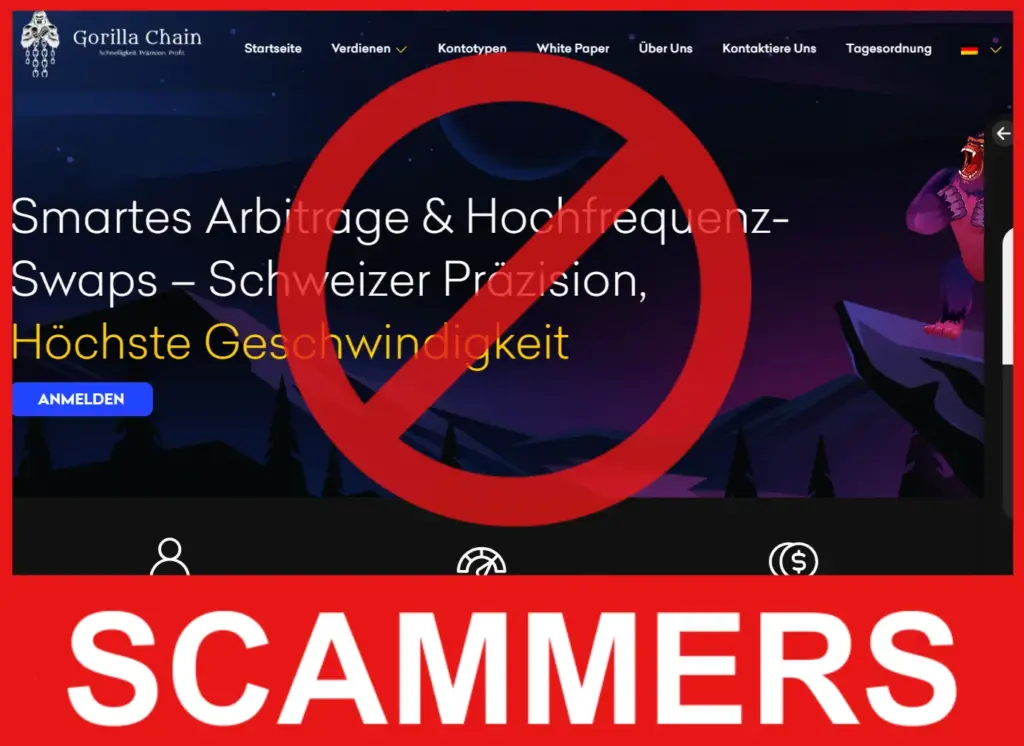
Information About the Fraudulent Broker
Gorilla Chain presents itself online as a platform involved in cryptocurrency investments, decentralized finance tools, staking services and trading technology. On its website it displays contact details including an address that appears to be in Switzerland, and it claims to offer advanced financial protocols that allow users to earn returns on their digital assets. However, when we look beyond the surface, the picture becomes more complicated. Independent trust assessment tools that analyse the underlying web domain and ownership data give Gorilla Chain a very low trust score. These services consider things such as how long the site has existed, whether the identity of the owner is public, and whether there are known associations with fraudulent activity. In the case of Gorilla Chain, the domain is relatively new, the site owner’s identity is hidden, and the platform has characteristics often associated with high‑risk or scam projects. These are not proof by themselves, but when combined with other indicators they are serious warning signs. Financial authorities in Switzerland have placed Gorilla Chain on a warning list, noting that the company is not entered in the official commercial register and is offering financial services without proper authorization. Regulated companies are required to register, disclose leadership and comply with strict rules designed to protect investors. Missing all of these raises legitimate questions about the company’s intentions and its legal standing. The marketing language used by Gorilla Chain often emphasizes potential gains while glossing over risk. It hints at “flexible staking returns” and “high‑frequency trading opportunities”, but it does not provide transparent documentation, independent audits, or verifiable proof that it actually executes trades and generates the returns it touts. In many legitimate investment platforms, performance data, risk disclosures and clear terms of service are standard. The absence of those here is notable. Some users on review platforms give positive impressions, saying the platform feels easy and professional. But these reviews should be viewed with scepticism: many are short and generic, and the platform itself appears to have invited some reviewers. A high number of positive reviews on a very new platform can sometimes indicate coordinated or incentivized feedback rather than genuine independent experience.
Verification of Company Data
One of the most important steps in assessing any broker or investment service is verifying its legal and regulatory status. In the case of Gorilla Chain, this search yields alarm bells. The Swiss Financial Market Supervisory Authority, which regulates banks, securities dealers, insurers and other financial intermediaries in Switzerland, lists Gorilla Chain on its warning list. This means that the authority has information suggesting the company is conducting activities that ordinarily require authorization, but it has not registered or been licensed to do so. The warning list is intended to alert consumers that a financial service is operating outside official oversight and that they should exercise extreme caution. Being on such a list is not by itself a criminal conviction, but it is a strong indication that the company does not meet recognised regulatory standards. Gorilla Chain’s claimed address is not found on official business registries, and there is no record of recognised financial licences attached to the company name. Legitimate investment firms, especially those operating in or out of Switzerland, typically must prove compliance with local commercial and financial laws, and that includes being transparent about corporate structure, directors and licences. The absence of these verifiable facts means that any claims of official status or legal operation are unsubstantiated. In addition, independent trust checkers point out other concerns such as low visitor traffic and the use of privacy‑protected domain registration. Fraudulent or high‑risk sites often hide their ownership details, while regulated financial companies typically provide full transparency because it is a legal requirement. Without clear, official records of authorisation or registration, potential investors are left to rely on the marketing claims displayed on the Gorilla Chain website itself — and that is never a safe basis for making financial decisions. Genuine brokers and trading platforms will provide licence numbers, links to regulator registers, audited financials and clear compliance information. Gorilla Chain does not.
Exposing the Broker as a Fraudster
Understanding why a platform might be considered fraudulent requires looking beyond surface impressions. There are several key signs that financial professionals and legal analysts associate with unfair or deceptive brokers — and Gorilla Chain displays several of these. One common feature of fraud schemes is the promotion of high and relatively guaranteed returns without adequate disclosure of risk or clear explanations of the business model. Gorilla Chain’s messaging focuses heavily on potential gains and sophisticated technology, but lacks independent proof that these systems actually operate as described. Legitimate investment opportunities always come with clear disclosures about risk, volatility and the possibility of loss; vague language about maximizing profits is a red flag. Another issue is the behaviour of withdrawals and deposits. Legitimate platforms, even with complex trading technologies, still allow users to withdraw their assets without unreasonable barriers. Reports related to Gorilla Chain and similar platforms often refer to situations where deposits were easy but withdrawals became difficult or conditional. This pattern — free entry but costly or delayed exits — is a classic tactic observed in fraudulent schemes. Marketing and communication strategies also give clues. Aggressive encouragement to deposit more funds or vague personal outreach through social media can be signs of an attempt to escalate client investment beyond initial amounts. Real brokers focus on education and informed decision‑making rather than pushing investors to increase deposits for the sake of higher returns. Lack of transparency in how returns are generated, combined with a lack of documented trading history or verifiable audit reports, further underlines why many experts question the legitimacy of Gorilla Chain. A real trading platform will typically show clear execution history, third‑party verification and easy access to transactional records. When that is missing, investors are often looking at account valuations that exist only within a dashboard and not in actual market activity.
Fraud Broker’s Deception Scheme
Scammers in the financial space often use a predictable but effective approach to draw in victims. Understanding this scheme can help people recognise early warning signs before significant money is lost. The sequence usually starts with marketing. Potential victims see ads on social media, receive direct messages, or encounter sponsored content suggesting easy earnings through cryptocurrency or digital asset management. The marketing is designed to look polished and trustworthy, with professional language and impressive visuals. It may reference trending topics like decentralized finance, staking strategies, or automated trading bots — all buzzwords that can attract crypto‑savvy investors. Once a person registers, the platform often makes the initial engagement smooth and appealing. Small deposits may be accepted easily, and early account balances may show credit increases, creating a sense of legitimacy. It gives the impression that the system works and is profitable. This psychological reinforcement is key: if someone believes they are earning, they are more likely to invest more. At some point, the platform introduces the idea that higher returns are available if the investor increases their deposit or participates in additional trading schemes. This is where pressure tactics often begin. Investors may be told that they need to unlock premium features, pay additional fees, or meet higher minimums to realize their profits. When the victim tries to withdraw funds — especially earnings — the problems start. The platform may suddenly introduce unexpected fees, compliance charges, or processing conditions. These conditions are often not disclosed upfront and are designed to extract more money, not to legitimately settle a withdrawal. Finally, once a victim has invested deeply, the communication may slow down or stop, support may become unresponsive, and access to the account could be restricted. Funds that seemed to be growing disappear behind new obstacles. This psychological and procedural pattern has been observed in numerous cases of investment and broker fraud.
How to Get Money Back from a Scam Broker
For those who have already lost money through Gorilla Chain or suspect that they are dealing with a fraudulent broker, there are important steps that can increase the chance of recovering funds. Acting quickly and with expert assistance is critical. Professional recovery specialists, such as the team at DNB Forex Review, have experience dealing with scams and understand how to navigate the complex legal and financial pathways involved in financial fraud cases. The first step they take is to document the case thoroughly. This includes saving all communications, screenshots of the account and platform, deposit receipts, and any correspondence with support representatives. This evidence is essential for legal claims and discussions with financial institutions. Recovery specialists can help identify how the funds were transferred, whether through bank transfer, credit card, cryptocurrency wallets or payment processors. Each situation has different recovery options. For example, deposits made with credit cards or bank transfers may be eligible for chargeback claims or recalls through the issuing institution. In cases where cryptocurrency was used, forensic analysis can sometimes trace the flow of digital assets and identify intermediaries that can be compelled to cooperate. Legal professionals know how to engage with regulators, enforcement bodies and courts where appropriate. Filing complaints with financial authorities and law enforcement can put pressure on the operators of fraudulent platforms and sometimes prompt action that helps recover assets or prevent further losses. It also adds weight to civil claims. Importantly, recovery specialists protect investors from falling into secondary scams. After a financial fraud, some unethical “recovery services” promise guaranteed returns if more money is paid upfront. Reputable firms, instead, work transparently, base their charges on results rather than promises, and prioritize the client’s best interests. The sooner an investor seeks help, the better. Delay allows fraud operators to move funds, change domains or disappear entirely, which can make recovery efforts more difficult. Prompt action, combined with professional support, can significantly improve the chances of getting money back.
Negative Reviews About the Broker
When looking at public feedback about Gorilla Chain, a mixed pattern emerges. On company‑linked review platforms, such as user review sections, there are many positive comments. Some users claim that the platform feels easy and professional, others say withdrawals were smooth, and some speak of stable returns. But there are several details that require critical examination. Firstly, the majority of these reviews are labelled as “invited” or appear to be responses to company invitations for reviews. This means the platform itself may have asked users to leave feedback, which can skew the perception of authenticity. Genuine independent reviews tend to come from broader sources and include more critical voices. Some reviewers do raise issues such as high fees, complicated deposit requirements, and user interface concerns. At least one user reported frustration with deposit minimums, a situation that reflects a common complaint that platforms sometimes set thresholds that serve the operator’s interests rather than the investor’s. External trust assessment tools have noted that a young website with a high number of reviews can be suspicious, because building a large customer base in a short time and getting many reviews is statistically unusual. This has led independent assessors to warn that some of the positive feedback may not be fully reliable. Most importantly, outside of the curated positive feedback, there are fewer independent user reports of significant withdrawals or long‑term success. This lack of unbiased, verifiable testimonies is itself noteworthy. Genuine financial platforms often have broader public conversations on forums, community boards and social networks where users share real outcomes. The absence of widespread, consistent positive reporting in independent spaces suggests that the online presence of Gorilla Chain may not reflect the full reality of user experiences.

Additional Considerations for Investors
One aspect that is not addressed enough in discussions about platforms like Gorilla Chain is the psychological and emotional impact on investors. People who put their money into what they believe is a legitimate opportunity can feel personal embarrassment or denial when confronted with evidence of fraud. Fraud operators often exploit this emotional response, making victims reluctant to report or discuss their losses. Recognizing that this reaction is common and understandable can help people make clearer, more objective decisions when reviewing their options. Another important consideration is that crypto‑related scams are part of a larger pattern of online fraud that spans regions and markets. Increased regulatory scrutiny, such as the actions taken by financial watchdogs in Switzerland and elsewhere, reflects not just isolated warnings but an industry‑wide response to protect consumers from unverified operators. Staying informed about these broader trends can help investors avoid similar traps in the future. Finally, knowledge of common scam indicators — such as refusing to disclose licensing, offering guaranteed profits, and creating artificial urgency for deposits — is one of the most valuable tools an investor can have. Education and vigilance are as important as any legal remedy after a loss.
Conclusion
In summary, Gorilla Chain raises multiple legitimate concerns for anyone considering investing with the platform. Independent evaluations point to a low trust score, hidden ownership details, and a lack of verified licensing. National financial regulators have explicitly placed the company on a warning list, indicating that it is offering financial services without proper authorization. Users and experts alike point to issues such as unclear mechanisms for profit generation, barriers to withdrawals, and reliance on invited reviews that do not match the breadth of real user experience. The combination of these factors suggests that Gorilla Chain may not be a reliable or trustworthy broker. For investors who have already deposited funds, it is crucial not to delay in seeking help. Professional recovery specialists like those at DNB Forex Review have the experience, legal knowledge and procedural tools to document cases, engage with financial institutions, trace funds, and pursue legal or regulatory avenues to recover assets. Financial fraud is a complex challenge, but you do not have to face it alone. Timely action, combined with experienced support, gives you the best chance of protecting what remains of your investment and bringing those responsible to account. The mistakes of the past do not have to determine your financial future — informed, deliberate steps can still make a real difference.







I lost a significant amount of money with Gorilla Chain and I regret not checking more information before investing. The platform looked convincing, but later I discovered many concerns about its legitimacy. I contacted support several times, but I did not receive a clear solution. Has anyone had experience recovering cryptocurrency or transferred funds from this company? I need advice on where to begin.
If you have fallen victim to an unscrupulous company, submit a request on our website.