




In today’s digital world, online trading platforms have become extremely common, and many of them aggressively advertise quick earnings, simple investing, and so-called expert assistance. One of such platforms is Plustrade (plustrade.io), which promotes itself as a modern broker giving access to global financial markets. On the surface, everything looks convincing thanks to polished marketing and promises of high returns. However, many traders have started raising concerns, claiming they faced financial losses and serious difficulties when trying to withdraw their money. This material has been prepared together with DNB Forex Review, a legal company that assists victims of dishonest brokers in attempting to recover lost funds. The purpose of this review is to examine how Plustrade operates, highlight suspicious patterns, and explain why many users now consider it a risky platform.
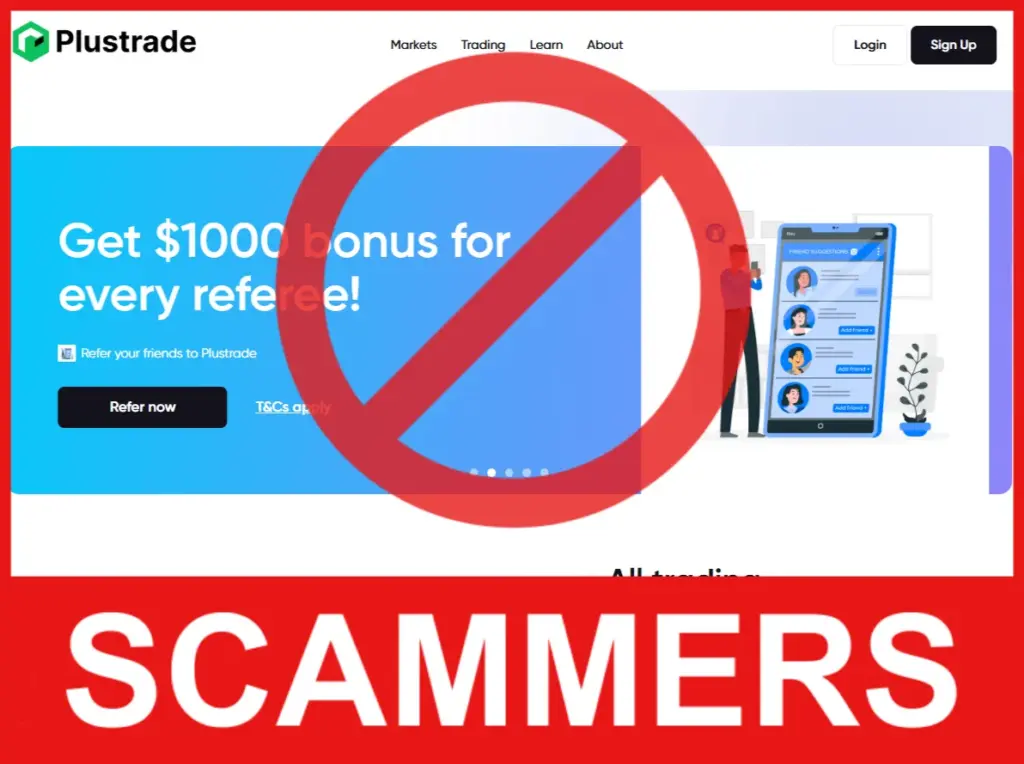
Information About the Fraudulent Broker
Plustrade presents itself as a multi-asset trading service offering forex, cryptocurrencies, commodities, and indices. At first sight, the website gives an impression of professionalism: users can see trading dashboards, different account types, and claims about modern trading technologies. The company advertises low spreads, high leverage, and personal managers who are supposed to help clients earn profits. In reality, many users describe a very different experience. After making an initial deposit, clients are often pushed to invest more money. Account managers reportedly use aggressive persuasion techniques and encourage increasing deposits instead of focusing on safe trading practices. Some traders even mention that their dashboards displayed artificial or misleading profits, creating a false sense of success. Another worrying element is the promotion of “exclusive investment deals” and “guaranteed income.” In financial markets, especially in forex and crypto, such guarantees are unrealistic and are usually considered a serious warning sign. Online feedback also suggests that problems begin as soon as users request withdrawals. Common issues include unexplained delays, repeated verification demands, and sudden account limitations. These behaviors are frequently linked to unregulated and questionable brokerage operations.
Verification of Company Data
When evaluating any trading platform, verifying its legal status is essential. In the case of Plustrade, many users report that it is difficult or impossible to find clear licensing information. Regulated brokers are normally supervised by authorities such as the FCA in the UK, CySEC in Cyprus, or ASIC in Australia. These institutions maintain official registries where licenses can be checked. However, for Plustrade, no reliable confirmation of strong regulatory supervision appears to exist. The company details shown on its website are often vague and sometimes refer to offshore locations known for weak financial oversight. This is a common approach used by questionable brokers to avoid strict regulation and legal responsibility. Another issue is the lack of transparent corporate identity. There is no clear information about the management team, no verified office address, and no reliable company history. In many similar cases, such anonymity makes it extremely difficult for clients to take legal action without professional support. Due to these missing elements, serious doubts remain regarding the platform’s legitimacy and level of transparency.
Exposing the Broker as a Fraudster
There are multiple indicators suggesting that Plustrade may not operate as a trustworthy broker. One of the biggest red flags is the promise of guaranteed or highly predictable profits. In real financial markets, no broker can ensure income, as trading always involves risk and market fluctuations. Another issue is the use of pressure-based communication. Many users report frequent calls from “account managers” who insist on depositing more funds. This type of behavior is often associated with aggressive sales tactics rather than legitimate financial advisory services. Withdrawal problems are also widely mentioned. Clients describe situations where their requests are ignored, delayed, or blocked. In some cases, users are asked to pay additional fees such as taxes, commissions, or verification charges before their money can be released. There is also concern about missing or unclear legal documentation. Important terms are either difficult to find or written in a confusing way that hides key conditions. Finally, some users claim that trading results shown on the platform may not reflect real market activity. Instead, they suspect the data is simulated to encourage further deposits. All these factors together create a strong impression that the platform does not operate under fair or transparent conditions.
Fraud Broker’s Deception Scheme
The operating model used by platforms like Plustrade usually follows a predictable pattern. At the beginning, potential clients are attracted through advertising campaigns, social media promotions, or so-called investment consultants. They are promised easy profits and professional support. After registration, a “manager” quickly contacts the user and helps them make their first deposit. Everything initially appears smooth, and small profits may even be shown in the account. Once trust is established, users are encouraged to invest larger amounts. In some cases, they are shown manipulated results or encouraged to believe that bigger investments will bring higher returns. When clients attempt to withdraw funds, the situation changes. The broker may introduce unexpected requirements such as additional payments, identity checks, or processing fees. Eventually, communication often becomes limited or stops entirely, especially when users refuse to send more money. At that point, access to funds is usually lost. This structure is designed to continuously attract deposits while preventing actual withdrawals.
How to Get Money Back from a Scam Broker
Many victims of such schemes feel confused and unsure about what to do next. However, there are still possible ways to take action. DNB Forex Review provides assistance to individuals affected by questionable brokers. The process usually begins with a detailed case review, including transaction history, payment methods, and communication records. Depending on how the money was transferred, different recovery strategies may be used. These can include chargeback procedures for card payments, crypto tracing for digital assets, or legal claims through financial institutions and regulators. Time plays an important role. The sooner action is taken, the higher the chances of recovering funds or stopping further losses. That is why victims are advised not to delay seeking help. The specialists also assist in preparing documentation, contacting banks, and building structured claims. Although recovery is not always guaranteed, professional support significantly improves the chances of success.
Negative Reviews About the Broker
Across forums, review websites, and social media discussions, Plustrade is often mentioned in a negative context. Many users report that the platform works smoothly at first, especially during deposits, but problems begin when withdrawal is requested. Some people claim they lost significant amounts of money after being persuaded to invest more through so-called “upgrades” or special investment offers. There are also reports of users being ignored by support teams once they request withdrawals. In several cases, communication reportedly stops completely after refusal to deposit additional funds. Emotional manipulation is another frequently mentioned issue. Clients say that trust is built over time, only to be used later to convince them to invest larger sums. While occasional positive comments exist online, they often appear generic and lack detailed trading information, which raises questions about their authenticity. Overall, the general impression from user feedback is dissatisfaction, financial loss, and feelings of being misled.

Hidden Risks for Users
When people first come across a platform like Plustrade, the main focus is usually on potential profit. The website looks modern, the promises sound convincing, and the idea of quick returns can easily distract from deeper problems. But behind this attractive surface there are several hidden risks that often become visible only after money has already been deposited. These risks are not always obvious at the beginning, which is exactly why so many users end up in difficult situations. One of the most serious risks is loss of personal data security. During registration, users are usually asked to provide sensitive documents such as passports, identity cards, proof of address, and sometimes even banking details. On regulated platforms, this information is protected by strict data laws and supervision. However, in the case of unregulated brokers like Plustrade, there is no clear guarantee how this information is stored, who has access to it, or whether it is shared with third parties. This creates a long-term risk, because personal data can potentially be misused for fraud, identity theft, or future scam attempts. Another hidden danger is emotional manipulation and psychological pressure. Many users report that communication with “account managers” starts very friendly and supportive. At first, everything feels personal and helpful. But over time, the tone often changes. Clients may begin receiving frequent calls or messages encouraging them to invest more money, increase deposits, or take higher risks. This constant pressure can slowly affect decision-making, making people act emotionally instead of rationally. In some cases, users describe feeling trapped or rushed into financial decisions they would not normally make. There is also a significant risk of false trust building, which is often overlooked. Scammers behind such platforms tend to invest time in creating a relationship with the client. They may provide small early “profits” or show positive trading results on the account dashboard. This is not necessarily real trading activity—it can simply be simulated data designed to build confidence. Once trust is established, users are more likely to deposit larger amounts. The danger here is that the victim does not realize they are being guided through a carefully planned manipulation process rather than genuine investment growth. Another issue that deserves attention is the lack of financial protection mechanisms. In regulated environments, client funds are usually stored in segregated accounts, meaning they are separated from company operational funds. This ensures that even if the broker has financial problems, client money remains protected. With platforms like Plustrade, there is no clear evidence that such safeguards exist. This means that once money is sent, it may no longer be protected or traceable in the same way as with regulated financial institutions. A less obvious but very important risk is difficulty in dispute resolution. If something goes wrong with a regulated broker, clients can file complaints with financial authorities, ombudsman services, or arbitration bodies. These institutions help resolve disputes and can sometimes force brokers to return funds. In contrast, unregulated platforms operate outside these systems. This leaves users with very limited options, often forcing them to rely on legal specialists or recovery services. The process becomes longer, more complex, and uncertain. Another hidden threat is the presence of internal withdrawal barriers that are not clearly disclosed in advance. Users often only discover these obstacles when they try to withdraw money. Suddenly, they may be informed about new conditions such as additional fees, verification steps, or “tax requirements.” These conditions are rarely explained clearly at the beginning and may appear only when a withdrawal request is submitted. This creates a situation where access to funds becomes conditional and unpredictable. There is also the risk of reinvestment traps, where users are encouraged to keep money on the platform instead of withdrawing it. Some clients report being told that withdrawing funds will “reduce profitability” or cause them to miss upcoming trading opportunities. Others are offered bonuses or special deals that require them to keep trading. These tactics are designed to keep funds inside the system for as long as possible, increasing the likelihood of further deposits and reducing the chances of successful withdrawal. An often overlooked issue is dependency on platform communication. Many users become reliant on their assigned “account manager” for guidance. This can create a false sense of security, where clients believe they are being professionally supported. In reality, this communication may be part of a structured strategy aimed at controlling user decisions. Once communication stops, users are often left confused and unsure of what steps to take next. Finally, there is the risk of secondary scams after initial loss. Unfortunately, once a person becomes a victim of a questionable broker, they are sometimes targeted again by unrelated fraudsters. These “recovery scammers” contact victims offering guaranteed fund recovery in exchange for upfront payments. This can lead to even more financial losses and deeper frustration. It is important to understand that legitimate recovery services, such as DNB Forex Review, do not operate on unrealistic guarantees or demand suspicious advance payments without proper case evaluation. All these hidden risks show that the danger of platforms like Plustrade is not limited to simple trading losses. The problem is much broader and includes data safety, psychological pressure, lack of legal protection, and complex withdrawal barriers. Many of these issues only become visible after the user is already deeply involved, which is why awareness is extremely important before investing any funds.
Conclusion
Taking into account all available information, Plustrade (plustrade.io) raises serious concerns that cannot be ignored. The combination of unclear regulation, repeated withdrawal issues, aggressive marketing tactics, and consistent negative user feedback strongly suggests a high-risk environment for investors. What stands out most is not a single isolated complaint, but a repeating pattern experienced by many users: easy deposits, apparent profits, and then major obstacles when trying to withdraw funds. Such consistency across different reports is often a strong indicator of systemic problems rather than coincidence. Another key issue is the absence of transparent regulation. In legitimate financial services, regulatory oversight is essential for protecting clients and ensuring fair operations. Without it, users are left without proper protection or recourse. Equally concerning is the behavior reported after deposits are made. Many users describe persistent pressure to invest more, often through emotional persuasion and unrealistic promises. This approach shifts the focus away from responsible trading and toward maximizing deposits. The most critical stage comes when withdrawal requests are made. Delays, additional fees, and sudden restrictions are frequently reported, leaving many users unable to access their funds. These tactics are commonly associated with problematic or unregulated financial schemes. For affected individuals, taking quick action is crucial. Professional assistance from organizations like DNB Forex Review can help assess the situation and explore possible recovery options through legal and financial channels. In the end, the key lesson is clear: in online trading, trust should never be based on promises or marketing claims. It must be built on verified regulation, transparency, and a proven reputation in the financial industry.






I had an account with Plustrade and everything seemed fine in the beginning. The problems started when I asked to withdraw my funds. They stopped giving clear answers and made the process very difficult. I believe this was a scam and I want to warn other people. I am now searching for professionals who can help me recover the money I lost.
Our team is ready to help you regain control of the situation. Submit a request today.
I was contacted by Plustrade representatives who promised good results and safe investments. Unfortunately, after I deposited money, I realized that getting my funds back was almost impossible. They asked for additional payments and did not complete my withdrawal. I have collected all messages and payment details and I am looking for advice about possible recovery options.
Thank you for sharing your experience. If you have any questions, submit a request and we will help you.