




In recent years the number of online trading brokers claiming to offer easy access to financial markets has increased dramatically. Some of these companies are legitimate, but many are not. One of the names that has surfaced repeatedly in connection with complaints and negative user experiences is TREX Trade. On the surface, the TREX Trade website appears to promote an online trading platform where users can invest in various assets including forex, cryptocurrencies and commodities. The advertisements and promotional materials present a picture of a professional trading environment with the potential for profit. However, beneath this surface there are serious concerns about the legitimacy of the company and the way it conducts business. For anyone considering investing money with an online broker, it is essential to know not only what the company claims but what real users and independent observers have experienced. The forex and derivatives markets are complex and inherently risky even with a reputable broker, but when a broker does not operate fairly or transparently, the risk becomes much more serious. This review aims to expose key issues associated with TREX Trade, explain its shortcomings, detail how its deception scheme works, and outline how victims can pursue recovery of funds. Bringing attention to cases like this is important because it helps other investors avoid similar traps and provides a realistic perspective on what happens when a broker engages in unfair or fraudulent practices.
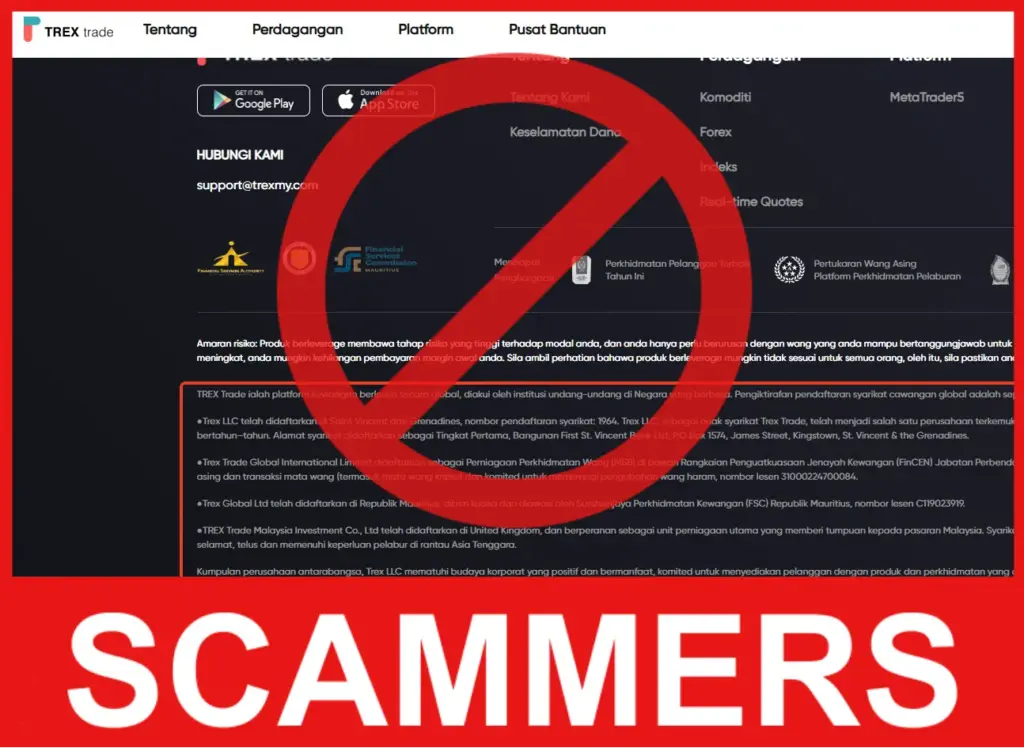
Information About the Fraudulent Broker
TREX Trade presents itself as an online trading broker offering financial services in markets such as foreign exchange and possibly other investment products. The company operates a website that invites traders to open an account, deposit funds, and begin trading. On its website, the broker highlights features such as flexible leverage and access to global markets. There is also mention of regulatory status and protections, which gives the impression of credibility at first glance. However, when closer examination is applied, many important indicators of legitimacy are absent. One of the most notable issues is the lack of verifiable information about the company’s regulation and legal standing. While some sections of TREX Trade’s promotional materials claim licensing under a regulatory authority, independent checks reveal that these claims are unverified and at odds with publicly accessible financial regulatory databases. This means that there is no confirmation that the broker is authorized by recognized financial regulators in major jurisdictions. The absence of real regulatory oversight is a significant warning sign about the reliability of the broker. Independent broker review and monitoring services that evaluate online brokers have raised serious concerns about TREX Trade’s operation. These sources consistently point to high risk and a lack of confidence in the broker’s ability to protect client funds. It is also noteworthy that the broker’s website uses contact details and a corporate registration in jurisdictions known for minimal oversight, such as certain offshore financial centers. Operating from such locations without strong external regulation gives the broker full control over customer funds without the accountability that serious financial authorities require. Furthermore, available information indicates that users have encountered problems at nearly every stage of the trading process. These include issues with account registration, difficulties in executing trades, slow or unresponsive customer service, and obstacles to withdrawing funds. In some cases funds reportedly disappear or are not accessible once deposited, even when trading activity is minimal. All of these experiences point to an environment where the broker’s conduct does not align with industry norms and where user protection appears to be absent.
Verification of Company Data
Verifying the legitimacy of a broker requires checking several key aspects of its operations, including corporate registration, regulatory authorization, transparency of ownership, and the safeguarding of client funds. When these elements are examined for TREX Trade, the available information raises immediate concerns. The first and most critical issue is the lack of a verified license from a reputable financial regulatory authority. Reputable brokers are typically licensed by agencies such as the Financial Conduct Authority in the United Kingdom, the Australian Securities and Investments Commission, the Cyprus Securities and Exchange Commission, or equivalent authorities in other major financial centers. These regulators impose strict requirements on brokers, including financial transparency, segregation of client funds, and regular audits. For TREX Trade, claims of regulatory status that appear on the website do not match up with records in the official regulatory registries. Independent broker review databases note that the claimed license cannot be verified, meaning the broker does not hold legitimate or enforceable regulatory approval. Another aspect of verification involves the broker’s corporate background, including its legal entity, location of headquarters, and management structure. For TREX Trade, the information provided on the website is limited and inconsistent. The broker is connected to a company name and addresses in jurisdictions with lenient corporate disclosure requirements, which means there is no publicly accountable record of the owners or directors. Legitimate brokers normally provide clear corporate information, including audited financial statements or evidence of compliance with local corporate laws. The absence of such details does not automatically prove fraud, but it is strongly indicative that the broker is not operating with transparency. The way client funds are treated is another essential part of verification. Responsible brokers maintain segregated accounts for client money, meaning the funds are held separately from the company’s operational funds and cannot be used for other purposes. Verified brokers also participate in investor protection schemes that can compensate clients if the brokerage fails. In TREX Trade’s case, there is no clear indication that funds are segregated or protected. The broker’s vague statements about measures to safeguard client assets do not include specific documentation or procedures. Independent reviews have specifically highlighted that there is no credible evidence of any formal fund protection arrangements.
Exposing the Broker as a Fraudster
To understand whether TREX Trade qualifies as a fraudulent broker rather than simply a risky one, it is important to identify specific signs of fraud and unfair behaviour, rather than general dissatisfaction. Fraudulent brokers typically exhibit a pattern of deceptive practices, misleading claims, and operational behaviour that prioritizes extracting funds from clients rather than facilitating fair trading. One of the clearest signs of fraud is the way regulatory claims are presented. TREX Trade’s marketing and legal statements refer to regulatory licences that cannot be substantiated through official channels. Claiming regulation without verifiable proof is a classic tactic used by fraudulent brokers to create a false sense of safety and legitimacy. Without genuine oversight by financial authorities, the broker is not bound by requirements that protect investors, making it free to operate in a way that benefits the company at the expense of clients. Another indicator of fraudulent operation is the lack of transparency regarding key aspects of service. This includes vague explanations of how funds are managed, unclear fee disclosures, and unclear policies on withdrawals. Fraudulent brokers often bury fees or present misleading information about costs to make the trading proposition appear more favourable while accumulating charges that clients may not fully understand until it is too late. In many reported cases involving similar brokers, traders find that withdrawal requests are delayed, ignored or blocked entirely, and customer support does not provide meaningful assistance. Patterns in user feedback add to the evidence of fraudulent conduct. Traders have repeatedly reported issues such as disappearing account balances, failure to process withdrawals, and non-existent or unresponsive customer support teams. In some user complaints, after initial deposits were made, clients found they could not access their funds or were told to pay additional charges before withdrawal could proceed. These are common tactics used by brokers operating with fraudulent intent: once the money is in, the obstacles to retrieve it multiply. Technical and operational issues are also telling. Reports from user experiences indicate that the trading platform does not function smoothly, orders are executed slowly or with significant slippage, and the interface can be unreliable. While poor technology alone is not definitive proof of fraud, it contributes to an environment where traders’ losses are more likely and confidence in fair trade execution is low. When technological deficiencies are combined with other red flags such as unverifiable regulation and withdrawal issues, a more concerning pattern emerges.
Fraud Broker’s Deception Scheme
Understanding how fraudulent brokers deceive traders can prevent further victims and provide clarity on what happens when someone invests with a deceptive company like TREX Trade. The deception typically follows a structured pattern that begins long before any money changes hands and continues through multiple stages of interaction. The first stage is attraction. Fraudulent brokers invest in marketing that is designed to appeal to potential traders’ hopes and aspirations. They advertise high leverage, market access, professional tools, and potential profitability. These claims are often presented with polished visuals, testimonials, and persuasive language that suggests legitimacy. For many unsuspecting investors, this initial impression creates a sense of trust and opportunity. Once interest is sparked, the onboarding process begins with the opening of an account. With fraudulent brokers, this process can appear straightforward but lacks verification checks that legitimate brokers employ. At this stage, prospects are encouraged to deposit funds quickly, often with assurances of bonus incentives, special account features, or guidance from a personal account manager. These tactics apply psychological pressure by suggesting urgency or exclusive benefits. After the deposit is made, the broker’s deception becomes more evident. Early stages of account activity may show positive balances, intended to reinforce confidence. However, when clients seek to withdraw funds — whether profits or the initial deposit — they encounter obstacles. These can take the form of unexpected requirements such as additional fees, documentation that was not previously mentioned, or explanations of technical issues that delay processing. In many cases, support teams become unresponsive or provide inconsistent information that shifts responsibility back onto the client. Hidden or ambiguous fee structures are another aspect of the deception scheme. Legitimate brokers disclose all fees transparently, but fraudulent ones often obscure costs or introduce new charges when a client tries to withdraw. This makes it appear as though the trading relationship is active and compliant, but in reality the broker is creating conditions that make it difficult or impossible for the client to retrieve funds.
How to Get Money Back from a Scam Broker
Recovering funds from a fraudulent or unresponsive broker is challenging, but it is not impossible. The recovery process typically requires professional expertise and a strategic approach because fraudulent brokers rarely respond to direct contact from individual investors. Specialists in financial recovery — such as those at DNB Forex Review — have experience dealing with deceptive brokers and know which channels and processes are most effective. The first step is evidence collection. This includes all records of communication, screenshots of account balances, deposits, attempted withdrawals, transaction confirmations from banks or payment services, and any other documentation that shows the flow of funds. The more detailed and organised this information is, the stronger the case becomes. Once documentation is prepared, recovery experts evaluate the case and determine the most productive route for action. For brokers that accept deposits through credit cards or bank transfers, it may be possible to pursue a chargeback request through the payment provider. Banks and credit card companies have procedures for reclaiming funds when fraud is involved, and they often respond more effectively when presented with a well-documented dispute. For cryptocurrency transactions, recovery is more complex because digital assets can be harder to trace and reverse. Professionals specialising in crypto fund recovery use specialised tools and networks to track the movement of funds and identify intermediaries that can be held accountable. They also understand the legal avenues available in jurisdictions where the broker is registered or operates. In cases where the broker’s operating jurisdiction is offshore or lacks strong regulatory enforcement, recovery experts use a combination of legal claims, international dispute resolution, and cooperation with financial investigation services. This can involve filing formal complaints with authorities in multiple countries, engaging private investigators, and using legal frameworks designed to protect investors.
Negative Reviews About the Broker
Perhaps the most compelling evidence of a broker’s real behaviour comes from the experiences of actual users. With TREX Trade, there are multiple reports from traders who have shared negative experiences that highlight the practical issues they faced. Many users describe problems initiating withdrawals, with accounts reported as frozen or inaccessible when clients attempted to retrieve their own funds. In these accounts, traders report that customer support either did not respond or provided vague and unhelpful explanations. Some users reported that after making an initial deposit, their account balance disappeared gradually without executing trades or providing clear reasons for the loss. Others stated that promises of high returns or quick profits did not materialise, and complaints about this went unanswered. In addition to withdrawal challenges, several reviews mention poor execution quality on the broker’s platform. Some users describe slow order processing, unpredictable price spreads, and signals that did not match real market conditions. These issues directly affect trading outcomes and suggest that the platform may not operate as expected by genuine brokers.

Red Flags and How to Spot Fraudulent Brokers
Aside from the specific problems associated with TREX Trade, there are general warning signs that prospective traders should always consider before investing with any broker. Recognising these indicators early can prevent significant financial losses. One major red flag is the absence of verifiable regulation. If a broker claims to be licensed but does not appear in official regulators’ lists, that claim should be treated with suspicion. Legitimate brokers must be transparent about their regulatory status and provide verifiable license numbers that can be checked publicly. Another warning sign is a lack of clear information about how client funds are handled. Brokers should disclose whether client money is held in segregated accounts and whether there is any investor protection scheme that compensates traders in case of issues. When this information is missing or vague, it suggests that the broker is not prioritising client security. Communication practices also reveal a lot about a broker’s reliability. Professional brokers maintain multiple channels of communication, including phone support, email, live chat, and detailed help resources. If a broker cannot be reached easily or staff provide inconsistent or evasive answers, that undermines trust. Payment options can also indicate risk levels. Brokers that only accept non‑traceable payment methods, such as certain cryptocurrencies, without more traditional options may be trying to make fund recovery more difficult. Reputable brokers provide a variety of secure payment methods and support clients through all stages of deposit and withdrawal.
Conclusion
After reviewing the available evidence and user reports related to TREX Trade, the overall conclusion is clear: this broker demonstrates multiple indicators of an untrustworthy and potentially fraudulent operation. From unverifiable licensing claims and poor transparency in corporate data to widespread negative user experiences involving fund accessibility and unresponsive support, the risks associated with TREX Trade outweigh any potential benefits. The broker’s lack of credible oversight and the consistent pattern of complaints from real traders create a compelling case that this is not a legitimate financial service provider. Legitimate brokers operate in regulated environments, disclose detailed information about how client funds are protected, and provide responsive customer support. TREX Trade fails to meet these basic expectations. For individuals who have already invested with TREX Trade and encountered problems, pursuing recovery can be difficult without expert assistance. Working with specialists who understand financial fraud and recovery processes significantly increases the chances of reclaiming lost funds. These professionals know which documentation to gather, how to negotiate with payment systems, and how to navigate legal frameworks that protect investors.







I reached out for help after losing money through T-Rex Trade and wanted to better understand the recovery process. The investigation required collecting payment confirmations, account information, and communication history with the platform. While I know there are no guarantees in these situations, getting professional advice helped me organize the information and understand what steps could potentially be taken next.
Our team will help you recover stolen funds; please submit a request.