




Brokers sound increasingly tempting. However, behind this enticing “chance to earn” often lies a trap—a professionally organized scam. In this review, we will examine one such case—the activities of the pseudo-broker UIIC (website uiictw.com)—and explain how to recognize a scammer, what to do if you have already been affected, and how to recover funds with the help of DNB Forex Review. The goal is to show the real picture in plain language—so that everyone understands: “How could I be scammed, what to do next, and how to avoid repeating it.”
Warning: if you are dealing with such a broker, it is important not to delay action. The longer you wait, the lower your chances of success. We will go through step by step: broker overview, data verification, signs of fraud, scam scheme, victim reviews, additional important details, and conclusions.

Broker Information – Overview
UIIC (website uiictw.com) presents itself as a broker or financial service offering some kind of investment or trading.
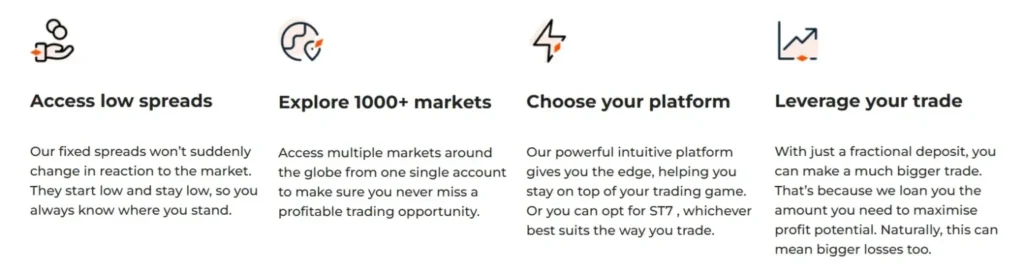
However, even a brief look at their resources reveals serious red flags. For example, the analytics site The Safety Reviewer notes: “UIICTW … presents itself as a provider of digital financial solutions but has no authorization from any reputable regulator.” Also, on the platform WikiFX, it is stated that UIIC has no valid license, rating 0/10, and “High potential risk.”
Company contact details are either missing or questionable. They list an email support@uiictw.cc, phone +1 844 907 8776, website https://uiictw.com/index.html, but there is no reliable information about the management, office, license, or active jurisdiction. Regulatory authorities (e.g., in Russia) have marked this site as showing “Signs of Fraud.”
The website looks like a standard brokerage portal: it invites you to open an account, trade, and promises high returns.
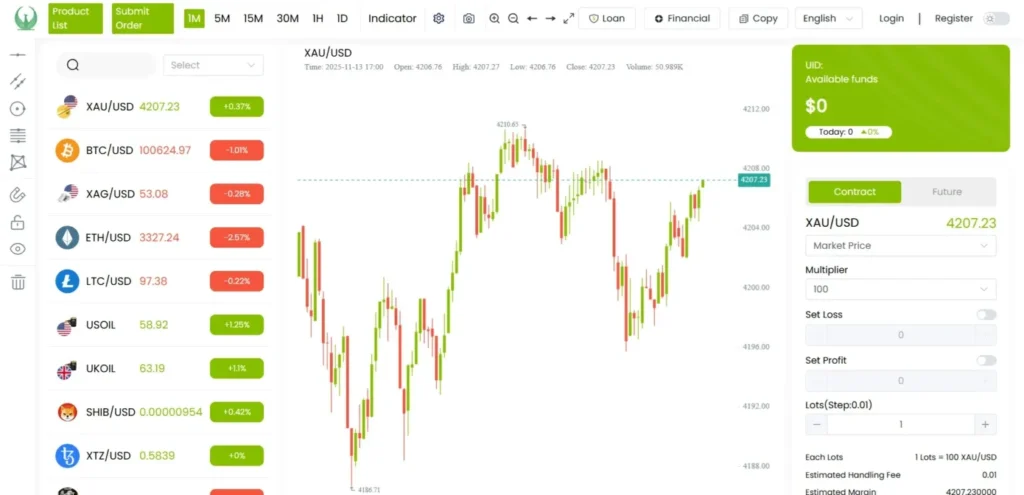
But beneath the surface—there are many questions: how withdrawals work, who controls the company, and whether there are hidden conditions. According to user reviews on WikiFX about “trading” with this broker: “I paid a deposit and was promised that the money would be refunded within 24 hours. But after that, there was still no refund. Then I paid the margin but they kept giving other reasons for not withdrawing the money.”
Thus, in summary: on the surface, UIIC presents itself as a broker service, but in fact, almost everything points to a company without a license, with questionable contacts, and a high risk to investments. If you were considering opening an account there—the risk is above average. Next, we will examine the data verification in detail to understand why this broker deserves the “scammer” label.
Company Data Verification
It is crucial to check licenses, registration, jurisdiction, contact information, and publicly available company details. For UIIC, verification reveals many blanks.
Regulation and license: WikiFX states that UIIC has no valid license: “No valid regulatory information, please be aware of the risk!” Also, The Safety Reviewer notes that UIIC “lacks registration with any respected financial authority.” In other words, there is no confirmation that the company is under the control of any recognized financial regulator. Lack of license is one of the main red flags.
Jurisdiction and office address: The website does not provide a reliable address or registration details. The Safety Reviewer notes: “Their website (uiictw.com) lists an address at N/A, a phone number N/A, and support email N/A.” This automatically increases the risk: the company is not ready for public scrutiny, which is typical for grey or black schemes.
Contacts and website: The contact email support@uiictw.cc and phone +1 844 907 8776 appear only on one resource and are not confirmed externally. The site server is 172.67.204.130 (USA) while registration shows United Kingdom via WikiFX, raising doubts about the reality of the legal entity.
Domain age and reputation: For example, UIICTW is rated as “Operating Period: Within 1 year” on one resource. This indicates the company is either very new or is disguising its age, which reduces confidence.
Withdrawal and operation reviews: Even at the verification stage, user complaints show that the company does not provide transparent withdrawal terms, which is characteristic of “off-the-rules” operations. For example, Malaysia/WikiFX users complain about non-payment of deposits.
Based on the above, UIIC’s data verification shows many warning signs: no license, unverified contacts, complaints, and no reliable history. All this points to a high probability of fraud. If you consider working with a broker and even one of these points matches—they are a cause for concern.
Exposing the Scam Broker
How to understand that you are dealing with a scammer, not just an unsuccessful broker? What makes UIIC dishonest and what behaviors raise alarms? Below is a breakdown of key warning signs relevant specifically to UIIC.
No license but promises full broker services. UIIC does not confirm registration with any serious regulator. This allows them to operate outside investor protection rules—no requirements for fund storage, reporting, or transparency. When a company calls itself a “broker” or “trading platform” without a license—this is almost always a risk sign.
Aggressive deposit requests and trading invitations. Scammers often create urgency—“limited spots,” “special offer,” “start now, profit tomorrow.” After deposit, conditions appear that were not initially disclosed—commissions, “capital insurance,” margin calls, etc. UIIC users report that after depositing, withdrawals are delayed and additional requirements appear.
Funds diversion or refusal to pay. A key red flag: when trying to withdraw profits or deposit, difficulties arise. Under various pretexts, you are asked to pay fees, wait for verification, provide new documents, and ultimately money is not returned. This is exactly the scheme reported for UIIC: “promised refund within 24 hours… after that—no refund.”
Lack of transparency and unclear rules. If the company does not publish terms, fees, withdrawal mechanisms, or does so in tiny font and hides key info—it’s a big risk. You don’t know what you agree to, and attempts to withdraw funds seem legal but are impossible.
Emotional pressure and “friendly” staff. Scammers first establish “friendly” communication—managers act like friends, show charts, invite to private chat, promise special treatment. This is a trust-building tactic. Then investment and deposit discussions start. The Safety Reviewer calls this part of the “pig butchering” scheme.
Promises of high guaranteed profits. Claims like “30 % per month without risk” or “5× growth in 2 weeks” are scams. UIIC does not provide verifiable statements about regular payments or regulated oversight.
Multiple complaints and negative user experience. Numerous complaints about non-payment, hidden conditions, and lack of contact are serious warnings. WikiFX specifically marks UIIC as “High potential risk” and notes cases of payment refusal.
Considering all these factors, UIIC meets classic broker scam criteria. Important: you don’t need definitive proof—if you see three or four signs, you should act, not wait for “everything to settle.”
Scam Scheme of the Broker
How does the scam work using UIIC as an example? Step-by-step breakdown:
Client Attraction: Calls, messages, emails, or ads promise “exclusive offer,” “entry to financial club,” “high-return investments.” Victims are made to feel they are “among the chosen.” They are shown an attractive interface with charts and fast profit promises.
Initial Deposit: Clients are persuaded to deposit $500–$1000 or pay a “membership fee” or “capital insurance.” They gain access to a “trading platform” and see their balance supposedly grow.
Convincing Fake Profit: The platform shows fictitious account growth, supported by a “manager” or “personal advisor.” The client sees real numbers and decides to invest more, building trust.
Withdrawal Attempt and Barriers: Withdrawal triggers hurdles: “pay tax/fee/insurance first,” “increase trading volume first,” “verify identity/address,” “pay minimum margin first.” Users report waiting, promises of refund “tomorrow,” then delays or refusal.
Pressure and “Catch-Up”: Calls and messages push the client to invest more, exploiting loss aversion and hope.
Disappearance or Refusal: At some point, the scammer vanishes or claims funds are “blocked,” demanding more money. The client loses access.
Recovery Challenges: Brokers are often registered offshore, making legal action difficult. Contacts are fake, money is gone. Recovery requires specialists. The Safety Reviewer notes: “Once funds vanish, recovery is often impossible.”
Understanding the scheme helps not only to recognize the scammer but also to collect evidence—step one toward fund recovery.
How to Recover Funds from a Scam Broker
If you were a victim of UIIC, here’s what to do and how DNB Forex Review helps:
What you can do:
Stop any further investments immediately.
Save all correspondence, screenshots, platform evidence, bank statements—all proof.
Contact your bank or payment provider for a transaction halt, refund, or chargeback.
File a complaint with law enforcement in your country: police, cybercrime units, financial regulators. The sooner, the better.
What DNB Forex Review can do:
Experts analyze all available info: uiictw.com, accounts, payments, contacts, bypassing templates. They establish what happened and which services were involved.
They help draft official requests to banks/payment providers citing “contract breach” and “funds held by scam broker” to initiate recovery procedures.
They assist in gathering evidence (correspondence, ads, promises) for legal claims or police reports.
For crypto or international payments, they involve crypto tracing specialists and approach freezing/blocking services.
After submitting the request, DNB Forex Review guides you: consultation, process tracking, step-by-step instructions.
Why complaints often fail without help:
Scam brokers are often offshore. Ordinary citizens may not know how to act.
Banks and payment systems require solid legal arguments—hard to prepare alone.
Timing is crucial: the faster claims are submitted and transactions blocked, the better the chances. Specialists know the right approach and arguments.
Negative Reviews of the Broker
Victim reviews are one of the strongest indicators of a scam. For UIIC, there are several confirmed complaints:
WikiFX reports:
“I paid a deposit and was promised that the money would be refunded within 24 hours. But after that, there was still no refund. Then I paid the margin but they kept giving other reasons for not withdrawing the money.”
“Fraudulent platform. I paid the deposit, but they kept looking for excuses not to withdraw the money.”
The Safety Reviewer notes UIIC has no license and that “when funds vanish, recovery is often impossible.”
Also, the Russian Central Bank (or warning lists) marks UIICTW with “Signs… Broker Limited.”
What is evident from reviews:
Clients deposited or started trading, then faced withdrawal refusals or hidden conditions.
Promises like “papers ready tomorrow,” “funds transferred”—but in reality, users get nothing.
Support is unreachable, conditions change, additional payments are demanded.
Positive outcomes are extremely rare, often fabricated by scammers.
These reviews reflect typical broker scam behavior—failed withdrawals, client pressure, extra payment demands, lack of regulatory oversight—and provide strong evidence when contacting DNB Forex Review and banks.

Why People Choose Such Brokers
Beyond standard topics, it’s useful to understand why people still trust these companies and what psychological tactics scammers use.
Why it seems legitimate:
Scammers create exclusivity: “only you,” “closed traders’ club,” “special market stake.”
Website interface looks official: charts, logos, chatbots, fake licenses—all build trust.
Small initial withdrawals or profits create a trap, encouraging further deposits.
Short timeframes—“here and now,” “quick start”—leave less time for verification.
People want to believe there’s an easy way to earn quickly.
Psychological tactics used:
Time manipulation: “Invest today, tomorrow will be better.”
Pressure: friendly manager becomes insistent.
Authority illusion: fake license, reviews, awards, ratings.
Trust reinforcement: small profits lure bigger investment.
Fear of loss: “Invest now or miss out,” “competitors will take your spot.”
Understanding these tactics is key to protection. If something seems too good to be true, check carefully. Scammers rely on you not verifying. Knowledge is your first defense.
Conclusion
In summary, UIIC (uiictw.com) exhibits almost all signs of a fraudulent scheme: no license, unverified data, multiple non-payment complaints, fake profit and extra payment requirements. If you invested, this is a serious warning. However, the situation is not hopeless. By contacting specialists at DNB Forex Review, you gain professional support: evidence collection, legal assistance, arguments for banks or regulators, and guidance in fund recovery.
If you or acquaintances encounter UIIC—do not delay. Reach out to DNB Forex Review. The key is not to waste time. Scammers rely on confusion and waiting. The choice is yours: either risk further loss, or take control, get support, and have a chance to recover your money.






After reading this page, I finally felt confident to stop any further payments to UIIC and to collect all my transaction records. I’m reaching out to DNB now to try to reclaim what I’ve lost — it feels like the only option left.
You’re taking the right steps, Emilia. Saving evidence and seeking expert help early significantly improves your chances of recovery.
I was tricked into depositing money with UIIC without realising they had no valid licence. The pressure to pay more and the constant delays on withdrawals made me suspicious – thank you, DNB Forex Review, for helping me understand what I was up against.
Thanks, Cameron. That’s exactly why we wrote this review – to help people spot the warning signs early and take action.