




In today’s fast-moving online trading space, new brokerage platforms appear almost constantly, each trying to position itself as a safe and modern gateway to financial markets. Aurixa, operating through aurixa.eu, fits into this category and presents itself as a service offering access to forex, cryptocurrencies, and CFD trading. At first sight, the platform gives an impression of structure and professionalism, with marketing that focuses on financial growth, easy entry, and simplified investing. However, once real user experiences are taken into account, the situation starts to look very different. Many traders describe difficulties that do not appear at the beginning but only after funds are deposited. These include blocked or delayed withdrawals, persistent pressure from representatives to increase deposits, and a lack of clear communication when users try to access their money. This contrast between presentation and reality raises serious doubts about whether the platform operates as a genuine broker or something far more risky.
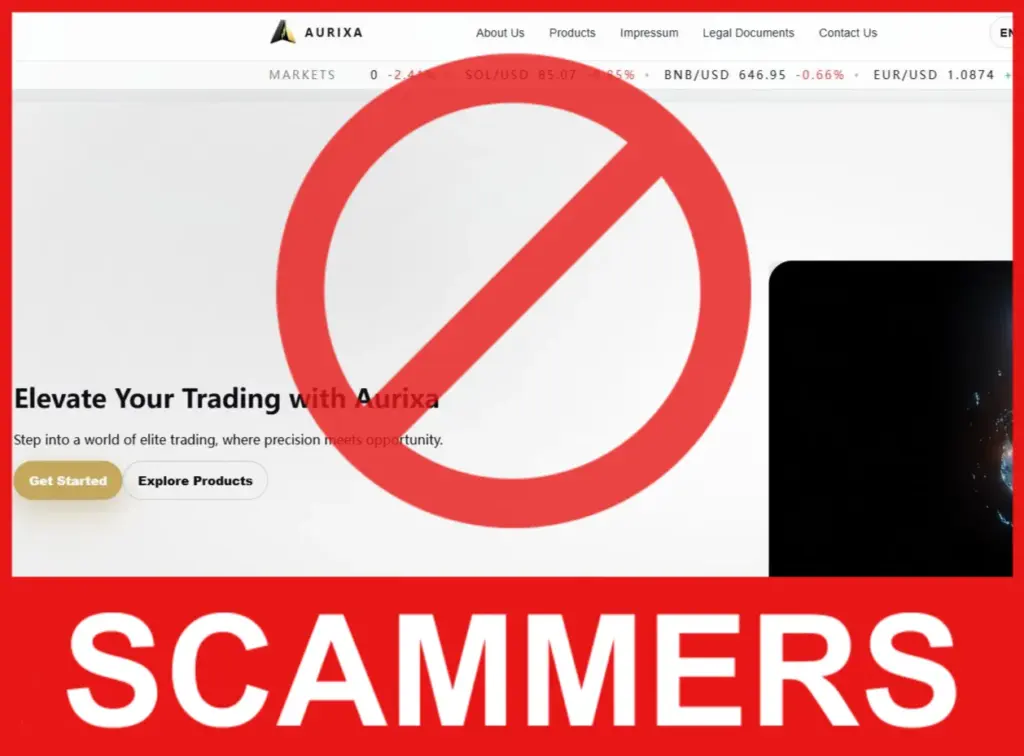
Information About the Fraudulent Broker
Aurixa positions itself as an international financial platform that allows clients to trade global markets with ease. It promotes the idea of simple onboarding, professional trading tools, and personal guidance for users of all experience levels. The marketing style is designed to appeal especially to beginners who are attracted by ideas of financial independence and fast profit potential. Once a user registers, contact from account representatives usually follows quite quickly. These representatives guide the onboarding process and often suggest making an initial deposit to begin trading. At first, the experience may feel supportive and structured, and some users even report seeing early positive results inside their accounts. This creates a sense of trust and encourages further engagement. Over time, however, the tone of communication often changes. Instead of focusing on education or risk awareness, discussions begin to revolve around increasing investment amounts. Users are frequently encouraged to deposit more money in order to improve performance or unlock better opportunities. This gradual shift from support to deposit-driven communication becomes one of the key concerns reported by users. Another detail often mentioned is that account balances may show consistent growth even without active trading activity from the user. This creates a strong impression of success, although the real accessibility of those funds remains unclear.
Verification of Company Data
One of the most important elements when evaluating any financial broker is regulation and transparency. Legitimate companies operate under strict supervision and provide clear, verifiable information about their licensing, corporate structure, and legal status. In the case of Aurixa, this transparency is not clearly present. There is no strong and independently verifiable confirmation of regulation from recognized financial authorities. In addition, ownership and corporate background information remain unclear, which makes it difficult to determine who is actually responsible for managing client funds. This lack of clarity is particularly concerning because it removes a key layer of investor protection. When a platform operates without clear regulatory oversight, clients have limited options in case of disputes or financial losses. Similar patterns are often observed in offshore-style operations where legal accountability is minimal or difficult to enforce.
Exposing the Broker as a Fraudster
When reviewing user feedback, a repeating set of issues becomes visible. One of the most common problems is withdrawal difficulty. Users often report that withdrawal requests are delayed, ignored, or denied without a clear explanation. In many cases, new conditions appear only when users try to withdraw funds. These conditions may include unexpected fees, additional verification steps, or administrative requirements that were never mentioned at the beginning of the relationship. This creates confusion and frustration, especially when users are simply trying to access their own money. Another frequently mentioned issue involves aggressive communication from account representatives. Instead of neutral support, users describe pressure-based conversations where they are encouraged to invest more funds. These messages often include urgency, emotional persuasion, or promises of higher returns linked to additional deposits. Some users also report that the platform shows unusually positive account performance even without active trading, which can mislead individuals into believing that their investments are performing better than they actually are.
Fraud Broker’s Deception Scheme
The behavior described by many users tends to follow a recognizable sequence. It begins with marketing outreach or direct contact that promotes easy profits and simple trading conditions. After the first deposit, communication becomes supportive and encouraging, sometimes even showing early gains to build trust. Once confidence is established, users are encouraged to increase their deposits. At this stage, investment amounts often grow significantly, as users believe they are building on early success. The platform appears stable, and withdrawal is not yet a concern. The situation changes once users attempt to withdraw their funds. This is where new barriers appear. Requests are delayed, additional conditions are introduced, and users may be asked to meet requirements that were not previously disclosed. In many cases, these obstacles make it extremely difficult or even impossible to access funds. Eventually, communication may slow down or stop completely, leaving users without support and without access to their investments.
How to Get Money Back from a Scam Broker
For individuals who find themselves in such situations, recovery may still be possible depending on the payment method used and the speed of response. Financial recovery efforts often involve analyzing transaction history, communication records, and identifying potential dispute mechanisms. Specialized services such as DNB Forex Review assist clients by reviewing the full situation and determining possible recovery strategies. In some cases, payments made through banking channels or card systems can still be challenged through formal procedures, provided action is taken quickly and evidence is properly preserved. It is important that users do not continue sending additional payments after problems begin, as this often worsens the situation and reduces the chances of recovery.
Negative Reviews About the Broker
Across various sources, user experiences tend to follow a similar pattern. The most frequently reported issue is the inability to withdraw funds after making deposits. Another common complaint is persistent pressure to invest more money, often accompanied by promises of improved returns. Some users describe relatively small initial losses, while others report more significant financial damage. Emotional reactions such as frustration, stress, and disappointment are commonly mentioned, especially when communication suddenly becomes limited or unclear. Although some positive comments exist, they are often general in nature and do not provide detailed or verifiable trading information, which raises questions about their reliability. Overall, the dominant sentiment is negative and centered on withdrawal problems and financial loss.

Hidden Risks That Many Users Overlook
When users first encounter a platform like Aurixa, the focus is usually on visible elements such as design, promises, and initial support. However, the real risks often emerge gradually after trust has been established. One of the most significant hidden risks is the appearance of consistent account growth that may not reflect real market activity. This can create a false sense of success and encourage users to invest more than they originally intended. Another overlooked risk is dependency on account representatives. Instead of independent financial advice, users may receive guidance that is influenced by sales objectives, which prioritizes deposits over protection of capital. There is also the issue of gradual financial escalation. Small initial deposits often lead to larger and repeated investments, with each step feeling justified at the time, even though overall exposure increases significantly. Psychological pressure also plays an important role. Users may be encouraged to act quickly due to time-sensitive claims or market urgency, which reduces careful decision-making and increases the likelihood of impulsive deposits. Additionally, all trading information remains internal to the platform, meaning users have no independent way to verify whether real market transactions are taking place. This lack of transparency creates an environment where trust is based on system presentation rather than external confirmation.
Conclusion
When we put all the pieces together and look at Aurixa as a whole, the picture becomes much clearer and far more concerning than what is shown on the surface. At first glance, the platform tries to present itself as a modern financial service with access to global trading, simple tools, and opportunities for profit. The design, communication style, and onboarding process are all built to create confidence and reduce suspicion. But once real user experiences and behavioral patterns are taken into account, the contrast between appearance and reality becomes impossible to ignore. One of the most important observations is that the problems rarely appear at the beginning. Most users describe a relatively smooth start, where registration is simple, communication feels supportive, and even small positive changes may appear inside the account. This early phase is not accidental. It plays a psychological role by building trust and lowering caution. When a platform looks stable and even shows early “results,” users naturally become more open to increasing their investment. This is exactly the point where the structure begins to shift. As time goes on, the focus of interaction changes noticeably. Instead of neutral guidance or balanced risk discussion, communication becomes increasingly centered on deposits and account growth. Users report that representatives begin to emphasize opportunities, timing, and potential returns, often encouraging larger financial commitments. The tone may feel persuasive or even urgent, as if missing a chance would mean losing profit potential. This gradual change in behavior is one of the strongest indicators that the priority of the platform is not transparent trading, but continuous capital inflow. Another key issue is what happens when users try to exit the system. Withdrawal is the moment where many concerns become visible at once. Instead of a straightforward process, users often encounter delays, additional conditions, or unexpected requirements that were never clearly explained earlier. These barriers can appear step by step, making the process more complicated each time a user tries to access their funds. In some cases, communication becomes less responsive or stops altogether, leaving users without clear answers or direction. This transition from active engagement to silence is especially alarming because it directly affects access to money. Beyond individual experiences, there is a broader structural concern related to transparency. A legitimate financial company normally operates within a clear regulatory framework, with publicly verifiable licensing and accountability. In contrast, Aurixa does not provide a strong and easily confirmable regulatory background. This lack of clarity means users cannot independently verify who is responsible for the platform or what legal protections are in place for client funds. When financial responsibility is unclear, risk increases significantly, because there is no reliable external mechanism ensuring fair treatment of users. There is also a deeper issue connected to how information is presented inside the platform. Many users rely entirely on internal dashboards to understand their account performance. If that environment shows growth, users naturally assume that trading activity is real and profitable. However, without external verification, there is no way to confirm whether these figures reflect actual market operations or are simply internal representations. This creates a situation where perception and reality may not fully align, and users base decisions on information they cannot independently verify. Another important aspect is the emotional and behavioral impact of the system. Over time, users may develop a sense of attachment to the process. Early positive signals, combined with personal communication from account representatives, can create trust and emotional investment. Once this connection is formed, it becomes harder to evaluate decisions purely logically. Even when small doubts appear, users may continue participating because they believe that success is close or already underway. This emotional involvement is subtle but powerful, and it often plays a significant role in continued deposits. At the same time, the financial structure itself tends to evolve gradually. Initial deposits are often small and feel manageable, but over time users are encouraged to increase their exposure. Each step may seem reasonable on its own, yet collectively it can lead to significant financial commitment. This slow escalation is particularly dangerous because it reduces the sense of overall risk until a much larger amount is already involved. By the time users fully realize the scale of their investment, reversing the situation becomes much more difficult. What makes the overall assessment even more serious is the repeated nature of the complaints. While individual experiences can vary, the same themes appear consistently across different users. Difficulty withdrawing funds, pressure to invest more, lack of transparency, and sudden communication breakdowns form a pattern that cannot be easily dismissed. When similar issues are reported repeatedly, it suggests a structural problem rather than isolated incidents. From a risk perspective, this combination of factors creates a profile that demands extreme caution. It is not just one issue that stands out, but the accumulation of multiple warning signs working together. Lack of clear regulation, dependence on internal account systems, aggressive investment encouragement, and withdrawal complications all contribute to an environment where user control is significantly reduced once funds are deposited. For individuals who have already interacted with such a platform, the emotional impact can also be significant. Many people initially hesitate to accept that something is wrong, especially when communication has been friendly or seemingly professional at the start. This delay in recognition often works against recovery, because financial traces and documentation become harder to organize over time. The longer the situation continues, the more complex the path to resolution becomes. This is why timely response is so important. Once withdrawal issues begin or communication changes noticeably, it is essential to document everything carefully and seek professional evaluation of the situation. Specialized assistance can help determine whether any recovery options exist based on payment methods and transaction routes. Without proper analysis, users may miss potential avenues for dispute or recovery. Ultimately, Aurixa demonstrates a pattern that should not be underestimated. While the surface presentation may appear modern and accessible, the underlying structure raises multiple concerns that directly affect user safety and financial control. The combination of unclear oversight, restrictive withdrawal behavior, and persistent deposit encouragement creates a risk environment that is difficult to ignore. The final takeaway is straightforward. In any financial platform, the true measure of reliability is not how easy it is to deposit money, but how transparent and accessible the withdrawal process is when users want their funds back. When that balance is missing, caution becomes not just advisable, but necessary.









I lost a significant amount through Aurixa earlier this year. The company convinced me to invest more by showing impressive trading results and claiming that larger deposits would unlock better opportunities. Looking back, there were warning signs that I ignored. Once I tried to withdraw my profits, the account manager became difficult to reach and eventually stopped answering altogether. I have already reported the matter to my bank and submitted documentation to a recovery specialist. If anyone here has dealt with a similar situation involving Aurixa, I would be interested in hearing whether a chargeback or legal recovery process was successful.
Our team will help you recover your stolen money. Submit a request.