




In the modern online trading space, many companies present themselves as reliable brokers offering access to forex, cryptocurrencies, and other financial markets. One of these platforms is KensingtonGrant, operating through its website kensingtongrant.com. At first glance, it looks like a professional brokerage service with trading tools, account managers, and promises of stable income opportunities. However, a growing number of complaints and user reports suggest that the reality behind this platform may be very different from what is advertised. Many traders describe similar experiences after joining the platform. At the beginning, everything looks smooth. Users are contacted by so-called financial consultants, encouraged to deposit small amounts, and shown what appears to be profitable trading activity. Later, however, problems begin when clients try to withdraw their money. Requests are delayed, rejected, or tied to unexpected conditions. This article is prepared for DNB Forex Review and aims to explain in simple language how KensingtonGrant allegedly operates, what risks are involved, and why so many users have reported negative experiences. It also explains what victims can do if they have already lost money and need help recovering funds.
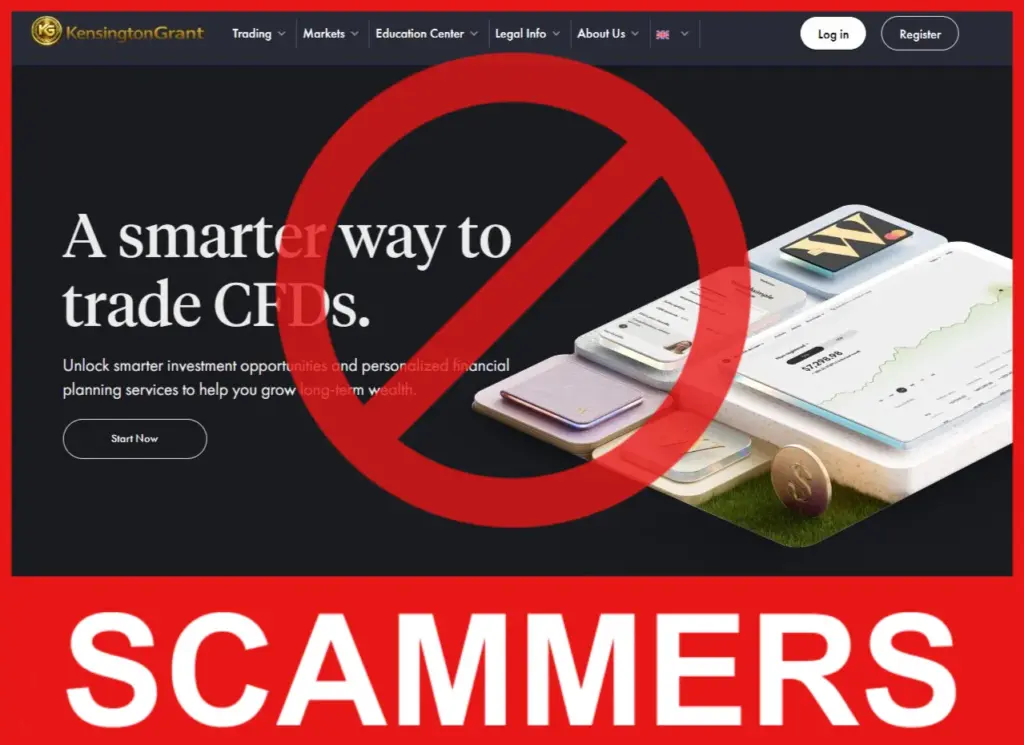
Information About the Fraudulent Broker
KensingtonGrant presents itself as an international trading broker offering access to forex markets, cryptocurrencies, commodities, and CFDs. The platform is designed to look modern and trustworthy, with dashboards showing trading charts, account balances, and supposed investment growth. However, many users report that this appearance does not match real experience. According to multiple complaints, the platform relies heavily on direct marketing. People are contacted by phone or email and encouraged to open an account quickly. Once registered, they are guided by account managers who promise financial success and safe investing. At first, small deposits seem to generate profits inside the trading interface. These results create trust and encourage users to invest more money. Over time, clients are pushed toward larger deposits, sometimes under the promise of higher returns or exclusive investment opportunities. Problems usually start when users request withdrawals. Many report that withdrawal requests are ignored or delayed. Others say they are asked to pay additional charges before receiving their funds. These charges are often described as taxes, compliance costs, or verification requirements. Another concern is the lack of transparency. There is very little verifiable information about who runs the company, where it is located, or how it is regulated. This makes it difficult for users to confirm whether the broker is operating legally or not.
Verification of Company Data
A legitimate brokerage must be regulated by official financial authorities and provide clear information about its license, registration, and management. In the case of KensingtonGrant, users and analysts report that such information is either missing or impossible to verify. No clear regulatory license can be confirmed through publicly available financial registries. This is a serious issue because regulated brokers are required to publish their authorization details and maintain transparent operations. The absence of such information raises concerns about the legitimacy of the company. Another problem is the lack of verifiable company structure. There is no reliable information about the physical office, ownership, or executive team. Often, platforms like this use virtual office addresses or offshore registration details that cannot be easily checked. It is also unclear whether client funds are kept in segregated accounts, which is a standard requirement for regulated brokers. Without this protection, clients face a much higher risk of losing money without any legal safety net. The overall lack of transparency, combined with user complaints, suggests that the company operates in a high-risk environment where investor protection is not guaranteed.
Exposing the Broker as a Fraudster
Many warning signs associated with KensingtonGrant are consistent with known patterns of fraudulent trading platforms. One of the most common complaints is the appearance of fake profits inside trading accounts. Users often see their balance growing after deposits, but these gains cannot be verified in real market conditions. This creates a false impression of successful trading and encourages further investment. Another serious issue is withdrawal obstruction. When clients attempt to withdraw money, they are often told that additional steps are required. These may include paying fees, completing extra verification, or upgrading accounts. In reality, these requirements are often used to delay or prevent payouts. Aggressive communication is also frequently reported. Account managers are described as persistent and persuasive, encouraging users to deposit more money and warning them about missed opportunities if they refuse. Eventually, communication often stops once users request withdrawals or question the system. Support becomes unresponsive, and accounts may be restricted without clear explanation. These patterns strongly resemble typical behavior seen in unregulated and suspicious brokerage schemes.
Fraud Broker’s Deception Scheme
The operation of platforms like KensingtonGrant usually follows a structured pattern designed to attract deposits and prevent withdrawals. The process begins with advertising or direct contact. Potential clients are promised financial independence, easy trading, and expert guidance. These messages are designed to build interest and trust quickly. After registration, users are encouraged to make an initial deposit. The trading platform then shows simulated profits, giving the impression that trading is successful. This stage is important because it convinces users to continue investing. Once trust is established, account managers begin pushing for larger investments. They may claim that bigger deposits lead to better trading conditions or higher returns. Emotional pressure is often used to encourage quick decisions. When users finally request withdrawals, problems begin. The platform introduces unexpected conditions such as fees or compliance requirements. These obstacles are not clearly explained at the beginning. If users continue to insist, communication may slow down or stop completely. In many cases, accounts become inaccessible and funds are never returned. This step-by-step approach is designed to maximize deposits while making it extremely difficult for clients to recover their money.
How to Get Money Back from a Scam Broker
Recovering money from suspicious brokers is difficult but sometimes possible if action is taken quickly. The first step is to collect all available evidence, including payment receipts, communication records, and screenshots of account activity. Depending on the payment method used, different recovery options may be available. Card payments may allow for chargeback procedures if fraud can be proven within the allowed timeframe. Bank transfers may require formal disputes or legal claims. Cryptocurrency transactions are more complicated, but tracing tools and cooperation with exchanges can sometimes help identify where funds were sent. Specialized recovery services such as DNB Forex Review assist victims in analyzing their case and choosing the correct strategy. They help identify whether funds can be recovered through financial institutions, legal channels, or dispute procedures. It is also important to report the incident to financial authorities. While this does not guarantee immediate refund, it creates an official record and can support further action. Acting quickly is crucial because delays reduce the chances of successful recovery.
Negative Reviews About the Broker
Across various online discussions and complaint platforms, KensingtonGrant is frequently associated with negative experiences. Many users describe similar situations where they were initially shown profits and treated professionally, but later faced serious issues when trying to withdraw funds. Delays, excuses, and sudden account restrictions are commonly reported. Some victims mention that they were encouraged to invest more money after seeing early profits. Others say they were contacted repeatedly by representatives who pressured them into increasing deposits. A frequent complaint is complete silence from support teams once withdrawal requests are made. Users report that emails go unanswered and phone numbers stop working. There are also cases where clients were told they must pay additional fees before accessing their own funds. After paying, many still did not receive any withdrawal. These repeated patterns across different users suggest that the issues are not isolated incidents but part of a broader structure of questionable operations.

Hidden risks and important details investors should know
Beyond the obvious complaints, there are deeper risks that many users only realize too late. One of them is psychological pressure. The communication style used by such platforms often creates urgency and emotional decision-making, making users feel they must invest quickly or lose an opportunity. Another issue is the closed system used for trading. Clients cannot independently verify trades on external platforms, which means all results are controlled internally by the broker. There is also a lack of independent auditing. Without third-party verification, there is no proof that trading activity is real or that funds are being managed properly. In addition, many users report that once problems begin, it becomes nearly impossible to reach responsible individuals within the company. Support is often automated or repetitive, offering no real solutions. These hidden risks make such platforms especially dangerous for inexperienced investors.
Conclusion
After analyzing the available information, user complaints, and the general behavior pattern associated with KensingtonGrant, a clear picture begins to form. This is not a typical transparent brokerage service where clients can freely trade, withdraw funds, and verify operations. Instead, the structure and reported experiences suggest a high-risk environment where the main focus appears to be continuous deposits rather than safe and regulated trading. The most important conclusion is that the platform demonstrates multiple warning signs that are commonly associated with unreliable or fraudulent brokerage schemes. These include lack of verifiable regulation, unclear company ownership, absence of transparent financial reporting, and repeated user complaints about withdrawal issues. When these elements appear together, the risk level for any investor becomes extremely high. A particularly concerning factor is the withdrawal behavior described by many users. In a legitimate trading environment, withdrawing funds should be a simple and clearly regulated process. In contrast, users of KensingtonGrant often report delays, unexplained rejections, or sudden requirements to pay additional fees before accessing their own money. This pattern is one of the strongest indicators that something is not operating under normal financial standards. Another important observation is the psychological structure of the platform’s communication. Many users describe an initial phase of trust building, where account managers are highly active, supportive, and persuasive. During this stage, clients are encouraged to increase deposits with promises of better returns. However, this communication often changes dramatically once withdrawal requests are made, becoming limited or disappearing entirely. This shift in behavior is not typical for legitimate financial institutions. It is also important to understand that many victims do not realize they are dealing with a high-risk platform until significant losses have already occurred. The system is designed in a way that creates early confidence through simulated profits and professional-looking dashboards. This illusion of success often leads people to invest more than they originally intended. By the time doubts appear, the financial exposure is already significant. From a broader perspective, cases like KensingtonGrant highlight a growing problem in the online trading industry. The low barrier to creating trading websites, combined with aggressive marketing strategies, allows questionable platforms to attract global audiences quickly. Many of these platforms rely on short operational lifespans, collecting as much money as possible before disappearing or rebranding under a new name. For investors, the key lesson is that appearance is not proof of legitimacy. A professional website, polite communication, and even showing fake trading profits do not guarantee safety. The only real protection is independent verification of regulation, company identity, and financial transparency. Without these elements, any investment becomes highly speculative and risky. For individuals who have already deposited funds into KensingtonGrant and are facing difficulties, the situation can feel stressful and confusing. Many victims initially try to resolve issues directly with the broker, but this often leads to further delays or no response at all. In such cases, continuing to communicate without a structured recovery strategy usually does not produce results. This is where specialized assistance becomes important. DNB Forex Review focuses on helping individuals who have encountered problems with unregulated or suspicious brokers. The recovery process typically starts with a detailed analysis of the case, including payment methods, transaction history, and communication records. This step is essential because the possibility of fund recovery depends heavily on how the money was transferred. In some situations, especially when payments were made through bank cards, chargeback procedures may be possible. These allow banks to investigate disputed transactions and potentially reverse payments if fraud is proven. In other cases, bank transfers or international transactions may require formal legal disputes or cooperation with financial institutions in different jurisdictions. Cryptocurrency payments present additional challenges due to their decentralized nature. However, even in such cases, blockchain analysis can sometimes help trace the movement of funds and identify exchange platforms where recovery efforts can be directed. While success is not guaranteed, structured investigation significantly improves the chances compared to acting alone. Another important aspect is timing. The sooner action is taken, the higher the likelihood of success. Delays can reduce available recovery options, as funds may be moved through multiple channels or converted into untraceable forms. This is why victims are often advised to respond quickly once suspicious activity is identified. It is also crucial for affected individuals to avoid further payments to the same broker, even if they are told that additional fees are required to unlock withdrawals. In many reported cases, such payments do not lead to fund release and only increase total losses. Recognizing this pattern early can prevent further financial damage. Beyond individual recovery, reporting the broker to relevant financial authorities and consumer protection organizations can also play an important role. While these reports may not immediately return lost funds, they help build a documented record of activity, which can support future investigations and prevent other potential victims from being affected. In conclusion, KensingtonGrant represents a serious warning example of how online trading platforms can appear legitimate while operating in a highly questionable manner. The combination of unclear regulation, withdrawal problems, and consistent user complaints strongly suggests that investors should approach this platform with extreme caution or avoid it entirely. For those who have already suffered losses, there is still a path forward. Recovery may require professional assistance, legal steps, and financial dispute procedures, but ignoring the situation rarely leads to a positive outcome. DNB Forex Review provides structured support in such cases, helping victims understand their options and take the necessary steps toward possible fund recovery. Ultimately, the most important takeaway is awareness. The online trading industry contains both legitimate and unreliable operators, and the difference between them is not always obvious at first glance. Careful verification, skepticism toward unrealistic promises, and timely action are the strongest tools investors have to protect themselves from financial harm.






I came across this page while searching for information about Kensington Grant, as I suspect I was targeted in a similar scheme. The communication seemed professional at first, but eventually it became clear that something was not right when I was asked to pay additional “verification fees.” I have not been able to recover anything so far. I would appreciate guidance on whether cases like mine are usually traceable, especially when payments were made through cryptocurrency platforms.
You’re absolutely right. If you’ve been scammed by this company, please submit a request with us, and our specialist will contact you for a free consultation!