




Sogo Invest is an online trading platform that presents itself as a modern brokerage service offering access to forex, crypto, indices, and other financial instruments. At first glance, the website promotes simple onboarding, fast trading, and the possibility of earning profits in global markets. However, when looking deeper into user discussions and common patterns associated with similar platforms, a number of concerns begin to appear. This review is written to help readers understand the potential risks connected with such brokers. It is not a final legal judgment, but rather a structured overview of warning signs, reported user experiences, and typical behavior patterns that often appear in disputes involving unregulated or questionable trading companies.
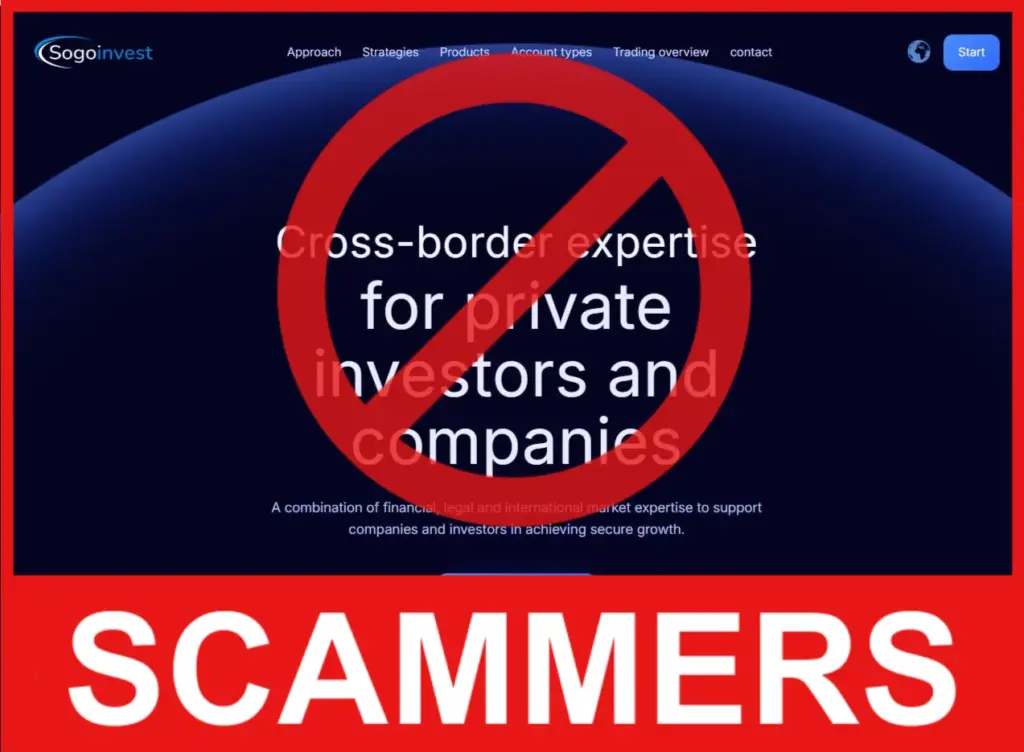
Information About the Fraudulent Broker
Sogo Invest is presented as a trading service that allows users to open accounts quickly and start investing with minimal requirements. The platform focuses heavily on marketing messages about financial independence and easy access to trading opportunities. In practice, brokers with a similar structure often operate mainly through online client acquisition. Users are typically contacted after registration by representatives who guide them through deposits and trading steps. The service tends to emphasize simplicity and profit potential, while offering limited detailed explanations about execution methods, liquidity providers, or regulatory oversight. Another common feature in such platforms is the use of account managers who actively communicate with clients. Their role is usually described as supportive, but in many cases reported in the industry, the communication often shifts toward encouraging higher deposits and more frequent trading activity.
Verification of Company Data
One of the main issues that potential investors try to verify is whether the broker is properly regulated and legally registered under a recognized financial authority. In the case of Sogo Invest, publicly available and independently verifiable regulatory information appears limited. Legitimate financial companies usually provide clear licensing details, registration numbers, and references to official regulators. They also maintain transparent corporate documentation, including company address, management structure, and compliance policies. When such information is missing, unclear, or difficult to confirm, it creates uncertainty for clients. Offshore registration is another factor often seen in similar cases. While offshore jurisdictions are not automatically illegal, they frequently provide weaker investor protection and limited dispute resolution mechanisms. The lack of clear transparency does not automatically prove wrongdoing, but it does increase the level of risk for anyone considering depositing funds.
Exposing the Broker as a Fraudster
When analyzing platforms like Sogo Invest, certain behavioral patterns are often discussed by traders in online communities and complaint forums. One of the most frequently mentioned concerns is aggressive investment encouragement. Users describe situations where they are repeatedly advised to increase deposits in order to access better trading conditions or higher profit opportunities. Another common concern involves withdrawal difficulties. In many similar cases across the trading industry, users report delays, additional verification requirements, or changing conditions when trying to withdraw their funds. While verification procedures are standard in financial services, problems arise when these requirements appear unexpectedly or are used to delay payouts. There are also reports in similar environments of account restrictions or reduced access after clients request withdrawals. These patterns are often considered warning signs, especially when combined with unclear regulatory status. It is important to emphasize that individual experiences can vary, and not every user may encounter issues. However, repeated similar complaints across independent sources can indicate systemic problems.
Fraud Broker’s Deception Scheme
In many cases involving questionable trading platforms, the process follows a predictable structure. It often begins with online advertising that highlights easy income opportunities and low entry requirements. After registration, users are contacted by representatives who introduce trading conditions and encourage the first deposit. At the beginning, everything may appear smooth. Some users even report seeing positive results on their trading dashboard, which builds trust and confidence. This stage is often crucial because it encourages further investment. Later, clients are usually introduced to larger deposit opportunities, premium account types, or personalized trading strategies. Communication during this phase becomes more frequent and persuasive. Difficulties tend to appear when users attempt to withdraw funds. At this point, additional conditions may be introduced, such as new verification steps or unexpected costs. In some cases, users report being advised to continue trading instead of withdrawing, which further complicates the situation. This model is widely discussed in the online trading industry and is one of the reasons why careful due diligence is essential before investing.
How to Get Money Back from a Scam Broker
For individuals who believe they have experienced issues with a trading platform like Sogo Invest, there are several general steps that may help in attempting to recover funds. One of the most common methods is a chargeback request through the bank or card provider. This process involves disputing a transaction and providing evidence that the service was not delivered as expected. Another possible step is filing complaints with financial regulators or consumer protection authorities in the client’s jurisdiction. Even if the broker is offshore, reporting helps create an official record of the dispute. Specialized legal and consulting assistance can also be useful. Firms such as DNB Forex Review focus on supporting clients in analyzing payment transactions, preparing documentation, and identifying possible recovery channels. These services typically work with banks, payment providers, and legal procedures to improve the chances of resolving disputes. It is important to understand that recovery is never guaranteed, but acting quickly and organizing documentation can significantly improve outcomes.
Negative Reviews About the Broker
Public discussions about brokers with similar profiles often show mixed feedback at the beginning, followed by more critical experiences over time. Some users initially describe positive communication and supportive guidance from representatives. However, negative experiences tend to focus on withdrawal-related issues, changes in account conditions, and difficulties contacting support once financial disputes begin. In some cases, users also mention pressure to deposit more funds even after expressing concerns. It is also worth noting that online reviews are not always fully verifiable. Some may be exaggerated in either direction. Because of this, it is more useful to focus on consistent patterns rather than isolated opinions. When multiple users independently describe similar problems, it becomes a stronger indicator that the platform may not operate under fully transparent or reliable standards.
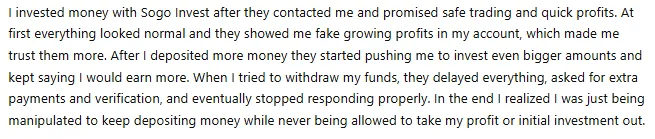
How Scam Brokers Use Emotional Manipulation and “Trust Building” Techniques
One important aspect that often goes unnoticed when people analyze suspicious trading platforms is not just the technical side of withdrawals or licenses, but the psychological strategy behind the interaction with clients. Many brokers that later raise concerns do not rely only on technical tricks. They also use carefully designed communication patterns to build emotional trust and reduce the client’s critical thinking. In the early stage of interaction, the client usually feels welcomed. Communication is friendly, supportive, and focused on personal goals. A so-called account manager often plays the role of a guide who “wants to help you succeed.” This creates a feeling of personal attention that many users do not normally get from traditional financial institutions. The key psychological trigger here is trust through familiarity. When a person hears their name often, receives daily calls or messages, and is told that their financial goals are achievable, they begin to associate the platform with personal success. Even if the broker is unknown or lacks strong regulation, this emotional connection can feel more powerful than rational analysis. Another commonly used technique is gradual commitment. Instead of asking for a large deposit immediately, the client is encouraged to start with a small amount. After this initial step, they may see a trading dashboard showing profits or successful trades. Even if these results are not real market outcomes but simulated figures or internal adjustments, they still create a strong psychological effect. The user begins to feel that the system “works.” Once trust is established, the communication slowly shifts. The same friendly manager may start introducing urgency. Phrases like limited opportunity, exclusive strategy, or temporary market condition are often used. This creates pressure without direct force. The client feels that hesitation could mean losing an opportunity. At this stage, emotional decision-making starts replacing logical evaluation. Instead of asking whether the broker is regulated or transparent, the client begins to focus on potential profit and fear of missing out. This is one of the most effective psychological traps used in high-risk financial schemes. Another important element is dependency building. Some users report that they begin to rely heavily on the account manager for decisions. The manager may suggest when to trade, how much to invest, and when to “wait for better results.” Over time, the client loses independent control over financial decisions and starts trusting external guidance almost completely. This dependency becomes a problem when withdrawal requests begin. At that point, communication often changes tone. The same supportive behavior may turn into delay tactics, additional conditions, or persuasion to continue trading instead of withdrawing funds. Because the emotional trust has already been built, many users hesitate to challenge these instructions or question them aggressively. A subtle but powerful psychological factor is the illusion of progress. Even if real profit does not exist, the user may see increasing numbers in their account interface. This creates a sense of growth and reinforces the idea that continuing investment will eventually lead to real gains. In reality, these figures may not represent actual liquidity or real market execution. It is also important to mention that emotional manipulation does not always look aggressive. In many cases, it is calm, polite, and professional in tone. That is what makes it effective. The client does not feel pressured in an obvious way; instead, they feel guided and supported, which reduces suspicion. Understanding these psychological patterns is essential because financial loss in such environments is not always caused by technical fraud alone. Often, it is a combination of emotional influence, gradual trust building, and delayed realization of risk.
Conclusion
Sogo Invest presents itself as a modern trading solution, but several factors commonly associated with high-risk brokerage environments should not be ignored. These include limited regulatory transparency, user-reported withdrawal difficulties, and aggressive investment communication patterns. None of these elements alone confirm fraudulent activity, but together they form a risk profile that requires caution. Online trading always carries financial risk, but that risk increases significantly when a broker lacks clear oversight and accountability. For traders who have already deposited funds and are experiencing difficulties, it is important to act promptly, preserve all communication records, and seek professional guidance where necessary. Support services such as DNB Forex Review can assist in evaluating the situation and exploring possible recovery strategies. In the end, the key takeaway is simple. In financial trading, trust should always be backed by transparency, regulation, and clear operational standards. When those elements are missing, careful reconsideration is the safest approach.






I had a similar experience with Sogo Invest where everything looked legitimate at first—charts, dashboards, and even polite customer support. But when I tried to withdraw my balance, I was told my account was “under investigation” for suspicious activity. They kept delaying me for weeks until I realized it was likely a scam. I’m now trying to understand what evidence is needed to file a proper complaint or start a recovery process.
Leave a request, and our team will help you find the best solution.