




The world of online trading attracts thousands of people who hope to earn money on forex, crypto, and CFDs. Unfortunately, this same field has become a magnet for fraudulent platforms that hide behind the image of “professional brokers.” One of the names that has been increasingly mentioned in complaints and warnings is Swiss Heritage Capital (swissheritagecapital.com). In this review prepared for DNB Forex Review, we will take a closer look at how this company allegedly operates, why so many users describe it as suspicious, and what patterns of behavior are typically associated with such offshore “brokers.” The goal is simple: to help readers recognize warning signs early and avoid losing money to similar schemes.
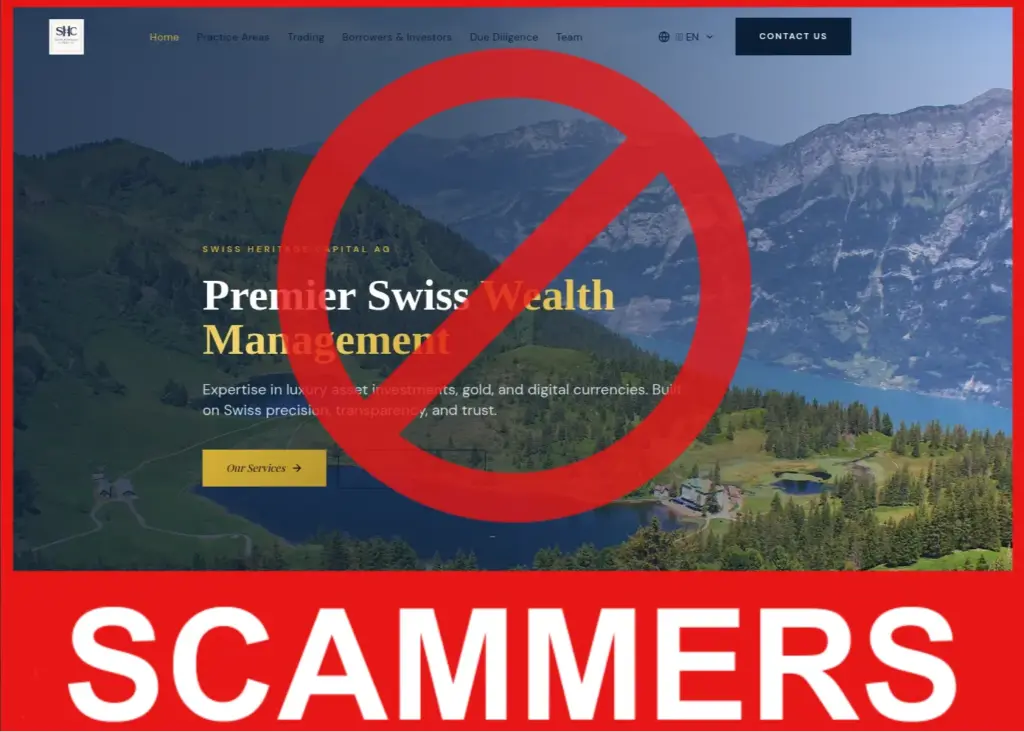
Information About the Fraudulent Broker
At first glance, Swiss Heritage Capital presents itself as a modern investment platform offering access to forex trading, cryptocurrencies, commodities, and other financial instruments. The website is designed in a way that tries to create trust: polished design, promises of high returns, and claims of “professional account managers” who help clients trade successfully. However, when users begin interacting with the platform, a very different picture often appears. Many traders report that the company actively encourages deposits right from the start. Potential clients are contacted by so-called “advisors” or “financial experts,” who are often very persuasive and push people to invest larger amounts. These conversations usually focus on quick profits, exclusive opportunities, and “limited-time offers.” The broker allegedly offers multiple account types, each requiring higher deposits to unlock better “conditions.” This structure is typical for questionable trading platforms, where the real goal is not trading but collecting deposits. Another concerning element is the lack of transparency. Users often report that trading conditions are vague, spreads and leverage are not clearly explained, and there is no reliable information about liquidity providers or real market execution. In many similar cases, clients only discover problems when they try to withdraw funds. Accounts may suddenly show “verification issues,” “tax requirements,” or unexpected fees that must be paid before withdrawal. These tactics are frequently described in complaints about offshore brokers operating without proper oversight.
Verification of Company Data
When examining a financial company, the first step is always regulatory verification. Legitimate brokers are usually licensed by well-known authorities such as the FCA (UK), CySEC (Cyprus), BaFin (Germany), or ASIC (Australia). These licenses are publicly verifiable and come with strict compliance rules. In the case of Swiss Heritage Capital, several red flags are typically mentioned: First, there is no clear evidence of a valid license from any reputable financial regulator. The website may claim registration in offshore jurisdictions, but such claims are often difficult or impossible to confirm. Second, company registration details—such as legal entity name, registration number, and physical office address—are either missing, vague, or inconsistent. In some cases, the same brand name appears connected to different entities, which raises additional doubts about transparency. Third, contact information is often limited to email forms, chat support, or international phone numbers that may not provide reliable service. Genuine brokers usually maintain verifiable headquarters and regulatory disclosure pages. Another issue is the use of generic branding. Names like “Swiss Heritage Capital” may be chosen to create an impression of Swiss financial credibility, even if the company has no actual ties to Switzerland’s regulated financial sector. Overall, the lack of verifiable documentation is one of the strongest indicators that users are dealing with an unregulated or potentially fraudulent operation.
Exposing the Broker as a Fraudster
Several behavioral patterns associated with Swiss Heritage Capital resemble well-known scam structures in the trading industry. One of the most frequently reported issues is aggressive client acquisition. People are contacted unexpectedly, often after leaving their details on unrelated websites or ads promising easy income. Once contact is established, representatives push for immediate deposits. Another major warning sign is manipulation during trading. Some users claim that trades appear manipulated or that platform results do not match real market conditions. In such environments, the trading interface may simply simulate market activity rather than connect to real exchanges. Withdrawal problems are another key concern. Clients report that when they request to withdraw profits or even their initial deposit, they face delays, additional requirements, or complete silence from support. Sometimes accounts are suddenly “blocked for verification,” and users are asked to pay extra fees to unlock funds. There are also complaints about psychological pressure. Advisors may insist that clients increase deposits to avoid “losing opportunities” or recovering previous losses. This emotional manipulation is a classic tactic used in high-risk fraudulent schemes. Taken together, these signs suggest a pattern that is not consistent with legitimate brokerage operations but rather with platforms designed primarily to extract deposits.
Fraud Broker’s Deception Scheme
The alleged scheme behind platforms like Swiss Heritage Capital usually follows a familiar structure. It starts with advertising. Social media, email campaigns, or fake investment blogs promote the idea of easy earnings through trading. Once a user signs up, they are contacted by a “personal manager.” The second stage is trust-building. The manager explains trading basics, shows fake success stories, and sometimes even allows small withdrawals to create confidence. These early wins are often artificial and designed to encourage larger deposits. Next comes escalation. Users are encouraged to invest more money to access “professional tools” or “VIP accounts.” At this stage, deposits can become significant. Once enough money is deposited, the system changes. Trades may suddenly turn negative, or the account may show losses that were not expected. When the client tries to withdraw, barriers appear—taxes, verification, fees, or technical issues. Eventually, communication may stop entirely. Accounts are frozen, support becomes unreachable, and the invested funds are effectively locked. This step-by-step method is common in many online investment fraud cases, and it is designed to delay suspicion until large sums are already lost.
How to Get Money Back from a Scam Broker
Recovering funds from unregulated brokers is difficult, but not impossible. The key is to act quickly and follow structured steps. The first step is collecting evidence. This includes screenshots of the trading account, transaction history, email correspondence, chat logs, and any payment confirmations. These materials are essential for building a case. Next, it is important to stop all communication with the broker to avoid further manipulation or pressure. In many cases, payments made via credit cards or bank transfers may be eligible for chargeback procedures. However, success depends on timing and documentation. This is where specialized legal support becomes important. DNB Forex Review assists victims of questionable brokers by analyzing transaction flows, identifying payment routes, and preparing dispute documentation. Their specialists understand how such schemes operate and can guide clients through recovery options, including chargebacks, complaints to financial institutions, and legal escalation where possible. While no company can guarantee 100% recovery, professional assistance significantly increases the chances of success, especially when action is taken early.
Negative Reviews About the Broker
Across various forums and review platforms, users describing their experience with Swiss Heritage Capital often highlight similar issues. A common complaint is difficulty withdrawing funds. Many users say that after initial deposits and small profits, withdrawal requests are either delayed indefinitely or rejected without clear explanation. Others mention that after refusing to invest more money, their accounts became inaccessible or support stopped responding. Some users report being pressured into depositing additional funds under the promise of recovering previous losses or unlocking profits. In hindsight, these promises were never fulfilled. There are also mentions of aggressive communication tactics. Representatives reportedly call clients repeatedly, pushing them to invest more or warning them about “missed opportunities.” While not every online complaint can be independently verified, the consistency of these patterns across different users is concerning and aligns with known scam behaviors in the trading industry.
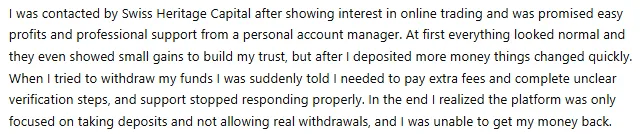
What victims should do immediately after suspicion arises
If a trader begins to suspect that something is wrong, timing becomes critical. The first action should be to stop depositing money immediately. Even small additional payments can deepen losses. Second, all communication should be preserved. Emails, chat messages, and transaction receipts may later serve as evidence. Third, users should contact their bank or payment provider as soon as possible to report suspicious transactions. In some cases, payments can be reversed if action is taken quickly. It is also recommended to avoid “recovery agents” that promise guaranteed returns for upfront fees, as this is another common scam layer targeting victims twice. Finally, seeking professional assistance from organizations like DNB Forex Review can help clarify legal options and prevent further financial damage.
Conclusion
When we put everything together — the way Swiss Heritage Capital presents itself, how it behaves after a client deposits money, and the consistent complaints from users — a very uneasy picture starts to form. This is not just about one or two dissatisfied traders who “didn’t understand trading” or “made bad decisions.” The pattern described across different sources is much more structural and repeats itself in a way that is typical for high-risk, unregulated investment schemes. The main problem is that such platforms are built around trust at the beginning and pressure at the end. At first, everything feels smooth: polite communication, “personal advisors,” growing account balances, and the illusion that trading is working exactly as promised. But once the client tries to secure profit or simply withdraw their own funds, the system changes its behavior. Suddenly there are delays, unexpected requirements, verification issues, or complete silence from support. This shift is where many victims realize that the situation is not normal. Another important point is psychological impact. People who deal with such brokers often do not lose money in one step. Losses happen gradually. First comes a small deposit, then encouragement to invest more, then emotional pressure to “not miss opportunities,” and only later the realization that access to funds has been restricted. This staged approach makes it harder for victims to react quickly, because at every stage there is still hope that things will turn around. What makes the situation even more serious is the lack of regulatory protection. When a broker operates without clear and verifiable supervision from recognized financial authorities, clients lose the safety net that normally exists in legitimate financial markets. In regulated environments, there are complaint procedures, compensation schemes, and oversight mechanisms. In offshore or unverified setups like the one described in connection with Swiss Heritage Capital, those protections are either extremely limited or completely absent. This is why cases involving such platforms rarely end with voluntary refunds. Once the money is transferred, recovery becomes a legal and technical challenge rather than a simple request. Funds may be routed through multiple payment channels, different jurisdictions, or third-party processors, which complicates the process even further. For this reason, the role of specialists like DNB Forex Review becomes crucial. They deal specifically with situations where traditional support systems no longer respond. Their work is focused on analyzing payment trails, identifying recovery options, preparing disputes with banks or payment providers, and guiding victims through procedures that are often confusing without legal experience. In many cases, early intervention significantly improves the chances of at least partial recovery, especially when action is taken before transactions become too old or fragmented. At the same time, it is important to be realistic. No legal service can guarantee full reimbursement in every situation. Fraud schemes are deliberately designed to be complex and international, which means each case depends on many factors: payment method, timing, documentation, and jurisdiction. However, doing nothing almost always leads to permanent loss. Silence and delay are usually the biggest allies of fraudulent operators. The broader lesson from situations like this is simple but important. In online investing, appearance can be extremely misleading. A professional-looking website, confident “advisors,” and promises of stable income do not equal safety. Real financial companies are defined not by marketing, but by transparency, regulation, and accountability — all of which must be verifiable, not just claimed. So the final takeaway is not just about one specific broker. It is about awareness. The more people understand how these schemes operate, the harder it becomes for them to succeed. And for those who have already been affected, the most important step is to act quickly, gather evidence, and seek structured help instead of trying to solve the problem alone. In cases connected to Swiss Heritage Capital and similar platforms, time is not just a factor — it is often the difference between partial recovery and complete loss.









My experience with Swiss Heritage Capital started positively and ended in disappointment. The representatives regularly contacted me with investment suggestions and updates about my account performance. Everything appeared legitimate until I submitted a withdrawal request. Instead of receiving my money, I was informed that further payments were needed before any funds could be released. Looking back, that should have been a major warning sign. I am currently trying to determine whether there is a realistic chance of recovering at least part of my investment and would appreciate hearing from anyone who has pursued a similar claim.
You’re absolutely right. If you’ve been scammed by this company, please submit a request with us, and our specialist will contact you for a free consultation!