




In recent years, the number of online investment platforms that appear professional but later turn out to be fraudulent has increased significantly. One of the websites that raises serious concerns is United Trust Consulting, operating through unitedconsultingtrust-ag.com. At first glance, it presents itself as a financial consulting or trading-related service that can help users earn stable income through investments. The language on the site is usually confident and designed to build trust quickly. However, many similar platforms follow the same pattern. They promise easy profits, emphasize expert guidance, and encourage fast deposits. After a closer look, the situation often becomes much less clear. There is usually no transparent company background, no verifiable licensing information, and no real explanation of how client funds are managed. This type of structure is commonly associated with high-risk or fraudulent investment schemes. People who encounter such platforms often do not realize the danger until they try to withdraw their money and face unexpected obstacles. This review is intended to help readers understand how such schemes typically operate and why caution is necessary when dealing with them.
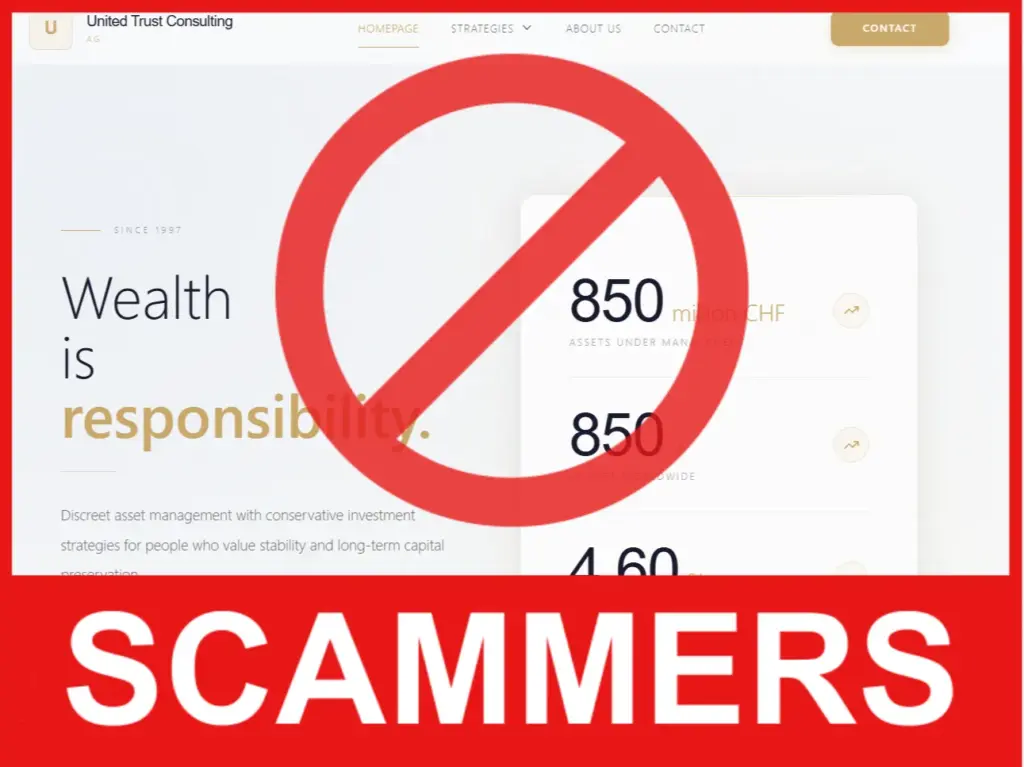
Information About the Fraudulent Broker
United Trust Consulting presents itself as a modern financial service offering access to trading opportunities and professional support. The website is designed in a way that gives an impression of legitimacy, using financial terminology and promises of structured investment strategies. However, the actual content is extremely limited when it comes to concrete details. There is no clear explanation of what financial instruments are used, no transparent trading conditions, and no evidence of real market activity. Instead, the platform focuses heavily on attracting deposits and convincing users that they can achieve financial growth with minimal effort. In many cases involving similar websites, users report that they are contacted by so-called account managers shortly after registration. These individuals usually encourage increasing deposits and promise higher returns if more funds are added. The communication is often very persuasive and designed to create urgency. Another concerning aspect is the lack of consistency in the information provided. Important details such as company history, management team, or physical office location are either missing or presented in a vague way. This makes it difficult to verify who is actually behind the platform. When comparing this behavior with known patterns in the online trading industry, it closely matches schemes that are designed not for real trading activity but for collecting client deposits under false pretenses.
Verification of Company Data
One of the most important steps in evaluating any financial service is checking whether it is properly regulated. In the case of United Trust Consulting, there is no evidence of valid authorization from recognized financial regulators. This is a major warning sign because legitimate brokerage companies are always required to operate under strict supervision. The absence of a verified license means there is no legal protection for client funds. If something goes wrong, users cannot rely on financial authorities to recover their money easily. Another issue is the lack of transparent corporate identity. The platform does not provide verifiable registration documents or clear details about the legal entity operating the website. In many similar cases, companies either use offshore registrations or completely hide ownership information. The contact details also appear unreliable. Often, such platforms provide only email forms or generic contact information without any physical office that can be confirmed independently. Domain registration patterns in similar cases also show that websites of this type are often created recently and designed to exist for a short period before disappearing or rebranding. This makes accountability extremely difficult. All these factors combined strongly suggest that the platform is operating outside of any regulated financial framework, which significantly increases the risk for users.
Exposing the Broker as a Fraudster
There are several warning signs that indicate the potential fraudulent nature of United Trust Consulting. One of the most common indicators is the promise of consistent or unusually high returns. In real financial markets, profits are never guaranteed, and any claim suggesting otherwise should be treated with skepticism. Another red flag is the behavior of account managers. Users often report persistent communication encouraging them to invest more money. This pressure can become intense, with repeated messages emphasizing limited-time opportunities or exclusive trading conditions. Withdrawal issues are one of the strongest indicators of problematic activity. In many similar schemes, users are able to deposit money easily, but when they attempt to withdraw, they encounter delays, additional requirements, or complete silence from support representatives. Sometimes they are told to pay extra fees or taxes before withdrawals can be processed, which is a common manipulation tactic. The trading platforms used by such websites may also display unrealistic profit figures that do not correspond to real market conditions. These numbers are often generated internally and have no connection to actual trading activity. Another concerning sign is the lack of independent reviews from verified sources. While positive comments may exist online, they are often generic and repetitive, which suggests they could be artificially created to build trust. All these elements together form a pattern that is frequently seen in fraudulent investment operations.
Fraud Broker’s Deception Scheme
The way platforms like United Trust Consulting operate usually follows a predictable structure. At the beginning, users are attracted through online advertising or promotional messages that emphasize easy earnings and financial independence. Once a person registers, they are quickly contacted by representatives who present themselves as experienced financial advisors. Their goal is to build trust and encourage the first deposit, which is usually relatively small. After the initial deposit, users may see growth in their account balance. This is often not connected to real trading but is instead used to create confidence and motivate further investments. As trust increases, users are encouraged to deposit larger amounts. The communication becomes more persuasive, often using emotional arguments or time-sensitive offers. The critical stage comes when the user tries to withdraw funds. At this point, multiple obstacles may appear. These can include verification issues, unexpected fees, or claims that the account is under review. Each delay is designed to discourage withdrawal attempts and keep the money inside the system. Eventually, communication may stop completely, or the user may be told that additional payments are required to release funds. In many cases, after these steps, the platform becomes unresponsive or disappears entirely. This structured approach is designed to extract as much money as possible before the operation is shut down or replaced with a new website.
How to Get Money Back from a Scam Broker
Recovering funds from suspicious brokers can be difficult, but in many cases, action can still be taken. The most important step is to stop all communication with the platform and avoid sending any additional payments, especially if they are requested as fees or taxes for withdrawal. The next step involves collecting all available evidence. This includes transaction records, screenshots of the account, communication with representatives, and any payment confirmations. Specialists who deal with financial fraud cases, such as DNB Forex Review experts, often assist victims in analyzing payment routes and identifying possible recovery options. Depending on the payment method used, it may be possible to initiate disputes or chargeback procedures through banks or payment providers. In some cases, funds can be traced through intermediaries, especially when transactions involve card payments or regulated financial institutions. The success of recovery often depends on how quickly action is taken after the fraud is identified. Professional assistance is important because these cases can involve complex financial structures and multiple jurisdictions. Without proper guidance, victims often struggle to navigate the process alone.
Negative Reviews About the Broker
Although detailed verified reviews about United Trust Consulting are limited, the behavior pattern is consistent with many other questionable platforms that have been reported online. Users typically describe situations where everything appears normal at first. Small profits may be shown in the account, and communication with support seems responsive. However, problems begin when withdrawal is requested. Common complaints include blocked withdrawals, sudden account restrictions, and demands for additional payments. Many users report being told that their funds are ready but cannot be released without extra steps or verification fees. There are also reports of aggressive communication strategies. Representatives may pressure users to reinvest instead of withdrawing, suggesting that waiting longer will result in higher profits. This is often used as a tactic to delay withdrawal requests. In some cases, users mention that communication stops entirely once they refuse to invest more money. This creates frustration and confusion, especially for those who initially trusted the platform. Overall, the sentiment from affected individuals is strongly negative once the withdrawal stage is reached.

Additional risks and hidden problems users often overlook
Beyond financial losses, there are additional risks associated with platforms like United Trust Consulting. One major issue is the handling of personal data. When registering, users are often asked to provide identification documents and sensitive information. In unregulated environments, there is no guarantee that this data is stored securely or used appropriately. Another problem is the potential for repeated targeting. Individuals who have already been affected may later be contacted by similar platforms or so-called recovery services that may also be fraudulent. This creates a cycle of risk where victims are exposed to multiple scams. There is also the psychological impact of such experiences. Many users feel stress, regret, and loss of confidence in online financial services after encountering such schemes. This emotional effect can sometimes be as damaging as the financial loss itself. Finally, these platforms often disappear and reappear under different names. This makes it difficult to track their activity and warns that similar websites may continue operating in new forms.
Conclusion
After analyzing the available information about United Trust Consulting and comparing its behavior with well-known patterns of fraudulent online brokers, the overall picture becomes quite concerning. The platform shows multiple warning signs that are commonly associated with unregulated investment schemes that are designed to collect deposits rather than provide real access to financial markets. The most important issue is the lack of transparency. There is no clear evidence of legitimate licensing, no verifiable regulatory oversight, and no reliable corporate background that would confirm the legality of its operations. In the financial industry, this alone is already a serious red flag. Real brokerage companies are always required to disclose who regulates them, where they are registered, and how client funds are protected. When this information is missing or intentionally vague, it usually means the platform is operating outside of legal financial frameworks. Another major concern is the way such platforms typically behave toward clients once money has been deposited. At the beginning, everything may seem professional and supportive. Users may receive friendly communication, guidance, and even access to a functional-looking trading interface. However, this is often only the surface layer. The real problems usually start when a client attempts to withdraw funds. At that stage, a wide range of obstacles may appear, including delays, repeated verification requests, unexpected conditions, or sudden “fees” that must be paid before processing withdrawals. These tactics are not random. They are part of a structured approach designed to extend the time money remains inside the system. The longer the process is delayed, the more opportunities there are to request additional deposits or convince the client to continue investing instead of withdrawing. Many victims report that they are told to “be patient,” “wait for market correction,” or “complete additional steps,” which are not part of any regulated financial procedure. It is also important to understand the psychological aspect of such schemes. They are often built to create trust gradually. Instead of immediately requesting large sums, the platform may start with small deposits and visible account growth. Seeing apparent profits encourages users to believe the system is real. This illusion becomes a powerful motivation to invest more. Once larger amounts are deposited, the level of control shifts entirely to the operators of the platform, and the user’s ability to recover funds becomes extremely limited. In many similar cases across the online investment space, victims only realize the true nature of the platform when communication begins to change. Support becomes slower, answers become vague, and eventually, contact may stop altogether. Some users are even redirected to different “specialists” who continue to request additional payments under different excuses. This pattern is widely recognized in financial fraud investigations. Despite these risks, it is still important to emphasize that victims are not without options. Financial recovery can sometimes be possible, especially if action is taken quickly. The first step is always to stop any further interaction with the platform. Sending additional payments in hopes of unlocking withdrawals usually leads to even greater losses. The next step is documentation. Every piece of evidence matters. This includes payment receipts, transaction history, chat logs, emails, account screenshots, and any instructions received from representatives. These details help reconstruct the flow of events and can be used to challenge transactions through financial institutions. In many cases, banks and payment providers may be able to initiate dispute procedures, especially if transactions were made via card payments or regulated financial channels. However, timing is critical. The sooner a case is reported, the higher the chance that funds can be traced or reversed before they are moved further through complex financial networks. Professional assistance can also play a key role. Specialists who deal with investment fraud cases understand how these schemes operate and how funds are typically transferred. They can help identify possible recovery routes, prepare formal claims, and communicate with financial institutions in a structured way. Without such guidance, many victims struggle to navigate the process on their own, especially when dealing with international or offshore entities. It is also important to recognize that platforms like United Trust Consulting often do not operate alone. In many cases, similar websites appear and disappear under different names but follow the same structure. This means that even after one platform becomes inactive, others may continue operating using the same methods. For this reason, awareness and early detection are essential to prevent repeated financial losses. From a broader perspective, the situation highlights a growing issue in online investing. The barrier to creating a professional-looking website is very low, while the ability to regulate such platforms globally remains limited. This creates an environment where fraudulent schemes can appear convincing enough to attract inexperienced investors. The final takeaway is clear. Any platform that promises easy profits, lacks transparent regulation, and creates pressure around deposits or withdrawals should be treated with extreme caution. Real investment services never guarantee returns, never pressure clients into immediate decisions, and always operate under strict legal supervision. United Trust Consulting fits many of the behavioral patterns associated with high-risk or potentially fraudulent financial operations. While every case must be evaluated individually, the combination of missing regulatory clarity, withdrawal issues, and aggressive client handling makes it a platform that requires serious caution. For individuals who have already been affected, the most important step is not panic, but structured action. With proper documentation, timely reporting, and professional support, there may still be a chance to recover part or all of the lost funds. The key is to act quickly, stay organized, and avoid further financial exposure to the same or related entities.






My experience with United Trust Consulting was disappointing. The managers were very responsive while I was depositing money, but their attitude changed completely when I requested a withdrawal. They kept introducing new requirements and additional charges that had never been mentioned before. I eventually realized that I might have been dealing with a fraudulent operation. I am currently collecting all emails, payment confirmations, and chat records. If anyone has gone through the recovery process after losing money to this broker, I would appreciate hearing how long it took and what evidence was most useful.
If you’ve been scammed by this company, submit a request with us, and our specialist will contact you for a free consultation!