




In today’s online trading world, it has become increasingly difficult to separate legitimate brokers from carefully designed fraudulent platforms. One such project that has recently attracted attention is Zuperior (zuperior.com). At first glance, the website presents itself as a modern trading service promising access to financial markets, attractive conditions, and simple earning opportunities. However, numerous warning signs reported by users and typical characteristics of unregulated brokers raise serious concerns. This review prepared for DNB Forex Review aims to examine available information, highlight inconsistencies, and help readers understand why many traders label such platforms as risky or potentially fraudulent. The goal is not to make emotional accusations, but to break down the structure, behavior patterns, and complaints associated with Zuperior-like operations so that investors can make informed decisions and, if needed, seek assistance in recovering lost funds.
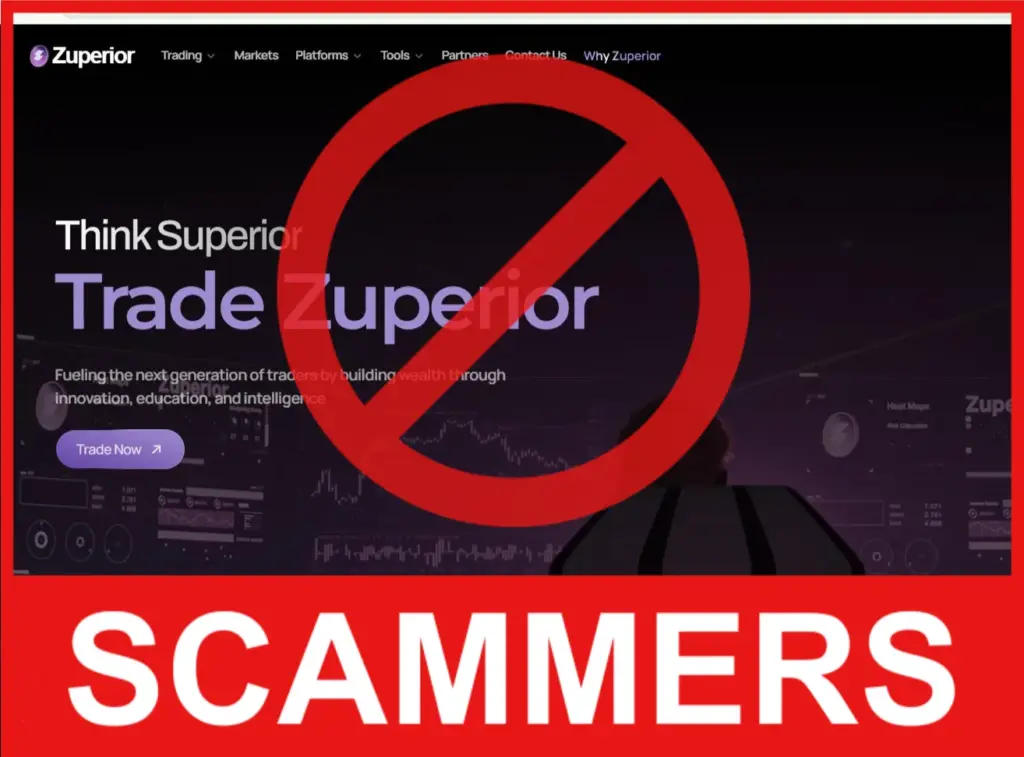
Information About the Fraudulent Broker
The Zuperior website presents a standard marketing approach often used by online trading platforms. It claims to provide access to forex, cryptocurrencies, commodities, and CFDs through a “modern trading system.” The interface appears simple, registration is quick, and users are encouraged to start trading with minimal deposits. However, deeper examination shows several gaps. There is little to no verifiable background about the company’s founders, physical office location, or operational history. Most of the content on the website is promotional and focuses on profit potential rather than transparent trading conditions. Users report that after registration, they are contacted by “account managers” who encourage larger deposits, promising increased returns or special investment opportunities. This aggressive marketing style is frequently associated with high-risk or unregulated brokerage schemes. Another concern is the lack of clear trading documentation. Important details such as spreads, liquidity providers, execution models, and withdrawal rules are either missing or vaguely described. This creates uncertainty about how trades are actually executed. Overall, Zuperior appears to follow a familiar structure seen in many questionable online brokers that prioritize deposits over transparent trading activity.
Verification of Company Data
One of the most important steps when evaluating any broker is checking its legal registration and regulatory status. In the case of Zuperior, available information is either unclear or difficult to independently verify. The website does not clearly display licensing details from recognized regulators such as the FCA, CySEC, ASIC, or other reputable financial authorities. In legitimate brokerage operations, such information is usually prominently displayed and easily verifiable through official registries. In addition, company registration numbers, corporate addresses, and ownership details are either missing or presented in a way that is hard to confirm. Some users report that provided addresses lead to virtual offices or unrelated business locations. Another issue is domain registration privacy. Many suspicious brokers use anonymous domain services to hide ownership details. This makes it difficult for clients or regulators to determine who is actually behind the platform. Without transparent corporate data, investors are left relying solely on website claims, which cannot be independently validated. This lack of accountability is a serious red flag in the financial services industry.
Exposing the Broker as a Fraudster
When analyzing Zuperior’s operating patterns, several warning signs become noticeable. These indicators do not automatically confirm fraud, but together they form a pattern commonly associated with scam brokers. First, there is the issue of unrealistic profit promises. Marketing materials often suggest that users can achieve high returns in a short time with minimal risk. In real financial markets, such guarantees simply do not exist. Second, users report difficulties when attempting to withdraw funds. In many similar cases, brokers introduce unexpected requirements such as additional fees, taxes, or verification deposits before allowing withdrawals. This tactic is widely recognized as a pressure method to extract more money from clients. Third, communication tends to become aggressive once clients hesitate to invest further. Account managers may push psychological pressure, warning about “lost opportunities” or “account restrictions.” Another concerning factor is platform control. Some users claim that trading results appear manipulated or inconsistent with real market movements, which raises concerns about whether trades are executed on actual exchanges or within an internal system. Together, these behaviors strongly resemble patterns seen in fraudulent brokerage schemes operating without regulatory oversight.
Fraud Broker’s Deception Scheme
The typical operational model behind platforms like Zuperior follows a structured sequence. First, users are attracted through online advertising, social media promotions, or fake investment reviews. These ads often highlight easy profits and professional trading tools. Second, after registration, clients are assigned a personal “financial advisor.” This person’s main role is not advisory in a traditional sense, but rather to encourage continuous deposits. Third, initial deposits may show small “profits” on the platform dashboard. This is often used to build trust and motivate larger investments. Fourth, once the user deposits a significant amount, problems begin. Withdrawal requests are delayed or rejected, and new conditions appear. Users may be asked to pay additional charges before accessing their own funds. Finally, communication may stop entirely once the broker determines that no further deposits can be obtained. This cycle is designed to maximize financial extraction while minimizing the chance of immediate detection.
How to Get Money Back from a Scam Broker
Victims of questionable brokers like Zuperior often feel trapped, but there are recovery options available through professional assistance. Specialists such as those at DNB Forex Review focus on analyzing financial transactions, identifying payment routes, and preparing legal and technical strategies for fund recovery. Depending on the situation, this may include chargeback procedures for card payments, bank dispute resolution, or tracing cryptocurrency transactions. It is important for victims to act quickly. The sooner evidence such as payment receipts, correspondence, and transaction records is collected, the higher the chance of successful recovery. Another important step is avoiding further communication with the broker. Scammers often attempt to extract additional payments under the pretense of “unlocking funds.” These requests should be treated with extreme caution. Professional legal support can also help escalate complaints to payment providers and relevant authorities, increasing pressure on fraudulent operators.
Negative Reviews About the Broker
Online discussions about brokers similar to Zuperior often reveal a pattern of dissatisfaction. Many users report that initial interactions appear smooth and professional, but issues begin once withdrawals are requested. Common complaints include blocked accounts, unexplained fees, and complete loss of access to trading platforms. Some users describe being repeatedly contacted by representatives urging them to deposit more funds to “save” or “unlock” their accounts. Another recurring theme is the lack of response from support teams once problems arise. Emails go unanswered, and live chat systems become inactive. There are also reports of emotional pressure tactics, where users are told that their account will be lost if they do not act immediately. These strategies are designed to prevent careful decision-making. While not every review can be independently verified, the consistency of complaints across different platforms is a strong indicator of systemic issues.

Hidden Risks and What Victims Should Know
Beyond obvious financial loss, dealing with unregulated brokers carries additional risks. One of the most serious is data security. When users register on such platforms, they often provide personal documents such as passports or ID cards. If the company is not legitimate, this information may be misused or sold. Another hidden risk is psychological pressure. Victims often experience stress, frustration, and confusion due to manipulative communication strategies used by brokers. It is also important to understand that scam operations frequently rebrand. Once exposed, they may change their website name and continue operating under a new identity. This makes awareness and education crucial for preventing repeated victimization. Users should always verify licenses, check independent reviews, and avoid platforms that promise guaranteed returns.
Conclusion
When we put all the pieces together, the picture around Zuperior doesn’t look reassuring. On the surface, the platform tries to present itself as a modern, easy-to-use trading service. But once you move past the marketing language and look at how it behaves in practice—especially through the experiences of users and the lack of transparent company information—a very different story starts to appear. The biggest concern is the absence of clear regulation. In the financial industry, regulation is not just a formality; it is the basic protection layer for clients. Regulated brokers are required to follow strict rules, keep client funds separate, provide transparent reporting, and operate under the supervision of financial authorities. In the case of Zuperior, there is no solid evidence of such oversight. And when a platform deals with people’s money but operates outside of clear regulatory control, the risk level automatically rises. Another important issue is consistency in user complaints. Even though individual stories may differ, the pattern is very similar: everything seems smooth at the beginning, deposits are easy, communication is active, and the platform looks professional. But once a client tries to withdraw funds, problems begin—delays, excuses, new “conditions,” additional payments, or complete silence. This kind of pattern is one of the most common signals seen in questionable brokerage schemes. It is also worth highlighting the psychological side of the experience. Many users describe feeling pressured or rushed into making decisions. This is not accidental. In many reported cases involving similar platforms, so-called “account managers” or “financial advisors” are trained to keep clients emotionally engaged. They often build trust quickly, then gradually push for higher deposits, sometimes using urgency or fear-based messaging like “limited opportunity” or “account risk if you don’t act now.” This is not how legitimate investment firms operate. Equally troubling is the lack of clarity around company identity. When a financial service does not clearly show who owns it, where it is registered, and under what legal framework it operates, accountability becomes almost impossible. If something goes wrong, clients are left with very few options for resolution. This is one of the key reasons why such platforms attract so many complaints globally. We should also not ignore the financial reality behind such schemes. Many victims do not lose money in one large transaction. Instead, losses build up gradually. It starts with a small deposit, then a “successful trade,” then encouragement to invest more. After that comes larger deposits, sometimes even loans or borrowed money. By the time withdrawal issues begin, the financial damage is already significant. This is why early recognition is so important. People often ignore small warning signs because everything seems fine at first. But in hindsight, most victims say the same thing: there were signals—they just didn’t look serious at the time. That is exactly how these systems are designed to work: slow progression, trust building, and then financial extraction. For anyone who has already interacted with Zuperior or similar platforms, the most important step is not to continue depositing money in hope of “unlocking” withdrawals. In many cases, additional payments only increase losses. It is also important to preserve all evidence: emails, chat logs, transaction receipts, screenshots of the trading platform, and any payment confirmations. These details can be crucial later. At this stage, professional help becomes especially relevant. Recovery processes are not simple, and they require structured legal and financial action. This is where organizations like DNB Forex Review come in. Their role is to analyze the situation, identify the payment channels used, and determine possible recovery routes such as chargebacks, bank disputes, or crypto tracing procedures where applicable. The key idea is that victims should not handle such situations alone. Fraudulent brokerage schemes are often designed in a way that makes individuals feel isolated and powerless. But with proper support and coordinated action, there are still paths that may lead to partial or full recovery depending on the case. In the end, Zuperior serves as another example of why caution in online investing is absolutely necessary. The financial markets themselves are not the problem—it is the unregulated intermediaries that misuse trust and lack accountability. Platforms like this highlight how easily presentation can be used to mask risk, and how important it is to verify everything before investing even a small amount. The main takeaway is simple: if something looks too easy, too profitable, and too pressure-driven, it deserves extra scrutiny. And if withdrawal problems appear, it is a strong signal that immediate action is needed rather than further investment. For affected individuals, the situation is serious—but not without options. Acting quickly, documenting everything, and seeking professional assistance from specialists such as DNB Forex Review can significantly improve the chances of limiting damage and starting the recovery process.









I invested with Zuperior earlier this year after being contacted by a representative who sounded knowledgeable and convincing. They encouraged me to increase my deposit several times, claiming my account was performing well. However, when I requested a withdrawal, I kept receiving excuses and new requirements. Eventually, I realized something was wrong. I am currently gathering documents, transaction records, and correspondence. If anyone has advice about the best steps to take after losing money to this company, I would be grateful for any practical recommendations.
We’ll be happy to help you. Submit a request on our website.